

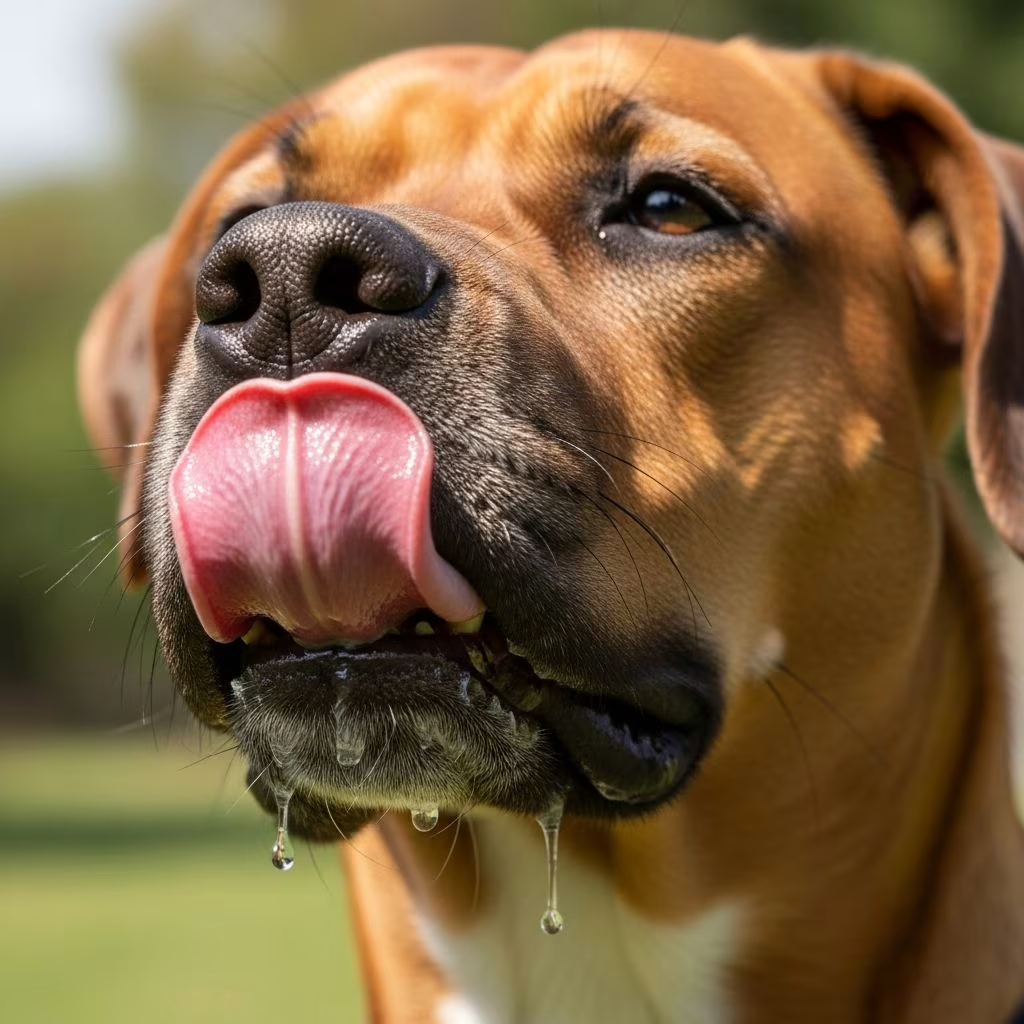
Your dog’s tongue isn’t just adorable when it’s hanging out during a happy walk. It’s actually a sophisticated cooling system that changes shape to tell you exactly how hot they’re feeling. Think of your dog’s tongue as nature’s most adorable thermometer – it’s not just cute, it’s actually an early warning system telling you exactly how their internal temperature is doing.
This fascinating fact recently went viral on social media, highlighting how observant pet owners can use tongue shape to gauge their dog’s comfort in warm weather. Understanding these changes can prevent heat-related illnesses like heat exhaustion and heat stroke, which affect thousands of dogs annually.
How Dogs Cool Themselves: The Science of Panting
Dogs primarily regulate body temperature through panting, as they lack the sweat glands humans rely on. Here’s how it works: your dog breathes in cooler, dry air and breathes out warm, humid air. As this air flows over the wet surfaces of their tongue, throat, and nasal passages, heat escapes through evaporation. The faster this happens, the quicker they cool down – hence the rapid panting you see.
Now here’s where it gets really clever: when your dog needs to cool down faster, their tongue actually changes shape to create more surface area for heat to escape. The hotter they feel, the more their tongue flattens and elongates into that distinctive spatula, spade, or ladle shape. You might even notice extra drooling – that’s your pup producing more saliva to boost the cooling effect.
According to veterinary insights, this tongue elongation and curling occurs as tongue muscles relax and widen, maximizing evaporative cooling efficiency. In severe overheating, the tongue may darken due to oxygen deprivation. Normal dog body temperature ranges from 99.5-102.5°F (37.5-39.2°C); anything above 103°F signals distress, and over 105°F is a heat stroke emergency.
How to Read Your Dog’s Heat Status Based on Their Tongue
Now we know why and how they pant, how can we tell when they’re feeling too hot and need our help to cool down. Observing tongue position, shape, and accompanying body language is key to early intervention.
Normal Panting
Your dog may have their mouth open and pant with their tongue inside their mouth when resting or exercising happily. It is very common to see them trotting along with an open, relaxed ’smile’, panting a little as they go, but this stops once resting. This is one content pup. Carry on! The tongue appears compact, pink, and moist with no extension.
Warming Up, But Still Happy
They may start to pant with their tongue out once working a bit harder, or temperatures around them increase. The tongue should appear loose and relaxed, along with a content facial expression with no tight muscles. When your pup is in this happy thermoregulation status, they can stop panting if distracted by something or if the exercise stops. You can see them happily sniff the air and appear interested in the world around them. This is A-OK, just monitor for now.
Starting to Feel the Heat – Pay Attention
This is where things change, and it’s crucial to recognize the signs. As your dog’s body gets hotter through exercise or environmental heat, their relaxed composure shifts. Their tongue starts extending further out, elongating into that spatula shape at the tip we mentioned earlier.
If they are finding it difficult to thermoregulate themselves, their expression becomes pinched and tight, with cheeks retracting back at the sides. This expression may confuse some, as while this can look like a happy content ‘smile’, we need to take the rest of their body language into account to make sure they are not struggling with overheating.
Here’s what to watch for:
- An almost human-like worried expression with ‘raised eyebrows’.
- Ears positioned back on their head.
- Distractions don’t stop their panting.
- They lie down and spread themselves out to get more contact with cool ground.
- Excessive drooling.
- Seeming anxious or restless.
- Their skin, nose, or paws feel warmer than usual to your touch.
If you see these signs, stop any exercise immediately and help your dog cool down. Move them to a cooler area, offer fresh water, and let them rest somewhere comfortable and cool.
Warning Signs Your Dog Needs Urgent Veterinary Care
These are critical indicators of heat stroke progression:
- Excessive panting with a pronounced ’ladle’ or spoon-shaped tongue and continuous thick drooling, combined with a worried expression.
- Collapse, wobbliness when walking, or inability to stand up.
- Lethargy and complete disinterest in their surroundings.
- Gums that feel sticky and/or appear darker than normal (brick-red, purple, or blue).
- Red dot rashes appear on their skin.
- Panting that stops abruptly (this could mean they’re losing consciousness or having a seizure).
- Tongue very dark in color due to lack of oxygen.
At this stage, body temperature often exceeds 105°F, risking organ failure including heart and lungs. Seek emergency vet care immediately.
Dogs at Higher Risk for Heat Stroke
Not all dogs handle heat equally. Certain factors increase vulnerability:
- Breeds: Brachycephalic (short-nosed) dogs like French Bulldogs, Pugs, Pekingese, Boston Terriers, and Lhasa Apsos have compromised airways, limiting panting efficiency.
- Age and Health: Puppies, seniors, overweight dogs, or those with heart/lung conditions, collapsing trachea, or laryngeal paralysis.
- Environment: High humidity reduces evaporation effectiveness; even moderate temps (above 80°F) can be dangerous.
| Risk Factor | Examples | Why It Increases Risk |
|---|---|---|
| Brachycephalic Breeds | Pugs, Bulldogs | Short airways hinder panting |
| Obesity/Age | Overweight seniors | Reduced stamina, poor circulation |
| Health Conditions | Heart disease, tracheal collapse | Impaired cooling/breathing |
What is a Healthy Tongue?
A healthy tongue is pink, uniform in texture, shape, and colour. It should be moist, not overly dry or sticky. A pale or blue-tinged tongue can indicate anaemia or circulation problems (unless you have a Chow Chow – they’re famous for their natural blue-black tongues!).
Many dogs have harmless black spots on their tongues or gums that are flat and appear in patches. These are completely normal and genetic, often seen in breeds like Labradors. However, if you notice spots appearing suddenly, or if they seem raised or irregular, it’s worth getting them checked out, as this can sometimes indicate canine melanoma or other issues.
Regularly inspect your dog’s tongue during play or meals to establish a baseline for normal appearance.
How to Cool Down an Overheated Dog Safely
Act fast but avoid common mistakes like ice baths, which can cause shock.
- Move to a cool, shaded area with good airflow.
- Offer small amounts of cool (not ice-cold) water frequently.
- Wet paws, belly, and ears with room-temperature water; use fans.
- Monitor temperature rectally if possible; aim below 103°F.
- Do not force water or exercise until recovered.
For heat stroke, transport to vet immediately while cooling en route. Vets may use IV fluids and monitoring.
Prevention Tips for Hot Weather
- Walk early morning or evening; avoid midday heat.
- Never leave in cars – temps rise 20°F in minutes.
- Provide constant fresh water and shade.
- Use cooling mats, vests; limit exercise in humidity.
- Know your dog’s limits based on breed/age.
Frequently Asked Questions (FAQs)
Is a spoon-shaped tongue always a heat stroke sign?
Not always, but combined with excessive drooling, worry expression, or collapse, it signals urgent overheating. Monitor closely.
How hot is too hot for my dog?
Temps above 80°F with humidity over 70% are risky. Check heat index; rectal temp over 103°F needs action, over 105°F is emergency.
Can all dogs get heat stroke?
Yes, but brachycephalic breeds, obese, old/young dogs are highest risk due to poor panting ability.
What do discolored gums mean?
Bright red/purple/blue indicates dehydration or oxygen lack – vet emergency.
How to check dog temperature at home?
Rectally with digital thermometer lubricated; normal 99.5-102.5°F. Avoid if untrained.
References
- Dog Panting & Tongue Shape: Heat Regulation Guide — Kinship. 2023. https://www.kinship.com/uk/dog-health/tongue-shape-heat-stroke-warning-signs
- Keep your dog cool this summer: Learn the signs of heat exhaustion in dogs — Holistic Vet Blend. 2023. https://holisticvetblend.com/blogs/news/keep-your-dog-cool-this-summer-learn-the-signs-of-heat-exhaustion-in-dogs
- 5 Symptoms of an Overheated Dog — Levan Road Veterinary Hospital. 2023. https://levanroadvet.com/blog/dog-heat-stroke/



