

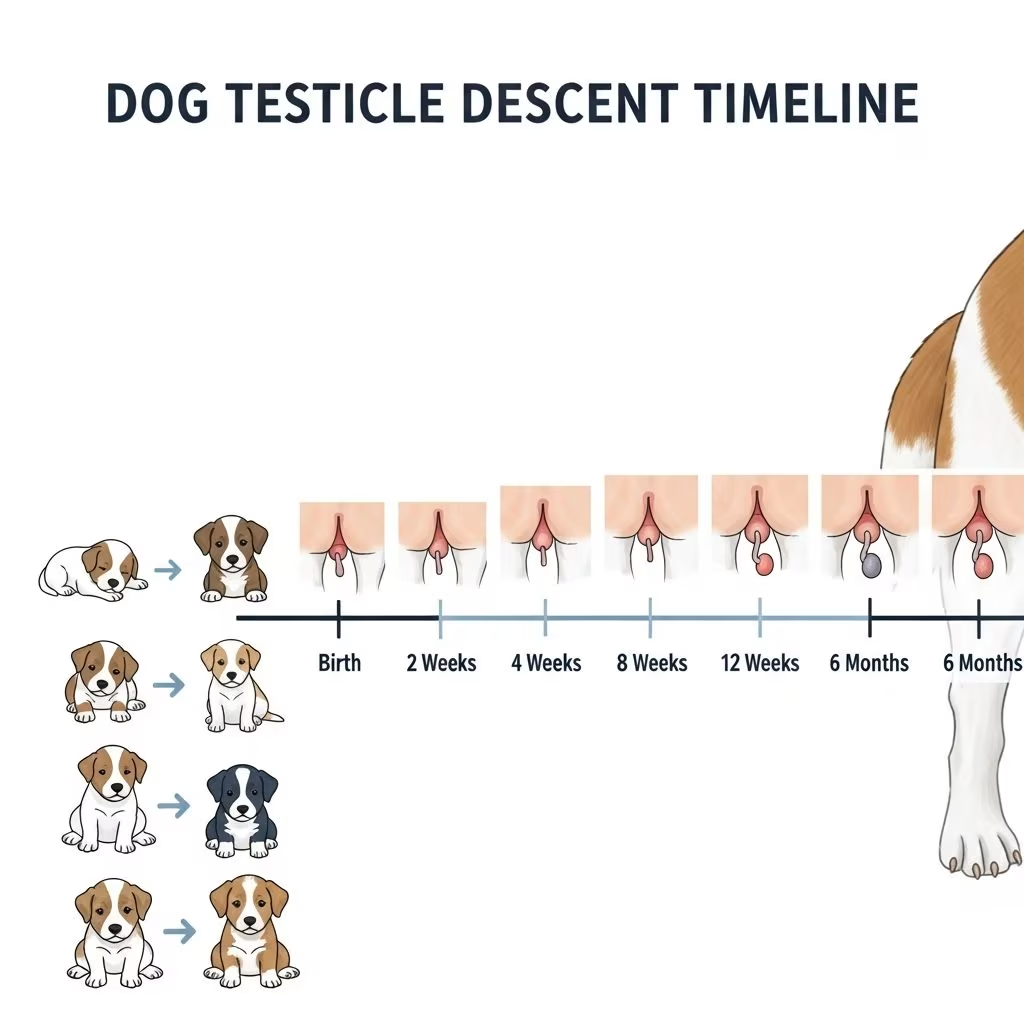
The process of testicle descent in male puppies is a key developmental milestone that typically occurs in the early weeks of life. Understanding this timeline helps owners identify potential issues early, preventing serious health complications down the line.
The Anatomy and Biology of Testicular Descent
In newborn male puppies, the testicles begin their journey from inside the abdominal cavity, positioned near the kidneys. A specialized structure known as the gubernaculum acts like a guiding cord, connecting each testicle to the scrotum. As the puppy grows, this cord contracts, pulling the testicles through the inguinal canal—a narrow passage in the abdominal wall—and into the scrotal sac where cooler temperatures support sperm production.
This migration is hormonally driven and should complete by around 6 to 8 weeks of age in most breeds. The scrotum’s external location is crucial because body core temperature would otherwise impair testicular function, leading to infertility if both testicles remain undescended.
- Starting point: Near kidneys in abdomen.
- Pathway: Inguinal canal to scrotum.
- Key enabler: Gubernaculum shortening.
- Ideal completion: By 8 weeks.
Normal Descent Schedule Across Breeds
While the process is generally consistent, slight variations exist by breed and individual. Toy and small breeds may show descent as early as 6 weeks, whereas larger breeds like Labradors or Great Danes might take up to 10-12 weeks. By 6 months, the inguinal canal closes, making late descent impossible.
| Breed Size | Typical Descent Age | Check by Age |
|---|---|---|
| Toy/Small | 4-8 weeks | 10 weeks |
| Medium | 6-10 weeks | 12 weeks |
| Large/Giant | 8-16 weeks | 6 months |
Owners should gently palpate the scrotum weekly from 6 weeks onward. Two symmetrical, grape-sized structures confirm normal descent.
Recognizing Retained Testicles: Cryptorchidism Explained
Cryptorchidism, or retained testicles, affects about 1-5% of male dogs, with unilateral cases (one testicle) far more common than bilateral (both). The right testicle is retained more often. Undescended testicles can lodge in the abdomen, inguinal region, or subcutaneously near the groin.
This condition is primarily genetic, passed from parents to offspring, making affected dogs unsuitable for breeding to avoid perpetuating the trait.
Factors Influencing Delayed Descent
Several elements can disrupt normal descent:
- Genetics: Heritable defect in gubernaculum development.
- Breed Predisposition: Higher in Chihuahuas, Poodles, Yorkshire Terriers, and Bulldogs.
- Hormonal Imbalances: Rare disruptions in testosterone signaling.
- Prematurity or Low Birth Weight: Delays physical maturation.
Environmental factors like maternal stress during pregnancy are theorized but lack strong evidence.
Step-by-Step Diagnosis Process
Diagnosis starts with physical examination. At 8 weeks, absence of one or both testicles prompts monitoring. By 6 months, veterinary confirmation is essential.
- Palpation: Vet checks scrotum and groin for palpable masses.
- Imaging: Ultrasound locates abdominal testicles; X-rays for complex cases.
- Hormone Tests: Measure testosterone post-stimulation to confirm retention.
- Exploratory Surgery: Last resort if imaging fails.
Early detection via routine puppy checks at 2, 4, and 6 months is ideal.
Surgical Solutions: Neutering Cryptorchid Dogs
The gold standard treatment is surgical neutering, removing both testicles to eliminate risks. Unlike standard castration (one midline incision), cryptorchid procedures often require multiple incisions: scrotal for descended testicle(s), groin or abdominal for retained ones.
Timing: Wait until 6-12 months to allow potential late descent, though success is rare post-6 months. Surgery complexity increases with abdominal retention, raising costs and anesthesia time.
- Unilateral: One extra incision.
- Bilateral: Full abdominal exploration possible.
- Recovery: 10-14 days; e-collar, restricted activity.
Post-op, dogs lead normal lives with reduced cancer risk and no behavioral changes from neutering.
Health Risks of Untreated Cryptorchidism
Leaving retained testicles intact invites disaster:
- Testicular Cancer: Sertoli cell tumors or seminomas, 10-13x risk.
- Torsion: Blood supply cut-off causes acute pain, vomiting; emergency.
- Infertility: Bilateral cases sterile; unilateral reduced fertility.
- Prostate Issues: Higher hyperplasia risk.
Annual vet checks can’t replace proactive neutering.
Breeding Considerations and Prevention
Cryptorchid dogs must not breed; even unilateral cases pass genetics (50% offspring risk). Reputable breeders screen sires and dams, ultrasound puppies at 8 weeks.
Prevention tips:
- Choose breeders with health clearances.
- Monitor litters closely.
- Neuter non-breeding pets early.
Caring for Your Puppy Post-Diagnosis
If diagnosed, prepare for surgery:
- Pre-op fasting, bloodwork.
- Post-op pain meds, cone collar.
- Monitor incision sites (2-3 possible).
- Limit jumps, play for 2 weeks.
Most recover fully within 14 days, gaining neuter benefits like longevity and reduced roaming.
Frequently Asked Questions (FAQs)
Can a retained testicle descend after 6 months?
No, the inguinal canal closes, preventing descent. Surgery is the only fix.
Is cryptorchidism painful for puppies?
Usually not until complications like torsion arise later in life.
How much does cryptorchid neutering cost?
1.5-3x standard neuter ($500-$2000+), depending on location and complexity.
Are certain breeds more prone?
Yes: small breeds like Chihuahua, Pomeranian, Shetland Sheepdog.
Can hormone therapy help?
Not recommended; ineffective with side effects on growth.
Long-Term Outlook and Wellness Tips
Post-neutering, cryptorchid dogs thrive without fertility or cancer worries. Maintain annual exams, balanced diet, exercise. Educate breeders to reduce incidence through selective pairing.
This guide empowers owners to safeguard puppy health through vigilance and prompt action.
References
- Cryptorchidism | Animal Health Topics / School of Veterinary Medicine — UC Davis School of Veterinary Medicine. Accessed 2026. https://healthtopics.vetmed.ucdavis.edu/health-topics/canine/what-you-need-know-about-cryptorchidism
- Cryptorchidism in dogs (retained testicle) — Cornell University College of Veterinary Medicine. Accessed 2026. https://www.vet.cornell.edu/departments-centers-and-institutes/riney-canine-health-center/canine-health-information/cryptorchidism-dogs-retained-testicle
- A Guide to Canine Cryptorchidism — Lynbrook Veterinary Clinic. Accessed 2026. https://lynbrookvet.com.au/a-guide-to-canine-cryptorchidism/
- Cryptorchidism/undescended testicles in dogs — People’s Dispensary for Sick Animals (PDSA). 2024-09. https://www.pdsa.org.uk/pet-help-and-advice/pet-health-hub/conditions/cryptorchidism-undescended-testicles-in-dogs
- Cryptorchidism in Dogs — PetMD. Accessed 2026. https://www.petmd.com/dog/conditions/reproductive/c_multi_cryptorchidism



