

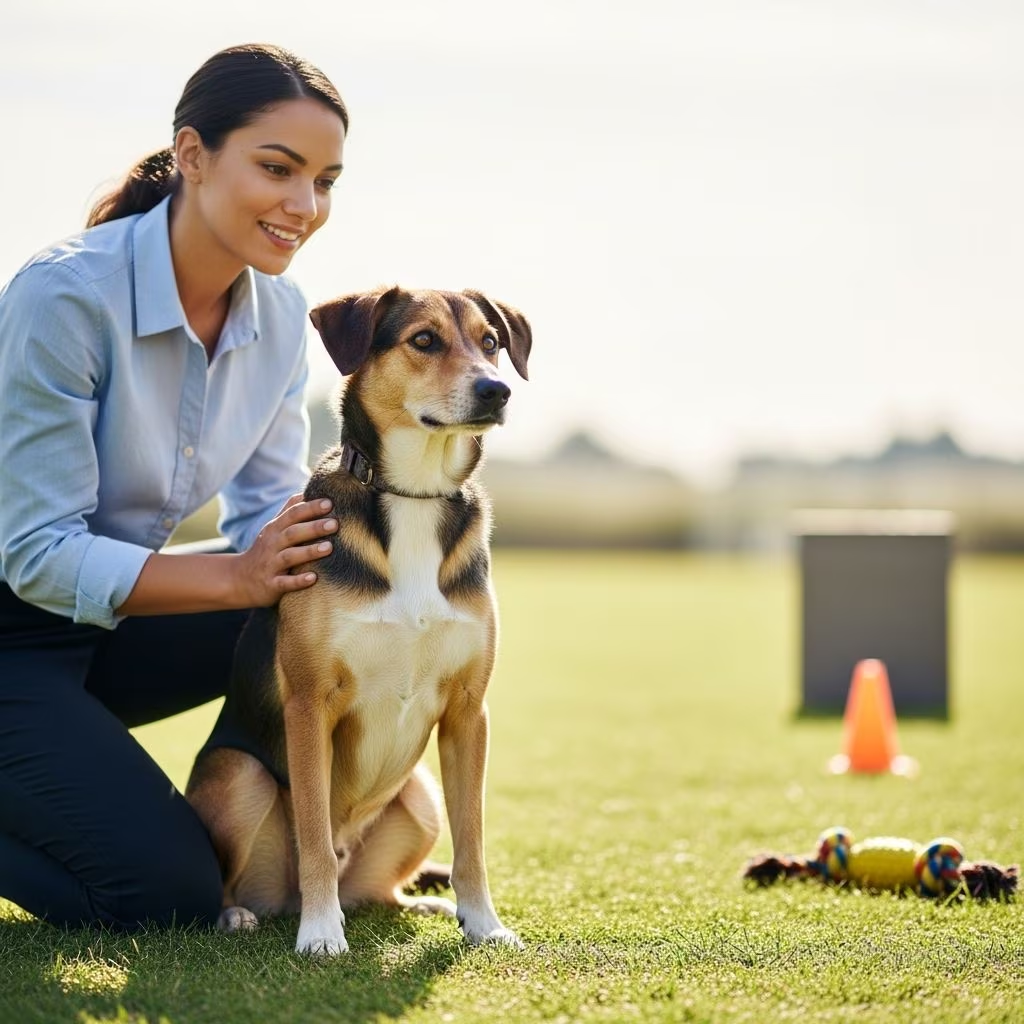
Understanding Dog Temperament Tests
Dog temperament tests are structured evaluations designed to assess how dogs respond to various stimuli and situations in their environment. These tests go beyond simple obedience checks; they measure a dog’s underlying personality traits, emotional stability, and behavioral tendencies. Rather than seeking to identify “perfect dogs,” temperament tests aim to understand how individual dogs react in diverse circumstances, providing valuable insights into their compatibility with different living situations, training programs, and social environments.
Temperament testing has become increasingly important for dog owners, breeders, shelters, and training facilities. Whether you’re considering adopting a dog, assessing a puppy from a breeding program, or evaluating your own dog’s behavior, understanding what these tests measure can help you make informed decisions about your dog’s care, training needs, and lifestyle.
What Do Temperament Tests Measure?
Temperament tests evaluate how dogs respond to a wide range of stimuli and situations that they may encounter in everyday life. Trained evaluators observe for specific behavioral indicators that reveal a dog’s underlying personality structure.
The primary factors assessed in temperament tests include:
- Response to sudden noises and movements: How a dog reacts when startled or exposed to unexpected auditory or visual stimuli
- Handling and restraint: Whether a dog remains calm when touched, held, or restrained by handlers
- Social interaction with strangers: How a dog greets and interacts with unfamiliar people in non-threatening situations
- Dog-to-dog interactions: Behavior when meeting other dogs, including play style and social compatibility
- Environmental exploration: Willingness to investigate new spaces and unfamiliar surfaces
- Separation tolerance: How dogs cope with being left alone or separated from their owners
- Aggression indicators: Ability to distinguish between threatening and non-threatening scenarios
- Resilience and recovery: Whether dogs can recover emotionally from startling or stressful situations
Core Temperament Traits Evaluated
Beyond specific reactions to stimuli, temperament tests assess fundamental personality dimensions that characterize individual dogs:
- Confident vs. cautious: Some dogs are naturally bold and self-assured, while others are more wary and reserved in novel situations
- High arousal vs. low arousal: Dogs vary significantly in their baseline excitability and energy levels
- Socially open vs. socially selective: While some dogs thrive on constant social interaction, others prefer limited contact with unfamiliar people or animals
- Independent vs. people-oriented: Certain breeds and individuals are naturally self-sufficient, whereas others intensely crave human companionship and attention
- Persistent vs. easily frustrated: Some dogs demonstrate remarkable determination and drive, while others become frustrated more readily when facing obstacles
An ideally temperament-tested dog will demonstrate emotional stability, cooperativeness, appropriate social behavior for their breed, and the ability to recover quickly from startling situations. These characteristics suggest a dog will adapt well to various living environments and handle new experiences with confidence.
The American Temperament Test Society (ATTS) Assessment
One of the most well-recognized and standardized temperament evaluations is conducted by the American Temperament Test Society. This comprehensive assessment has become a benchmark for evaluating adult dogs across various breeds and backgrounds.
ATTS Test Basics
The ATTS test involves a brief walk through a park environment where dogs are exposed to controlled auditory, visual, and tactile stimuli. Dogs must be at least 18 months old to participate, and the evaluation typically lasts between 8 and 12 minutes. The test is designed to determine whether a dog can effectively differentiate between non-threatening and potentially threatening scenarios.
Dogs automatically fail the ATTS test if they display unprovoked aggression, strong avoidance behaviors, or panic without recovery. The assessment consists of ten subtests organized into five primary categories, each targeting different behavioral dimensions.
Stranger Interaction Tests
The stranger test evaluates how dogs interact with unfamiliar people and consists of two distinct parts:
- Neutral Stranger Test: An unknown person approaches the handler, shakes hands, and engages in brief conversation while deliberately ignoring the dog. This portion assesses the dog’s protective instincts and any tendencies toward possessiveness or resource guarding
- Friendly Stranger Test: A different person approaches with enthusiastic friendliness, warmly greeting the dog and offering affection. This portion reveals the dog’s active social skills and receptiveness to friendly interaction with strangers
Noise Response Evaluation
Auditory sensitivity is assessed through a two-part noise response test that measures how dogs react to various sounds and their investigative tendencies:
- Hidden Noise Test: An assistant out of sight shakes a metal bucket filled with rocks and places it in the dog’s path. The handler encourages the dog to investigate when appropriate. This test measures alertness, curiosity, and the dog’s willingness to approach something that initially frightened them
- Continuous Sound Test: The dog is exposed to ongoing auditory stimuli to assess sustained responses to noise
Texture and Surface Tests
Dogs undergo tactile testing to evaluate their ability to handle unusual footing and novel textures, divided into two components:
- Plastic Footing Test: The handler and dog walk the entire length of a 12-foot by 3-foot clear plastic strip, assessing comfort with transparent and potentially unstable surfaces
- Wire Footing Test: The dog independently walks the length of a 12-foot by 3-foot exercise pen with wire flooring. Evaluators assess the dog’s ability to overcome fear and whether they investigate unusual surfaces with confidence
Aggression Assessment
The ATTS aggression test is the most complex component, consisting of three distinct phases that evaluate a dog’s protective instincts and threat detection abilities:
- Non-Threatening Scenario: The handler and dog stop at a designated marker while an unusually dressed stranger walks in front of them at a safe distance of 38 feet. Evaluators observe the dog’s alertness to something out of the ordinary
- Threatening Scenario: The stranger moves to ten feet closer and exhibits threatening behavior. The dog’s reaction reveals their ability to detect genuine threats or provocations
- Aggressive Scenario: The stranger advances to 18 feet away and displays aggressive behavior. The stranger never approaches closer than 10 feet, allowing evaluators to assess the dog’s response to genuine aggression while maintaining safety
Alternative Temperament Testing Methods
Beyond the ATTS framework, several other established temperament testing approaches have been developed to assess dogs in various contexts, including shelters, breeding programs, and daycare facilities.
Modified Assess-A-Pet Test
This comprehensive evaluation includes nine subtests designed to assess various behavioral dimensions:
- Sensitivity testing using firm kneading motions
- Tag engagement and light touch responses
- Gentle squeeze tests between the toes
- Food guarding and possession behavior
- Toy possession and retrieval tendencies
- Dog-to-dog approach behavior
- Restraint handling and tolerance
- Arousal levels during play and recovery ability
- Food bowl interaction and protectiveness
Volhard Puppy Aptitude Test (PAT)
Specifically designed for puppies, the Volhard PAT assesses ten behavioral dimensions that help predict future adult temperament and suitability for specific roles. This test evaluates social attraction, following tendency, restraint tolerance, social and elevation dominance, retrieving drive, touch sensitivity, sound sensitivity, sight sensitivity, and overall stability.
Shelter-Based Temperament Assessments
Research has identified two shelter assessment approaches with high reliability: a modified version of the C-BARQ personality assessment and the Match-Up II test developed by the Animal Rescue League of Boston. These tests help shelters make appropriate placement decisions and identify dogs requiring additional behavior support.
Daycare Temperament Testing Protocols
Dog daycare facilities have developed specific temperament testing protocols to ensure safe interactions among dogs in group settings. These assessments follow a systematic progression:
Test Phases
- Initial Separation Phase: The owner and dog are separated to assess how the dog behaves independently. If the dog displays aggression or dangerous behavior during this phase, testing stops and the dog returns home with their owner
- Dog-to-Dog Interaction Phase: If the initial phase is successful, the dog is introduced to calm and interactive dogs at the facility. Evaluators carefully observe how the dog meets, plays, and engages with other dogs
- Resource Management Phase: The evaluation includes introducing toys and food to assess whether the dog has territorial issues around possessions
Failure Indicators
Dogs may fail daycare temperament tests if they display any of the following behaviors:
- Lunging or growling at people or other dogs
- Snapping or biting at people or other dogs
- Cowering, anxiety, nervousness, or fear responses around other dogs
- Resource guarding or territorial aggression over toys or food
- Inability to recover from frightening situations
Specialty Temperament Traits
Beyond standard assessments, some temperament evaluation programs test for specialized behavioral traits important for specific roles or lifestyles:
Sight Sensitivity
This assessment measures how dogs respond to sudden visual stimuli and unexpected movements. During evaluation, a tester may open an umbrella to simulate unpredictable visual events. Evaluators consider a response healthy if the dog startles but recovers within three seconds. Dogs that “completely fall apart” may develop unhealthy fears requiring additional behavior support and training.
Tenderheartedness
This trait measures how influenced a dog is by unpredictable human emotion. During testing, an evaluator may dramatically fall to the floor and simulate distress. This evaluation reveals whether a dog is sensitive to human emotional states and whether they may struggle in homes with variable emotional atmospheres.
Sound and Environmental Sensitivity
Beyond basic noise response, evaluators may assess sensitivity to various environmental sounds including thunder, fireworks, vacuum cleaners, and other household noises that commonly trigger anxiety in dogs.
Why Temperament Testing Matters
Temperament testing provides valuable information that benefits multiple stakeholders in the dog community:
- For prospective owners: Test results help match dogs with appropriate home environments and predict how dogs will cope with specific living situations, family dynamics, and lifestyle demands
- For breeders: Assessments identify which dogs possess traits suitable for breeding programs and which puppies show promise for specific roles like service work, therapy, or competition
- For shelters: Tests help identify dogs requiring behavioral support and facilitate appropriate placement decisions
- For training facilities: Assessments predict which dogs will succeed in specific training programs like agility, obedience, or protection work
- For daycare and boarding facilities: Tests ensure staff and other dogs remain safe by identifying animals with aggression or severe anxiety issues
Interpreting Temperament Test Results
Temperament test results should be understood as a snapshot of how a dog behaves under specific test conditions, not an absolute predictor of behavior in all situations. Environmental factors, training, socialization history, and individual life experiences all influence how dogs behave in real-world scenarios.
Dogs that pass temperament tests have demonstrated emotional stability, appropriate social skills, and the ability to handle novel situations with confidence. However, failed tests don’t necessarily indicate a dog is unsuitable as a pet; rather, they suggest that dog may require additional training, behavior modification, or a more specialized living situation.
Frequently Asked Questions
Q: At what age can dogs take temperament tests?
A: Dogs must be at least 18 months old for the ATTS test, though puppy temperament tests like the Volhard PAT can be administered as early as 6-8 weeks of age.
Q: Can a dog retake a temperament test if they fail?
A: Yes, many organizations allow dogs to retake tests after additional training or behavior modification. However, some shelters may use failed results as part of their assessment process.
Q: How reliable are temperament tests?
A: Research indicates that well-established tests like the ATTS and modified C-BARQ have high reliability and validity in predicting dog behavior. However, no test is 100% predictive of real-world behavior.
Q: Do all dogs need temperament testing?
A: While not all dogs require formal testing, many benefit from assessment, especially those in shelters, breeding programs, daycare settings, or being trained for specific roles.
Q: What should I do if my dog fails a temperament test?
A: Work with a qualified dog trainer or behaviorist to identify underlying issues and develop a training plan. Many dogs improve significantly with proper training and socialization.
Q: Can temperament be changed through training?
A: While some underlying traits are inherent, behavior can be significantly modified through training, socialization, and positive experiences. However, some temperamental tendencies are more difficult to change than others.
References
- How To Test Your Dog’s Temperament — Rover.com. https://www.rover.com/blog/aggressive-stable-confident-test-dogs-temperament/
- Temperament Testing Presentation Notes — Maddie’s Fund. https://www.maddiesfund.org
- Puppy Temperament Tests: A Tool to Help with Placement — American Kennel Club. https://www.akc.org/expert-advice/dog-breeding/puppy-temperament-tests-tool-help-placement/
- Dog Temperament Tests: Best Practices for Daycares — Revelation Pets. https://www.revelationpets.com/blog/dog-temperament-tests
- Testing the Temperament of Dogs Housed in Animal Shelters — IAABC Foundation Journal. https://journal.iaabcfoundation.org/shelter-temperament-tests-28/



