

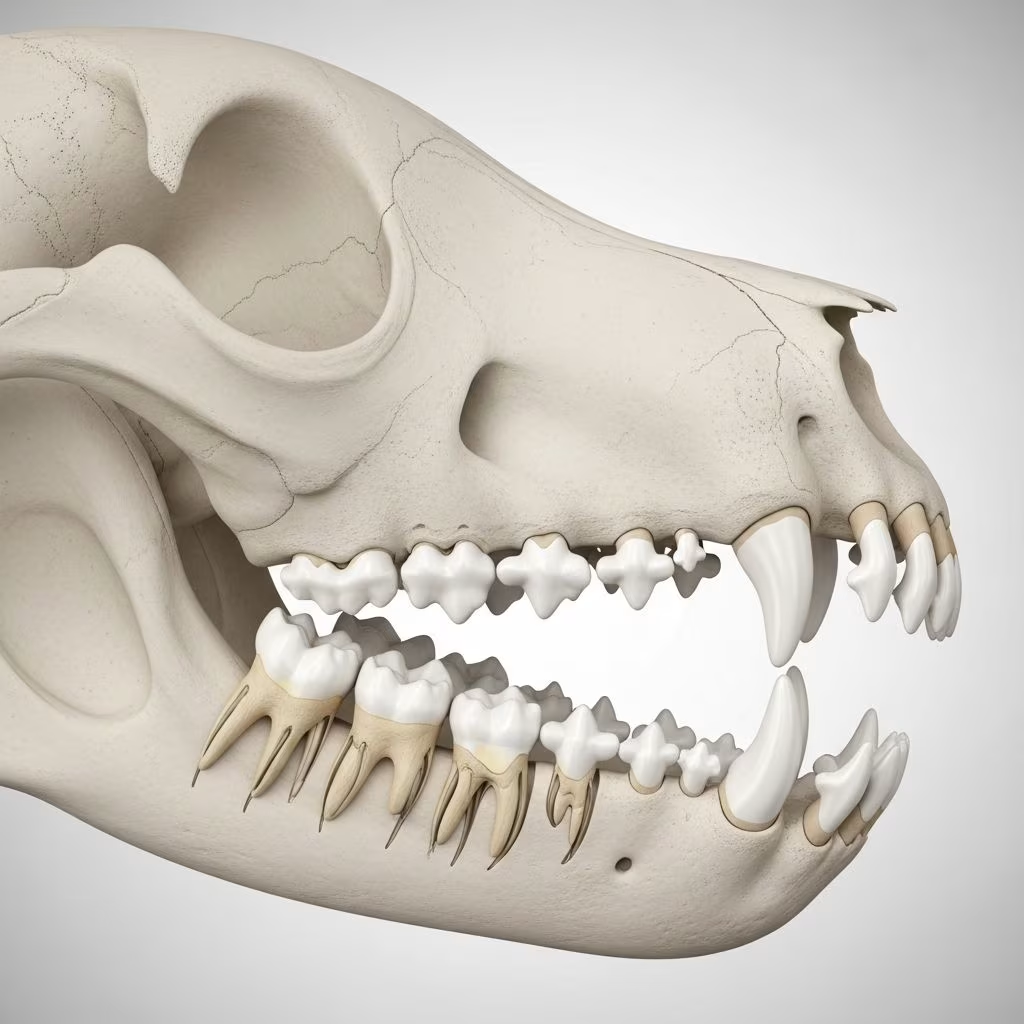
Dogs typically have **42 permanent teeth**, consisting of 12 incisors, 4 canines, 16 premolars, and 10 molars, replacing the initial 28 deciduous teeth that emerge in puppies.
The Dual Dentition System in Canines
Canines exhibit a diphyodont dentition, meaning they develop two successive sets of teeth: deciduous (milk or puppy teeth) and permanent teeth. This system supports early nursing and later adaptation to an adult carnivorous diet. Puppies start with 28 deciduous teeth, which are smaller and fewer than adult ones, designed primarily for suckling rather than chewing tough foods.
The transition from puppy to permanent teeth occurs gradually. Deciduous incisors appear around 4-6 weeks, canines at 5-6 weeks, and premolars by 6 weeks. These are shed between 3-7 months as permanent teeth push through the gums. Delays or failures in this process can signal nutritional deficiencies or genetic issues, warranting veterinary attention.
Breakdown of Permanent Teeth by Type and Function
Adult dogs possess a precise arrangement of teeth, numbered using the modified Triadan system for veterinary reference. This quadrants-based numbering (101-111 for upper right, 201-211 upper left, 301-311 lower left, 401-411 lower right) aids in diagnostics and treatments.
- Incisors (12 total): Six per jaw (three per quadrant), single-rooted, used for nibbling, grooming, and picking up objects. Numbered 101-103, 201-203, 301-303, 401-403.
- Canines (4 total): One per quadrant (104, 204, 304, 404), prominent fangs for tearing meat and defense, with long single roots.
- Premolars (16 total): Vary by jaw; maxillary have 1-3 roots (e.g., P4 with mesiobuccal, mesiopalatal, distal roots), mandibular mostly 2 roots. Function in shearing and crushing.
- Molars (10 total): Maxillary M1-M2 (3 roots each), mandibular M1-M2 (2 roots), M3 (1 root). Grind food, with carnassial pairs (upper P4, lower M1) for slicing.
| Quadrant | Incisors | Canines | Premolars | Molars | Total per Quadrant |
|---|---|---|---|---|---|
| Maxillary Right (100s) | 3 | 1 | 4 | 2 | 10 |
| Maxillary Left (200s) | 3 | 1 | 4 | 2 | 10 |
| Mandibular Left (300s) | 3 | 1 | 4 | 3 | 11 |
| Mandibular Right (400s) | 3 | 1 | 4 | 3 | 11 |
This table illustrates the dental formula: I 3/3, C 1/1, P 4/4, M 2/3 = 42.
Detailed Tooth Structure and Supporting Tissues
Each tooth comprises layers: enamel (outermost, hardest tissue covering crown, ~0.6mm thick, radiopaque on x-rays), dentin (bulk of tooth, less dense), cementum (root covering, anchors to bone), and pulp (innermost with vessels, nerves).
The periodontium supports teeth: gingiva (gums), periodontal ligament (attaches tooth to alveolus), cementum, and alveolar bone. The ligament space appears radiolucent on intraoral radiographs, with lamina dura outlining sockets.
Roots exceed crown length; maxillary premolars/molars have multiple roots for stability. Radiographically, enamel outlines crowns, dentin dominates roots, and pulp cavities are central lucencies. “Cervical burn-out” is a normal radiolucency at the crown-root junction, not pathology.
Eruption Timelines and Developmental Milestones
Permanent teeth erupt as follows: incisors 3-5 months, canines 4-6 months, premolars 4-5 months, molars post-premolars. Full dentition by 7 months.
Persistent deciduous teeth occur if permanents fail to displace them, often in incisors/premolars, risking malocclusion. Radiographs confirm root resorption status before extraction.
Common Dental Variations and Abnormalities
Breeds vary: brachycephalics (e.g., Bulldogs) prone to crowding; small breeds to periodontal issues. Anomalies include supernumerary teeth, missing premolars (e.g., Greyhounds), or rotated canines.
Endodontic lesions show periapical lucencies; immature roots indicate pulp necrosis. Alveolar changes signal periodontitis or cysts.
Daily Oral Health Maintenance Strategies
Preventive care mitigates plaque buildup, leading cause of gingivitis/periodontitis. Brush daily with enzymatic toothpaste, using finger brushes. Dental chews, water additives reduce tartar.
Annual exams include probing (pocket depths <1-2mm normal), scaling, polishing under anesthesia for efficacy. Extractions preserve health if mobility exceeds grade 3.
Diagnostic Tools for Thorough Assessments
Intraoral radiographs reveal subgingival pathology invisible clinically. Full-mouth series essential pre-extraction. CT scans detail complex structures like canine apices.
Nutritional Impacts on Dental Development
Calcium-phosphorus balance crucial during eruption. Deficiencies delay shedding; excesses cause fibrous osteodystrophy. Raw diets risk fractures; kibble promotes chewing.
Frequently Asked Questions
How many teeth do puppies have?
Puppies have 28 deciduous teeth: 12 incisors, 4 canines, 12 premolars (no molars).
Do all dogs have the same number of teeth?
Most have 42 permanents, but breeds like Greyhounds may lack PM1/PM2.
When should I worry about my dog’s teeth?
Bad breath, drooling, fractured teeth, or loose teeth signal issues; seek vet care.
Can dogs get cavities?
Rare; slab fractures and wear more common than caries.
How often do dogs need dental cleanings?
Depends on home care; AAHA recommends annual for adults.
Long-Term Benefits of Proactive Dental Care
Healthy teeth prevent pain, infections spreading to organs, and extend lifespan. Integrate brushing, diets, chews for 360-degree hygiene. Monitor for breed predispositions.
References
- Anatomy & pathology – AAHA — American Animal Hospital Association. 2019. https://www.aaha.org/resources/2019-aaha-dental-care-guidelines-for-dogs-and-cats/anatomy-pathology-2/
- Intraoral Radiographic Anatomy of the Dog — Veterian Key. N/A. https://veteriankey.com/intraoral-radiographic-anatomy-of-the-dog/
- Dentition, dog – Merck Veterinary Manual — Merck & Co. N/A. https://www.merckvetmanual.com/multimedia/image/dentition-dog
- Dentistry 101: Surfaces of teeth and directions in the mouth — dvm360. N/A. https://www.dvm360.com/view/dentistry-101-surfaces-teeth-and-directions-mouth
- Anatomy of The Tooth — WellPets. N/A. https://www.wellpets.com/blog/51-anatomy-of-the-tooth/
- Navigating Clinical Oral Anatomy — Veterinary Dentistry. N/A. https://veterinarydentistry.net/navigating-clinical-oral-anatomy-imperative-successful-oral-care/



