

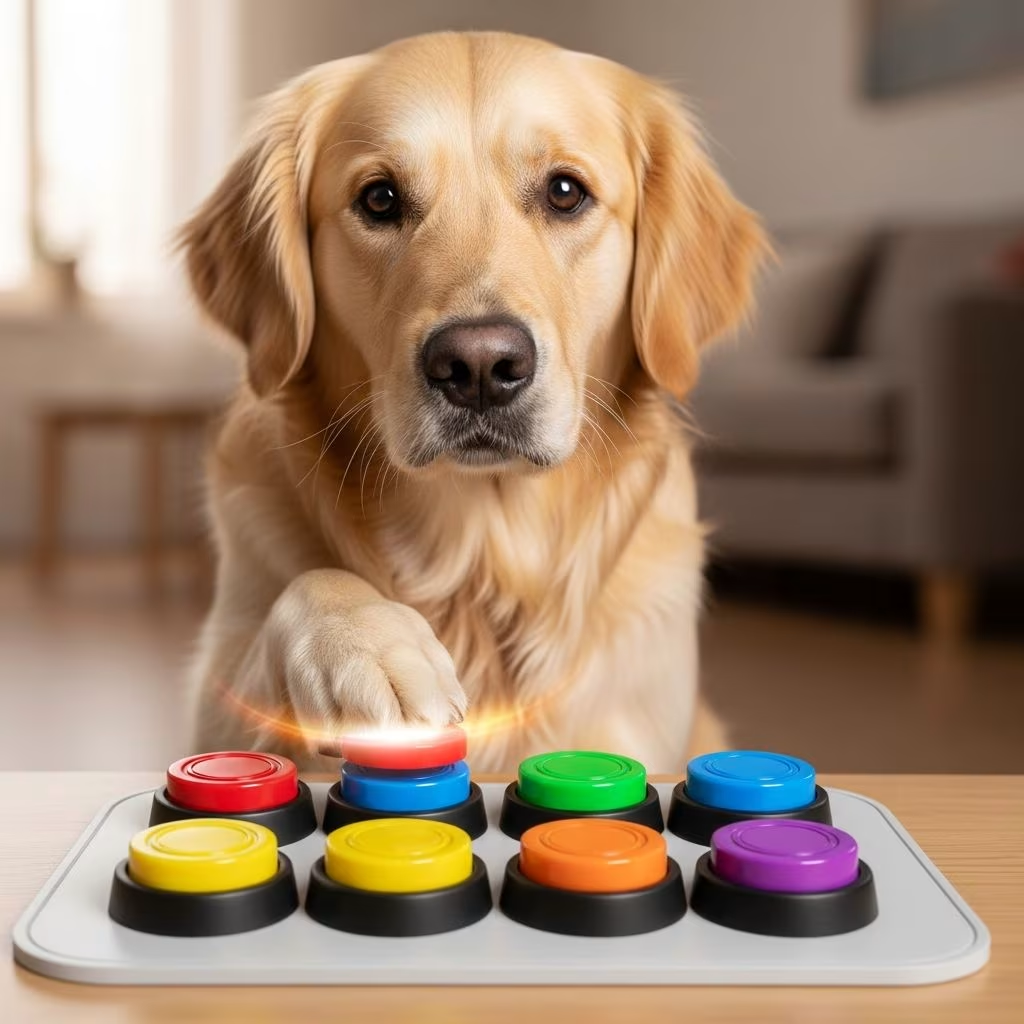
Modern dog owners are increasingly turning to innovative tools like talking buttons to deepen their bond with their canine companions. These simple, recordable devices allow dogs to press buttons that play pre-recorded words, enabling them to ‘communicate’ basic needs or desires. This technology builds on natural canine intelligence, offering a structured way to express thoughts beyond barks and whines.
Understanding the Rise of Talking Buttons for Dogs
Talking buttons have gained popularity through viral stories of dogs forming sentences like ‘outside now’ or ‘love you.’ At their core, these are durable, paw-friendly buttons that owners record with words such as ‘play,’ ‘food,’ or ‘walk.’ Dogs learn to associate pressing a button with the resulting action, creating a reliable communication channel.
Unlike traditional commands where humans direct the dog, buttons empower the animal to initiate interaction. This shift promotes mutual understanding, reducing frustration from misinterpreted signals. Research highlights dogs’ cognitive abilities, showing many breeds excel at learning dozens of words through consistent reinforcement.
Essential Components of a Talking Button System
Building an effective setup requires selecting quality buttons and strategic placement. Opt for large, colorful buttons with clear recording capabilities, designed to withstand enthusiastic paws. Start with 4-6 core words relevant to daily routines: ‘outside,’ ‘inside,’ ‘food,’ ‘water,’ ‘play,’ and ‘potty.’
- Button Selection: Choose sets with volume control and easy reprogramming to adapt as your dog progresses.
- Placement Strategy: Arrange in a grid on the floor near high-traffic areas like the kitchen or door, ensuring accessibility without tripping hazards.
- Expansion Planning: Prepare for growth by reserving space for future buttons like ‘ball,’ ‘friend,’ or emotion words such as ‘mad’ or ‘happy.’
Proximity to action points enhances learning; for instance, place ‘outside’ buttons by the door to link pressing with immediate outings.
Step-by-Step Guide to Training Your Dog
Training begins with modeling: the owner presses the button while saying the word aloud and performing the action. Consistency is paramount—repeat this 10-20 times daily in short bursts to capture your dog’s attention without overwhelming them.
- Introduce Single Words: Model ‘outside’ every time you head outdoors, praising lavishly when your dog noses the button.
- Encourage Independent Use: Pause near buttons when your dog shows interest (whining, staring), giving them time to press without prompting.
- Reinforce Success: Respond promptly to correct presses with the requested action, using high-value treats to solidify associations.
- Monitor Progress: Track combinations in a journal, noting patterns like frequent ‘play ball’ requests.
Sessions should last 5-10 minutes, multiple times a day, paired with positive reinforcement. Patience pays off; some dogs grasp basics in weeks, while others take months.
Benefits of Enhanced Canine-Human Dialogue
Implementing talking buttons yields profound advantages. Owners report fewer accidents as dogs signal potty needs clearly. Anxiety decreases when dogs can request comfort, leading to calmer households. Bonds strengthen through responsive interactions, mirroring pack dynamics where clear signals foster trust.
| Benefit | Description | Impact on Dog |
|---|---|---|
| Clear Expression | Dogs convey specific wants | Reduces frustration |
| Improved Training | Teaches cause-effect | Boosts confidence |
| Health Monitoring | Alerts to issues like ‘mad’ or ‘hurt’ | Early intervention |
| Enrichment | Mental stimulation | Prevents boredom |
These tools also aid in behavioral diagnostics, helping identify unmet needs behind destructive habits.
Overcoming Common Training Hurdles
Not all journeys are smooth. Dogs may ignore buttons initially or press randomly. Counter this by ignoring off-target presses and lavishly rewarding correct ones. If a dog fixates on one button, introduce variety with novel rewards.
- False Presses: Remain neutral; only act on accurate requests to avoid reinforcing errors.
- Slow Learners: Break into micro-sessions, using play to maintain engagement.
- Multi-Dog Homes: Color-code buttons per dog or train sequentially.
Physical issues like arthritis may require larger or elevated buttons. Always consult vets for underlying problems mimicking disinterest.
Advanced Techniques: Building Complex Sentences
Once basics are mastered, teach sequencing. Dogs naturally combine buttons, forming phrases like ‘beach ball’ or ‘love you.’ Introduce grammar boards with positional rules: nouns first, verbs second. Model multi-presses during exciting events, like ‘want walk now.’
Track data to spot intelligence peaks—some dogs use 50+ words, combining creatively. Integrate with traditional cues: pair button ‘sit’ with hand signals for hybrid fluency.
Real-World Success Stories and Case Studies
Owners worldwide share triumphs. One Border Collie mastered 100 words, requesting specific toys. A rescue mix used buttons to overcome separation anxiety, pressing ‘mom home’ upon return. These anecdotes underscore adaptability across breeds, from smarty-pants herders to laid-back labs.
Professionals note buttons shine in therapy settings, helping reactive dogs self-regulate by voicing needs.
Scientific Backing and Cognitive Insights
Studies affirm dogs’ language comprehension rivals young children. Auditory processing allows distinction of hundreds of words, with visual and contextual cues amplifying retention. Button training leverages operant conditioning, where voluntary presses yield rewards, mirroring wild learning.
Choosing the Right Tools and Accessories
Market options abound: starter kits for beginners, programmable hubs for pros. Accessories like mats prevent slipping, while apps log presses for analytics. Budget for durability—cheap buttons fail under paw pressure.
- Budget Option: Basic 4-button sets under $50.
- Premium: Expandable systems with lights/sounds, $100+.
- Add-Ons: Stickers for labeling, stands for elevation.
Frequently Asked Questions (FAQs)
Do all dogs learn talking buttons?
Most intelligent breeds do, but motivation and consistency determine success. Puppies and working dogs often excel fastest.
How long until my dog uses buttons independently?
Typically 2-8 weeks for first words, months for combinations. Vary by individual.
Can buttons replace traditional training?
No—they complement commands, hand signals, and voice tones for holistic communication.
What if my dog chews the buttons?
Select heavy-duty models; supervise initially and redirect chewing to toys.
Are talking buttons worth the investment?
For dedicated owners, yes—deeper bonds and fewer mishaps justify costs.
Integrating Buttons with Broader Communication Strategies
Combine with body language reading: dogs interpret human gestures intuitively. Use consistent tones—high for excitement, calm for directions. Marker signals like clickers bridge verbal and button worlds, timing rewards precisely.
Incorporate daily routines: breakfast as ‘food time,’ walks as ‘outside adventure.’ This predictability accelerates learning.
Long-Term Maintenance and Evolution
Sustain progress with refreshers, adding seasonal words like ‘snow’ or ‘beach.’ Rotate inactive buttons to refresh associations. Monitor for overuse—balance with off-button play to prevent dependency.
As dogs age, adapt: simplify boards or voice-amplify for hearing loss. This lifelong tool evolves with your pet.
References
- Dog Button Communication: Guide for Owners and Trainers 2025 — iPuppee. 2025. https://ipuppee.com/blogs/news/dog-button-communication-guide-owners-trainers
- The Complete Guide To Teaching Dogs To Talk with Buttons — FluentPet. 2023. https://fluent.pet/pages/getting-started-with-talking-buttons
- A Dog Trainer’s Guide to Effective Communication: Visual, Physical and Auditory Techniques — Hill Country K9. 2024. https://hillcountryk9.com/post/a-dog-trainers-guide-to-effective-communication-visual-physical-and-auditory-techniques
- How to Communicate With Your Dog — AKC Pet Insurance. 2023. https://www.akcpetinsurance.com/blog/7-tips-for-better-communication-with-your-canine
- Dog Communication and Commands — Doglistener. 2022. https://doglistener.co.uk/communication_and_command-shtml/



