

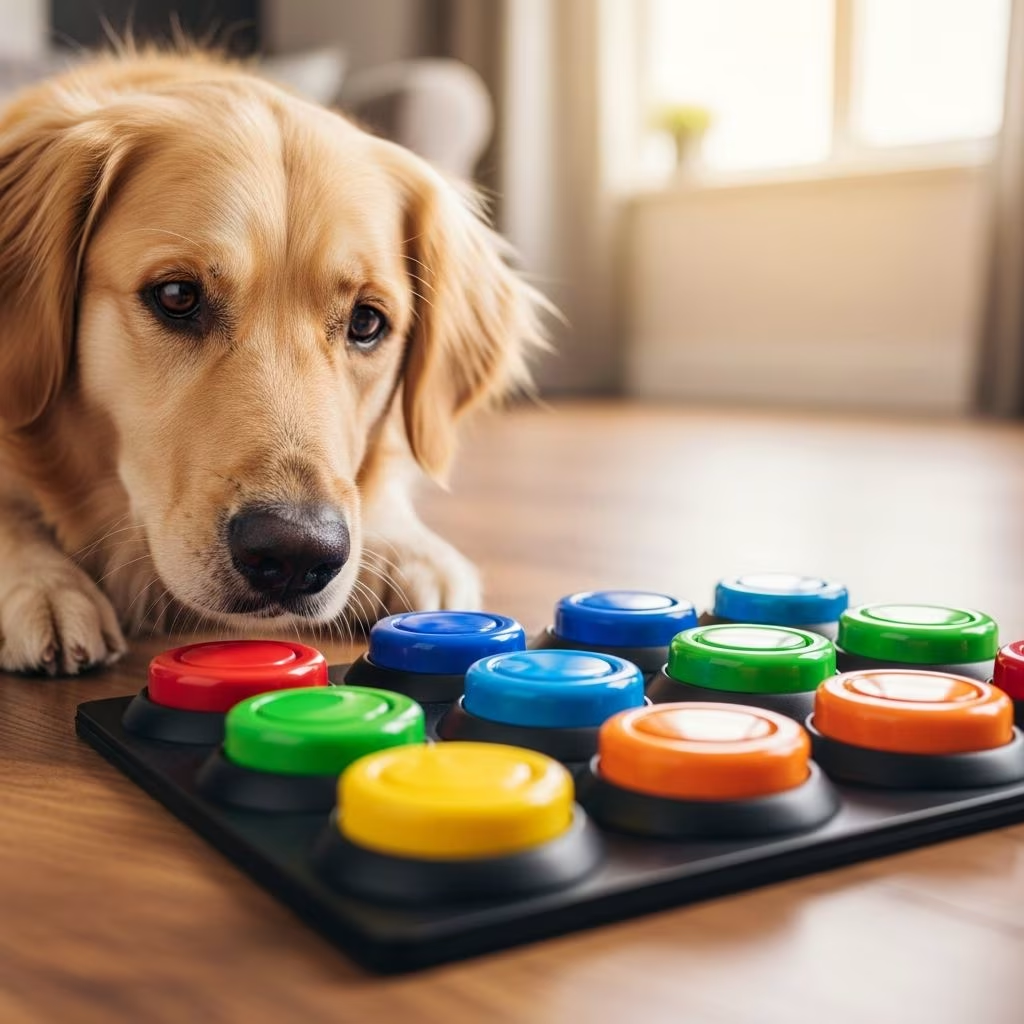
Talking buttons offer pet owners a groundbreaking way to bridge the communication gap with their dogs. These simple devices allow canines to press buttons that play recorded words, enabling them to express basic needs like hunger or the desire to play, and even more nuanced thoughts over time. By associating specific sounds with actions, dogs can actively participate in conversations, leading to deeper mutual understanding and stronger bonds.
Understanding the Science Behind Dog Communication
Dogs naturally communicate through a rich array of signals, including body language, scents, vocalizations, and facial expressions. Unlike humans, who rely heavily on verbal cues, canines prioritize visual and olfactory information for most interactions. Talking buttons tap into their cognitive abilities by providing an auditory tool that mimics human speech patterns, leveraging dogs’ proven capacity to learn hundreds of words and gestures.
Research highlights that dogs process language in ways similar to young children, distinguishing between words and tone. This foundation makes button training feasible, as it builds on existing skills like responding to commands such as ‘sit’ or ‘stay,’ which combine verbal cues with actions and rewards.
Benefits of Introducing Talking Buttons to Your Dog
Implementing talking buttons yields multiple advantages for both dogs and owners:
- Enhanced Emotional Insight: Dogs can convey feelings like excitement or discomfort, helping owners address issues proactively.
- Reduced Frustration: Clear expression minimizes whining or destructive behavior stemming from unmet needs.
- Stronger Relationships: Mutual communication fosters trust and empathy, enriching daily interactions.
- Cognitive Stimulation: Training engages the brain, potentially slowing age-related decline and improving problem-solving skills.
Owners report dogs using buttons for novel combinations, such as requesting specific toys, demonstrating unexpected linguistic creativity.
Essential Equipment for Button Training Success
Starting requires durable, dog-friendly buttons with large, paw-accessible surfaces and clear audio playback. Opt for recordable devices where you can customize phrases in your voice for familiarity. A typical starter kit includes 4-6 buttons covering core concepts: ‘outside,’ ‘food,’ ‘play,’ and ‘water.’
Position buttons on a stable soundboard at nose height, near relevant areas—like the ‘food’ button by the bowl or ‘outside’ near the door. Ensure batteries are fresh and volumes are consistent to avoid confusion.
| Button Type | Recommended Features | Ideal Placement |
|---|---|---|
| Basic Starter | Recordable, 4-inch diameter, volume control | Kitchen or entryway |
| Advanced Board | 10+ buttons, modular design | Living room hub |
| Portable | Battery-powered, lightweight | Travel or yard use |
Step-by-Step Training Roadmap
Training demands patience, spanning weeks to months based on the dog’s age, breed, and prior learning. Begin with observation: note your dog’s routines and signals, like staring at the door for walks.
- Introduce Core Words: Select 2-4 high-motivation terms your dog already recognizes through daily life.
- Model Consistently: Press the button yourself, verbalize the word, and perform the action immediately. Repeat every relevant occasion.
- Encourage Autonomy: When the dog shows interest, pause near buttons during known desire moments, allowing voluntary presses.
- Reinforce Positively: Reward correct use with treats, praise, or the requested action promptly. Avoid forcing paws on buttons to prevent aversion.
- Expand Gradually: Add new buttons only after mastery of basics, maintaining one introduction per week.
Consistency across household members is crucial; varying routines disrupts associations. Sessions should last 5-10 minutes, several times daily, in a distraction-free zone.
Overcoming Common Training Hurdles
Challenges arise, but targeted strategies resolve most:
- Slow Progress: Some dogs need months; track small wins like glancing at buttons and celebrate them.
- Button Overuse: If a dog spams requests, acknowledge but delay fulfillment to teach appropriate timing.
- Confusion Between Buttons: Use distinct voices or tones; relocate similar ones farther apart.
- Lack of Interest: Boost with high-value rewards and pair with exciting events.
Breeds like Border Collies may excel quickly due to high intelligence, while others like Bulldogs require more repetition. Tailor to individual pace.
Advanced Techniques for Fluent Button Use
Once basics solidify, elevate to multi-button sequences. Teach combinations like ‘play ball’ by modeling presses in order before acting. Place related buttons adjacently to encourage linking.
Incorporate emotions: Add ‘mad,’ ‘love,’ or ‘hurt’ after observing context-specific behaviors. Advanced dogs reportedly form 3-5 word phrases, revealing preferences like ‘outside potty’ over ‘inside potty.’ Patience here is key, as cognitive leaps vary widely.
Integrate with traditional cues: Pair buttons with hand signals for reinforced learning, enhancing reliability in noisy environments.
Real-World Applications and Success Stories
Owners worldwide share triumphs: One dog’s daily ‘water walk’ routine improved hydration; another’s ‘cuddle mad’ signaled separation anxiety, prompting behavioral adjustments. These tools shine in multi-pet homes, reducing resource conflicts via clear requests.
In therapeutic settings, buttons aid shelter dogs, easing adoptions by demonstrating personalities. Professional trainers emphasize ethical use, prioritizing welfare over performance.
Potential Limitations and Ethical Considerations
Not all dogs embrace buttons; physical limitations or low motivation hinder some. Over-reliance risks anthropomorphizing, mistaking guesses for true intent. Always cross-reference with body language, as buttons supplement—not replace—natural signals.
Ethical training avoids coercion, respecting the dog’s choice to engage. Monitor for stress, and discontinue if unhelpful.
Frequently Asked Questions (FAQs)
What age is best for starting button training?
Puppies from 6 months thrive, but adults of any age succeed with adapted methods. Older dogs leverage life experience.
Can all breeds learn talking buttons?
Yes, though working breeds often progress faster. Focus on motivation over breed.
How many buttons should I start with?
Begin with 4: outside, food, play, water. Expand slowly.
What if my dog chews the buttons?
Choose heavy-duty models; supervise initially and use deterrent sprays if needed.
Do buttons work for deaf dogs?
Absolutely—pair with vibrating or lighted buttons and visual modeling.
Embracing talking buttons transforms routine interactions into dialogues, revealing your dog’s inner world. With dedication, this tool enriches lives on both ends of the leash.
References
- Dog Button Communication: Guide for Owners and Trainers — iPuppee. 2025. https://ipuppee.com/blogs/news/dog-button-communication-guide-owners-trainers
- Dog Communication and Commands — Doglistener. N/A. https://doglistener.co.uk/communication_and_command-shtml/
- The Complete Guide To Teaching Dogs To Talk with Buttons — FluentPet. N/A. https://fluent.pet/pages/getting-started-with-talking-buttons
- Canine Communication – Interpreting Dog Language — VCA Animal Hospitals. N/A. https://vcahospitals.com/know-your-pet/canine-communication—interpreting-dog-language
- A List of Dog Commands & Hand Signals for Beginners — Taste of the Wild. N/A. https://www.tasteofthewildpetfood.com/articles/training-and-behavior/list-of-dog-commands-hand-signals-for-beginners/
- Canine Communication Skills for Working with Shelter Dogs — ASPCA Pro. N/A. https://www.aspcapro.org/resource/canine-communication-skills-working-shelter-dogs



