

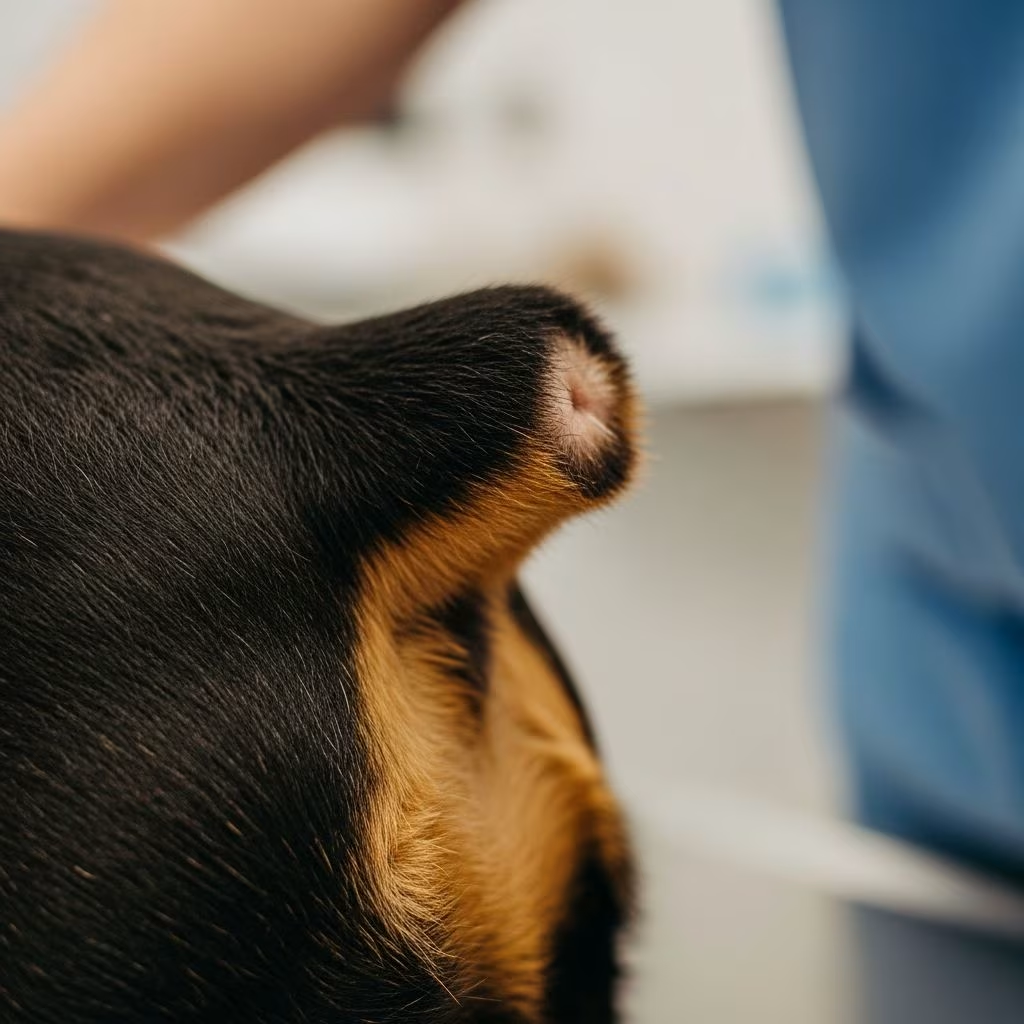
Dog tail docking is a surgical procedure that involves the partial or complete removal of a puppy’s tail, often performed shortly after birth. This practice, rooted in tradition and breed standards, has sparked intense debate among veterinarians, animal welfare advocates, and dog owners due to its potential for causing pain and impairing natural canine communication.
What is tail docking?
**Tail docking** refers to the amputation of a dog’s tail, typically done on puppies under 5 days old without anesthesia by cutting or crushing the tail bone, muscles, and nerves. The procedure shortens the tail to conform to certain breed aesthetics or purportedly prevent injuries in working dogs.
Historically performed for functional reasons like preventing tail injuries in hunting or herding dogs, docking today is predominantly **cosmetic**, aimed at matching breed standards set by kennel clubs. Puppies are docked at 1-5 days old because their nervous systems are not fully developed, though evidence suggests they still experience significant acute pain.
Why do people dock dogs’ tails?
Common reasons for tail docking include:
- Cosmetic purposes: To achieve a ‘breed standard’ look, such as the short tails seen in Boxers, Dobermans, and Rottweilers. Surveys of owners and breeders indicate this is the primary motivation.
- Preventing injuries: Claimed for working breeds to avoid tail damage from thorns, burrs, or fights, though data shows approximately 500 dogs must be docked to prevent one injury.
- Hygiene: In long-haired breeds to reduce fecal matter accumulation, but rarely justified medically.
Despite these rationales, organizations like the American Veterinary Medical Association (AVMA) state that docking for breed standards or aesthetics lacks medical necessity.
Does tail docking hurt puppies?
Yes, tail docking causes **acute pain** during the procedure, even in neonates. Puppies under 5 days exhibit distress behaviors like vocalization and struggling, indicating nociception despite immature pain pathways.
Long-term, docking leads to **chronic pain** and **heightened pain sensitivity** (hyperalgesia). Neuroma formation at the amputation site creates ongoing neuropathic pain, impairing welfare lifelong.
A reassessment confirms that while puppies may not consciously ‘remember’ the pain, the procedure inflicts verifiable harm, contradicting claims of it being painless.
Tail docking procedure
The docking process varies but typically involves:
- Restraining the 1-5 day old puppy.
- Locating the docking site based on breed standard (e.g., 1st-2nd caudal vertebra).
- Using sharp scissors, scalpel, or crushing tool (e.g., elastrator band) to sever the tail without anesthesia.
- Cauterizing or bandaging to stop bleeding; no sutures needed due to rapid healing.
Performed by breeders, not always veterinarians, increasing complication risks.
Pros and cons of tail docking
Pros (claimed):
- Reduced tail injury risk in specific working contexts (e.g., hunting dogs).
- Aesthetic conformity to breed standards, potentially aiding show success.
- Alleged hygiene benefits in some breeds.
Cons (evidence-based):
- Impaired communication: Tails are integral to canine body language; docking hinders unambiguous signaling of emotions, increasing aggression risks.
- Pain and complications: Acute pain, chronic neuroma pain, infections, incontinence.
- Welfare detriment: Loss of natural expression affects social interactions with dogs and humans.
| Aspect | Pros | Cons |
|---|---|---|
| Pain | Neonates feel less (disputed) | Acute + chronic pain confirmed |
| Communication | Minimal impact claimed | Major handicap to signals |
| Injury Prevention | Some reduction | 500:1 ratio inefficient |
| Legal/Ethical | Tradition | Banned in many countries |
Is tail docking illegal?
Tail docking legality varies globally:
- Banned in UK (England, Wales, NI): Classified as mutilation; illegal except for therapeutic reasons or limited working dog exemptions.
- Restricted in Europe: Many countries (e.g., Germany, Norway) prohibit non-therapeutic docking.
- US: Legal in most states; AVMA opposes routine docking but no federal ban.
- Australia/New Zealand: Banned except for veterinary necessity.
Professional bodies like the British Veterinary Association (BVA) advocate complete bans for non-medical reasons.
Tail docking and communication
The dog’s tail is crucial for **canine communication**, conveying emotions via position, speed, and direction:
| Tail Position | Meaning |
|---|---|
| High wag, wide arcs | Excitement, play invitation |
| Slow wag, low | Uncertainty, mild aggression |
| Tucked under body | Fear, submission |
| Stiff horizontal | Alert, potential threat |
Docking removes these cues, leading to misunderstandings. Studies show docked dogs face more aggressive encounters due to impaired signaling.
This lifetime communication deficit affects welfare profoundly, as tails integrate with ears, posture, etc.
What are the risks and complications?
Beyond pain:
- Neuropathic pain: Neuromas cause chronic sensitivity.
- Infections/bleeding: Common in non-sterile breeder settings.
- Improper healing: Stumps prone to trauma.
- Behavioral issues: Potential frustration from unexpressible emotions.
- Muscle weakness: Reduced levator ani support linked to incontinence in some breeds.
Alternatives to tail docking
- Select breeds with natural tails; advocate kennel club changes.
- Preventive care: Regular grooming, tail guards for working dogs.
- Therapeutic docking only: By vets for injury/medical need.
- Education: Promote natural tails in shows and breeding.
FAQs
Is tail docking painful for puppies?
Yes, it causes acute pain and potential chronic issues, despite neonatal status.
Why dock tails if it’s controversial?
Mostly for cosmetics to meet outdated breed standards.
Can docked dogs communicate normally?
No, they lose key signals, risking misinterpretations.
Is tail docking banned everywhere?
No, but prohibited in UK/EU; US allows it.
Should I dock my puppy’s tail?
Veterinary consensus advises against unless medically necessary.
This comprehensive overview highlights why tail docking is increasingly viewed as an unnecessary procedure with significant welfare costs. Opt for natural-tailed companions for optimal health and expression.
References
- Tail Docking of Canine Puppies: Reassessment of the Tail’s Role in Communication, Health, and Welfare — James A. Serpell & Todd D. Duffy. 2018-08-01. https://pmc.ncbi.nlm.nih.gov/articles/PMC6028921/
- Tail Docking of Canine Puppies: Reassessment of the Tail’s Role — James A. Serpell & Todd D. Duffy. 2018. https://www.wellbeingintlstudiesrepository.org/aw_welfare_gen/8/
- The Ethical Perceptions of Dog Tail Docking Amongst Owners and Veterinarians — University of South Carolina Scholar Commons. 2019. https://scholarcommons.sc.edu/senior_theses/573/
- Tail Docking in Dogs — British Veterinary Association (BVA). 2024. https://www.bva.co.uk/take-action/our-policies/tail-docking-in-dogs/
- Tail Docking in Dogs: Can Attitude Change Be Achieved? — PubMed. 2004-04-01. https://pubmed.ncbi.nlm.nih.gov/15084038/
- Tail Docking of Dogs Literature Review — American Veterinary Medical Association (AVMA). 2024-12. https://www.avma.org/sites/default/files/2024-12/avma-lit-review-dog-tail-docking-1124.pdf



