

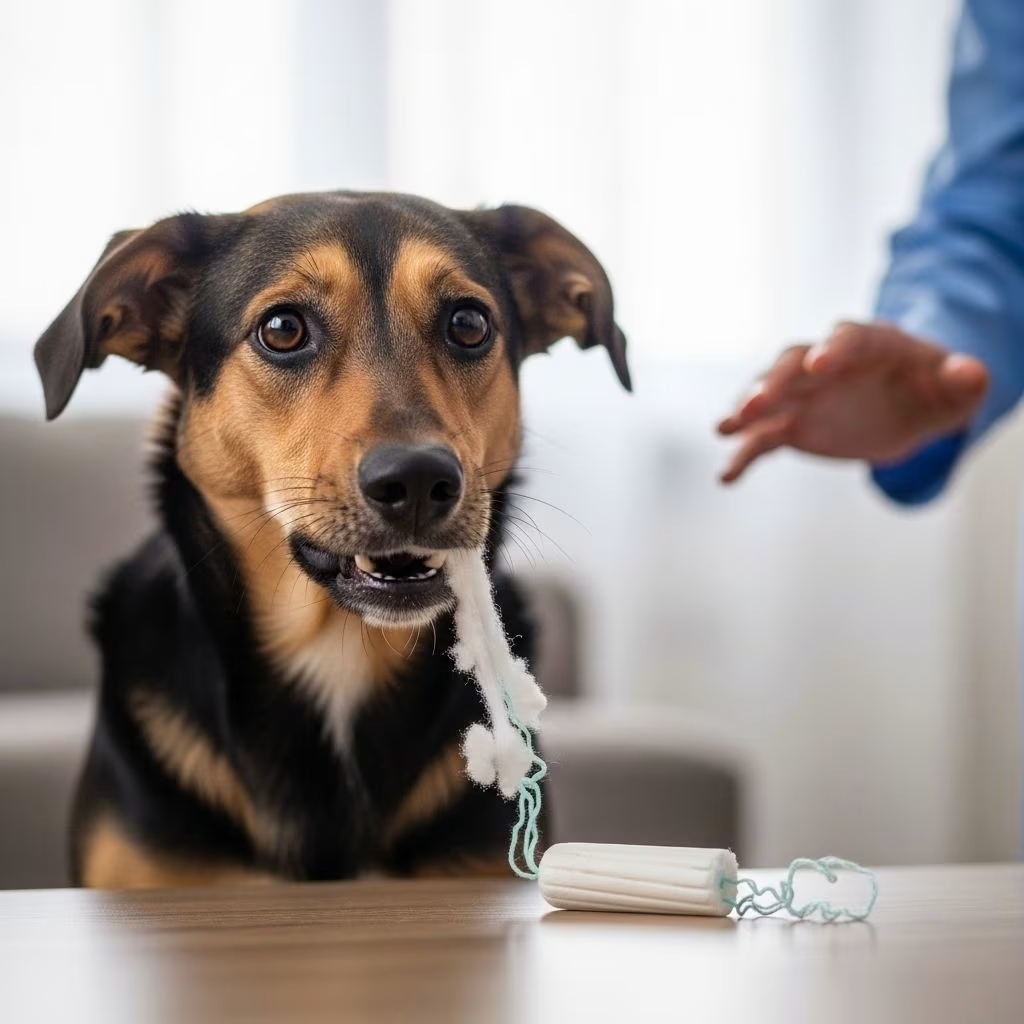
When a beloved pet accidentally ingests an unexpected household item, pet owners often face panic and uncertainty about the appropriate response. Among the various dangerous objects dogs might consume, tampons represent a particularly serious threat that requires immediate professional intervention. Unlike many foreign objects that dogs might pass naturally, tampons present unique physiological challenges due to their material composition and ability to expand when exposed to bodily fluids. Understanding the specific dangers, recognizing warning symptoms, and knowing when to seek emergency veterinary care can make the critical difference between a straightforward medical procedure and a life-threatening emergency.
The Unique Dangers Posed by Tampon Ingestion
Tampons create distinct hazards for dogs that differ from many other swallowed objects. The primary danger stems from their design purpose: these products are specifically engineered to absorb and retain moisture. When a dog swallows a tampon, the device begins absorbing saliva, stomach acids, and intestinal secretions almost immediately. This absorption causes the tampon to expand significantly within the digestive tract, transforming from a relatively small object into a much larger mass that can easily become lodged in the stomach or intestines.
The expansion mechanism presents a compounding problem because the growing tampon creates pressure against the digestive tract walls while simultaneously blocking the normal passage of food and waste materials. This creates what veterinarians refer to as a gastrointestinal obstruction or blockage. Small dog breeds face heightened vulnerability due to their smaller stomach and intestinal diameters, meaning that a tampon can obstruct their digestive system more readily than it might in a larger dog.
Beyond simple blockage, tampons carry additional risks depending on their condition at the time of ingestion. A used tampon may harbor bacteria or other pathogens that could trigger infection within the digestive tract. If the tampon arrives in your dog’s stomach still enclosed within a plastic or cardboard applicator, the applicator itself can puncture or lacerate the delicate tissue lining the stomach and intestines, causing internal bleeding and additional complications that compound the original problem.
In rare cases, if a tampon becomes stuck in the throat or esophagus rather than reaching the stomach, it can create a choking hazard that restricts the airway. This scenario demands immediate emergency intervention to prevent respiratory failure.
Recognizing Critical Warning Symptoms
Identifying whether your dog has ingested a tampon requires knowing what symptoms to watch for. Dogs cannot communicate their distress verbally, making owner vigilance essential for early detection and treatment. The timeline for symptom appearance varies, but owners should maintain heightened awareness for at least 24 to 72 hours following suspected ingestion.
Primary Warning Indicators
- Persistent or repeated vomiting — One of the earliest signs that something has disturbed the digestive system. Dogs with blockages often vomit multiple times throughout the day or at regular intervals.
- Loss of appetite or refusing meals — Dogs feeling internal discomfort naturally become reluctant to eat. If your normally enthusiastic eater suddenly shows food disinterest, this warrants investigation.
- Lethargy and weakness — Affected dogs may seem unusually tired, unwilling to play, or lacking their normal energy levels. Severely affected dogs may appear depressed or unresponsive.
- Abdominal pain indicators — Watch for whining, hunching posture, guarding their belly area by curling into a tight ball, or reluctance to be touched on the abdomen.
- Constipation or straining during bowel movements — Dogs may struggle unsuccessfully to defecate, produce little or no stool, or display obvious discomfort during attempts.
- Diarrhea or altered stool consistency — Some dogs experience loose stools or diarrhea, particularly if a partial blockage allows some material to pass while the blockage itself remains.
Severe Emergency Symptoms
Certain symptoms indicate progression to a life-threatening emergency status requiring immediate emergency clinic treatment rather than a regular veterinary appointment:
- Continuous or uncontrollable vomiting that prevents the dog from retaining any food or water
- Severe abdominal bloating or visible swelling of the belly
- Complete inability to pass any stool for more than 24 hours
- Signs of shock such as pale gums, rapid heart rate, weakness, or collapse
- High fever or signs of infection
- Trembling, shivering, or visible signs of severe pain
When Should You Seek Veterinary Care?
The answer is straightforward: contact your veterinarian immediately upon discovering or suspecting that your dog has swallowed a tampon, regardless of whether current symptoms are present. Many blockages progress silently without obvious early warning signs, and delay in seeking diagnosis can transform a treatable situation into an emergency requiring intensive care.
Do not attempt home remedies, inducing vomiting without veterinary supervision, or waiting to observe whether symptoms develop. The window of time for non-invasive treatment is narrow, typically only several hours after ingestion. After this window closes, treatment options become more limited and invasive, often requiring surgery.
If your regular veterinary clinic cannot accommodate an urgent appointment, contact a local emergency veterinary hospital immediately. Many areas have 24-hour emergency animal hospitals specifically equipped to handle urgent situations like this.
Diagnostic Procedures Your Veterinarian Will Perform
Upon arrival at the veterinary clinic, your dog will undergo a systematic evaluation to determine the tampon’s location and whether it is currently causing an obstruction.
Initial Assessment
The veterinarian will conduct a thorough physical examination, palpating the abdomen to assess for pain, unusual firmness, or masses. They will ask detailed questions about when the ingestion likely occurred, whether the tampon was used or unused, and what symptoms you have observed. This timeline information proves critical because it influences which treatment approaches become viable options.
Imaging Studies
Radiographs (X-rays) typically form the foundation of diagnostic imaging. An abdominal X-ray can reveal the presence and location of a foreign object and determine whether obvious signs of obstruction exist. The veterinarian may employ several X-ray techniques including:
- Standard radiographs — Initial imaging to locate the tampon and assess the digestive tract
- Contrast radiographs — Special liquid administered orally that makes the digestive tract visible on X-rays, allowing visualization of how material is moving through the system
- Serial radiographs — Multiple X-rays taken at intervals (sometimes every few hours) to monitor whether stomach contents are progressing normally through the intestines or becoming blocked
Ultrasound imaging provides additional diagnostic information, particularly regarding inflammation, fluid accumulation, or the exact position of the foreign object. Some veterinarians use ultrasound as a complementary study to radiographs.
Treatment Options Available
The treatment approach your veterinarian recommends depends on several factors including how recently the tampon was ingested, the dog’s current symptoms, and the diagnostic findings.
Induced Vomiting
If the tampon was ingested very recently (typically within 1-2 hours) and your dog shows no signs of obstruction on imaging studies, your veterinarian may recommend inducing vomiting under controlled veterinary supervision. This approach is only appropriate in early cases and must never be attempted at home. The veterinarian will use specific medications and monitor your dog closely to ensure the tampon is successfully expelled and that no complications arise during the process.
Endoscopic Retrieval
Endoscopy involves passing a flexible camera-equipped tube down the esophagus into the stomach, allowing the veterinarian to visualize the tampon and retrieve it using specialized instruments. This minimally invasive procedure is appropriate if the tampon is still in the stomach and has not yet moved into the intestines. Endoscopy avoids surgical incisions and typically allows for faster recovery than surgical removal, though it requires specialized equipment and trained personnel not available at all veterinary clinics.
Surgical Removal
Once a tampon has moved into the small intestines or if it is causing a complete blockage, surgical intervention becomes necessary. During surgery, the veterinarian makes an incision into the abdomen and locates the obstructed portion of the intestine. The blockage is carefully removed, and the intestine is inspected for damage or perforation. If the intestinal tissue is severely damaged, the affected section may need to be removed and the remaining healthy portions surgically reconnected.
While surgery sounds alarming, it is a well-established procedure that veterinarians perform regularly. Early intervention significantly improves outcomes and recovery times compared to surgery performed after the dog has deteriorated severely from a complete blockage.
Supportive Hospitalization
Depending on the situation, your veterinarian may recommend monitoring your dog in the hospital while watching for evidence that the tampon will pass naturally. This approach is only appropriate in specific cases where partial blockage is suspected and the dog is stable. Hospital monitoring allows for serial imaging, intravenous fluid support, and immediate intervention if the situation worsens.
Differences Between Used and Unused Tampons
The condition of the ingested tampon influences the specific risks involved. An unused tampon without its applicator poses the primary risk of expansion and blockage. The tampon will swell significantly as it absorbs digestive fluids, potentially creating a substantial obstruction even though it started as a relatively small object.
An unused tampon still enclosed within its plastic or cardboard applicator creates a different danger profile. While the applicator prevents the tampon from absorbing moisture and expanding, the rigid applicator itself can puncture or lacerate the stomach and intestinal linings, causing internal bleeding and creating additional trauma beyond simple blockage.
Used tampons carry the additional concern of bacterial contamination. Besides the expansion and blockage risks, bacteria harbored in used tampons can trigger infections within the digestive tract, potentially leading to peritonitis (abdominal cavity infection) if the intestine is perforated.
Regardless of the tampon’s condition, contact your veterinarian immediately. The specific risks vary, but all types of tampon ingestion warrant urgent professional evaluation.
Frequently Asked Questions About Canine Tampon Ingestion
How long does it take for symptoms to appear after a dog swallows a tampon?
Symptoms can appear within hours of ingestion, but blockage symptoms sometimes take 24 to 72 hours to become apparent. This delayed symptom onset makes prompt veterinary evaluation critical even if your dog currently seems fine. Waiting to see if symptoms develop can allow the blockage to worsen significantly.
Can a tampon pass through a dog’s digestive system naturally?
In some cases, particularly with larger dogs or partial blockages, a tampon might pass naturally. However, this cannot be predicted reliably, and attempting to wait and see if natural passage occurs risks serious complications. Professional assessment is necessary to determine whether your individual dog is likely to pass the tampon or requires intervention.
What is the cost range for treating tampon ingestion?
Costs vary widely depending on the treatment approach required. A simple veterinary examination and X-rays might cost $500-$1500. Endoscopic retrieval typically ranges from $1500-$3000. Surgical removal is generally the most expensive option, ranging from $2000-$5000 or more depending on the complexity and whether intestinal damage requires repair. Emergency clinic visits incur additional facility charges beyond the procedure costs.
Is it safe to induce vomiting at home if my dog just ate a tampon?
No. Never attempt to induce vomiting without explicit veterinary instruction and supervision. Improper induction techniques can cause aspiration, where vomited material enters the lungs, creating additional life-threatening complications. Additionally, inducing vomiting is contraindicated in many situations and is only appropriate under specific circumstances that a veterinarian must evaluate.
Do small breed dogs face higher risks than large breed dogs?
Yes. Small breeds like Yorkshire Terriers, Chihuahuas, and similar-sized dogs have smaller digestive tracts, making them far more vulnerable to blockage from a tampon. A tampon that might cause only partial blockage in a large dog could create a complete obstruction in a small dog. Small breed owners should be especially vigilant and aggressive about seeking prompt veterinary care.
What should I tell the veterinarian when I arrive?
Provide specific details about the ingestion timing, whether the tampon was used or unused, whether an applicator was present, your dog’s behavior and symptoms since ingestion, and any previous health conditions or medications your dog takes. The more detailed information you provide, the better your veterinarian can assess the situation and plan appropriate treatment.
Prevention Strategies for the Future
Preventing future incidents requires making tampons inaccessible to your dog. Keep used and unused tampons in closed cabinets, preferably in bathrooms or bedrooms where you can restrict your dog’s access. Dispose of used tampons securely in waste containers that your dog cannot access, perhaps using a dedicated bathroom trash can with a locking lid. If you have multiple pets or visiting dogs, remind guests about proper tampon storage and disposal.
Training your dog to avoid picking up dropped items and not leaving personal hygiene products in accessible locations forms the foundation of prevention. These simple measures can spare you and your dog from a frightening emergency situation and substantial veterinary expenses.
References
- What are the symptoms of a dog that ate a tampon? — PetPlace.com. https://www.petplace.com/article/dogs/vet-qa-parent/vet-qa/what-are-the-symptoms-of-a-dog-that-ate-a-tampon
- Dog Ate A Tampon: What To Do? — Cuddly Tails. https://www.cuddlytails.com/blogs/dog-ate-a-tampon-what-to-do/
- Dog Ate A Tampon? What To Do & When To Worry — Pawp. https://pawp.com/dog-ate-a-tampon-what-to-do-and-when-to-worry/
- Help! My Dog Ate a Tampon – What You Should Do Next — Dial A Vet. https://www.dialavet.com/blog/help-my-dog-ate-a-tampon—what-you-should-do-next



