

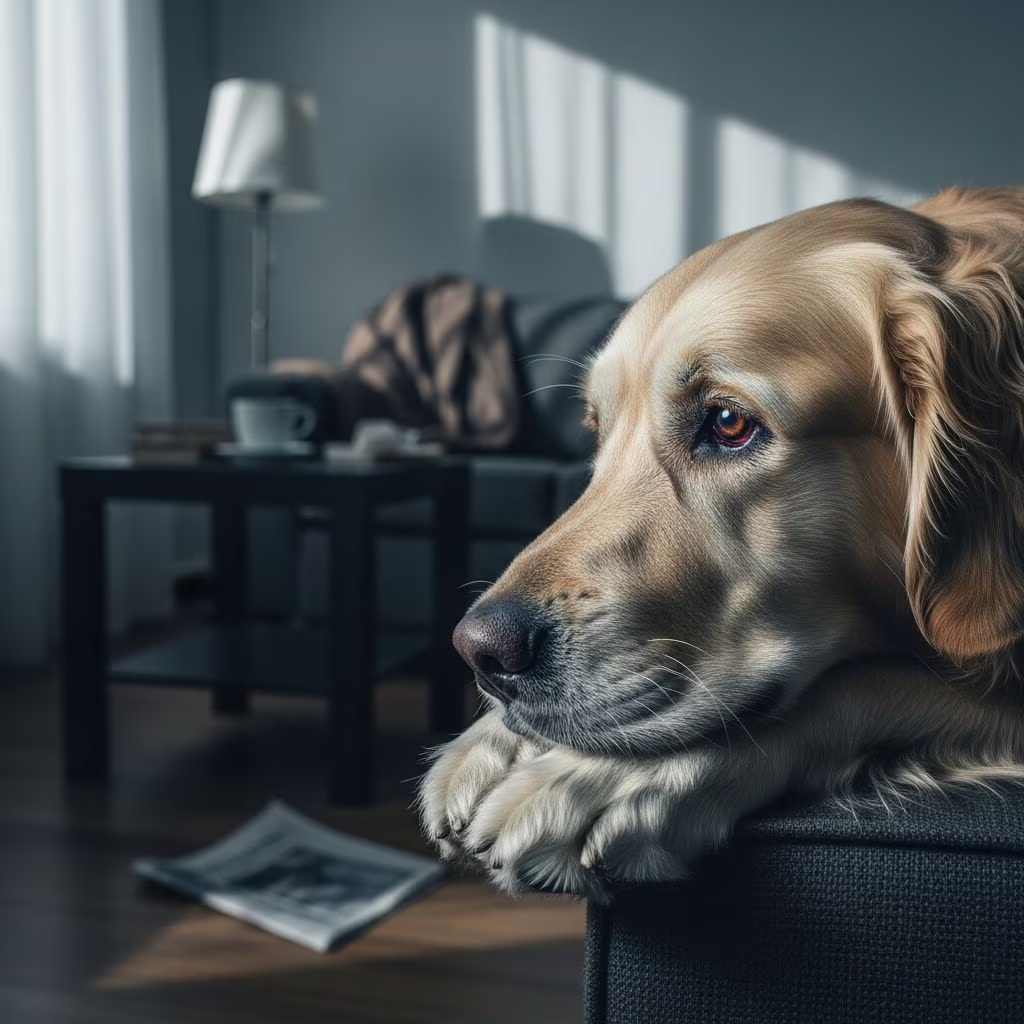
Many dogs find it hard to stay calm when their favorite humans walk out the door. Some may pace and whine, others might bark nonstop or chew the couch. These behaviors are often signs of stress related to being left alone, sometimes rising to the level of full separation anxiety. Understanding what your dog is going through is the first step toward helping them feel safe and secure at home.
This guide explains why some dogs struggle when left alone, how to recognize the warning signs, and what you can do to reduce their stress using kind, evidence-based methods.
Why Dogs Get Stressed When Left Alone
Dogs are social animals that evolved to live in groups. Being suddenly isolated from their family can feel frightening, especially if they have not been gradually taught that alone time is safe. Veterinary behavior experts describe separation anxiety as a distress response that occurs when a dog is away from their primary attachment figure, leading to panic-like behaviors and intense efforts to cope or escape.
Separation Anxiety vs. Normal Alone-Time Worry
Not every dog that whines or barks when you leave has full-blown separation anxiety. The key differences are in intensity and persistence:
- Mild concern: Short-lived whining, brief pacing, settles within minutes.
- Moderate stress: Longer whining or barking, some destructive behavior, but the dog may eventually calm down.
- Severe separation anxiety: Panic-level behaviors such as continuous vocalizing, frantic scratching at doors, or self-injury that often continue until the person returns.
In true separation anxiety, the problem is not disobedience or boredom. It is a fear-based reaction to being separated from the person the dog is bonded to.
Common Signs Your Dog Is Stressed When Left Alone
Signs of alone-time stress often start even before you leave and may continue long after. According to veterinary and animal welfare organizations, dogs with separation-related problems frequently show:
- Clingy behavior when you are home (following you from room to room)
- Trembling, panting, or drooling as you prepare to leave
- Pacing or restlessness near doors or windows
- Excessive vocalization: barking, whining, or howling soon after you leave
- Destructive chewing or scratching, often focused on doors, windows, or exit points
- House soiling (urinating or defecating indoors) despite being normally house-trained
- Refusal to eat or drink when alone
- Over-the-top greetings when you return, as if you’ve been gone for a very long time
Table: Stress Behaviors and What They Might Mean
| Behavior | When It Happens | What It Can Indicate |
|---|---|---|
| Barking or howling non-stop | Shortly after you leave, may continue for long periods | Separation anxiety, distress triggered by being alone |
| Chewing doors, doorframes, or windowsills | During your absence | Panic and attempts to escape, not simple boredom |
| Indoor accidents when otherwise house-trained | Only when left alone | Stress-related loss of bladder/bowel control, or anxiety |
| Clingy following at home | Any time you move around | Strong attachment, possible early warning sign of separation issues |
| Refusing food or treats when you leave | Starting just before or after departure | High arousal and fear; many anxious dogs won’t eat when stressed |
Why Some Dogs Struggle More Than Others
There is no single cause of separation anxiety. Research and clinical reports suggest a mix of genetic tendencies, life experiences, and changes in routine all play a role.
Common Triggers and Risk Factors
- Sudden changes in schedule, such as a new job that keeps you away longer or a switch from working at home to working outside the home.
- Moving to a new home, even with the same family, which can temporarily unsettle some dogs.
- Loss or addition of family members, such as a death, divorce, or new baby, can disrupt the dog’s routine and sense of security.
- Time spent in shelters or boarding may increase stress around being confined or separated again.
- Underlying anxiety from genetics, poor early socialization, or past trauma can make separation more difficult to cope with.
Rule Out Medical and Training Issues
Because some signs of separation distress overlap with other problems, veterinarians recommend ruling out medical and basic training issues before focusing on behavior treatment.
For example:
- Indoor accidents may result from urinary tract infections, gastrointestinal disease, or incomplete house-training.
- Chewing can reflect teething in young dogs or general boredom rather than anxiety.
- Vocalizing may be linked to reactivity to outside noises, not just being left alone.
A full veterinary exam and, if needed, lab tests help ensure you are not missing a health condition that must be treated alongside behavior work.
How to Help a Dog Who Gets Stressed When Left Alone
The most effective plans combine behavior modification, environmental changes, and sometimes medication. These approaches are based on principles of desensitization and counterconditioning, where the dog gradually learns that departures are low-intensity and predict positive outcomes.
Step 1: Change the Experience of Departures and Returns
Your departure routine can be a major trigger. Many dogs start to panic when they see keys picked up or shoes put on. Animal welfare organizations recommend making these moments calmer and more predictable.
- Keep greetings and goodbyes low-key so they feel less dramatic.
- Practice picking up keys, putting on a coat, then not leaving, until these cues are no longer strongly linked to panic.
- Avoid punishment for stress behaviors. Anxious behaviors are distress responses, not stubbornness, and punishment can worsen anxiety.
Step 2: Gradual Alone-Time Training
Systematic desensitization involves exposing your dog to very short periods of separation that they can tolerate, then slowly building up duration.
- Start with your dog behind a baby gate or in another room for just a few seconds while you remain calm and neutral.
- Return before they begin to panic, then slowly increase the time over many sessions.
- Only progress if your dog consistently stays relaxed at the current duration.
- Once they are comfortable out of sight for several minutes, begin short, real departures from the house, starting with just a minute or two and increasing gradually.
This process can take weeks or months for severely anxious dogs, but research and clinical reports indicate that methodical, slow exposure is far more effective than forcing dogs to “cry it out,” which can damage their mental health.
Step 3: Make the Environment Safer and More Enriching
While training is underway, small changes to your dog’s environment can significantly reduce stress.
- Provide mental enrichment: food puzzles, safe chew items, or treat-dispensing toys can occupy your dog and create positive associations with alone time.
- Control the sound environment: soft background noise or calm music may help mask triggers like outside traffic or hallway sounds.
- Limit access to overstimulating views by closing curtains if your dog barks at people or animals outside.
- Consider safe confinement only if your dog is already crate-comfortable; forcing a distressed dog into a crate often makes anxiety worse.
Step 4: Exercise and Daily Routine
Consistent routines and appropriate exercise support overall emotional balance.
- Regular physical activity can reduce general anxiety and restlessness.
- Predictable feeding, walking, and rest times help many dogs feel more secure.
- Mental training games (like short training sessions or scent games) build confidence and provide healthy outlets for energy.
Step 5: When to Involve a Professional
For moderate to severe cases, expert support from your veterinarian and a qualified behavior professional is strongly recommended.
- Veterinarian: to rule out medical causes and discuss whether anti-anxiety medication or adjunct therapies might help your dog cope while training is in progress.
- Veterinary behaviorist or certified behavior consultant: to design a tailored behavior plan and help you adjust it based on your dog’s responses.
Multiple sources note that combining behavior modification with appropriate medication can significantly improve outcomes for dogs with severe separation anxiety, especially when panic prevents them from learning while alone.
Prevention: Teaching Puppies and New Dogs to Be Comfortable Alone
Preventive training can greatly reduce the chance that a dog will develop serious separation problems later in life.
Healthy Habits for Puppies
- Introduce brief separations early, even when you are home (for example, your puppy resting behind a baby gate with a chew while you are in another room).
- Avoid constant 24/7 contact; teach your puppy that it is okay to relax without physical touch all the time.
- Pair alone time with something positive, like a safe food puzzle or chew, so your puppy learns that good things happen when you step away.
Adopted or Newly Rehomed Dogs
Many adopted dogs have had recent upheaval—new surroundings, new people, and sometimes prior loss. Gentle transitions can help them adjust.
- Allow a settling-in period where absences are kept short and predictable.
- Gradually build alone time instead of immediately leaving them for full workdays.
- Watch for early signs of distress so you can adjust before behaviors escalate.
What Not to Do With a Stressed, Home-Alone Dog
Certain common responses can unintentionally make fear worse or damage your relationship with your dog.
- Do not scold or punish your dog for destruction, barking, or accidents that happen when they are alone. Anxious behaviors are distress responses, not purposeful misbehavior, and punishment can increase fear and anxiety.
- Do not force prolonged absences on a dog who is panicking. Repeated intense fear without support can sensitize them further.
- Do not rely on quick fixes alone, such as gadgets or confinement, without addressing the underlying emotional problem.
Frequently Asked Questions (FAQs)
Q: How do I know if my dog has true separation anxiety or is just bored?
A: Dogs with separation anxiety typically show distress specifically tied to your departures, such as panic when you pick up keys, intense vocalizing or destructive behavior focused on doors and windows, and difficulty settling until you return. Bored dogs are more likely to chew or get into things more randomly and may not show strong pre-departure anxiety signs.
Q: Can separation anxiety be cured, or only managed?
A: Many dogs improve dramatically with structured behavior modification and environmental support, and some may appear fully resolved in daily life. However, stress-vulnerable dogs can regress if major life changes occur, so maintaining good habits around alone-time training is helpful.
Q: How long can I leave a dog with separation issues alone?
A: Ideally, anxious dogs are not left alone longer than they can comfortably tolerate while training is underway. For some, that may start at only a few minutes. Using pet sitters, dog walkers, or trusted friends can help bridge longer absences as you gradually build your dog’s independence.
Q: Will getting a second dog fix my dog’s separation anxiety?
A: A second animal is not a guaranteed solution. Many dogs with separation anxiety are specifically attached to their human, not just any companion. While some may benefit from another calm dog in the home, others remain distressed whenever their primary person leaves.
Q: When should I talk to my vet about medications?
A: Consult your veterinarian if your dog shows severe signs (such as self-injury, continuous destruction, or inability to settle), if progress is very slow despite careful training, or if your dog is too panicked to eat or respond to rewards during alone-time exercises. Medication is often used alongside behavior modification, not as a standalone fix.
References
- Separation Anxiety in Dogs — PetMD / Melissa Bain, DVM et al. 2023-04-04. https://www.petmd.com/dog/conditions/behavioral/separation-anxiety-dogs
- Separation anxiety in dogs — Journal of Veterinary Behavior / Overall & Dunham. 2001-06-01. https://doi.org/10.1053/jvet.2001.25444
- Calm a dog with separation anxiety symptoms — Humane Society of the United States. 2022-08-15. https://www.humaneworld.org/en/resources/calm-dog-separation-anxiety
- Separation Anxiety — American Society for the Prevention of Cruelty to Animals (ASPCA). 2021-11-10. https://www.aspca.org/pet-care/dog-care/common-dog-behavior-issues/separation-anxiety
- Home Alone – Separation Anxiety in Dogs — Blue Cross (UK). 2020-09-30. https://www.bluecross.org.uk/advice/dog/home-alone-separation-anxiety-in-dogs
- Separation Anxiety in Dogs: Causes, Signs, and Solutions — Best Friends Animal Society. 2023-05-02. https://bestfriends.org/pet-care-resources/separation-anxiety-dogs-causes-signs-and-solutions
- Dog Anxiety: Symptoms, Causes, and Treatment Options — GoodRx Health / Dr. JoAnna Pendergrass. 2022-07-18. https://www.goodrx.com/pet-health/dog/anxiety-symptoms



