

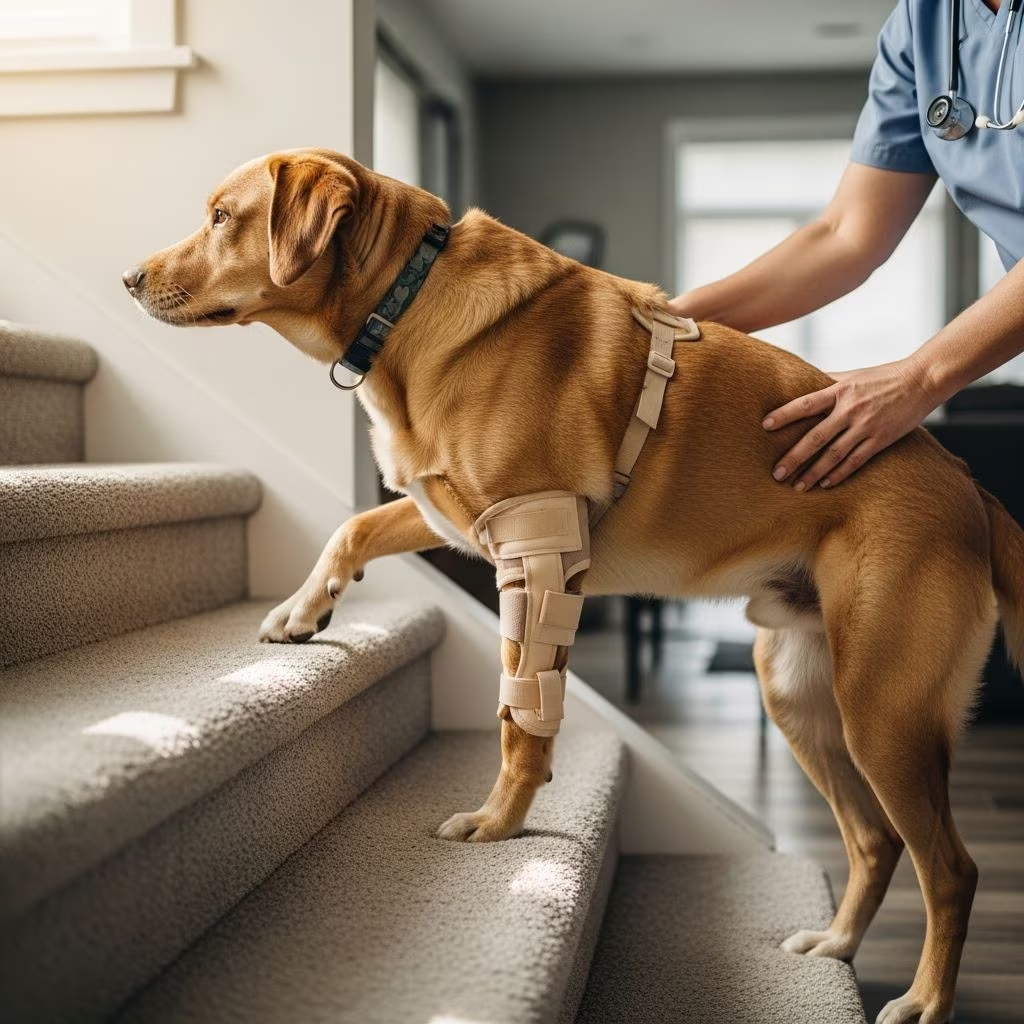
One of the most common questions veterinarians receive from dog owners following anterior cruciate ligament (ACL) surgery is when their beloved pet can resume normal household activities, particularly climbing stairs. This inquiry reflects the genuine concern pet owners have about balancing their dog’s need for rest with the reality of living in a multi-level home. Understanding the appropriate timeline for reintroducing stairs is essential for preventing complications and ensuring optimal healing.
Understanding the ACL Surgery Recovery Landscape
Before addressing the specific question of stair climbing, it’s important to understand the broader context of ACL recovery. The anterior cruciate ligament is a critical structure in the knee joint that provides stability during movement. When this ligament tears, it compromises the joint’s function and can lead to significant pain and lameness. Surgical repair through techniques such as tibial plateau leveling osteotomy (TPLO) or tibial tuberosity advancement (TTA) involves modifying bone structure or placing stabilizing materials to restore stability to the joint.
The healing process following ACL surgery unfolds in distinct phases, each with specific physiological changes and activity recommendations. Complete bone healing typically requires 12 to 16 weeks, though full functional recovery may extend to six months in some cases. The timeline varies significantly based on individual factors including your dog’s age, weight, overall health status, and adherence to rehabilitation protocols.
The Critical Early Recovery Phase: Weeks 1-2
The immediate post-operative period represents the most delicate phase of recovery. During the first 24 to 48 hours following surgery, your dog will be recovering from anesthesia and experiencing pain medication effects, which naturally promotes the immobility necessary for healing. During weeks one and two, strict crate rest is non-negotiable for proper surgical site healing. Your dog should remain confined except for essential bathroom breaks on a leash, preferably on flat ground.
During this period, stairs should be completely avoided. Your dog may not have the physical capacity or pain tolerance to navigate them safely, and any misstep could compromise the surgical repair. Many veterinarians recommend setting up a comfortable recovery space on a single level of your home to eliminate the need for stair climbing entirely during this crucial phase.
Transitional Period: Weeks 3-4 and the Introduction of Limited Movement
As your dog enters weeks three and four of recovery, the surgical incision typically begins showing signs of healing, and sutures are often ready for removal. This phase marks the beginning of controlled activity expansion. Your veterinarian will likely permit gradually longer walks on flat surfaces with good traction, progressively increasing from initial 5-minute walks to approximately 20-minute sessions three times daily by the end of week four.
Stairs remain off-limits during this period. Although your dog is showing improvement and may be more mobile, the muscles and soft tissues surrounding the knee joint remain weak and vulnerable. The ligaments, tendons, and supporting musculature have not yet developed sufficient strength to handle the repetitive stress and altered weight-bearing patterns that stair climbing demands. Any premature stair activity could result in re-injury or complications that would significantly extend recovery time.
Building Foundation: Weeks 5-6 and Physical Development
Weeks five and six represent a significant turning point in the recovery process. By this stage, your dog should demonstrate improved weight-bearing on the affected leg and may be able to stand more confidently. Walking duration can now extend to 20-30 minutes on flat terrain, with gradual introduction of slight inclines by week six. Your veterinarian will typically conduct a formal assessment around this six-week mark to evaluate bone healing progress and determine appropriate progression.
This is still too early for regular stair climbing, but some dogs may be ready for carefully managed, limited stair activity under close supervision. However, this depends entirely on your individual dog’s healing progression and your veterinarian’s specific recommendations. Many vets prefer to wait until week eight or later before permitting any stair access. If your dog lives in a multi-story home, consider continuing to minimize stair use or limiting your dog to one level during this phase.
Strengthening and Stabilization: Weeks 7-10
The period spanning weeks seven through ten represents an important strengthening phase where most dogs have developed sufficient baseline strength to engage in more challenging controlled exercises. Your veterinarian will likely provide clearance for expanded activities during this window. Physical therapy exercises designed to build functional muscle support around the knee become increasingly important. Many dogs benefit from consultation with a rehabilitation veterinarian who can prescribe targeted strengthening exercises.
For many dogs, this is the period when carefully supervised, limited stair climbing may become permissible—but only with explicit veterinary approval and under careful monitoring. Your dog should demonstrate pain-free weight-bearing on the affected leg and show no signs of lameness during regular walking activities. If your veterinarian gives approval, introduce stairs gradually, allowing your dog to climb just one or two steps initially and rewarding calm behavior. Watch closely for signs of pain, limping after stair activity, or reluctance to use the affected leg.
Progressive Return to Activity: Weeks 11-16
The 11 to 16-week window represents the final phase of initial bone healing and the beginning of transition toward normalized activity. By this point, most dogs are significantly more mobile and show clear improvement in strength and confidence. The restricted crate rest can typically be gradually reduced to allow more freedom of movement throughout the home. Longer walks and more challenging physical therapy exercises become standard practice.
Most dogs can generally resume normal stair climbing activities by week 12 to 16 of recovery, provided they demonstrate consistent healing progress and pain-free movement. However, this should still be introduced gradually. Allow your dog to climb stairs on their own schedule rather than forcing or encouraging rapid climbing. Some dogs may develop their own cautious approach naturally, taking stairs one step at a time or pausing between steps. This self-regulated pace is appropriate and should not be discouraged.
Important Considerations for Stair Safety During Recovery
Beyond the basic timeline, several factors should influence your decision-making about stair access:
- Your Dog’s Individual Healing Rate: Dogs recover at different speeds based on age, weight, fitness level before surgery, and overall healing capacity. Senior dogs or those with pre-existing arthritis may require extended recovery periods. Younger, healthier dogs often progress more quickly.
- Type of Surgical Procedure: Different ACL repair techniques may have slightly different recovery timelines. TPLO procedures, TTA techniques, and lateral suture repairs each have specific healing characteristics. Confirm your dog’s specific procedure and follow your surgeon’s recommendations precisely.
- Home Environment Modification: Consider using baby gates to restrict stair access initially or creating a single-level living space during recovery. This prevents accidental stair climbing when your dog is resting or unsupervised.
- Signs of Complications: Increased lameness, swelling at the surgical site, reluctance to bear weight, or limping after stair activity all warrant immediate veterinary consultation. These may indicate setbacks that require additional rest.
Rehabilitation Exercises to Support Stair Readiness
Specific exercises can help prepare your dog’s leg for stair climbing demands. Passive range of motion exercises, where you gently flex and extend the knee without your dog’s muscular effort, help maintain flexibility. As your dog progresses, your veterinarian may recommend sit-to-stand exercises, which build strength in the affected leg. Hillwalking, where your dog walks up and down gentle slopes, effectively strengthens rear leg muscles and mimics the weight-shifting demands of stair climbing. Cavaletti poles or ground-level obstacles encourage careful foot placement and build proprioception—your dog’s awareness of their limb position.
Long-Term Considerations and Ongoing Management
Even after your dog has cleared the initial recovery phase and resumed stair climbing, ongoing management remains important. Full functional recovery can take up to six months, and it’s essential to maintain appropriate activity levels throughout this extended period. Continue following your veterinarian’s recommendations for exercise progression. Dogs may develop osteoarthritis in the affected joint over time, so maintaining appropriate weight and continuing joint-supportive practices as recommended by your veterinarian can help prevent future complications.
Some dogs benefit from ongoing supplements supporting joint health, controlled exercise routines, or physical therapy sessions even after formal recovery ends. Discuss long-term management strategies with your veterinarian to optimize your dog’s joint health and quality of life.
Addressing Common Concerns
What if my dog lives upstairs? If your dog’s primary living space is upstairs, discuss this with your veterinarian before surgery. They may recommend temporary modifications such as setting up a ground-level recovery space or using alternative arrangements during the critical early recovery phases.
Can I carry my dog up stairs? While carrying your dog might seem to bypass the problem, it can be inadvisable for large dogs and may not allow proper healing because the affected leg never develops strength. Follow your veterinarian’s guidance on this approach.
What if my dog refuses to climb stairs? Some dogs develop anxiety about stairs following surgery, particularly if they experienced pain while attempting to climb during recovery. This is normal and usually resolves with time and positive reinforcement. Never force your dog to climb stairs; allow confidence to develop naturally.
References
- A Complete Timeline for Dog ACL Surgery Recovery: What to Expect — Lick Sleeve. 2024. https://www.licksleeve.com/blogs/news/dog-acl-surgery-recovery-week-by-week-timeline
- Dog ACL Surgery Recovery: A Week by Week Timeline — Paws and More Vet. 2024. https://pawsandmorevet.com.au/dog-acl-surgery-recovery-week-by-week/
- How Long Should Dogs Rest After CCL Surgery? – AZ Vet Direct — AZ Vet Direct. 2024. https://azvet.direct/low-cost-pet-surgery-in-mesa-and-the-entire-southeast-valley-of-phoenix/how-long-should-dogs-rest-after-ccl-surgery-a-complete-recovery-timeline/
- Recovery Timeline for ACL Surgery in Dogs – Zoetis Petcare — Zoetis Petcare. 2024. https://www.zoetispetcare.com/blog/article/recovery-timeline-acl-surgery-dogs
- Dog CCL (ACL) Surgery: Cost and Recovery Timeline — PetMD. 2024. https://www.petmd.com/dog/procedure/acl-surgery-in-dogs



