

What to Do If Your Dog Gets Sprayed by a Skunk
Encountering a skunk can turn into a messy situation when your curious dog decides to investigate. Skunks produce spray in their anal glands as a defense mechanism against predators, and this spray contains sulfurous chemicals called thiols that create that unmistakable, pungent odor. Since skunks can spray this liquid as far as 15 feet, it’s common for dogs to get a blast of skunk spray directly in the face or body. While this encounter is undoubtedly unpleasant, understanding the proper response can help minimize the damage and get your furry friend smelling fresh again.
Understanding Skunk Spray and Its Effects
Skunk spray is more than just a bad smell—it can cause temporary discomfort to your dog. The spray can irritate your pet’s eyes, nose, and throat, potentially causing temporary blindness, nausea, and general irritation. In rare cases, a dog may have an allergic reaction to the spray, which could require immediate veterinary attention. The compounds in skunk spray are irritating and, in some cases, can result in damage to a dog’s red blood cells, potentially leading to anemia in severe cases.
The odor is caused by oils in the skunk spray that cling stubbornly to your dog’s fur. Without proper treatment, skunk smell will eventually fade on its own over several weeks or even months, but this timeline is far from ideal for you and your pet. Fortunately, several effective methods can significantly speed up the de-skunking process.
Immediate Steps After Skunk Spray Exposure
Step 1: Keep Your Dog Outside
Your first priority should be preventing the skunk smell from spreading throughout your home. Keep your dog outside while you gather your de-skunking supplies and assess the situation. This containment strategy limits how much of the pungent odor transfers to your furniture, bedding, and other household items. If possible, bathe your dog outdoors or in a space outside your main living areas, such as a garage or barn.
Step 2: Check for Injuries and Eye Irritation
Before starting treatment and cleanings, carefully check your canine for any signs of skin, ear, or eye irritation. A gentle wipe with a damp cloth or a quick rinse with the hose can relieve any areas that may have been directly sprayed. If your pet’s eyes seem to be affected, rinsing them with copious amounts of tepid water for 20 minutes may relieve some discomfort. However, if your dog was sprayed directly in the eyes or mouth, this requires immediate veterinary attention.
Step 3: Watch for Warning Signs
Most symptoms from skunk spray are mild and appear immediately or within a couple of hours of exposure. However, some more serious symptoms like lethargy, weakness, changes in urine color, and pale or brown gums may take up to a few hours or even days to appear. These symptoms are rarer, but if they appear, you should take your pet to a veterinarian right away. Monitoring your dog closely during the first 24 hours is essential for catching any concerning reactions early.
The De-Skunking Process
Why Tomato Juice Doesn’t Work
Despite being a popular myth, tomato juice baths are largely ineffective at removing skunk odor. The acidity in tomato juice doesn’t break down the oils in skunk spray effectively, leaving your dog still smelly and now covered in red juice. Instead, you need a solution specifically designed to chemically break down the sulfurous compounds responsible for the odor.
The DIY De-Skunking Solution
The most effective and affordable option is a simple DIY formula that uses common household ingredients. This mixture is significantly more effective than traditional remedies and can be made with products you likely already have on hand.
DIY Skunk Shampoo Recipe:
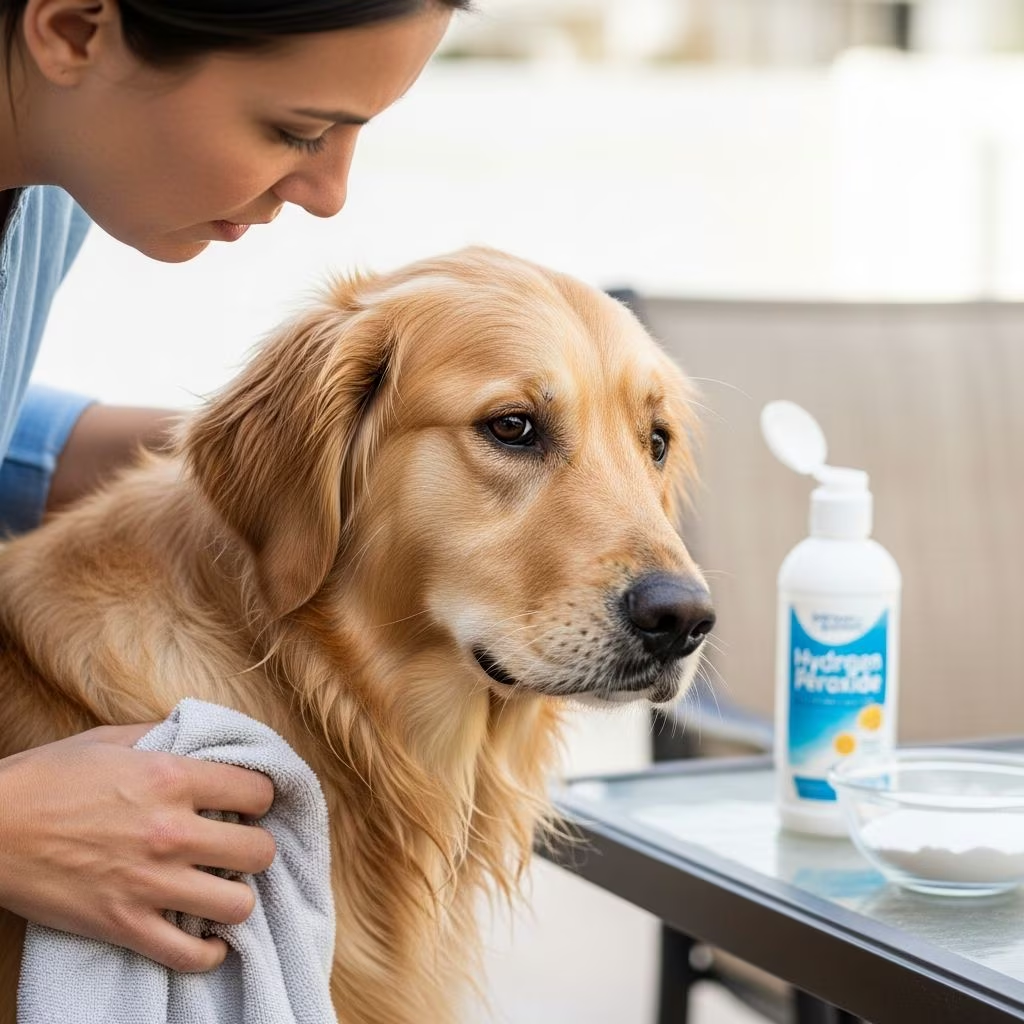
– 1 quart (4 cups) of 3% fresh hydrogen peroxide- ¼ cup of baking soda- 1 to 2 teaspoons of liquid dishwashing soap (dish detergent)
Critical Safety Note: Mix these ingredients immediately before use and apply the solution right away. Never store this mixture in a closed container, as the combination can become unstable and potentially explode. Make a fresh batch each time your dog needs de-skunking.
Application Instructions
Wearing rubber gloves and old clothing that can be disposed of or deep cleaned, apply the de-skunking mixture generously throughout your dog’s coat. Work the solution into their fur thoroughly, paying special attention to areas that received direct contact with the spray. Be extremely careful not to get the solution in your dog’s eyes, ears, or mouth. Massage the mixture into the fur and allow it to sit for about 5 minutes—long enough for the chemical reaction to break down the skunk oils but not so long that the peroxide bleaches your dog’s fur.
After the five-minute wait, rinse your dog thoroughly with copious amounts of lukewarm water. You may need to repeat this process several times to fully remove the skunk odor, especially if your dog received a direct hit to the face. Each application helps eliminate more of the stubborn oils, and multiple treatments are often necessary for complete odor removal.
Follow-Up Shampoo
After completing the de-skunking process, wash your dog with regular pet shampoo or a specialized deodorizing shampoo to remove any residual solution and leave their coat smelling fresh. Rinse thoroughly to ensure no hydrogen peroxide remains on their skin. By this point, your dog should be significantly de-skunked and smelling much better. Thoroughly towel-dry your dog and place them in a warm, sunny room for the next couple of hours so they don’t get chilled.
Important Precautions and Considerations
Hydrogen Peroxide Strength
Never use hydrogen peroxide stronger than 3%, as higher concentrations can irritate your dog’s skin and cause additional problems. The 3% solution found in pharmacy and supermarket aisles is the perfect strength for this application. Double-check your hydrogen peroxide bottle before using it to confirm the correct concentration.
Potential Hair Bleaching
The hydrogen peroxide in this mixture may bleach your dog’s fur, particularly if your pet has dark-colored hair. This discoloration is not toxic to their skin and will eventually fade as new hair grows in, but it’s something to be aware of before applying the solution. If your dog has a light coat, the bleaching effect may be less noticeable.
Avoid Overwashing
While it might be tempting to repeat the de-skunking process multiple times in quick succession, overwashing can cause skin irritation and strip natural oils from your dog’s coat. Space out treatments appropriately and monitor your dog’s skin for signs of irritation.
Alternative De-Skunking Options
Over-the-Counter Products
If you don’t have the ingredients for the DIY solution on hand or prefer a ready-made option, several commercial de-skunking products are available. Products such as Nature’s Miracle Skunk Odor Remover are specifically formulated to neutralize skunk odor and provide quick, convenient solutions. These products are often highly effective and eliminate the need to mix solutions, though they may be more expensive than the DIY approach.
Vinegar Solution
If you don’t have peroxide, baking soda, and dish soap on hand, white vinegar diluted with water is the next best option. While not as effective as the hydrogen peroxide mixture, it may still help clean some of the skunk oils off your dog and reduce the smell. This alternative should only be used when the preferred solution ingredients are unavailable.
Treating Your Home for Skunk Odor
If any skunk spray made it inside your home, proper ventilation is key to removing the odor. Open windows and use fans to increase air circulation and help disperse the smell. Place bowls of white vinegar or activated charcoal around the affected areas to absorb odors naturally. You can also try boiling a pot of vinegar on the stove to help neutralize the smell throughout your home. These methods work gradually but effectively over time.
When to Seek Veterinary Care
While most skunk spray incidents can be managed at home, certain situations require professional veterinary attention. Seek immediate veterinary care if:
– Your dog was sprayed directly in the eyes or mouth- Your dog shows signs of serious allergic reaction- Your dog displays symptoms such as severe lethargy, weakness, pale or brown gums, or changes in urine color- You notice signs of internal damage or severe distress- Your dog seems to be having difficulty breathing
A veterinarian can assess your dog’s condition and provide appropriate treatment if complications arise from the skunk spray exposure.
Prevention Strategies
While you can’t entirely prevent skunk encounters, especially if you live in areas where skunks are common, certain precautions can reduce the likelihood:
– Keep your dog on a leash during nighttime outdoor activities when skunks are most active- Supervise outdoor playtime and maintain awareness of your surroundings- Remove potential food sources that attract skunks, such as fallen garbage or pet food left outside- Keep your yard well-lit and maintain clear sight lines- Educate your dog about respecting wildlife boundaries through training
Frequently Asked Questions
Q: Will skunk spray cause permanent damage to my dog?
A: No, skunk spray typically does not cause permanent damage. The odor and irritation are temporary, though serious reactions are rare. Most dogs recover completely with proper treatment and time.
Q: How long does it take to completely remove skunk odor from a dog?
A: With proper treatment using the hydrogen peroxide solution, you can significantly reduce the odor within hours. However, it may take multiple applications and several days to completely eliminate all traces of the smell. Without treatment, the odor can persist for weeks or months.
Q: Can I use regular shampoo instead of the special de-skunking solution?
A: No, regular shampoo will not effectively remove skunk odor. The oils in skunk spray require the chemical action of the hydrogen peroxide and baking soda mixture to break down effectively. Regular shampoo alone will not eliminate the smell.
Q: What should I do if I accidentally store the hydrogen peroxide mixture?
A: Do not attempt to use stored mixture. Discard it safely and make a fresh batch. The mixture can become unstable and potentially dangerous if stored, especially in closed containers.
Q: Is skunk spray toxic to dogs?
A: Skunk spray is not typically lethal to dogs, though it can cause irritation and discomfort. In rare cases, severe reactions can occur, but most dogs experience only temporary symptoms that resolve with proper treatment.
Q: Can I use human deodorant or perfume to mask skunk odor?
A: Masking products will not eliminate the odor and may irritate your dog’s skin or be harmful if ingested. Focus on removing the odor using appropriate de-skunking methods rather than masking it.
References
- What to Do If Your Dog Gets Sprayed by a Skunk — American Society for the Prevention of Cruelty to Animals (ASPCA). Accessed 2025. https://www.aspca.org/news/what-do-if-your-dog-gets-sprayed-skunk
- How to Get Skunk Smell Off Your Dog — American Kennel Club (AKC). Accessed 2025. https://www.akc.org/expert-advice/health/dog-sprayed-by-skunk/
- What to do if your dog gets skunked — VCA Animal Hospitals. Accessed 2025. https://vcahospitals.com/shop/articles/what-to-do-if-your-dog-gets-skunked
- What to do when a skunk sprays your dog — Humane World for Animals. Accessed 2025. https://www.humaneworld.org/en/resources/de-skunking-your-dog



