

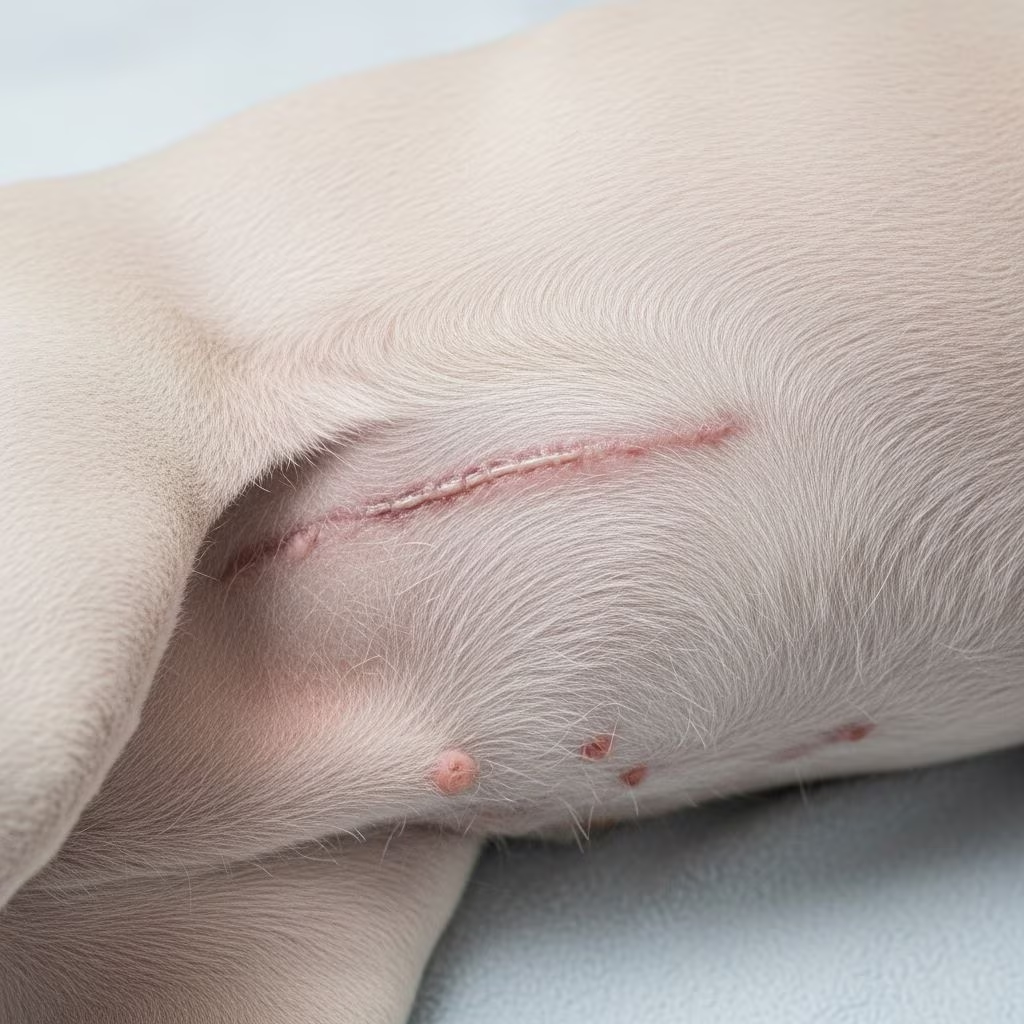
Spaying a female dog involves removing the ovaries and often the uterus through a surgical incision on the abdomen. The size of this incision varies based on the dog’s age, size, surgical technique, and the veterinarian’s approach, typically ranging from tiny keyhole cuts to several centimeters in traditional procedures.
Understanding Spay Surgery Basics
Spaying, or ovariohysterectomy, prevents unwanted pregnancies and reduces risks of certain cancers and infections. Veterinarians choose incision size to balance access to reproductive organs with minimal tissue trauma for faster healing. Smaller incisions promote less pain and quicker recovery, but must allow safe organ removal.
Factors Influencing Incision Dimensions
Several elements determine how large the cut needs to be. Dog size matters: small breeds require less access than large ones. Age affects anatomy—puppies have tighter abdomens, while adults post-heat cycles have more developed tissues needing precise placement.
- Patient Size: Tiny dogs might need just 1-2 cm, while large breeds over 20kg often require 5-7 cm or more.
- Age and Reproductive History: Puppies under 6 months get shorter incisions; adults with litters need longer ones for exteriorizing structures.
- Body Type: Deep-chested or obese dogs demand cranial placements and potential extensions.
Traditional Spay Incision Details
In conventional ovariohysterectomy, a midline abdominal cut provides direct access. For a 15-20kg dog, this measures about 5-7 cm (2-3 inches), made boldly in one stroke to minimize trauma. Puppies receive 1-2 cm slits, adults 2-4 cm just behind the umbilicus, and it’s often one-third the umbilicus-to-pubis distance.
| Dog Category | Typical Length | Placement |
|---|---|---|
| Puppy (<6 months) | 1-2 cm | Midpoint umbilicus-pubis |
| Adult (6-18 months) | 2-4 cm | One blade caudal to umbilicus |
| Mature (>18 months) | 4-7 cm+ | Just caudal to umbilicus |
This approach suits routine cases, especially larger dogs or those with complications like pyometra, where ventral incisions extend 4-8 cm.
Laparoscopic or Keyhole Spay Options
Minimally invasive laparoscopic spaying uses 2 tiny incisions of 0.3-1 cm each—one for the camera, one for tools—to remove ovaries only (ovariectomy). This avoids uterus removal, reducing invasiveness. Magnified views enable precision, with dissolvable subcutaneous stitches needing minimal aftercare like e-collars.
Recovery drops to 2-3 days versus 10-14 for traditional methods, ideal for active dogs.
Precise Placement Strategies
Incision location optimizes efficiency. Adult dogs start just caudal to the umbilicus; pediatric ones halfway to pubis. Variables like chest depth shift it cranially in bigger dogs. Videos demonstrate: for post-heat adults, begin caudal to umbilicus; younger ones adjust by scalpel blade widths.
Suturing and Closure Techniques
Closure secures healing. Abdominal walls use 2-0 suture for small dogs, 0 for large, in continuous or interrupted patterns. Subcutaneous layers get simple continuous stitches; skin often buried intradermal absorbable ones to avoid removal and chewing. Square knots (4-6) ensure strength without reactions.
- External rectus fascia: 5-10mm bites each side.
- Intradermal skin: Reduces scarring, no external sutures.
- Tissue adhesive or glue for some seals.
Post-Operative Wound Care Essentials
Monitor the site closely. Incisions are abdominal or groin; buried sutures hide from view. Prevent licking with e-collars or suits—key for tiny laparoscopic ports. Rest limits: 2-3 days for keyhole, up to 14 for open.
Signs of issues: swelling, discharge, redness. Larger incisions heal similarly to small ones if clean.
Comparing Traditional vs. Minimally Invasive
| Aspect | Traditional | Laparoscopic |
|---|---|---|
| Incision Size | 2-15 cm | 0.3-1 cm (x2) |
| Recovery Time | 10-14 days | 2-3 days |
| Pain Level | Higher | Lower |
| Best For | Complicated cases | Routine, healthy dogs |
When Size Might Increase
Obesity, deep chests, or conditions like pregnancy extend cuts for visibility. Pyometra demands ventral approaches. Always consult vets for tailored plans.
FAQs on Dog Spay Incisions
How big is a puppy spay incision?
Typically 1-2 cm, placed midway between umbilicus and pubis for easy access.
Do laparoscopic spays leave visible scars?
Minimal; tiny incisions close with hidden stitches, fading quickly.
How long until my dog can play after spay?
2-3 days for keyhole, 10-14 for traditional—follow vet guidelines.
Are dissolvable stitches always used?
Common for skin in modern techniques to prevent chewing.
Can incision size affect recovery speed?
Yes, smaller ones generally mean less pain and faster healing.
Choosing the Right Spay Method
Discuss with your vet: traditional for affordability and complex cases, laparoscopic for speed and comfort in eligible dogs. Factors like breed, health, and cost guide decisions.
References
- Laparoscopic Spay (Keyhole Surgery) for Pets in Burgess Hill — Heath Vets. Accessed 2026. https://www.heathvets.com/laparoscopic-spay-keyhole-surgery-burgess-hill/
- Surgical procedure – Canine Ovariohysterectomy — WVS Academy. Accessed 2026. https://wvs.academy/learn/companion-animals/spay-neuter/surgery/canine-ovariohysterectomy/surgical-procedure/
- Spay/Neuter Surgery: Incision Placement — YouTube (Transcript). Accessed 2026. https://www.youtube.com/watch?v=q9Z0pr2xBsQ
- Suture Size – Veterinary Surgery Online — Vetsurgeryonline. Accessed 2026. https://www.vetsurgeryonline.com/suture-size-2/
- Update on Ovariohysterectomy — Today’s Veterinary Practice. Accessed 2026. https://todaysveterinarypractice.com/soft-tissue-surgery/update-on-ovariohysterectomy/
- Surgical approach to bitch spay — University of Edinburgh. Accessed 2026. https://edwebcontent.ed.ac.uk/sites/default/files/atoms/files/cnr_surgical_approach_to_bitch_spay_v1.2.pdf
- Spay/Neuter Training Reference Guide for Veterinarians — ASPCApro. Accessed 2026. https://www.aspcapro.org/sites/default/files/wysiwyg-uploads/asna_spay_neuter_reference_guide_for_veterinarians.pdf
- Spay/Neuter Post-Operative Guide — Seattle Humane. Accessed 2026. https://www.seattlehumane.org/resource-library/veterinary-care-handouts/spay-neuter-post-operative-guide/



