

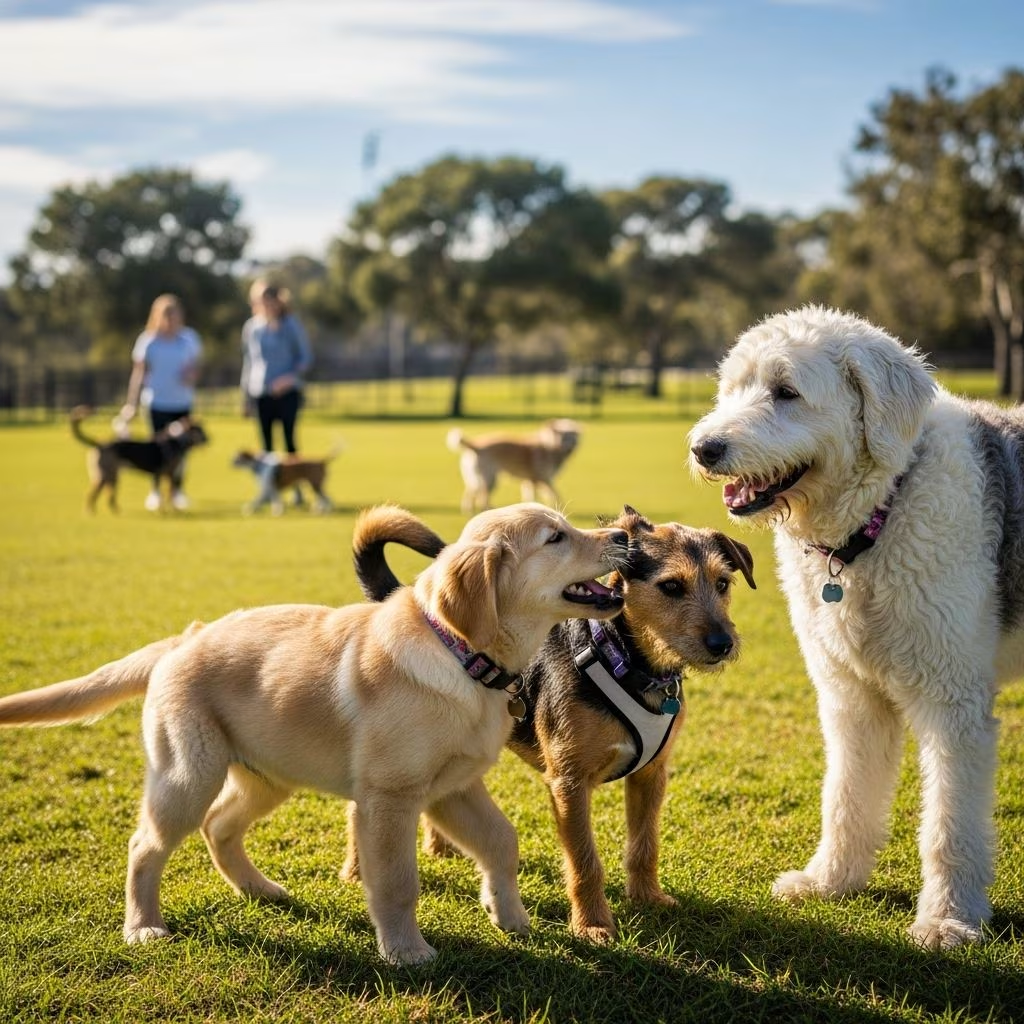
Well-socialized dogs enjoy significantly longer, healthier lives according to groundbreaking research from Arizona State University. Dogs with robust social networks—both canine and human—demonstrate markedly improved health outcomes, underscoring the critical role socialization plays in canine well-being.
Do dogs cheer up if they have friends?
Social isolation takes a heavy toll on dogs, just as it does on humans. Studies reveal that dogs with limited social interactions suffer from heightened stress levels, weakened immune responses, and accelerated aging markers. Conversely, dogs surrounded by friends exhibit lower cortisol levels—the primary stress hormone—and display more playful, confident behaviors.
Dr. Noah Snyder-Mackler, lead researcher from Arizona State University, explains: “Social connectedness—the quality and quantity of our friendships—is one of the components of our social environment that can have a strong impact on our health and well-being. And this link between our social environments and our health extends to many social animals.” This principle applies directly to dogs, where companionship proves more influential on health than factors like household income.
A dog with buddies is a healthy dog
Analysis of nearly 2,000 beagles over eight years revealed that social support was the dominant predictor of overall health—five times more impactful than socioeconomic factors. Socially integrated dogs showed stronger immune function, better cardiovascular health, and slower biological aging.
PhD student Brianah McCoy notes, “So having a friend around really matters, which I am sure we can all relate to.” Regular interactions with other dogs and humans create a buffer against disease and behavioral issues.
- Immune Boost: Social dogs produce more antibodies and fewer inflammatory markers
- Stress Reduction: Lower baseline cortisol levels improve mental health
- Longevity: Social networks correlate with extended lifespan
The Science Behind Dog Social Bonds
Oxytocin, often called the “love hormone,” plays a pivotal role in dog socialization. A PNAS study demonstrated that oxytocin administration significantly increases dogs’ social motivation toward both humans and other dogs. Treated dogs showed higher rates of affiliation, proximity maintenance, and positive social orientation.
The study found that socio-positive interactions naturally trigger endogenous oxytocin release, creating a positive feedback loop that strengthens bonds over time. This neurochemical foundation explains why well-socialized dogs form enduring relationships beyond mere survival needs.
Research from the American Kennel Club confirms dogs enhance human social lives while socialization improves canine mental health. Dog owners report increased openness to strangers, more frequent conversations, and greater community connection.
Socialization Benefits for Puppies
The critical socialization window for puppies spans 3-14 weeks. During this period, puppies’ brains are highly plastic, rapidly forming associations that shape lifelong behavior. Positive exposures to diverse stimuli—people, dogs, environments, sounds—build confident, adaptable adults.
Tufts University research shows children who bond with family dogs develop greater empathy, self-assurance, and social competence. This bidirectional benefit extends across life stages.
| Age Window | Key Socialization Goals | Expected Outcomes |
|---|---|---|
| 3-8 weeks | Household sounds, gentle handling | Reduced fear responses |
| 8-12 weeks | Diverse people, car rides | Increased confidence |
| 12-14 weeks | Other vaccinated puppies, surfaces | Social play skills |
Adult Dog Socialization Strategies
While puppies benefit most from structured socialization, adult dogs can improve dramatically through consistent positive experiences. Start with low-stress environments and gradually increase complexity:
- Parallel walks with calm dogs at a distance
- Supervised playdates with known friendly dogs
- Positive reinforcement for calm greetings
- Group training classes with professional supervision
Japanese researchers found dog walking creates “anchored relationships”—repeated interactions in consistent locations that build community ties. Dog owners experience more incidental chats and deeper neighbor connections.
Behavioral Health Improvements
Socialization dramatically reduces common behavior problems:
- Fear Aggression: 70% reduction through controlled exposures
- Reactivity: Decreased barking/lunging toward triggers
- Separation Anxiety: Better tolerance of alone time
- Resource Guarding: Improved sharing behaviors
Well-socialized dogs show greater adaptability to routine changes, veterinary visits, and travel, reducing owner stress and improving quality of life for both.
Human-Dog Bond Enhancement
Social dogs form stronger attachments to their owners. Oxytocin research reveals mutual hormone release during positive interactions reinforces the human-canine partnership.
Benefits include:
- Increased mutual gazing and physical contact
- Better reading of human emotional cues
- Enhanced training responsiveness
- Greater household harmony
Physical Health Correlations
Beyond mental benefits, socialization encourages essential exercise. Regular dog park visits provide cardiovascular workouts while satisfying social needs. Social dogs maintain healthier weights and exhibit better muscle tone.
Neighborhood studies show dog-owning households walk 22% more daily, compounding health benefits for both species.
Socialization Period Myths Debunked
Myth: “Socialization only matters for puppies.”
Fact: Adults benefit throughout life with patience and consistency.
Myth: “Dog parks are always beneficial.”
Fact: Poorly socialized dogs can worsen from negative experiences.
Myth: “My dog will socialize itself.”
Fact: Proactive, structured exposure yields best results.
Frequently Asked Questions (FAQs)
What is the best age to socialize a puppy?
The critical period is 3-14 weeks, but socialization should continue throughout adolescence and adulthood for optimal results.
Can you socialize an adult rescue dog?
Yes, though progress requires patience. Start with low-stress, positive experiences and professional guidance if needed.
How do I know if my dog is well-socialized?
Well-socialized dogs greet calmly, recover quickly from surprises, enjoy play without bullying, and show confidence in new situations.
Are dog parks safe for socialization?
Only for dogs already showing good social skills. Start with supervised playdates and training classes instead.
How much socialization does my dog need?
Daily positive social exposure—walks, training, playdates—produces the healthiest outcomes.
Socialization Checklist
- ✅ 100+ positive people exposures by 16 weeks
- ✅ Regular play with vaccinated puppies
- ✅ Exposure to household appliances/sounds
- ✅ Car rides and vet visit practice
- ✅ Walks in new neighborhoods weekly
- ✅ Group obedience classes enrollment
Consistent application of these principles transforms shy, fearful dogs into confident companions while significantly extending their healthy lifespan.
References
- Dog Parents Have Better Relationships With Their Neighbors — Kinship. 2023. https://www.kinship.com/news/dogs-owners-more-connected-to-neighbors
- The Healthiest Thing You Can Do Is Get a Dog — Kinship. 2023. https://www.kinship.com/dog-lifestyle/health-benefits-of-having-a-dog
- Why Having a Dog is Actually Great for Your Social Life and Mental Health — American Kennel Club. 2023. https://www.akc.org/expert-advice/news/dog-actually-great-social-life-mental-health/
- Oxytocin promotes social bonding in dogs — Proceedings of the National Academy of Sciences (PNAS). 2014-04-01. https://www.pnas.org/doi/10.1073/pnas.1322868111
- Research Finds Dogs With More Buddies Live Longer — Kinship. 2023. https://www.kinship.com/dog-health/dog-socialization-benefits



