

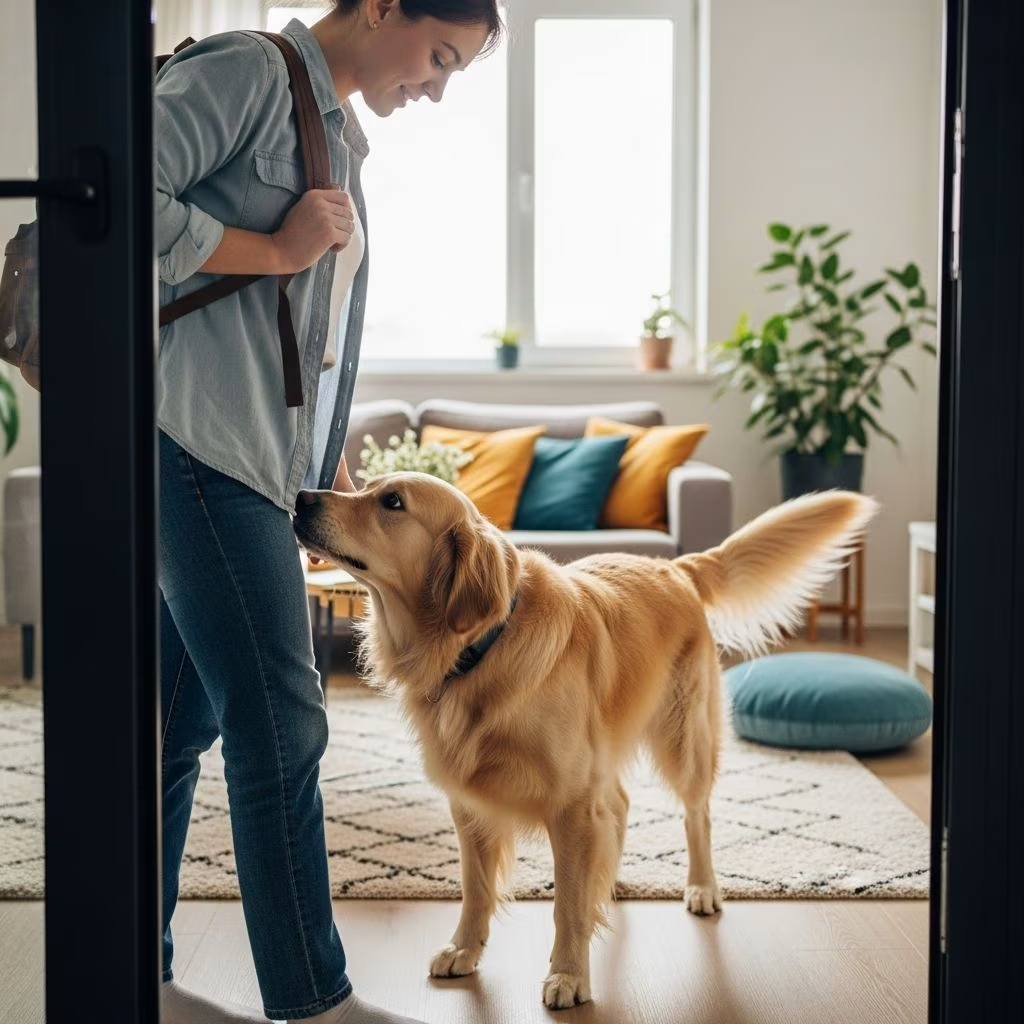
You step through the door after a long day, and before you can even kick off your shoes, your dog is there—nose twitching, sniffing every inch from your toes to your pockets. This daily ritual might feel like a thorough security check, but it’s your dog’s way of catching up on your adventures. Far from mere curiosity, this behavior reveals the incredible power of their sense of smell, allowing them to decode where you’ve been, who you’ve met, and even what you’ve eaten.
Dogs possess an olfactory system 10,000 to 100,000 times more sensitive than humans, with up to 300 million olfactory receptors compared to our 6 million. This super-sniffer capability turns every return home into a news bulletin for your pup, blending science, instinct, and deep emotional connection. In this comprehensive guide, we’ll break down the reasons behind this sniffing obsession, when it might signal something more, and how to embrace or manage it effectively.
Why Do Dogs Sniff You When You Get Home?
No matter if you’ve been at the office, grocery shopping, or visiting friends, your dog launches into an enthusiastic sniff fest the moment you arrive. This isn’t random—it’s a targeted investigation of the scents clinging to your clothes, shoes, and skin. Your personal scent profile, mixed with environmental traces, tells them a complete story of your day.
For instance, if you’ve petted another dog or walked through a park, those lingering aromas spark interest. Food smells are particularly exciting; many dogs associate your return with potential treats hidden in pockets, a habit reinforced by past rewards. Even subtle changes in your stress hormones, detectable via pheromones, help them gauge your mood—happy, tired, or anxious?
Regrouping and Bonding
Just like humans hug loved ones after time apart, dogs use sniffing as a reunion ritual. This ‘scent check-in’ reaffirms your bond, reassuring them you’re safe and still ‘pack.’ You might notice licking too, which serves dual purposes: gathering more scent molecules via the vomeronasal organ (Jacobson’s organ) or depositing their own scent to reinforce household familiarity.
Studies on canine olfaction highlight how this behavior strengthens social ties. In wolf packs, similar scent exchanges maintain group cohesion. Domesticated dogs retain this, turning your homecoming into a moment of reconnection that releases oxytocin—the ‘love hormone’—in both of you. If your dog nuzzles during sniffing, it’s often paired with tail wags and soft eyes, signaling pure affection.
Instinctual Behavior
At its core, sniffing is hardwired. Dogs explore the world primarily through smell, using it to detect threats, food sources, and familiar allies. When you return, they’re verifying you’re not a danger—’Is this still my trusted human, or has something changed?’ This primal drive persists despite domestication, as evidenced by research linking olfactory function to health and behavior.
In the wild, survival depended on such vigilance. Today, it manifests as your dog patrolling your perimeter for any ‘intruder’ scents, like other animals or unfamiliar people. This instinct peaks in breeds like Beagles or Bloodhounds, bred for scent work, but all dogs share it.
Out of Habit
Routines shape dog behavior profoundly. If sniffing started during a puppy’s anxious phase—like adolescence when separation fears peak—it can solidify into habit. Positive reinforcement amplifies it: your pets, hugs, or excited greetings teach them, ‘Sniffing = rewards!’
Over time, this becomes a cherished routine. Dogs thrive on predictability, and your return signals ‘sniff time’—a highlight of their day. Breaking it requires consistency, but most owners find it endearing.
Anxiety and Reassurance-Seeking
Not all sniffing is purely joyful. Dogs with separation anxiety intensify this behavior, using your scent as a comfort hit after solo time. Excessive sniffing, paired with whining, pacing, or clinginess, may indicate distress. They crave your familiar smell to self-soothe.
- Signs of anxiety-driven sniffing: Intense focus ignoring toys/food, trembling, destructive behavior pre-return.
- Normal vs. problematic: Brief, happy sniffing (1-2 minutes) is fine; prolonged hysteria isn’t.
Veterinary behaviorists recommend gradual desensitization: ignore until calm, then reward quiet behavior.
Anticipating Rewards
Dogs are opportunists. If past homecomings involved treats or play, they’ll sniff pockets hoping for repeats. This ‘jackpot search’ is clever conditioning—your pup’s memory links door-opening with goodies. Manage by varying routines to prevent expectation buildup.
Should You Stop Your Dog from Sniffing You?
Generally, no—it’s harmless and healthy. Sniffing exercises their brain, reduces stress, and deepens your bond. However, intervene if:
- It endangers safety (e.g., tripping you with groceries).
- It’s overwhelming for guests (lead or gate them initially).
- It’s obsessive, linked to anxiety.
Management tips:
- Ignore until settled— no attention during frenzy.
- Use a ‘settle’ command with treats for calm sits.
- Provide scent toys pre-return to redirect.
- Consult a vet/trainer for anxiety.
| Scenario | Response |
|---|---|
| Happy, brief sniff | Embrace it! |
| Guest overwhelm | Leash/gate |
| Anxiety signs | Professional help |
Embrace the ‘Sniffing Ritual’
Next homecoming, pause and appreciate: your dog isn’t nosy—they’re your personal news decoder, bonding partner, and guardian. This ritual enriches their world, leveraging a sense we’ll never fully grasp. Lean in, let them investigate, then reciprocate with pets. It’s the essence of canine companionship.
Enhance it with scent games: hide treats, use sniff mats, or rotate blankets for ‘scent swaps.’ These tap their natural drive, preventing boredom.
Frequently Asked Questions (FAQs)
Is it normal for my dog to sniff me excessively when I get home?
Yes, it’s completely normal and driven by their superior sense of smell. It’s how they gather info on your day.
What if my dog only sniffs certain areas like feet or pockets?
Feet carry outdoor scents; pockets hold treat potential. It’s targeted intel-gathering.
Does sniffing mean my dog missed me?
Often yes—it’s a bonding reunion, boosted by your comforting scent.
How can I reduce sniffing if it’s too much?
Ignore the behavior, reward calm, and use management tools like leashes.
Is excessive sniffing a sign of health issues?
Rarely, but compulsive sniffing could link to olfactory or anxiety problems. Vet check recommended.
References
- Why Is My Dog Obsessed With Sniffing Me Every Time I Come Home? — Kinship.com. 2023. https://www.kinship.com/uk/dog-behaviour/why-does-my-dog-sniff-me-when-i-come-home
- Why Do Dogs Smell You When You Come Home — WagWalking. 2023-10-15. https://wagwalking.com/behavior/why-do-dogs-smell-you-when-you-come-home
- Why Do Dogs Sniff Everything? — Wagsworth Manor Pet Resort. 2024. https://wagsworthmanor.com/why-do-dogs-sniff-everything/
- Canine Olfaction: Physiology, Behavior, and Possibilities for Practical Applications — PMC (National Library of Medicine). 2023-05-12. https://pmc.ncbi.nlm.nih.gov/articles/PMC7308493/
- Dogs’ Olfactory Cognition — Frontiers in Veterinary Science (Peer-reviewed). 2024-01-22. https://www.frontiersin.org/journals/veterinary-science/articles/10.3389/fvets.2024.1329505/full
- Separation Anxiety in Dogs — ASPCA.org (Official). 2025. https://www.aspca.org/pet-care/dog-care/common-dog-behavior-issues/separation-anxiety
- Oxytocin and Social Bonding in Dogs — Proceedings of the National Academy of Sciences (PNAS). 2015-04-14. https://www.pnas.org/doi/10.1073/pnas.1506785112
- When the Nose Doesn’t Know: Canine Olfactory Function Associated with Health — Jenkins, Eileen K. et al. Frontiers in Veterinary Science. 2019-12-10. https://www.frontiersin.org/articles/10.3389/fvets.2019.00517/full



