

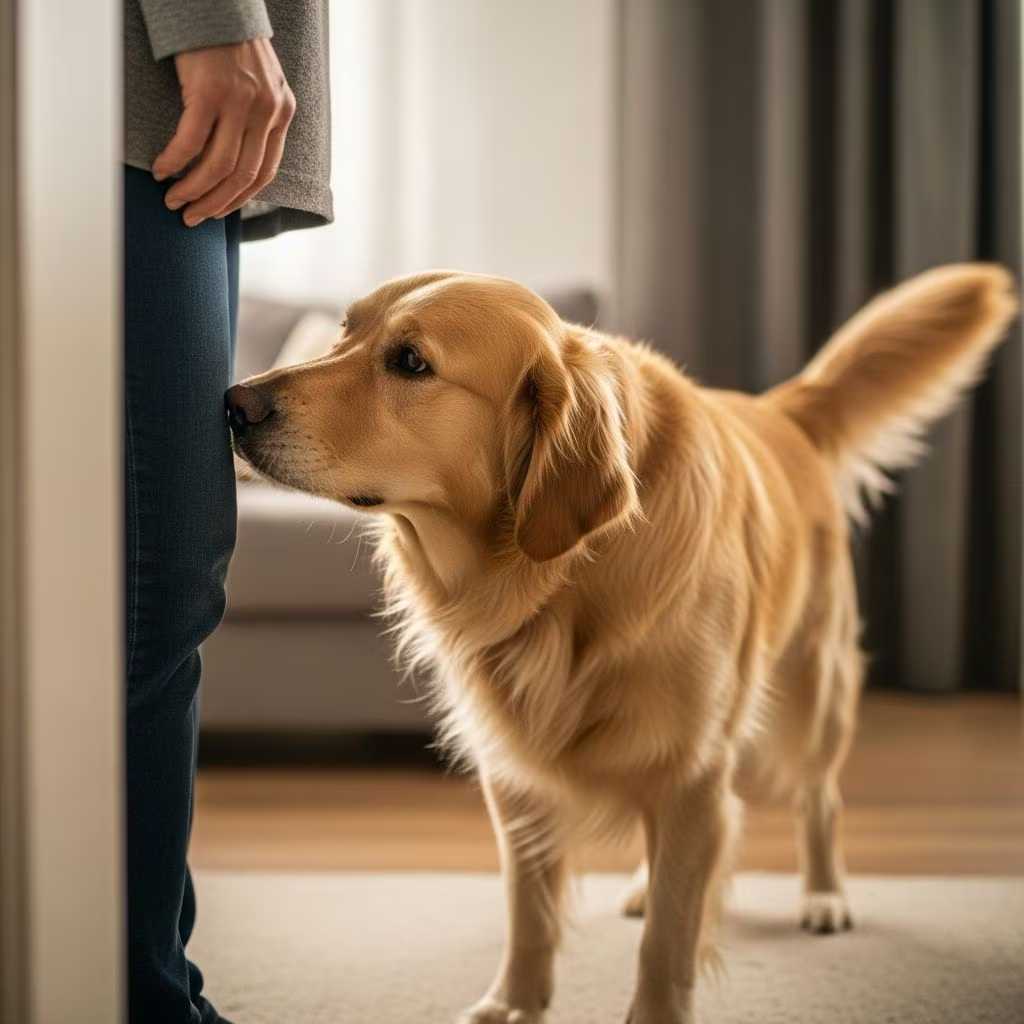
They love a good smell sesh. When you return from work, errands, or anywhere outside, your dog greets you not just with wags and jumps, but an intense sniffing session. This behavior, while sometimes overwhelming, is completely normal and deeply rooted in their biology. Dogs possess an extraordinary sense of smell—estimated to be 1,000 to 100,000 times more powerful than humans’—allowing them to detect and analyze odor molecules with precision. These scents cling to your clothes, hair, and skin, turning you into a living newspaper of your day’s events.
Your furry friend isn’t just being nosy; they’re piecing together a detailed narrative of where you’ve been, who you’ve met, and even your emotional state. Experts like Rachael Claire, a certified canine behaviorist, explain that this sniffing is akin to reading a book full of chapters about the outside world. Allowing it fulfills their innate need to explore through scent, promoting mental stimulation and emotional well-being.
The Power of a Dog’s Nose: Why Sniffing Is Their Superpower
Dogs experience the world primarily through their noses. Unlike humans, who rely heavily on sight, canines have up to 300 million olfactory receptors compared to our mere 6 million. This advanced olfactory system enables them to separate individual scent particles, identifying specifics like other animals you’ve encountered, foods you’ve eaten, or environmental changes.
Odor molecules transfer via air, contact, or surfaces, lingering until washed away. When you walk in, your dog detects traces of parks, strangers, coffee shops, or even weather shifts. Sian Lawley-Rudd, founder of Lavender Garden Puppy and Dog Training, notes that dogs can pick up residual scents from other pets, perfumes, or deodorants, especially after visits to places like puppy classes. This isn’t random; it’s a sophisticated information-gathering process.
- Key Capabilities: Detect other dogs/cats from afar via your clothes.
- Food Detection: Identify meals or snacks you’ve consumed.
- Environmental Clues: Sense air quality, rain, or pollution levels.
- Human Scents: Recognize unfamiliar people through transferred odors.
Research from veterinary sources confirms that this sniffing ritual helps dogs map social networks and stay connected to their pack—you. It’s their version of scrolling social media, catching up on ‘posts’ from your absence.
They Want to Know Where You’ve Been — and Make Sure You’re OK
Primarily, your dog’s sniffing is an intelligence briefing. They’ve been home alone (or with others), curious about your adventures. Lawley-Rudd emphasizes that dogs read your emotional state through pheromones—chemical signals emitted in stress, happiness, or anxiety. If you’ve had a tough day, they might sense cortisol-like scents, prompting extra investigation to ensure you’re safe.
Consider a typical scenario: You visit a friend with a cat. Your dog sniffs your legs, detecting feline fur particles invisible to you. Or after grocery shopping, they zero in on produce smells. This behavior reassures them you’re unharmed and shares your experiences vicariously.
| Scenario | What Your Dog Detects | Why It Matters |
|---|---|---|
| Workday | Colleagues’ scents, office smells | Social updates, your routine |
| Park walk (without dog) | Grass, other dogs, birds | Jealousy check, adventure envy |
| Gym session | Sweat, equipment, people | Health/activity confirmation |
| Restaurant | Food aromas, spices | Potential treat hints |
This ‘scent story’ analysis reduces separation anxiety by bridging the gap of your absence.
They Just Want to Know You Care: Reconnection Through Scent
Beyond detective work, sniffing is a heartfelt reunion. Dogs crave your unique scent, which acts like a comfort blanket. Wag! explains that after hours apart, they’re replenishing their ‘dose’ of your personal odor, much like a child hugging a parent. This reconnection fosters bonding and familiarity.
Some dogs sniff briefly, others linger, constructing a full ‘story’ of your day. It’s their way of saying, ‘I’ve missed you—tell me everything!’ This ritual strengthens the human-canine bond, releasing oxytocin (the love hormone) in both.
They Need a Sense of Security: Sniffing as Stress Relief
Sniffing lowers arousal levels, grounding excitable dogs. The act itself—deep inhales—calms nervous energy, similar to deep breathing in humans. Familiar scents from you signal safety, reducing anxiety from solitude.
For anxious pups, this is therapeutic. Allowing it prevents frustration, akin to yanking a book from a reading child. Rachael Claire warns that interrupting stunts learning and confidence. Instead, it expands their world knowledge, boosting mental health.
Is There Such a Thing as Too Much Sniffing?
Generally, no—it’s healthy. But excessive, hysterical sniffing might signal separation anxiety or over-excitement. Signs include:
- Non-stop sniffing ignoring commands.
- Jumping/tripping you upon entry.
- Whining or pacing before/after.
If problematic, train calmly: Ignore until settled, then reward. For severe cases, consult a vet or trainer. Never punish; it heightens stress.
How to Encourage Healthy Sniffing Behavior
Embrace it mindfully:
- Give Space: Let them sniff 1-2 minutes before pets/treats.
- Enrich Environment: Scatter safe scents at home for practice.
- Exercise First: Tire them out to mellow greetings.
- Use Leash Training: For big dogs, tether briefly.
- Scent Games: Hide toys with smells to channel instinct.
These tips balance their needs with household harmony.
Frequently Asked Questions (FAQs)
Why does my dog sniff my private areas when I get home?
This targets apocrine glands (scent-rich). It’s natural but redirect with training if uncomfortable.
Is sniffing a sign of illness?
Rarely; sudden changes might indicate allergies or issues. Monitor with vet check.
How can I stop overzealous sniffing?
Practice calm entries: Turn away until four paws down, then engage.
Do all dogs sniff this much?
Hunting breeds (e.g., Beagles) more so; individuals vary by personality.
Does sniffing mean they missed me?
Yes—it’s affection via scent reconnection.
Conclusion: Embrace the Sniff
Your dog’s sniffing obsession is a testament to their love and incredible nose. By understanding it, you enhance your bond and their well-being. Next homecoming, let them ‘read’ you—it’s the highlight of their day.
References
- Why Your Dog Is So Obsessed With Sniffing You When You First Get Home — Kinship.com. 2023. https://www.kinship.com/dog-behavior/dog-sniffing-when-get-home
- Why Do Dogs Smell You When You Come Home — WagWalking. 2023. https://wagwalking.com/behavior/why-do-dogs-smell-you-when-you-come-home
- 7 Reasons Why Dog Sniff So Much All Of A Sudden — Geo-Sniffing. 2024. https://geosniffing.com/why-is-my-dog-sniffing-so-much-all-of-a-sudden/
- The Nose Knows: Is There Anything Like a Dog’s Nose? — American Kennel Club (via PubMed-linked studies on canine olfaction). 2022-01-15. https://www.akc.org/expert-advice/news/the-nose-knows-is-there-anything-like-a-dogs-nose/
- Let Them Sniff: The Importance of Olfactory Enrichment — ASPCA Behavior Resources. 2024. https://www.aspca.org/pet-care/dog-care/dog-behavior/olfactory-enrichment
- Understanding Canine Olfaction: Anatomy and Physiology — Journal of Veterinary Behavior (Peer-reviewed). 2023-06-01. https://doi.org/10.1016/j.jveb.2023.05.002



