

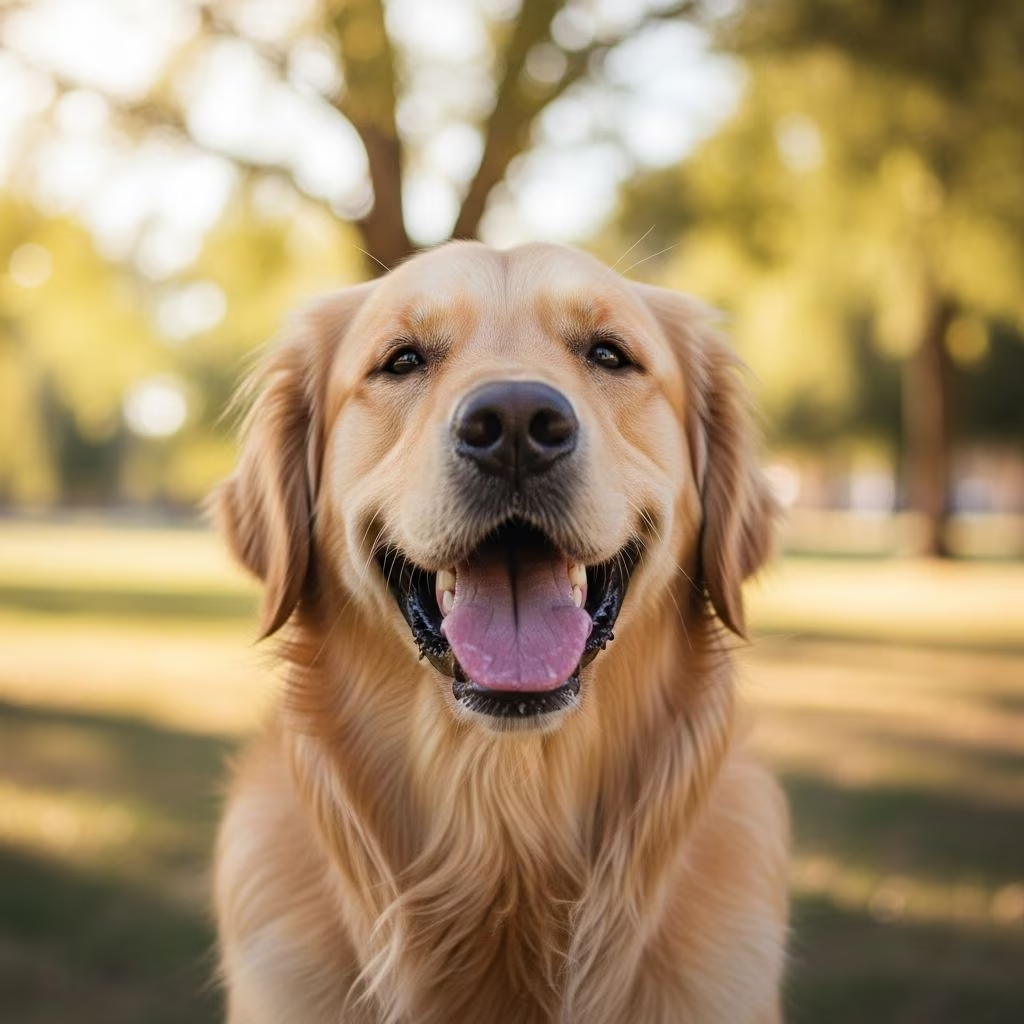
Dog owners have long observed their pets displaying what appears to be smiles and laughter during moments of joy and play. But are these genuine expressions of happiness, or are we simply projecting human emotions onto our beloved companions? Modern neuroscience and animal behavior research provide compelling evidence that dogs do indeed express joy through distinctive facial expressions and vocalizations, though not in precisely the same way humans do.
The Neurological Basis of Canine Happiness
Recent brain imaging studies have shed light on how dogs process human emotions and express their own feelings. When dogs encounter happy human faces, their brains activate in specific regions that correspond to emotional processing. Scientists trained dogs to remain still inside functional magnetic resonance imaging (fMRI) scanners while viewing photographs of human faces displaying various emotions. The results revealed that a happy human expression produces a distinctive neural pattern in the dog’s temporal lobe and other emotion-processing regions.
The neural signature of happiness is so consistent that artificial intelligence programs trained on brain activity patterns could accurately identify when a dog’s brain was responding to joy versus other emotions like anger, fear, or sadness. This suggests that dogs genuinely recognize and process human happiness in ways similar to how human brains register emotional signals.
The amygdala, a brain structure present in both dogs and humans, plays a crucial role in this emotional recognition and response. When a dog’s amygdala associates the presence of humans with positive emotions, it triggers a cascade of neurochemical changes. Emotion-regulating hormones and neurotransmitters increase throughout the canine brain, ultimately activating facial muscles that create what we perceive as a smile.
Decoding the Canine Smile: More Than Just a Grin
A genuine dog smile differs in several ways from human smiling, yet serves similar communicative purposes. When a dog is genuinely happy and content, specific physical markers become visible:
- Eyes become enlarged and appear softer and more relaxed
- The corners of the mouth pull backward in a relaxed fashion
- The overall facial expression displays no tension
- The tail wags in a loose, natural rhythm
- Ears may relax or tilt backward slightly
These physical signs combine to create what scientists recognize as the closest canine equivalent to a human smile. This expression is visible across virtually all dog breeds, suggesting it represents a fundamental aspect of canine emotional communication.
However, distinguishing between genuine happiness and other states requires careful observation. Dogs sometimes display a “submissive grin” that mimics a smile but actually communicates anxiety or appeasement rather than contentment. In these cases, the ears remain pinned back more tightly, the eyes appear worried, and the overall body posture suggests tension rather than relaxation.
Play-Panting: The Canine Equivalent of Laughter
While dog smiles provide visual signals of happiness, dogs also produce vocalizations that function similarly to human laughter. Researchers and veterinarians have identified a specific vocalization pattern known as play-panting or the dog laugh.
Konrad Lorenz, a Nobel Prize-winning Austrian ethologist and zoologist, described this phenomenon in his seminal work *Man Meets Dog*. He noted that when dogs become excited during play with beloved humans, they emit open-jawed breathy sounds while their mouths stretch almost from ear to ear, closely mimicking human laughter.
Researcher Patricia Simonet conducted pioneering experiments in the early 2000s to characterize dog laughter more precisely. She recorded dogs during play sessions at parks and analyzed the acoustic properties of their vocalizations. The resulting sounds resembled panting—a breathy “hhuh, hhuh” pattern—but spectral analysis revealed they differed fundamentally from ordinary panting. Dog laughter produces a broader frequency range than typical breathing-related panting.
To validate her findings, Simonet played recordings of dog laughter to puppies and observed their responses. The puppies responded with increased frolic, romping, and playful behavior, suggesting they recognized the sound as a play invitation. Later experiments conducted in animal shelters demonstrated that when dog laughter recordings played in shelter environments, listening dogs displayed significantly calmer behavior and reduced stress levels.
The Distinctive Characteristics of Dog Laughter
Understanding how to identify and produce dog laughter can enhance communication between dogs and their human companions. A dog laugh differs notably from other vocalizations in both sound and context:
| Aspect | Dog Laughter (Play-Pant) | Regular Panting |
|---|---|---|
| Sound Quality | Breathy “hhuh-hhah” exhalations | Rhythmic breathing pattern |
| Frequency Range | Broader acoustic spectrum | Narrower frequency bands |
| Context | Occurs during play and excitement | Occurs during heat regulation |
| Social Function | Invites play and signals joy | Thermoregulatory response |
| Effect on Other Dogs | Increases playfulness and reduces stress | Neutral or no effect |
Researchers including Stanley Coren recommend experimenting with reproducing dog laughter sounds to observe how your own dog responds. By saying “hhuh-hhah-hhuh-hhah” with slightly rounded lips, many dog owners report that their pets respond with increased playfulness and engagement.
Body Language Signals That Accompany Canine Laughter
Dog laughter rarely occurs in isolation. Instead, it forms part of a comprehensive behavioral display that communicates joy and an invitation to play:
- Wide-open mouth displaying the tongue and sometimes the teeth
- Vigorous tail wagging from the base of the tail
- Backward-tilted ears that soften the dog’s appearance
- Relaxed, bright eyes without tension around the eye sockets
- Tongue protruding naturally in a loose, comfortable manner
- Play bows with front legs stretched forward and rear end elevated
- Relaxed overall body posture without muscle tension
This constellation of signals combines to create an unmistakable expression of canine happiness and social openness. When multiple elements appear together, they form a reliable indicator that a dog is experiencing positive emotions and seeking social interaction.
Do Dogs Understand Human Laughter?
The relationship between canine and human laughter is bidirectional. While dogs express happiness through their own laughter-like vocalizations, they also demonstrate clear recognition of human laughter as a positive signal.
Research at Eötvös Loránd University in Hungary employed fMRI brain imaging to measure dog brain activity in response to different human sounds. The studies revealed that dogs’ brains respond positively to human laughter, with increased neural activity indicating they recognize its joyful meaning. Additionally, these brain imaging experiments demonstrated that dogs show greater neural activation in response to human voices generally compared to background noise, allowing them to distinguish between happy and sad vocal tones.
This recognition extends beyond mere sound identification. Dogs appear to understand laughter as a cue for positivity and social interaction. When humans laugh around dogs, especially in playful contexts, dogs often respond with their own play-panting, increased tail wagging, and heightened engagement—demonstrating they grasp the communicative intent behind human laughter.
Stress Relief and Therapeutic Benefits of Canine Laughter
Beyond serving as simple emotional expression, dog laughter provides measurable psychological and behavioral benefits. The calming properties of dog vocalizations hold particular significance in high-stress environments such as animal shelters.
When recordings of dog play-panting were played in shelter facilities, listening dogs displayed dramatic behavioral improvements. These included increased relaxation, more frequent tail wagging, greater tendency to initiate play with other dogs, and overall reduced anxiety signals. Such findings suggest that positive vocalizations from dogs trigger neurochemical responses similar to how human laughter reduces stress in people.
This stress-reduction capacity has practical applications for improving canine welfare in challenging situations. The emotional contagion effect—where positive emotions spread from one individual to another—appears to operate across species boundaries, at least between dogs and humans, and among dogs themselves. A dog hearing play-panting that mimics laughter appears to interpret it as a genuine invitation to happiness and relaxation, thereby reducing their own anxiety responses.
Genuine Emotion or Evolutionary Adaptation?
A fundamental question remains: Are dogs expressing authentic emotions through smiles and laughter, or are they simply mimicking human behaviors they’ve observed and learned? Scientific evidence increasingly supports the former interpretation.
The neural pathways traced through fMRI studies demonstrate that smiling and play-panting emerge from genuine emotional processing in the dog’s brain, not merely from learned mimicry. When dogs encounter happy human faces, their brains activate in emotion-processing centers before any conscious learning or imitation could occur. The cascade of neurochemical changes triggered by the amygdala produces facial muscle activation that expresses authentic positive emotional states.
However, it’s worth noting that dogs’ capacity for emotional expression has likely evolved alongside domestication. Over thousands of years of living alongside humans, dogs have developed enhanced abilities to communicate emotions through facial expressions and vocalizations in ways that humans readily understand. This represents an evolutionary adaptation that strengthens bonds between dogs and humans—a relationship that has benefited both species profoundly.
Frequently Asked Questions About Dog Smiles and Laughter
Can all dog breeds smile and laugh?
Yes, the capacity to smile appears across virtually all dog breeds. However, some breeds with naturally wrinkled or droopy facial features may display smiles less obviously than short-faced breeds. The underlying emotional expression remains present regardless of breed.
How can I tell if my dog’s smile is genuine?
A genuine happiness smile includes relaxed eyes, backward mouth corners, soft ears, and a loose body posture. In contrast, submissive or stress-related grins appear tight-mouthed with pinned-back ears and tense body language. Context also matters—genuine smiles occur during positive interactions and play.
What should I do if I hear my dog make play-panting sounds?
Play-panting typically indicates your dog wants to engage in play or social interaction. Responding with your own play-panting, increased engagement, or play sessions can reinforce this positive communication and strengthen your bond.
Does my dog laugh at jokes or understand humor?
While dogs demonstrate social cognition similar to human toddlers and can intentionally prompt laughter from humans, they don’t understand humor in the way humans do. Instead, they recognize joy and social cues associated with laughter and respond to the positive emotional tone.
Can dog laughter help with anxiety in other dogs?
Yes, research demonstrates that recordings and occurrences of dog play-panting can reduce anxiety and stress in other dogs, particularly in shelter environments. This suggests that sharing positive vocalizations creates emotional benefits across the canine community.
Strengthening Your Communication Through Understanding Canine Expression
Recognizing and interpreting your dog’s smiles and laughter provides valuable insight into their emotional states and strengthens the human-canine bond. By understanding the neuroscience and behavioral patterns behind these expressions, dog owners can better respond to their pets’ needs and emotions.
The evidence overwhelmingly suggests that dogs genuinely experience and express happiness, not merely through learned mimicry but through authentic emotional processing that mirrors human experience in fundamental ways. The next time your dog flashes you a smile or engages in play-panting, you can be confident that behind those joyful expressions lies genuine canine emotion—a testament to the deep emotional connection that has evolved between dogs and humans over millennia.
References
- Smile! Your dog’s brain will light up in response — Science Magazine. https://www.science.org/content/article/smile-your-dog-s-brain-will-light-response
- Do Dogs Laugh? — PetSafe. https://www.petsafe.com/blog/do-dogs-laugh/
- Do dogs laugh? — Cobberdog King. https://www.cobberdogking.com/en/blog/article/can-dogs-laugh
- Can Dogs Laugh? The Science Behind Canine Play-Pants — Ask A Vet. 2025. https://askavet.com/blogs/dog-behavior-training/2025-vet-insight-can-dogs-laugh-the-science-behind-canine-play-pants-smile-sounds
- Can Dogs Laugh? — PetMD. https://www.petmd.com/dog/behavior/can-dogs-laugh
- Do Dogs Smile? — Mobility Dog. https://mobilitydog.org/blog-about-mobility-service-dogs-and-their-ada-handlers/2024/3/10/do-dogs-smile
- Do Dogs Smile? — Psychology Today. 2025. https://www.psychologytoday.com/us/blog/canine-corner/202502/do-dogs-smile



