

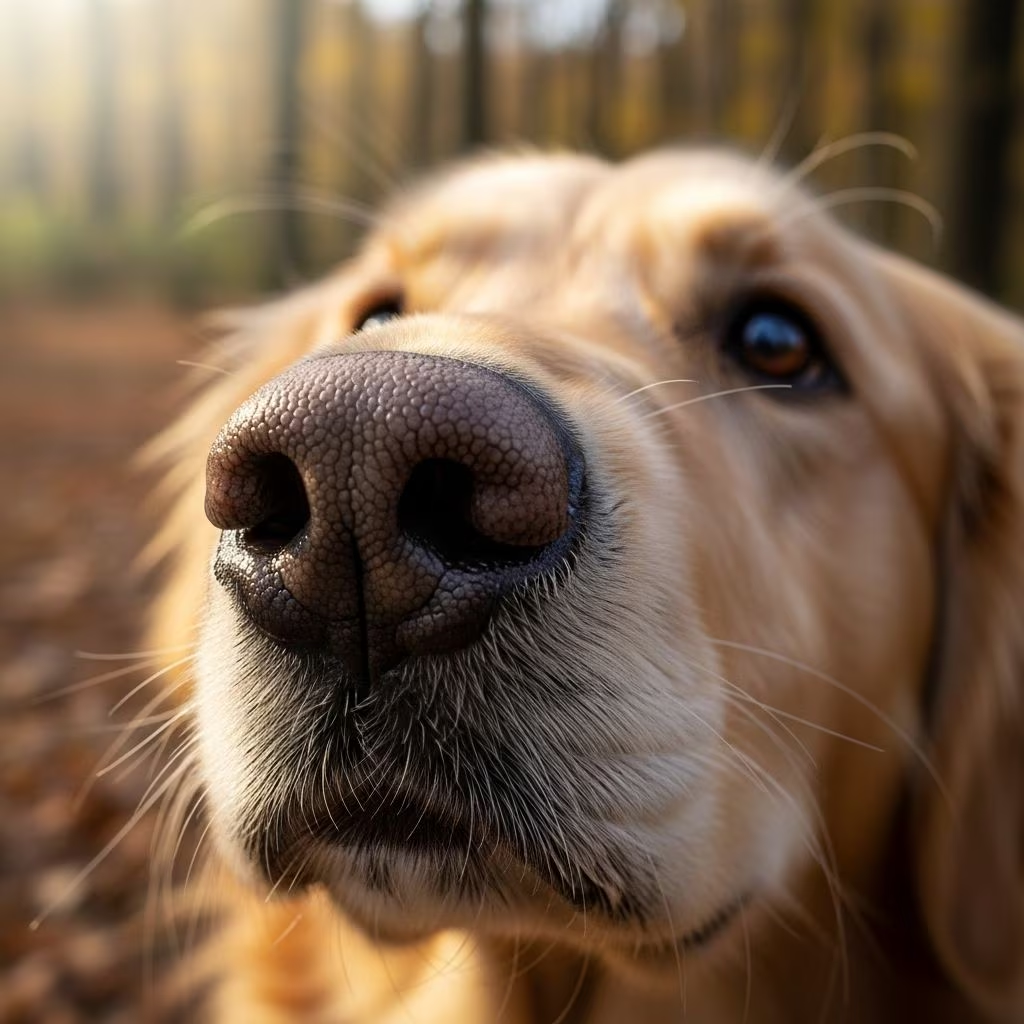
Understanding Your Dog’s Incredible Sense of Smell
Your dog’s nose is far more powerful than you might imagine. While humans rely heavily on vision to navigate the world, dogs experience their surroundings primarily through scent. This fundamental difference in perception shapes how our canine companions interact with their environment, communicate with other animals, and even alert us to potential dangers. Understanding your dog’s sense of smell provides valuable insight into their behavior and deepens your appreciation for their unique abilities.
How Powerful Is Your Dog’s Nose?
Scientists have consistently documented that a dog’s sense of smell is 10,000 to 100,000 times more acute than a human’s. Some specialized breeds, like the Bloodhound, can achieve sensitivity levels up to 100 million times greater than humans. This extraordinary difference in olfactory capability stems from several biological factors working together to create a sensory system unlike anything humans possess.
The primary reason for this superior smelling ability lies in the number of scent receptors. While humans have approximately 5 to 6 million scent receptors, dogs possess around 220 million. This means that for every scent receptor a human has, a dog has approximately 50. Additionally, dogs dedicate a significantly larger portion of their brain to processing smells—approximately 33% compared to just 5% in humans. This substantial brain real estate allows dogs to not only detect scents but also analyze and interpret them with remarkable precision.
The Anatomy of Your Dog’s Nose
The Olfactory Epithelium
The olfactory epithelium is a thin layer of tissue lining the nasal cavity that serves as the primary detector of odors. When your dog inhales, air travels through their nose, and approximately 12% to 13% of that air is separated through an upper pathway that leads directly to the olfactory epithelium. Odor molecules accumulate on this tissue with every breath, allowing dogs to build a comprehensive picture of their olfactory environment. This specialized routing of air, separate from the pathway to the lungs, enables dogs to smell continuously without interfering with respiration.
The Vomeronasal Organ
Beyond the standard olfactory system, dogs possess a special sensory organ called the vomeronasal organ, also known as Jacobson’s organ. Located just above the roof of the mouth, this organ detects pheromones—chemical signals that animals use to communicate with others of the same species. Pheromones play crucial roles in mating behavior, signaling fear and distress, and strengthening the bond between mothers and their puppies. This additional olfactory pathway gives dogs a form of chemical communication that humans simply do not experience.
The Olfactory Bulb
The olfactory bulb is a rounded mass of tissue in the brain containing several types of nerve cells responsible for processing smell. Dogs have a remarkably larger olfactory bulb compared to other mammals with similarly sized brains. This enlarged structure contains millions of neurons dedicated to receiving and interpreting signals from the olfactory epithelium, allowing for the complex analysis of scent information that dogs perform constantly.
How Dogs Smell: A Different Process
Separate Nostril Function
One of the most fascinating aspects of canine olfaction is a phenomenon called “sniffing lateralization.” Dogs can sniff with each nostril separately, and this asymmetrical sniffing serves distinct purposes. When dogs first begin sniffing, they primarily use their right nostril. This right-nostril preference is associated with processing novel, unfamiliar, or potentially threatening information—functions handled by the right hemisphere of the brain.
As dogs become comfortable with a scent—particularly familiar or non-threatening smells like food—they typically switch to their left nostril. The left hemisphere of the brain controls behavioral responses to familiar stimuli, so this switch facilitates the dog’s ability to react appropriately to known scents. For aversive, threatening, or highly arousing scents, dogs maintain right-nostril dominance to maintain heightened alert status. This sophisticated neurological adaptation demonstrates how deeply integrated smell is with your dog’s cognitive and emotional processing.
Continuous Sniffing and Air Flow
Dogs can inhale up to 300 times per minute in short, rapid breaths when actively sniffing. This frequent sniffing ensures that their olfactory cells are constantly supplied with fresh odor particles. The efficiency of this system is remarkable—dogs can detect substances at concentrations of one part per trillion, equivalent to a single drop of liquid in 20 Olympic-sized swimming pools. Additionally, the lower pathway of air circulation during exhalation allows odor molecules to accumulate on the receptors, enhancing their ability to build comprehensive scent profiles.
Physical Characteristics That Affect Smell
Nose Structure and Breed Differences
Not all dog noses are created equal. While all dog breeds possess an excellent sense of smell compared to humans, certain physical characteristics influence olfactory sensitivity. Dogs with elongated noses generally perform better at smelling than dogs with flat, shortened noses. Brachycephalic breeds—dogs with short noses such as Bulldogs, Pugs, and Boxers—have been found to have the least sensitivity to odor compared to non-brachycephalic breeds. The shortened nasal passages limit airflow and reduce the surface area available for scent detection.
Nose Size and Moisture
A dog’s cold, wet nose serves more than just cosmetic purposes. The coating of mucus on a dog’s damp nose helps them smell by capturing and dissolving scent particles. This moisture increases the effectiveness of the olfactory epithelium in absorbing odor molecules. The coldness of a dog’s nose also reflects improved blood circulation to the area, which supports sensory function.
Breed Rankings
Certain breeds stand out for their exceptional olfactory abilities. The Bloodhound leads the way with approximately 300 million scent receptors—nearly 50 times more than average dogs. Other sporting and herding breeds follow closely behind:
- Bluetick Coonhound
- Labrador Retriever
- German Shepherd
- Beagle
- English Springer Spaniel
How Age Affects Your Dog’s Sense of Smell
Just as dogs’ vision and hearing decline with age, so does their sense of smell. Research has documented atrophy of the olfactory epithelium in the nasal cavity in dogs over 14 years of age, along with senile changes in the olfactory bulb similar to those observed in aging humans. However, aging brings some compensatory advantages: older dogs may develop much stronger long-term memory of odors and can process more complicated olfactory information than younger dogs. Additionally, female dogs tend to show more active cells in their olfactory bulbs compared to males, suggesting potential gender differences in olfactory capability.
Environmental Factors Affecting Smell
A dog’s olfactory performance isn’t solely determined by biology—environmental conditions significantly influence their ability to detect and track scents:
- Humidity: Higher humidity improves scent detection by trapping odors in water vapor and increasing humidity within the dog’s nasal cavity
- Temperature: Warmer temperatures increase odor molecules in the air at nose level, though excessive heat can kill bacteria useful in detecting scents
- Wind: Optimal wind speeds of 3 to 10 km/h enhance scent tracking, while very low winds reduce effective range and excessive wind creates turbulence that hinders detection
- Time of Day: Dogs may perform better at certain times when atmospheric conditions are more favorable
Your Dog’s Remarkable Olfactory Abilities
Detecting Human Stress
Research conducted at Queen’s University Belfast revealed that dogs can detect when humans are stressed. When humans experience stress, their breath and sweat samples contain volatile organic chemicals detectable by dogs. Dogs in the study correctly identified stress samples with a combined accuracy of 93.75%, demonstrating that your dog can literally smell your anxiety or fear.
Recognizing Your Personal Scent
A groundbreaking study conducted at Emory University used functional MRI technology to observe how dogs’ brains respond to different scents. Researchers presented trained dogs with five scents: a familiar human, an unfamiliar human, a familiar dog, an unfamiliar dog, and the dog’s own scent. The results were heartwarming: only the familiar human scent activated the part of the dog’s brain associated with positive expectations and social rewards. This suggests that dogs don’t just recognize our scents—they associate our individual odors with good things and genuine affection.
Medical Detection Abilities
One of the most remarkable applications of canine olfaction is disease detection. Dogs’ powerful noses are increasingly being used in medical settings to identify diseases in ways that are less invasive than traditional diagnostic tests. Studies have demonstrated that properly trained dogs can:
- Detect various forms of cancer with remarkable accuracy, including breast cancer (88% accuracy) and lung cancer (99% accuracy) through breath samples
- Predict seizures before they occur, giving handlers crucial warning time
- Identify people with dangerously low blood sugar levels
- Detect narcolepsy with 91.7% accuracy using sweat samples and provide warnings up to 5 minutes before attacks occur
- Identify blood samples from cancer patients with nearly 97% accuracy
Frequently Asked Questions
Q: Why is my dog’s nose always wet?
A: A dog’s wet nose is perfectly normal and actually beneficial for their sense of smell. The moisture helps capture and dissolve scent particles, making odors easier to detect. The wetness also reflects good circulation to the area, which supports sensory function.
Q: Can all dog breeds smell equally well?
A: While all dogs have excellent senses of smell compared to humans, not all breeds are equal. Dogs with elongated noses like Bloodhounds have superior olfactory abilities compared to brachycephalic breeds like Bulldogs, which have shortened nasal passages that limit their smelling capacity.
Q: Does my dog’s sense of smell decline with age?
A: Yes, a dog’s sense of smell gradually decreases with age due to atrophy of the olfactory epithelium and changes in the olfactory bulb. However, older dogs often compensate with stronger long-term odor memory and the ability to process more complex scent information.
Q: How does my dog use smell to communicate?
A: Dogs use their vomeronasal organ to detect pheromones, which are chemical signals used for communication within their species. These signals convey information about mating, fear, distress, and the bond between mothers and puppies.
Q: Can dogs really smell diseases?
A: Yes, properly trained dogs can detect various diseases including cancer, diabetes, and narcolepsy. They accomplish this by identifying subtle changes in human scent caused by disease, detecting volatile organic compounds released by diseased cells with incredible accuracy.
Q: Why does my dog sniff with one nostril more than the other?
A: This is called sniffing lateralization. Dogs use their right nostril primarily when encountering novel or threatening scents, and switch to their left nostril for familiar, non-threatening smells. This reflects how each hemisphere of the brain processes different types of information.
References
- How Well Can Your Dog Smell? 13 Fun Facts About Your Dog’s Sense of Smell — CareCredit. 2024. https://www.carecredit.com/well-u/pet-care/how-well-can-your-dog-smell/
- The Science of Sniffs: Disease Smelling Dogs — Understanding Animal Research. 2024. https://www.understandinganimalresearch.org.uk/news/the-science-of-sniffs-disease-smelling-dogs
- Canine Olfaction: Physiology, Behavior, and Possibilities for Practical Applications — National Center for Biotechnology Information (NCBI). PMC8388720. https://pmc.ncbi.nlm.nih.gov/articles/PMC8388720/
- Dog Sense of Smell — Wikipedia. 2024. https://en.wikipedia.org/wiki/Dog_sense_of_smell
- How Dogs Use Smell to Perceive the World — VCA Animal Hospitals. 2024. https://vcahospitals.com/know-your-pet/how-dogs-use-smell-to-perceive-the-world



