

Why Your Dog’s Sense of Smell Matters More Than You Think
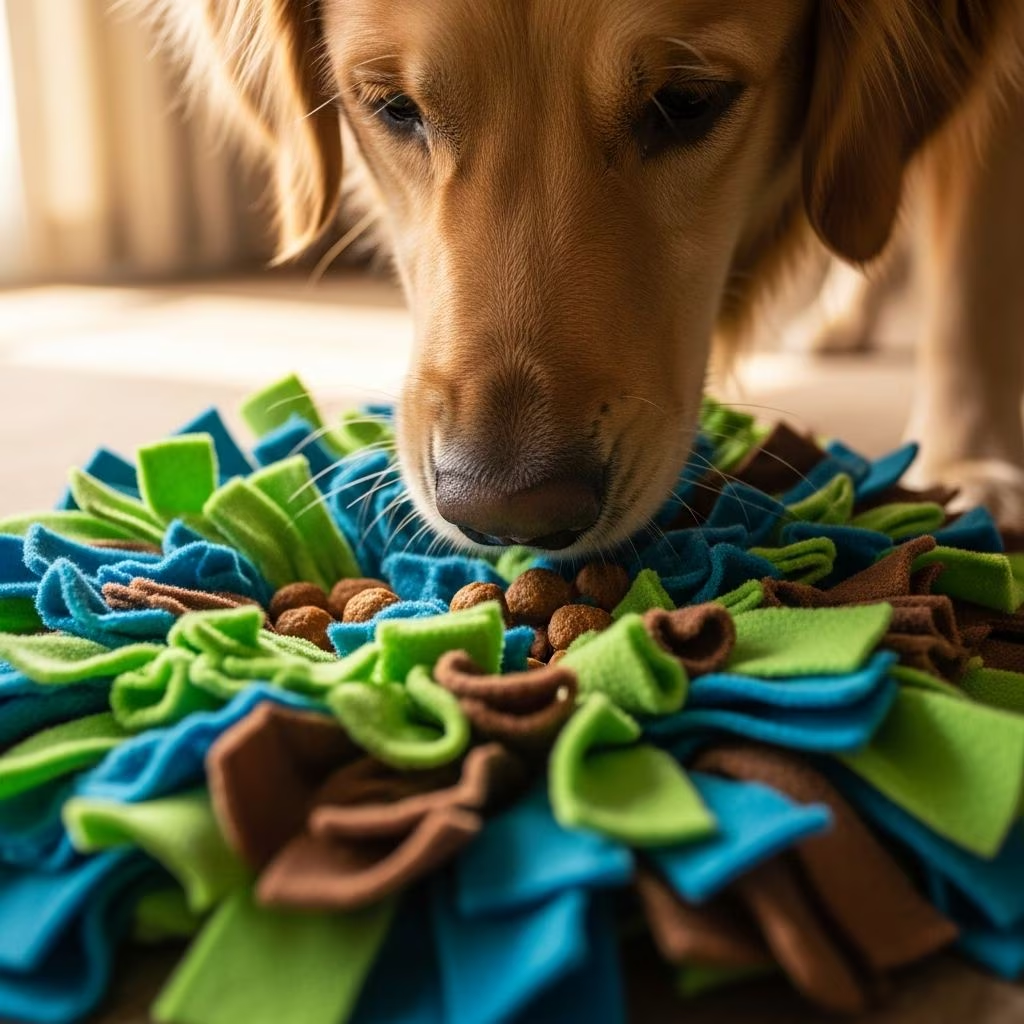
Dogs experience the world through their noses in ways humans can barely comprehend. Their olfactory capabilities far exceed our own, allowing them to detect scents at concentrations thousands of times lower than what we can perceive. When your dog takes a walk, they’re gathering enormous amounts of information through their nose—information that enriches their understanding of their environment and provides mental engagement we often overlook.
Scent games tap into this natural ability, transforming your dog’s instinctive sniffing behavior into structured activities that provide both entertainment and cognitive development. Rather than suppressing this behavior during walks or at home, scent games celebrate and channel it productively.
The Cognitive and Behavioral Benefits of Scent-Based Activities
Engaging your dog in regular scent work offers multiple layers of benefit beyond simple entertainment. These activities stimulate your dog’s brain in profound ways, requiring them to problem-solve, focus, and make decisions independently. Dogs that participate in scent games often show improved confidence, particularly those with anxiety or behavioral challenges.
Research from animal behavior specialists indicates that allowing dogs to work independently on scent tasks helps build their problem-solving abilities and persistence. The act of using their primary sense—smell—in a structured game context satisfies an intrinsic need for mental engagement that many domesticated dogs don’t experience in their daily lives.
Foundational Games for Beginners
The Muffin Tin Puzzle: Starting Simple
One of the most accessible entry points into scent games requires nothing more specialized than items you likely have at home. The muffin tin puzzle introduces your dog to the concept of using their nose to locate rewards through a tactile and olfactory challenge.
- Place aromatic treats into several cups of an empty muffin tin
- Cover all cups with tennis balls, regardless of whether they contain treats
- Present the puzzle to your dog and allow them to explore freely
- Encourage them to move the balls using their paws and nose to access hidden treats
As your dog becomes proficient, gradually increase the difficulty by adding more empty cups, making the puzzle require greater discrimination between scented and unscented locations. The beauty of this game lies in its simplicity and its effectiveness at building foundational scent-work skills.
Cardboard Box Construction
Repurposing cardboard boxes transforms household waste into enrichment opportunities. This game teaches your dog to manipulate objects and use both their nose and paws to solve problems.
- Gather five to eight small cardboard boxes
- Poke or cut several small holes into each box
- Hide highly aromatic treats inside the boxes
- Arrange the boxes in your yard or living room
- Allow your dog to explore and figure out how to extract treats
This activity encourages independent problem-solving and builds your dog’s confidence as they successfully complete the task without constant human guidance.
Intermediate Scent Game Variations
Scent Trail Following
Once your dog understands the basic concept of following their nose to rewards, scent trails introduce the element of tracking and direction-following. This game mimics real-world tracking tasks and provides excellent mental stimulation.
Create a scent trail by dragging a highly aromatic treat—such as chicken, cheese, or specialized dog training treats—along the ground or through grass. Hide the reward at the end of the trail where your dog will ultimately discover it. Start with short, obvious trails and gradually extend the distance and add subtle variations in direction as your dog’s tracking abilities improve.
The Cup Selection Challenge
This intermediate game teaches your dog to make correct discriminations and builds their understanding that they should communicate what they find through specific behaviors.
- Arrange several inverted cups in a line
- Place a treat under one cup
- Guide your dog to investigate each cup
- Praise and reward when they select the correct cup containing the treat
- Gradually increase the number of cups as proficiency improves
To demonstrate that your dog is using their nose rather than simply memorizing locations, occasionally shuffle the cups around before each trial, similar to a shell game. This variation prevents your dog from relying on memory and reinforces their use of olfactory information.
Advanced Training Applications
Introducing Essential Oils and Specific Scents
Beyond food-based scent games, you can train your dog to identify and alert to specific non-food odors. This opens possibilities for competitive scent work and more sophisticated training applications.
Begin by selecting an essential oil appropriate for dogs. Place a single drop onto a cotton swab and secure it inside a glass jar—small canning jars work effectively. Hold the jar near your dog and immediately reward them with treats when they sniff or nose-bump the jar. This creates a strong association between the scent and positive reinforcement.
Common essential oils suitable for training include peppermint, lavender, chamomile, and cinnamon. You can also source hunting-specific scents from specialty retailers, which provide realistic training scenarios for dogs with working backgrounds.
Building from Simple to Complex Searches
Progression in scent work follows a logical sequence. After your dog consistently identifies scents held in your hand, transition the jar to ground level. Eventually, hide the scented jar in various locations throughout your home or yard. This progression builds your dog’s understanding of their task while maintaining their motivation and success rate.
Scent Games as Training Tools
Reinforcing Recall Commands
Incorporate scent games into your obedience training by using aromatic treats strategically placed in your training area. Practice calling your dog to “come” using their favorite scented treats as motivation. This combines scent enrichment with command training, creating a multi-layered training opportunity.
Building Confidence in Anxious Dogs
Dogs experiencing behavioral or emotional challenges often benefit from scent-work training. The independent nature of the work—where your dog solves problems with minimal human interference—builds confidence gradually. Many shelter professionals and trainers report noticeable improvements in behavior and anxiety levels in dogs that engage regularly in scent games.
Practical Setup and Safety Considerations
Choosing Appropriate Treats and Rewards
Select treats that are highly aromatic and appropriate for your dog’s size and dietary needs. Soft treats often work better than hard kibble because they release scent more readily. Consider your dog’s specific dietary restrictions, allergies, or sensitivities when selecting rewards.
Environmental Preparation
Begin scent games in low-distraction environments where your dog can focus. As their skills develop, gradually introduce games in more complex environments with competing scents, such as kitchens or backyards with diverse olfactory stimulation.
Session Management
Keep scent game sessions relatively brief—typically 10 to 20 minutes—to maintain your dog’s interest and enthusiasm. End sessions on a positive note with a successful find, leaving your dog eager for the next opportunity.
Competitive Scent Work: Taking It Further
If you find yourself enjoying scent games with your dog, competitive opportunities exist. The American Kennel Club offers AKC Scent Work competitions where dogs search for specific odors in various environments.
At the Novice level, dogs search for birch essential oil. Advanced levels introduce anise, clove, and cypress scents. Competition categories include interior searches, exterior searches, vehicle searches, and container searches, providing diverse challenges for experienced scent-work teams.
Beginning with birch oil during your home training prepares your dog appropriately for potential competition entry, though competition participation remains optional for dogs who simply enjoy the enrichment benefits.
Environmental Enrichment Beyond Games
Maximizing Sniffing Opportunities on Walks
Formalized scent games represent only one component of olfactory enrichment. Allow your dog extended sniffing time during walks, varying your routes to expose them to new scents regularly. Different environments provide distinct olfactory landscapes that naturally stimulate your dog’s brain.
Scent-Based Bedding Enrichment
Add interesting scents to your dog’s bedding and rotate them periodically to maintain novelty. Some facilities use calming scents such as lavender, which research suggests may promote relaxation and reduce stress in canine environments.
Common Questions About Scent Games
At what age can dogs start scent games?
Most puppies can begin simple scent games as early as 8 to 12 weeks old. Start with highly aromatic treats and obvious hiding spots, adjusting difficulty based on your individual puppy’s maturation and confidence level.
How often should I play scent games with my dog?
Three to four sessions per week provides excellent enrichment without overtraining. Many dogs benefit from brief daily sessions, though quality matters more than frequency.
Can senior dogs participate in scent games?
Senior dogs often excel at scent games because the activity doesn’t require physical athleticism. These games provide excellent mental stimulation for older dogs while accommodating their reduced energy levels and physical capabilities.
What if my dog shows no interest in scent games initially?
Start with higher-value treats that capture your dog’s attention more effectively. Some dogs require longer introduction periods. Keep sessions very short and end positively to build gradual interest.
Do I need special equipment for scent games?
Most scent games rely on household items—muffin tins, cups, boxes, and towels. Specialized equipment enhances options but remains optional for basic training.
Conclusion: Unlocking Your Dog’s Potential
Scent games represent a powerful, accessible way to enrich your dog’s life while deepening your bond. By providing structured opportunities for your dog to use their extraordinary sense of smell, you’re not simply providing entertainment—you’re offering cognitive engagement, building confidence, and supporting their emotional wellbeing. Whether you choose to engage in casual home games or explore competitive opportunities, scent work transforms your dog’s natural abilities into meaningful activities that satisfy deep instinctive needs.
References
- Indoor Scent Games For Dogs — American Kennel Club. Accessed March 2026. https://www.akc.org/expert-advice/training/indoor-scent-games-for-dogs/
- Scent Games for Canine Enrichment — ASPCApro. https://www.aspcapro.org/resource/scent-games-canine-enrichment
- Scent Work & Mental Stimulation Games For Dogs — Dr. Harvey’s. https://www.drharveys.com/blogs/blog/scent-work-mental-stimulation-games-for-dogs
- The Beginner’s Guide to Scent Training for Dogs — Tug-E-Nuff. https://us.tug-e-nuff.com/blogs/news/scent-training-for-dogs
- Scent Game for Dogs: Benefits + Easy Nose Work Games — Natural Farm Pet. https://www.naturalfarmpet.com/blogs/all/scent-games-tapping-into-your-dogs-incredible-sense-of-smell



