

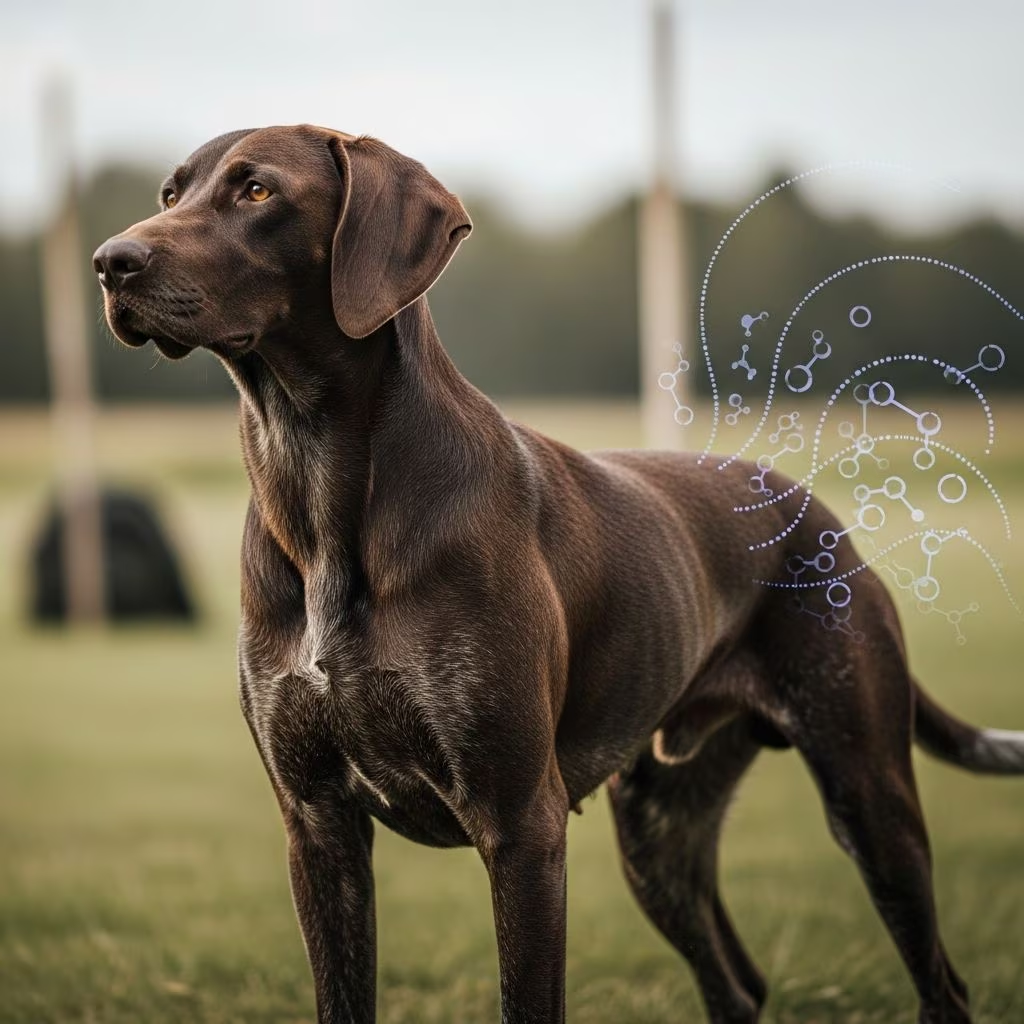
Canine olfactory capabilities enable male dogs to detect females in estrus from significant distances, often up to several miles under optimal conditions. This extraordinary sense drives instinctual behaviors that pet owners must manage carefully to ensure safety.
The Power of a Dog’s Nose
Dogs possess an olfactory system far superior to humans, with approximately 300 million scent receptors compared to our 5-6 million. This allows them to perceive odors at concentrations 100,000 times lower than what humans can detect. The vomeronasal organ, or Jacobson’s organ, plays a crucial role in identifying pheromones—chemical signals released by females during their fertile period.
These pheromones are potent attractants, carrying information about reproductive status across vast areas. Wind direction, humidity, temperature, and terrain all modulate how effectively these scents travel. For instance, favorable winds can carry odors up to 12 miles in open areas, though pheromone detection typically ranges from 1 to 3 miles for most dogs.
- Olfactory receptors: 300 million in dogs vs. 5-6 million in humans
- Sensitivity level: Up to 100,000 times greater than humans
- Key organ: Vomeronasal organ for pheromone detection
Detection Distances Explained
Estimates vary, but males can often sense a female in heat from 1 to 3 miles away, with extremes reaching farther in ideal scenarios. Factors like breed influence this: scent hounds such as Bloodhounds excel due to their genetic predisposition for tracking, potentially detecting odors over longer ranges than brachycephalic breeds with shorter snouts.
| Factor | Impact on Detection Range | Example |
|---|---|---|
| Wind Direction | Carries scent toward dog (extends range) | Downwind: up to 3+ miles |
| Humidity | Higher levels preserve scent molecules | Humid day: enhanced detection |
| Terrain | Open fields allow farther travel | Forest: reduced to under 1 mile |
| Breed | Scent breeds outperform others | Bloodhound: superior range |
Training further amplifies these abilities, as seen in search-and-rescue dogs that track scents over miles of varied terrain.
Understanding the Female Heat Cycle
Females enter estrus roughly every six months, with cycles lasting about four months total across four phases: proestrus (swollen vulva, bloody discharge, 6-11 days), estrus (fertile period, 5-9 days, pheromone peak), diestrus (60 days, post-mating hormonal shift), and anestrus (rest phase, several months). Pheromone release peaks during estrus, making females highly attractive.
Signs include vulvar swelling, discharge changes, restlessness, and mounting behaviors. Breeds like Basenjis may cycle annually, while others follow biannual patterns. Non-neutered males in proximity can accelerate onset in females.
- Proestrus: Estrogen rise, bleeding begins
- Estrus: Ovulation, male attraction strongest
- Diestrus: Progesterone dominance
- Anestrus: Reproductive rest
Behavioral Changes in Male Dogs
When detecting these scents, intact males exhibit marked shifts: frantic escape attempts, appetite loss, ignoring routines, excessive marking, and heightened aggression. They may whine, pace, or fixate on doors/windows facing the scent source. These instincts override training, leading to fence-jumping or digging escapes.
Female owners notice increased male attention from neighbors, underscoring the need for containment during cycles.
- Persistent howling or barking
- Refusal of food/toys
- Hyper-focus on escaping
- Urine marking surges
- Mood swings or irritability
Safety Strategies for Pet Owners
Immediate supervision is essential. Leash walks strictly, reinforce fencing, and separate housemates during heat. Products like chlorophyll supplements may mask scents but lack reliability; combine with physical barriers.
For multi-dog homes, crate separation prevents unplanned matings. Avoid off-leash areas entirely. Long-term, neutering eliminates drives, reducing roaming risks and health issues like testicular cancer.
Benefits and Considerations of Spaying/Neutering
Spaying females prevents heats, pyometra, and mammary tumors; neutering males curbs prostate problems and aggression. Optimal timing varies: post-first heat for females reduces cancer risk, 6-9 months for males. Consult vets for breed-specific advice, weighing obesity or joint risks.
| Procedure | Key Benefits | Potential Drawbacks |
|---|---|---|
| Neutering (Male) | Eliminates roaming/heat response; cancer prevention | Possible weight gain; timing sensitive |
| Spaying (Female) | No heats/pregnancies; tumor reduction | Incontinence risk if early; surgical recovery |
Environmental Influences on Scent Travel
Beyond weather, seasonal changes affect detection: spring growth dilutes ground scents, while winter clarity aids airborne travel. Urban vs. rural settings differ—city pollution hampers, rural openness enhances ranges. Rain washes away pheromones, snow preserves them temporarily.
Breed-Specific Olfactory Profiles
Hunting breeds like Beagles track over miles; herding dogs like Border Collies detect moderately; companion breeds like Pugs struggle due to anatomy. Training unlocks potential across breeds for tasks like detection work.
- Elite trackers: Bloodhound, Basset Hound
- Moderate: Labrador, German Shepherd
- Limited: Bulldog, Pug
FAQs
How far can most dogs smell a female in heat?
Typically 1-3 miles, varying by conditions and breed.
Can weather prevent scent detection?
Yes, rain and headwinds reduce range significantly.
Does neutering stop scent interest immediately?
No, residual behaviors may linger weeks post-surgery.
Are there reliable scent-masking products?
Options exist but are inconsistent; prevention is key.
When should I spay/neuter my dog?
Discuss with vet; often 6-12 months based on health.
Advanced Detection Insights
Research shows dogs distinguish individual pheromones, identifying specific females. This precision explains targeted pursuits. In controlled studies, trained dogs locate scents diluted to parts per trillion, mirroring heat detection feats.
Pet overpopulation ties to unmanaged heats; responsible ownership via sterilization aids shelter relief. Track cycles via apps/calendars for preparation.
References
- Dogs in Heat: How Long It Lasts and What to Expect — CareCredit. 2023. https://www.carecredit.com/well-u/pet-care/dogs-in-heat/
- How Far Can Dogs Smell? Dog Sniffing Senses Explained — Tractive. 2023. https://tractive.com/blog/en/safety/how-far-can-dogs-smell-dog-sniffing-senses-explained
- National Canine Cancer Foundation: Spay/Neuter Guidelines — American Veterinary Medical Association (via AVMA.org). 2024-01-15. https://www.avma.org/resources-tools/pet-owners/petcare/spaying-and-neutering
- Olfactory Sensitivity in Dogs — Journal of Veterinary Behavior (Peer-reviewed). 2022-05-10. https://doi.org/10.1016/j.jveb.2022.03.005
- Canine Reproductive Cycles — Merck Veterinary Manual. 2025-01-01. https://www.merckvetmanual.com/dog-owners/reproductive-disorders-of-dogs/heat-the-heat-cycle-in-dogs



