

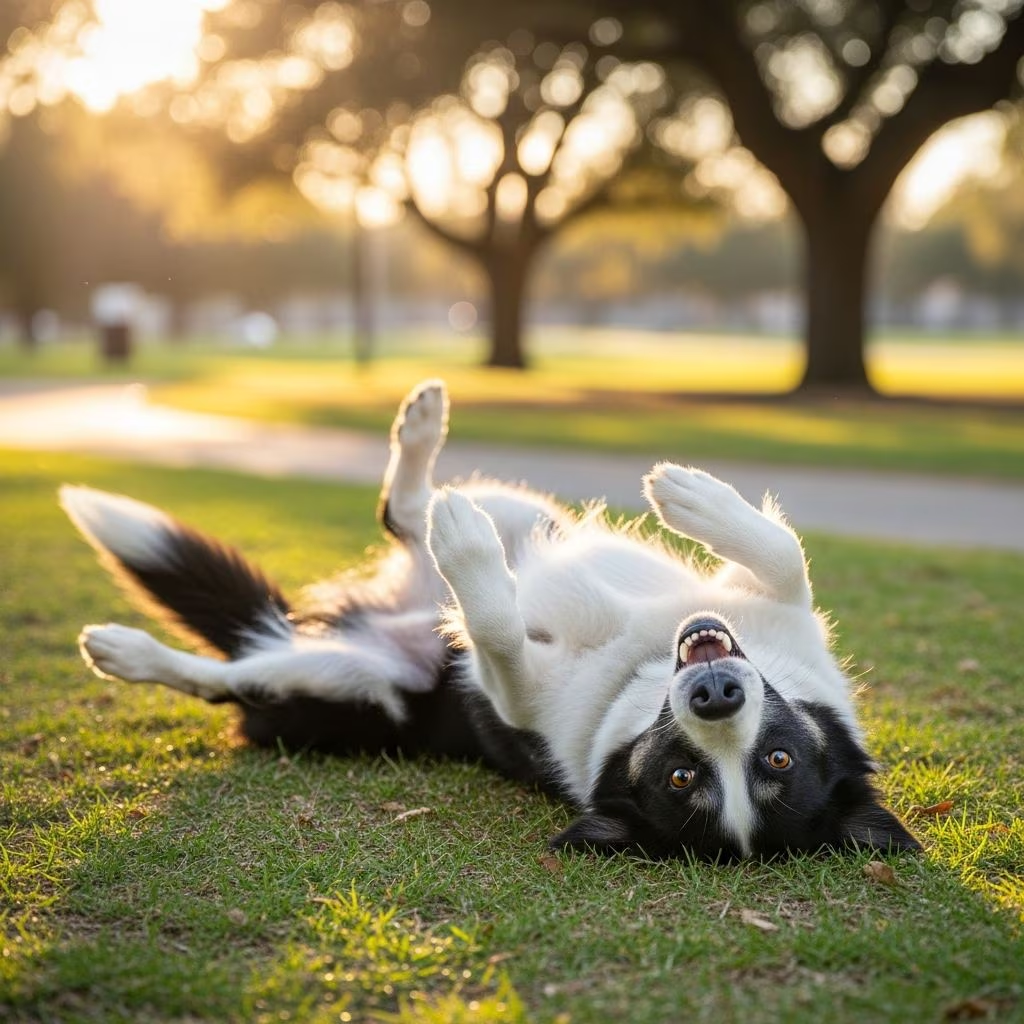
Teaching your dog to roll over is one of the most entertaining and rewarding tricks you can accomplish together. This classic trick showcases your dog’s intelligence and willingness to cooperate with you, while simultaneously strengthening your bond through positive interactions. Unlike some complex behaviors that require extensive experience, roll over is achievable for most dogs regardless of age or previous training background. The key to success lies in understanding how to break down this seemingly simple trick into manageable components and maintaining consistency throughout the learning process.
Understanding the Roll Over Behavior
Before you begin training, it’s helpful to understand what’s actually happening when your dog rolls over. The behavior consists of several distinct phases that occur in sequence. First, your dog must shift their weight to one side of their body. This requires balance and coordination, as your dog transitions from a seated or standing position. Next, your dog needs to tip further onto their hip and eventually their shoulder, creating the momentum necessary for the full rotation. Finally, they complete the roll by bringing their legs up and over their body, finishing with a return to an upright position or continuing to their side.
This breakdown is crucial because many trainers attempt to teach the entire behavior at once, leading to confusion and frustration for both dog and owner. Instead, successful training involves rewarding your dog for completing each smaller component until they can string all the pieces together seamlessly. This approach aligns with modern positive reinforcement training methods that emphasize clarity and incremental progress.
Essential Preparation and Prerequisites
Choosing the Right Training Environment
Your training environment significantly impacts your dog’s ability to learn and focus on the task at hand. Select a quiet, familiar space free from distractions where your dog feels comfortable and confident. Your living room, backyard, or a quiet corner of a park works well for initial training sessions. Avoid loud environments, unfamiliar locations, or areas with other dogs or people, as these elements will divert your dog’s attention from your instructions and reward signals.
The surface matters as well. A soft surface like carpet, grass, or a yoga mat is preferable to hard flooring such as tile or concrete. Rolling over on uncomfortable surfaces can discourage your dog from fully committing to the behavior, and hard surfaces may cause discomfort during the learning phase. Once your dog has mastered the trick on a comfortable surface, you can gradually introduce training in other environments.
Selecting Appropriate Motivation Tools
The most effective training motivators fall into two categories: food rewards and toy rewards. Food remains the most common choice because it provides immediate gratification and can be easily portioned into tiny pieces. High-value treats—those your dog doesn’t receive during regular meals—work best. Suitable options include small pieces of cooked chicken, turkey sausage, cheese, or commercial training treats that are designed to be quickly consumed.
For dogs less motivated by food, toys can serve as excellent training incentives. A squeaky toy, tug toy, or favorite ball can be just as effective as treats for the right dog. Some trainers even combine both motivators, using food for most of the training and introducing toys as an alternative reward to maintain your dog’s enthusiasm over extended training periods.
The Progressive Training Framework
Building the Foundation: Getting Your Dog on Their Side
Begin by positioning your dog in a comfortable lying position or seated posture. Holding a treat close to your dog’s nose, slowly move it toward their neck and past their shoulder in an arcing motion. Your dog will naturally follow the treat with their head, causing their body to shift onto one side. As soon as your dog’s head turns and their weight shifts, immediately provide the reward and enthusiastic praise.
Repeat this step multiple times during short training sessions. Your dog will begin to anticipate the reward and may start turning their head more readily. This is exactly what you want to see—it indicates your dog understands that turning their head toward their neck produces a positive outcome. Continue rewarding every successful attempt without moving to the next stage prematurely.
Progressing to the Full Body Rotation
Once your dog consistently turns their head in response to your treat lure, gradually increase the distance your hand travels. Instead of stopping at their shoulder, continue the arcing motion past their side, encouraging them to shift more of their body weight. As your dog follows the treat further, they will naturally roll onto their hip and eventually onto their back.
At each stage of this progression, pause and reward your dog for reaching the new position. Some dogs may need many repetitions at each level before progressing further, while others might move through the stages more quickly. Patience is essential—if you rush the process, your dog may become confused or develop an incomplete version of the trick that’s difficult to correct later.
Completing the Rotation
The final component involves your dog rolling from their back to their opposite side or back to an upright position. By this point, most dogs understand the basic concept and will follow your lure motion through the complete rotation. Continue the arcing motion past their back and around to their other side. Your dog should now be able to complete a full roll with minimal guidance.
Once your dog can perform the complete roll reliably, begin introducing the verbal command. Say “Roll over” or “Roll” clearly just as your dog begins the behavior. Pair this consistently with your hand signal and treat lure. After several repetitions in which the command precedes the action, your dog will begin associating the spoken word with the behavior.
Optimizing Training Sessions
Session Duration and Frequency
Dogs learn best through frequent, brief training sessions rather than long, exhausting ones. Limit each training session to five or ten minutes maximum. During this concentrated time, focus exclusively on rewarding the desired behavior—roll over attempts—and ignore competing behaviors. This focused approach prevents your dog from becoming confused about which behaviors earn rewards.
You can conduct up to three training sessions per day, spacing them throughout your daily routine. This frequency accelerates learning while preventing boredom or frustration. Many dogs show significant progress within one to two weeks of consistent daily practice at this frequency.
Praise and Enthusiasm as Training Fuel
Your enthusiasm directly influences your dog’s motivation and engagement during training. Dogs are remarkably perceptive creatures that pick up on human emotion and energy levels. When you celebrate your dog’s successful attempts with genuine excitement, verbal praise, and physical affection, your dog experiences positive emotions associated with the training process itself. This intrinsic motivation becomes increasingly important as you gradually reduce treat rewards.
Maintain an upbeat, encouraging tone throughout training sessions. Let your dog know through your words, body language, and facial expressions that you’re proud of their efforts. This positive emotional experience makes your dog eager to participate in future training sessions.
Transitioning from Lures to Independent Performance
Gradually Reducing Treatment Dependency
After approximately one week of consistent daily training, your dog should be responding reliably to your treat lure. At this point, begin the gradual weaning process. Instead of using a treat to guide every repetition, occasionally perform your hand signal without the treat present. If your dog responds correctly, provide an enthusiastic reward. This teaches your dog that compliance with your hand signal—regardless of treat presence—produces positive outcomes.
Slowly decrease the frequency of treat-guided lures while increasing the frequency of hand-signal-only requests. Eventually, your dog should respond to your verbal command and hand gesture without requiring the treat lure. This transition usually takes one to three weeks, depending on your individual dog’s learning speed and treat motivation level.
Variable Reward Schedules for Long-Term Success
Once your dog performs roll over reliably without lures, implement a variable reward schedule. This means you occasionally reward the behavior while sometimes offering only praise. Research in animal behavior demonstrates that variable reward schedules create stronger, more persistent learning than consistent reward schedules. Your dog will continue performing the trick enthusiastically even though they don’t receive a treat every single time.
Addressing Common Training Challenges
Dogs Resistant to Rolling
Some dogs initially resist rolling onto their back or sides, which is a completely normal response. This resistance often stems from discomfort or anxiety about the unfamiliar position. If your dog shows reluctance, slow down your progression significantly. Spend additional training sessions simply rewarding your dog for lying on their side without attempting a roll. Build positive associations with this position before progressing further. Additionally, ensure you’re training on a comfortable surface that feels safe to your dog.
Incomplete or Sloppy Rolls
If your dog performs partial rolls without completing the full rotation, you may have progressed too quickly. Return to rewarding smaller components of the behavior. Specifically reward your dog for reaching deeper positions—fully onto their back, for instance—before requiring a complete roll. This refinement process strengthens the behavior and results in cleaner, more complete rolls.
Inconsistent Performance
Dogs may perform tricks reliably in familiar environments but fail to demonstrate them in new locations or around distractions. This is normal and doesn’t indicate a training failure. Once your dog masters roll over in your primary training location, systematically introduce the trick in new environments. Start with minimally different locations and gradually progress to more challenging settings. This generalization process ensures your dog performs the trick reliably regardless of circumstance.
Advanced Considerations
Training Multiple Dogs Simultaneously
If you have several dogs, train them individually rather than as a group. This prevents competition for rewards and ensures each dog receives your complete attention. Dogs can become distracted or frustrated when competing with siblings for treats and praise during training sessions. Individual sessions, though more time-intensive, produce superior learning outcomes and prevent behavioral conflicts.
Age-Specific Training Approaches
Puppies can begin learning tricks as early as eight weeks of age, though attention spans are brief. Adjust session duration accordingly for young puppies—even five minutes may be too long for very young dogs. Senior dogs may need more time to learn new behaviors, but they remain absolutely capable of acquiring new tricks. Physical comfort becomes more important with aging dogs; ensure adequate soft bedding and consider whether the rolling motion might aggravate any existing joint issues. Always consult your veterinarian before beginning an intensive training program with senior or physically compromised dogs.
Troubleshooting FAQ
Frequently Asked Questions
How long does it typically take to train roll over?
Most dogs can learn the basics within one to three weeks of consistent daily training. However, achieving reliable, polished performance in various environments may take several additional weeks. Individual variation exists based on your dog’s age, prior training experience, and natural learning aptitude.
What if my dog won’t follow the treat lure?
If your dog ignores the treat, the reward may not be sufficiently valuable. Try using higher-value treats your dog rarely receives otherwise. Alternatively, ensure your dog isn’t already satiated from recent meals. Training sessions immediately before regular meal times often improve motivation.
Can I use toys exclusively instead of food rewards?
Yes, absolutely. Some dogs respond better to toy rewards than food. Use a toy your dog specifically loves and keep it exclusively for training sessions to maintain its value. The training process remains identical; you’re simply substituting the reward type.
Should I train roll over before teaching other tricks?
Roll over doesn’t need to be your starting trick, but it works well as a foundational trick after your dog has mastered basic obedience commands like sit and down. These prerequisite skills help your dog understand the training process itself.
Why should I train in multiple locations?
Dogs don’t automatically understand that behaviors learned in one location apply elsewhere. Training in varied environments teaches your dog that the roll over command means the same thing regardless of setting, creating true understanding rather than location-dependent conditioning.
Creating a Sustainable Training Practice
The most successful dog training integrates naturally into your daily routine rather than becoming a separate, burdensome activity. Find times during your regular day—after meals, during evening relaxation, or on morning walks—to conduct brief training sessions. This consistency builds habit for both you and your dog, making continued practice feel natural rather than obligatory.
Remember that training serves purposes beyond teaching specific tricks. It provides mental stimulation, reinforces your relationship through positive interaction, and gives your dog a sense of purpose and accomplishment. These benefits extend far beyond the roll over trick itself, positively influencing overall behavior and well-being.
Training your dog to roll over demonstrates the power of patience, clear communication, and positive reinforcement. Through systematic, incremental progress and consistent practice, you’ll successfully teach this delightful trick while simultaneously strengthening your bond with your canine companion. The process is just as rewarding as the final result.
References
- How to Teach a Dog to Roll Over in 3 Easy Steps — Dog Trick Academy. Accessed March 2026. https://www.dogtrickacademy.com/blog/how-to-teach-a-dog-to-roll-over/
- How to Teach a Dog to Roll Over in 10 Easy Steps — Purina UK Editorial Team. Accessed March 2026. https://www.purina.co.uk/articles/dogs/behaviour/training/how-to-teach-a-dog-to-roll-over



