

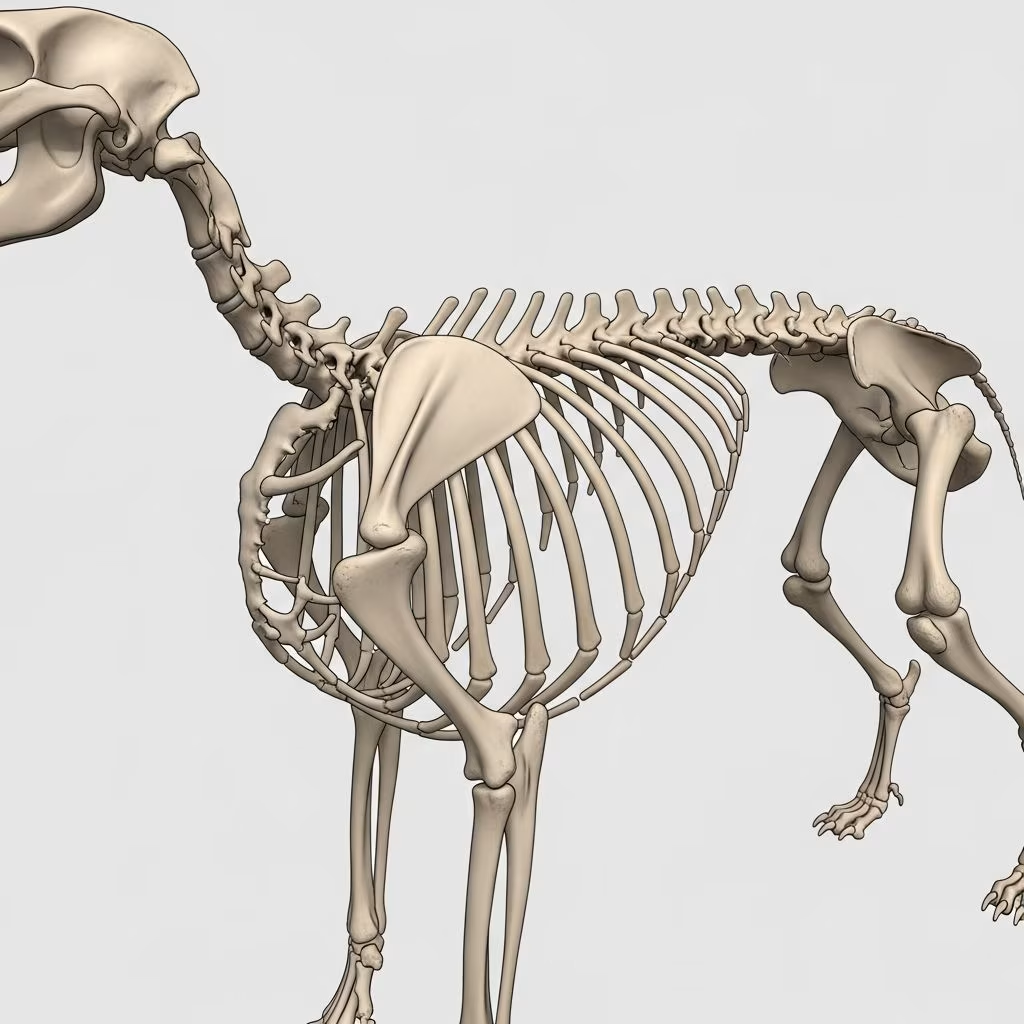
Dogs possess **13 pairs of ribs**, making a total of **26 ribs** that form the rib cage, a critical structure shielding the heart, lungs, and other thoracic organs while supporting respiration and body conformation.
The Protective Framework of Canine Ribs
The rib cage stands as one of the most vital components of a dog’s skeletal system. Composed of ribs curving around the thoracic cavity, it attaches to the thoracic vertebrae dorsally and the sternum ventrally. This bony enclosure not only safeguards delicate internal organs from external trauma but also facilitates the mechanical process of breathing. During inhalation, chest muscles contract, expanding the rib cage to draw air into the lungs; exhalation reverses this motion for efficient gas exchange.
Structurally, the canine rib cage differs from that of humans, who have 12 pairs. Dogs’ extra pair enhances protection and accommodates their quadrupedal posture and active lifestyle. The ribs’ curvature—described as well-sprung in many breeds—allows for optimal lung capacity and heart positioning, influencing overall vitality and endurance.
Structural Breakdown of Dog Ribs
Each rib features three main parts: the head, which articulates with the thoracic vertebrae; a tubercle for additional vertebral attachment; and a shaft that extends laterally. The first nine pairs, known as true ribs or sternal ribs, connect directly to the sternum via costal cartilages. These cartilages provide flexibility, essential for movement and breathing.
The subsequent three pairs (10th to 12th) are false ribs or asternal ribs, linked to each other by cartilage forming a costal arch rather than attaching to the sternum. The 13th pair consists of floating ribs, lacking any ventral connection, which adds to the cage’s posterior boundary. The sternum itself comprises 8-9 sternebrae, flat bones fused by cartilage, forming the chest floor.
- True ribs (1-9): Direct sternal attachment for stability.
- False ribs (10-12): Interconnected by cartilage for respiratory mobility.
- Floating rib (13): Free-floating posteriorly, unique to dogs and humans among many mammals.
This arrangement ensures the rib cage is lightweight yet robust, composed of mineralized bone with collagen for resilience.
Comparing Rib Counts Across Species
Rib numbers vary widely in the animal kingdom, reflecting evolutionary adaptations. Horses boast 18 pairs for expansive lungs suited to speed; pigs range from 14-16 pairs. Humans have 12 pairs, emphasizing upright posture. Dogs’ 13 pairs strike a balance for agility, protection, and stamina.
| Species | Pairs of Ribs | Total Ribs | Key Adaptation |
|---|---|---|---|
| Dog | 13 | 26 | Agility and organ protection |
| Human | 12 | 24 | Bipedal posture |
| Horse | 18 | 36 | Endurance running |
| Pig | 14-16 | 28-32 | Robust torso |
Such differences highlight how rib count correlates with lifestyle and physiology.
Influence of Breed Standards on Rib Shape
Selective breeding has sculpted rib cage variations among dog breeds, impacting appearance and function. Breed standards often specify chest depth, spring of ribs, and overall conformation. For instance, deep, oval chests in working breeds like retrievers maximize lung volume; barrel-shaped ribs in bulldogs provide girth but may limit agility.
Four primary chest shapes emerge:
- Oval: Balanced depth and width for versatility.
- Oval-tapered (egg-shaped): Wider forechest narrowing rearward.
- Round/barrel: Maximal volume, strong but potentially restrictive.
- Narrow: Deeper for sighthounds, prioritizing speed.
Proper ribbing allows free elbow movement during trotting; slab-sided (flat) ribs reduce capacity, while overly round ones paddle elbows outward. These traits are evaluated in shows, underscoring ribs’ role in breed identity.
Health Implications and Common Rib Issues
The rib cage’s integrity directly affects health. Trauma from falls or vehicle accidents can fracture ribs, risking punctured lungs (pneumothorax) or hemothorax. Floating ribs, being less anchored, are prone to sprains in active dogs.
Tumors on ribs or chest wall, though rare, demand prompt veterinary attention. Chondrosarcoma or osteosarcoma may erode bone, causing pain and respiratory distress. Diagnosis involves X-rays; treatment ranges from surgery to chemotherapy.
Respiratory conditions like pneumonia stress the rib cage, while brachycephalic breeds (e.g., pugs) face challenges from shallow chests limiting airflow. Owners should monitor for labored breathing, coughing, or reluctance to exercise.
Diagnostic Tools for Rib Cage Assessment
Veterinarians use radiography to visualize ribs, identifying fractures, tumors, or congenital anomalies. CT scans offer 3D detail for complex cases. Ultrasound aids soft tissue evaluation around cartilages.
Physical exams palpate rib spring and symmetry, correlating with breed norms. Early detection preserves rib cage function, preventing secondary issues like collapsed lungs.
Caring for Your Dog’s Rib Cage Health
Preventive care minimizes rib-related risks. Maintain ideal weight to reduce chest strain; provide safe play environments to avoid impacts. Regular vet checkups catch issues early.
For breeds with extreme conformations, like deep-chested greyhounds prone to bloat (GDV), monitor abdominal tuck and rib depth. Post-injury, restrict activity and use pain management as prescribed.
FAQs on Dog Rib Anatomy
How many ribs does a typical dog have?
Dogs have 13 pairs, totaling 26 ribs.
Do all dog breeds have the same number of ribs?
Yes, the count is standard at 13 pairs across breeds, though shape varies.
What is a floating rib in dogs?
The 13th pair, unattached ventrally, allowing greater flexibility.
Can dogs survive rib fractures?
Yes, with veterinary care; complications like lung puncture require urgent treatment.
How does rib shape affect a dog’s performance?
Well-sprung ribs enhance lung capacity and movement; poor conformation hinders it.
Key Takeaways on Canine Thoracic Structure
Understanding a dog’s 26 ribs reveals the ingenuity of canine design. From protection to propulsion, this framework underpins health and breed excellence. Consult vets for breed-specific advice to optimize your pet’s well-being.
References
- How Many Ribs Do Dogs Have? Vet-Approved Anatomy Facts & Info — Dogster. 2023. https://www.dogster.com/dog-health-care/how-many-ribs-do-dogs-have
- The Body of the Dog (The Chest) — Showsight Magazine. 2023. https://showsightmagazine.com/the-body-of-the-dog-the-chest/
- Skeletal System (Part 3) – Vertebrae, ribs and sternum — YouTube (Pinoy Vet Anatomist). 2023. https://www.youtube.com/watch?v=NHxRRIdARmE
- Understanding Your Dog’s Rib Count: A Look at Canine Anatomy — Oreata AI. 2024. https://www.oreateai.com/blog/understanding-your-dogs-rib-count-a-look-at-canine-anatomy/e74815c491f1194f1349b9ba90923f98
- Chest Wall Tumors – Rib Tumors — Animal Surgical Center of Michigan. 2023. https://www.animalsurgicalcenter.com/chest-wall-tumors–rib-tumors



