

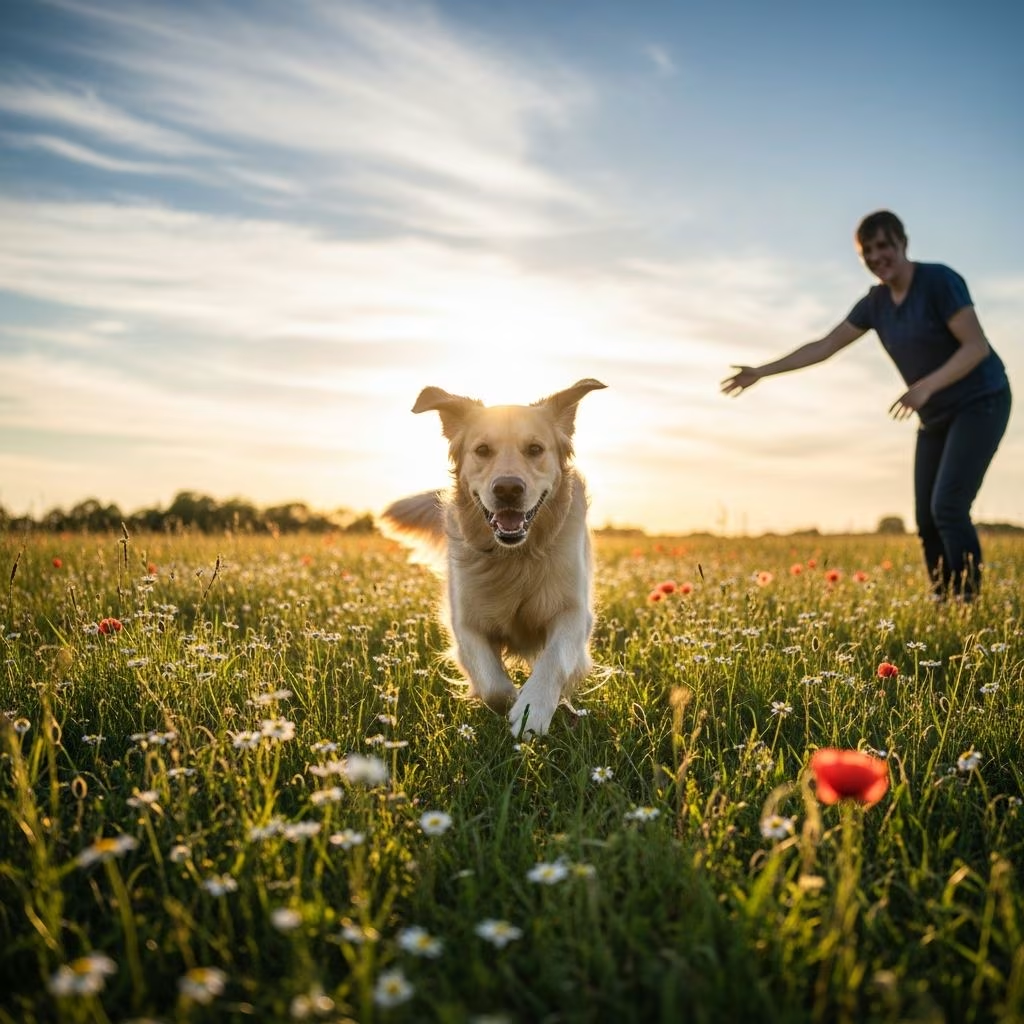
A solid recall — your dog reliably coming when called — is one of the most important skills you can teach your dog. It keeps them safe, builds freedom into your walks, and strengthens your relationship. This guide walks you through what recall is, why it matters, how to train it step by step, and how to troubleshoot common recall problems.
What Is Recall Training and Why It Matters
Recall training simply means teaching your dog to come to you immediately when you call them, no matter what else is going on around them.
Animal welfare and training organizations view recall as a core life skill because it directly affects safety and welfare. A reliable recall can prevent accidents with traffic, wildlife, other dogs, or unsafe environments.
Benefits of a Reliable Recall
- Safety: Helps protect your dog from cars, hazards, and unsafe animals.
- More freedom: Once reliable, your dog can enjoy larger safe spaces, long lines, and in some cases off-leash time where it is legal and appropriate.
- Better behavior: Frequently reinforcing recall strengthens attention, impulse control, and responsiveness.
- Stronger bond: Your dog learns that coming to you always leads to good things, making you the center of their world.
Before You Start: Foundations for Great Recall
Good recall training starts with strong foundations. Before expecting your dog to come racing away from distractions, make sure the basics are in place.
Choose a Special Recall Cue
Pick a word that will mean “drop everything and run to me.” Common choices include:
- “Come”
- “Here”
- “To me”
- A unique word you do not use casually in daily conversation
Use this cue only when you are sure you can help your dog succeed. If your dog hears the recall cue many times and then ignores it, the cue will lose its meaning.
Teach Your Dog to Respond to Their Name
Most major training organizations recommend teaching name recognition first: your dog should reliably look at you when they hear their name before you expect a recall response.
- Say your dog’s name once.
- When they glance at you, mark (say “yes” or use a clicker) and reward.
- Practice in quiet places first, then gradually add mild distractions.
Set Up Your Training Environment
To keep training safe and productive:
- Begin in a low-distraction environment (indoors or fenced yard).
- Use a harness and a long line (20–50 ft) outdoors to maintain safety while allowing freedom to move.
- Have high-value rewards ready (chicken, cheese, soft treats, or a favorite toy). Studies show that using valued rewards improves learning and motivation in dogs.
Step-by-Step: How to Train a Reliable Recall
This process uses positive reinforcement: your dog learns that coming when called always leads to good things. Start with easy steps and slowly increase difficulty.
Step 1: Charge Your Recall Cue
First, build a powerful association between your recall word and excellent rewards.
- With your dog close to you, say your chosen cue in a cheerful voice (for example, “Come!”).
- Immediately feed several high-value treats in a row or play an exciting short game.
- Your dog does not need to move; you are just building meaning for the cue.
- Repeat many times until your dog looks excited when they hear the cue.
Step 2: Short-Distance Indoor Recalls
Once the cue is charged, ask your dog to move toward you.
- Stand a step or two away from your dog.
- Say the recall cue once in a happy tone.
- Encourage your dog with claps, smiles, or slight movement if needed.
- When they move toward you, mark and reward generously.
- Release them by saying a release word such as “OK” so they know they can go back to what they were doing.
Step 3: Increase Distance and Add Movement
Gradually make recalls more dynamic and fun.
- Call your dog from across the room.
- As they start coming, move backwards or run a few steps away to encourage chasing you.
- When they reach you, reward with a treat, toy, or brief play.
- Practice several short sessions each day.
Running away from your dog after giving the cue can make recall more exciting and increase speed, a strategy also recommended by experienced trainers.
Step 4: Practice on a Long Line Outdoors
When your dog is responding quickly indoors, move to a secure outdoor area.
- Clip the long line to a harness (not a collar) for safety.
- Allow your dog to wander a bit on the long line.
- Wait for a moment when the distractions are manageable.
- Say your recall cue once and encourage them happily.
- When they reach you, reward with a jackpot (several treats or great play).
- Then release them to go explore again so recall does not always predict the end of fun.
Step 5: Add Mild Distractions Gradually
To make recall reliable in real life, systematically introduce distractions.
- Start with small distractions such as standing near a bush or scattered leaves.
- Call your dog when they are mildly interested but not fully absorbed.
- Reward generously when they choose you over the distraction.
- Slowly increase difficulty: new locations, more smells, people at a distance, calm dogs in view.
Animal charities recommend building difficulty gradually to avoid overwhelming the dog and creating failure experiences.
Step 6: Proof the Behavior in Real-Life Situations
“Proofing” means practicing recall in a variety of contexts so your dog understands that the cue always means the same thing.
- Practice in different safe locations: yards, quiet parks, friends’ gardens.
- Vary distance, your body position, and whether you are standing, sitting, or moving.
- Gradually practice with bigger distractions under control: dogs at a distance, joggers, bicycles.
- Continue to reward generously, especially in harder situations.
Fun Recall Games to Strengthen Training
Turning recall into a game makes training more enjoyable and improves your dog’s enthusiasm. Research on dog training suggests that playful, reward-based methods can enhance learning and owner–dog relationships.
Game 1: Catch Me
This game builds responsiveness during walks.
- Walk your dog on leash.
- Get their attention, then quickly turn and run a few steps.
- As they move with you, say your recall cue.
- Stop after a few steps and reward with a treat or toy.
Game 2: Find Me (Hide-and-Seek)
This game encourages your dog to search for you and reinforces fast responses.
- When your dog understands recall indoors, go into another room or behind a piece of furniture.
- Call your dog using your recall cue.
- When they find you, reward with praise, treats, and excitement.
- Gradually increase difficulty by hiding in slightly harder spots.
Game 3: Hot Potato Recall
Great for families, this game helps your dog learn to come to anyone who calls.
- Have two or more people stand several meters apart, each with high-value treats.
- Take turns calling the dog using the same recall cue.
- When the dog arrives, reward and then let the next person call.
- Keep the pace lively but not chaotic.
Game 4: Ping-Pong Recalls
Similar to Hot Potato but often done over slightly larger distances.
- Two people stand far apart in a safe area.
- One calls the dog, rewards richly, then the other calls.
- The dog runs back and forth like a ping-pong ball, learning to respond quickly.
Game 5: Hand Target Recall
Hand targeting can make recalls more precise and help if your dog is shy about being reached for.
- Teach your dog to touch their nose to your outstretched hand.
- When this is solid, call your dog and present your hand target as they arrive.
- Mark and reward when they touch your hand, then occasionally gently take their collar and reward again.
Top Recall Training Tips
Small details make a big difference in recall reliability. The following principles are consistent with advice from major dog training resources and humane societies.
- Always reward the recall: Especially while training, every time your dog comes when called, they should receive something they find valuable.
- Do not punish after a recall: Never scold, grab harshly, or end all fun immediately after your dog comes. That teaches them that coming to you is unpleasant.
- Avoid repeating the cue: Saying the recall word many times without a response weakens the cue. If your dog does not respond, move closer or reduce distractions rather than repeating the word over and over.
- Reward eye contact: If your dog chooses to check in with you or stay near you, praise and treat. This builds a habit of paying attention.
- Use your dog’s favorite rewards: For difficult recalls, use the best rewards your dog knows — special food, a favorite game, or a chance to go back to sniffing.
- Train in short sessions: Several brief sessions per day are more effective than one long session.
- Gradually increase difficulty: Only add distance or distractions when your dog is consistently successful at the current level.
- Practice daily: Make recall a regular part of walks and play, not just a formal exercise.
Common Recall Mistakes to Avoid
Certain patterns can quickly weaken your recall cue. Avoid these common pitfalls:
- Using recall to end all fun: If “come” always means going home or getting the leash on, many dogs start avoiding it. Instead, sometimes recall, reward, and then release your dog to play again.
- Calling when your dog is unlikely to respond: For example, calling from a great distance when your dog is highly engaged with another dog or chasing wildlife. This teaches them that ignoring you is an option.
- Scolding the dog after they come: Even if they were slow to respond, praise and reward once they arrive. You can manage situations better next time, but never punish a recall.
- Inconsistent rules among family members: Make sure everyone uses the same recall word and rewards coming reliably.
- Lack of practice: Recall is a skill that needs regular reinforcement, not just a one-time lesson.
Sample Recall Training Progression Table
| Stage | Environment | Distance | Distraction Level | Goal |
|---|---|---|---|---|
| 1 | Indoor, quiet room | 1–2 meters | Very low | Dog moves toward you when they hear the recall cue. |
| 2 | Indoor, larger space | Across the room | Low | Dog responds quickly from moderate distance. |
| 3 | Secure yard, long line | 5–10 meters | Medium | Dog returns despite mild outdoor distractions. |
| 4 | Quiet park, long line | 10–20 meters | Medium–high | Dog responds with other people, smells, and distant dogs. |
| 5 | Varied safe locations | Variable | High | Dog recalls reliably in many real-life situations. |
Fixing Common Recall Problems
If your dog struggles with recall, adjust the training setup rather than assuming they are being stubborn. Research on learning in animals emphasizes the importance of clear cues, timing, and reinforcing correct responses rather than punishing mistakes.
Problem 1: Dog Ignores the Recall Cue
Likely causes:
- Distractions are too strong for their current skill level.
- The recall word has been overused without reward.
- Coming to you has sometimes led to unpleasant outcomes.
How to help:
- Go back to an easier environment and re-charge the cue with great rewards.
- Use a new recall word if the old one has become “background noise.”
- Ensure every successful recall earns something your dog loves.
Problem 2: Dog Comes Slowly or Hesitantly
Likely causes:
- Rewards are not exciting enough.
- Your tone or body language feels stern rather than inviting.
- Dog is unsure what will happen when they arrive.
How to help:
- Use higher-value rewards or a surprise “jackpot” of several treats when they come faster.
- Run away, clap, and make your voice bright to encourage enthusiastic movement.
- Frequently recall, reward, and then release back to fun activities.
Problem 3: Dog Comes Close but Stays Out of Reach
Likely causes:
- Dog has learned that being caught always ends their fun.
- They are unsure about being handled or grabbed.
How to help:
- Practice gently taking the collar, giving a treat, and then releasing the dog again.
- Use hand-target recalls to a clear position near your body.
- Play games where you briefly clip the leash on, feed, and then unclip and release.
Frequently Asked Questions (FAQs)
Q: How long does it take to train a reliable recall?
A: Many dogs learn the basics in a few weeks of consistent practice, but achieving a truly reliable recall around major distractions can take several months of daily training and ongoing maintenance.
Q: Can older dogs learn recall, or is it only for puppies?
A: Dogs of all ages can improve their recall with positive reinforcement. While puppies may learn new habits more quickly, adult and senior dogs regularly succeed with patient, reward-based training.
Q: Should I ever punish my dog for ignoring a recall?
A: Evidence-based training guidelines advise against punishment in recall training because it can make your dog hesitant to come to you and damage trust. Instead, manage the environment with a leash or long line and reward every successful recall.
Q: When can I safely let my dog off leash?
A: Only consider off-leash freedom where it is legal and safe, once your dog consistently responds on a long line around real-world distractions. Many trainers recommend practicing hundreds of successful recalls before testing off-leash in a securely fenced area.
Q: Do I have to use treats forever?
A: Food is very helpful during training, but over time you can mix in other rewards like toys, games, or access to interesting smells. However, keeping recall highly rewarding throughout your dog’s life helps maintain reliability.
References
- Rooney NJ, Cowan S. Training methods and owner–dog interactions: Links with dog behaviour and learning ability. — Animal Welfare. 2011-02-01. https://doi.org/10.7120/09627286.20.1.31
- Teaching a Reliable Recall. — Whole Dog Journal. 2019-08-01. https://www.whole-dog-journal.com/training/teaching-a-reliable-recall/
- Come! Tips for Training a Reliable Recall. — American Kennel Club (AKC). 2021-06-15. https://www.akc.org/expert-advice/training/reliable-recall-train-dogs-to-come-when-called/
- Recall Training — Come Back When Called. — Dogs Trust. 2020-05-10. https://www.dogstrust.org.uk/dog-advice/training/basics/recall-training



