

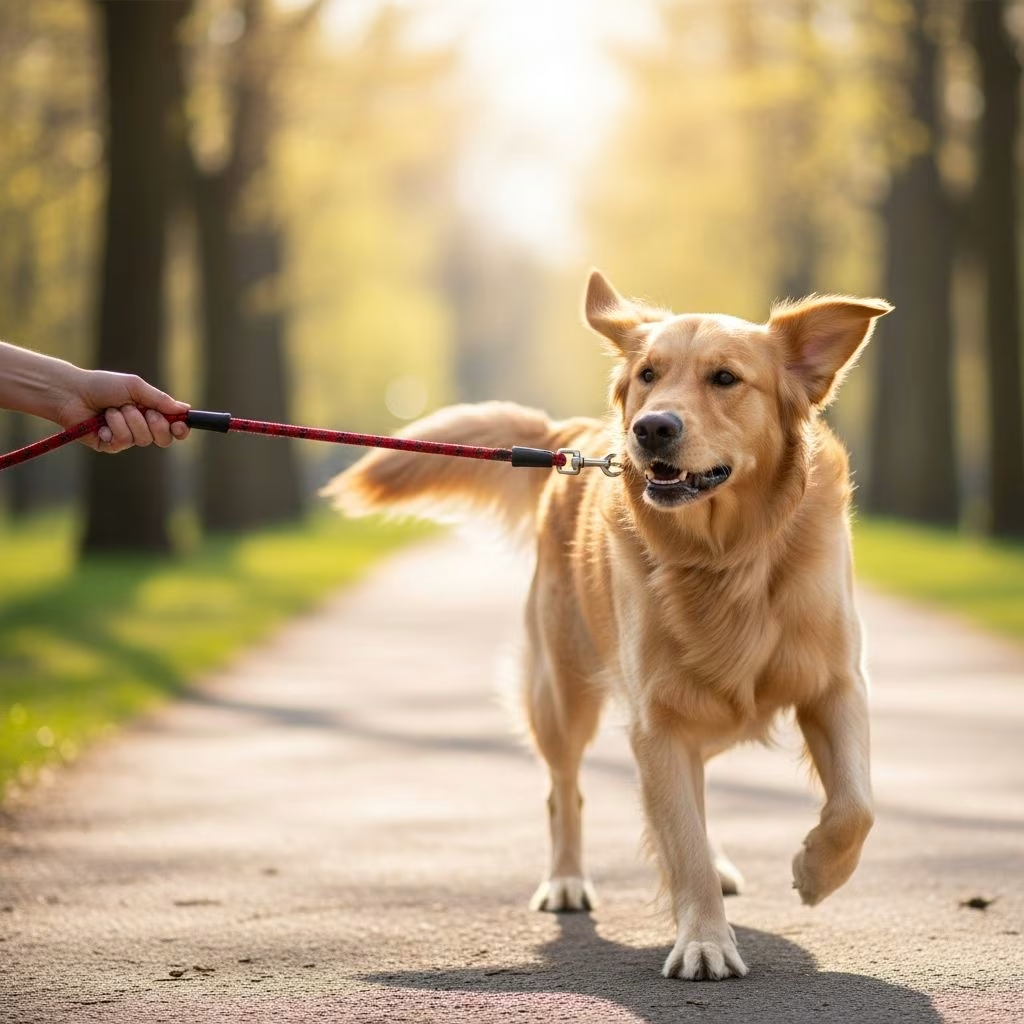
Leash pulling can turn a simple walk into a daily struggle, but it is a trainable behavior. With the right understanding, equipment, and consistent practice, most dogs can learn to walk politely on a loose leash.
Why Dogs Pull on the Leash
To change leash behavior, it helps to first understand what is driving it. Dogs rarely pull just to be difficult; pulling usually makes sense from their point of view.
- Walking faster than humans: Most dogs naturally move at a quicker pace than we do. When they forge ahead, the leash tightens and pulling begins.
- Reinforced by success: If a dog pulls and the person keeps walking, the dog learns that pulling works to reach smells, people, or other dogs. Over time, this positive outcome reinforces pulling.
- Excitement and arousal: Walks are full of scents and sights. High arousal can make it hard for a dog to control their impulses, including the impulse to surge forward.
- Lack of prior training: Many dogs simply have never been taught what “walking nicely” looks like, especially if they grew up practicing pulling from puppyhood.
- Inappropriate equipment: Some gear can encourage leaning and pulling, while other equipment can provide more control and reduce pulling pressure.
Because behavior is functional, dogs repeat what works. If pulling gets them where they want to go faster, they will keep doing it until taught a different strategy.
Loose Leash Walking vs. Heel: What’s the Goal?
Not all polite walking looks the same. Clarifying your goal will help you pick the right exercises and expectations.
| Walking Style | Description | When It’s Used |
|---|---|---|
| Loose Leash Walking | Leash remains slack; dog may walk slightly ahead, beside, or behind as long as there is no pulling. | Everyday walks, sniff walks, casual outings where comfort and relaxation matter most. |
| Formal Heel | Dog remains very close to one side (usually left), head near your leg, with focused attention on you. | Busy areas, crossing streets, sports or obedience work, or situations needing high precision and control. |
For most families, the main goal is loose leash walking—comfortable, controlled movement with a slack leash—not a competition-level heel.
Choosing the Right Equipment for Leash Training
Training is the core solution to pulling, but equipment can make a dramatic difference in safety and ease. Humane societies emphasize that proper tools can significantly reduce pulling so that training can do the rest.
Front-Clip Harnesses
Many behavior professionals recommend front-clip harnesses because they give the handler more control without putting pressure on the dog’s neck.
- The leash clips at the dog’s chest, gently turning the body back toward the handler when the dog pulls.
- They discourage forward lunging and encourage the dog to check in with you.
- They are especially helpful for strong dogs, young dogs, or guardians with less physical strength.
Standard Flat Collars
A flat collar is still useful for holding ID tags and for dogs that already walk nicely on leash. However, when a dog pulls hard, pressure on the neck can be uncomfortable and may increase coughing or gagging in sensitive dogs.
Tools to Use Cautiously or Avoid
Aim for equipment that protects your dog’s airway and uses minimal force. Many welfare organizations and modern trainers discourage reliance on aversive tools (such as choke chains or prong collars) in favor of positive reinforcement methods.
Core Principles of Leash Training
Regardless of which specific exercise you use, effective leash training typically follows a few shared principles.
- Reinforce the behavior you want: Reward the dog for staying near you or for keeping the leash loose. Reinforcement can be food, praise, or access to interesting smells.
- Don’t pay for pulling: Moving forward while the dog pulls acts like a reward. When pulling happens, removing that reward (by stopping or changing direction) teaches that pulling does not work.
- Train in small steps: Start in low-distraction environments and gradually add more challenging settings (busier streets, other dogs, new smells) as your dog succeeds.
- Keep sessions short and frequent: Several short training walks are often more effective than one long, frustrating outing.
- Use positive reinforcement: Organizations like the RSPCA and many humane societies recommend reward-based methods to build reliable behavior and protect animal welfare.
Step-by-Step: Teaching Loose Leash Walking
Below is a simple sequence you can adapt to your dog’s pace and environment.
1. Build Attention and Check-Ins
Before expecting perfect leash manners, teach your dog that paying attention to you is rewarding.
- Stand still with your dog on leash in a quiet space.
- Each time your dog glances at you—even a small ear flick toward you—mark (with a click or a word like “yes”) and give a treat near your leg.
- Gradually ask for slightly longer eye contact before delivering the reward.
This attention exercise helps your dog learn that you are part of the environment they should monitor, not just the background noise.
2. Introduce the Concept of a Loose Leash
- Set your dog up with a front-clip harness or well-fitted collar and a 4–6 foot leash.
- Take one or two steps forward; if the leash stays loose, mark and reward by your side.
- If the leash tightens, stop moving. Wait for the dog to step back or turn toward you. When the tension releases, mark and reward, then walk again.
This “stop when tight, go when loose” pattern teaches that a slack leash is what makes the walk continue.
3. Use Red Light/Green Light Style Games
Some humane societies recommend turning leash practice into a simple game.
- Place a small pile of treats or a toy a short distance away, just beyond the dog’s reach on leash.
- Walk toward the reward. If your dog pulls, you become a “red light”: stop moving immediately.
- When the leash slackens or the dog looks back at you, become a “green light”: walk forward again.
- Reaching the reward is the dog’s payoff for walking without pulling.
Over time, your dog learns that pulling slows or stops progress, while staying close moves you both toward good things.
4. Change Direction When Pulling Happens
Another effective technique is to turn and move the other way when your dog hits the end of the leash.
- As soon as the leash tightens, calmly say the dog’s name and turn 180 degrees away.
- Encourage the dog to catch up with you; when they reach your side with a slack leash, mark and reward.
- Continue in the new direction until the dog pulls again, then repeat.
At first, you may not get very far, but your dog will eventually learn that pulling never leads straight to the interesting thing—walking with you does.
5. Reinforce an Incompatible Behavior
Teaching a specific behavior that cannot happen at the same time as pulling is another positive method.
- Choose a simple cue, such as “close” or “with me,” which means “return to my side.”
- Practice indoors first: call the cue, take a step backward, and reward when your dog moves toward you.
- Use this cue when you see your dog starting to focus intensely on something ahead. Reward generously as they come back to you and walk together.
By asking for a returning behavior before the dog hits the end of the leash, you prevent pulling from happening in the first place.
Common Mistakes That Keep Dogs Pulling
A few very common patterns can unintentionally make leash training harder.
- Inconsistency: If sometimes you let your dog drag you to the park and other times you insist on a loose leash, the dog receives mixed signals and learns more slowly.
- Rehearsing pulling daily: Long walks where the dog pulls the entire time can deeply ingrain the habit. Balance exercise with dedicated training walks focused on manners, not distance.
- Too much distraction too soon: Jumping from quiet hallway practice to a busy street full of dogs and bikes is often overwhelming. Gradually increase difficulty.
- Using only physical strength: Relying on force or constant tension without teaching the dog what to do instead often leads to frustration for both dog and human.
Adapting Leash Training to Puppies vs. Adult Dogs
Puppies and adult dogs can both learn loose leash walking, but their needs differ slightly.
Training Puppies
- Keep sessions very short and upbeat; young puppies tire and lose focus quickly.
- Let them explore but introduce the idea that a loose leash gets them access to interesting smells and areas.
- Use soft, well-fitted harnesses and light leashes to protect developing bodies.
Training Adult or Strong Dogs
- Start with equipment that gives you safe mechanical advantage, such as a front-clip harness.
- Expect that older habits may take longer to change, but don’t assume they cannot change.
- Provide mental enrichment on off-days so walks do not become the only outlet for energy.
When to Seek Professional Help
In some cases, pulling is not just about enthusiasm but is tied to fear, frustration, or reactivity toward other dogs, people, or vehicles. Reputable welfare organizations recommend seeking help when leash behavior includes growling, lunging, or intense barking.
- Consult a qualified, reward-based trainer or a certified behavior professional.
- Ask potential trainers what methods and tools they use; look for those who emphasize positive reinforcement and humane handling.
- Discuss any medical concerns with your veterinarian, especially if your dog coughs, limps, or seems painful while walking.
Frequently Asked Questions (FAQs)
Q: How long does it take to stop leash pulling?
A: It varies by dog, history, and consistency. Some dogs improve noticeably in a few weeks of daily practice, while others with a long history of pulling may need several months of gradual training.
Q: Should I stop the walk every time my dog pulls?
A: If you choose the stop-and-go method, yes—the power of the exercise lies in being consistent so your dog clearly learns that tension halts progress while a slack leash makes the walk move forward.
Q: Is it okay to let my dog sniff during leash training?
A: Yes. Sniffing is an important mental activity for dogs. You can use access to sniffing spots as a reward for walking with a loose leash, letting your dog explore when they stay near you without pulling.
Q: What if my dog pulls only when they see other dogs?
A: That type of pulling can be excitement or reactivity. Work at a distance where your dog can still pay attention to you, reward calm behavior, and consider involving a professional trainer who specializes in positive methods.
Q: Are punishment-based tools necessary for strong pullers?
A: Major welfare organizations advocate for reward-based training and careful equipment choices rather than relying on harsh corrections. Front-clip harnesses and consistent reinforcement usually provide enough control for most dogs when combined with training.
References
- Training Tips: Loose Leash Walking — San Diego Humane Society. 2022-06-01. https://sdhumane.org/resources/training-tips-loose-leash-walking/
- How to train your dog to walk nicely on the lead — RSPCA. 2021-09-15. https://www.rspca.org.uk/adviceandwelfare/pets/dogs/training/walknicely
- Dog Pulls on Leash? Try These 5 Tips! — Happy Hounds Dog Training. 2023-04-10. https://happyhoundsdogtraining.ca/dog-pulls-on-leash-try-these-5-tips/
- The Trainer’s Guide to Loose Leash Walking and Positive Reinforcement — Manners for Mutts. 2025-11-04. https://mannersformutts.com/blog/2025/11/04/dogs-on-halloween-how-to-keep-them-calm-confident-and-safe-2/
- How to FIX Leash Pulling in UNDER 10 Minutes! — American Standard Dog Training (YouTube). 2024-11-22. https://www.youtube.com/watch?v=mM-YIoJyko8



