

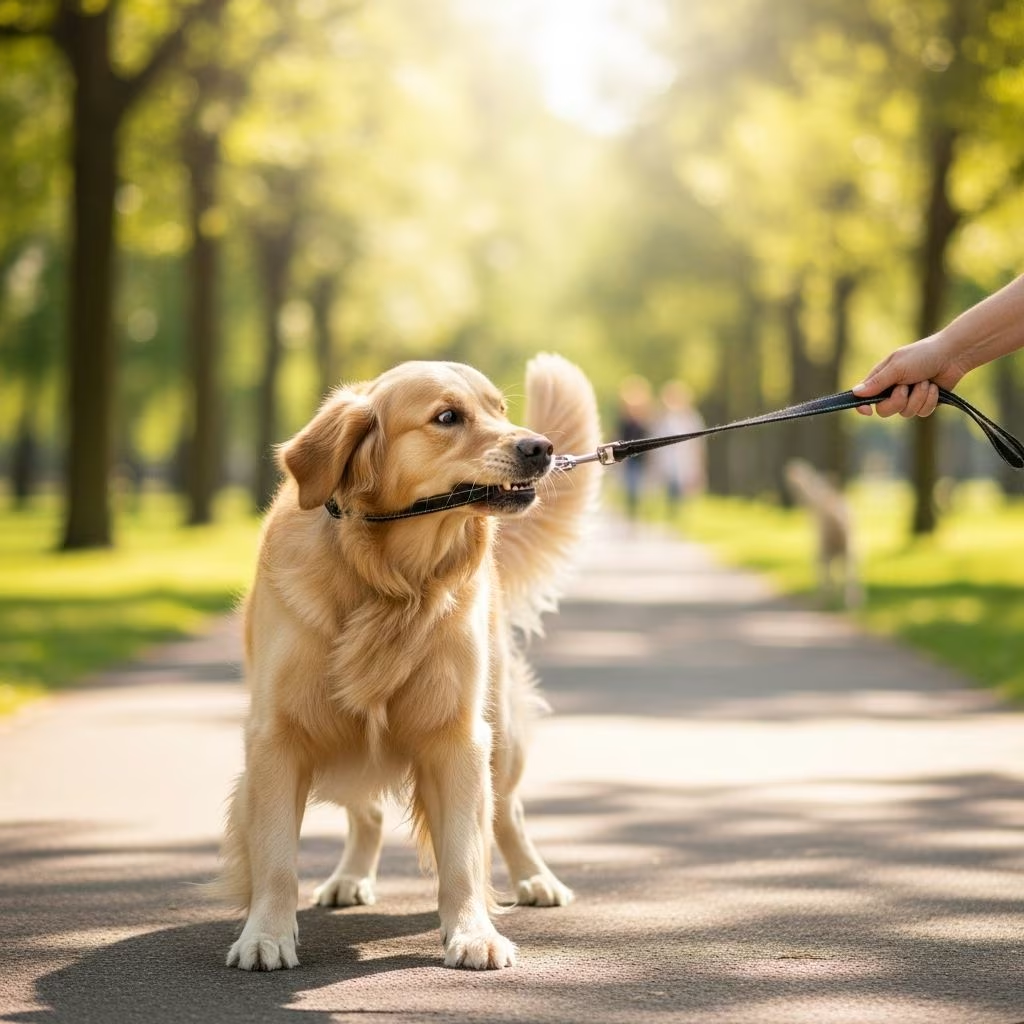
What to Do If Your Dog Is Pulling on the Leash
One of the most common challenges dog owners face is managing a dog that pulls excessively on the leash. Whether you have a small breed or a large dog, leash pulling can turn what should be an enjoyable walk into a frustrating and physically demanding experience. The good news is that with the right approach, patience, and consistency, you can train your dog to walk calmly on a loose leash. This comprehensive guide will walk you through the various strategies, techniques, and equipment options that can help transform your walks into pleasant outings for both you and your furry companion.
Understanding Why Dogs Pull on the Leash
Before addressing solutions, it’s important to understand the underlying reasons why dogs pull. Dogs pull on leashes for several primary reasons. First, they have an innate opposition reflex—when they feel pressure on the leash, their natural instinct is to pull back against that pressure rather than yield to it. This means that when you pull your dog backward, you’re often actually reinforcing the pulling behavior rather than discouraging it. Second, dogs are naturally motivated to explore their environment, chase interesting scents, and investigate new things. A leash can feel restrictive to these natural urges, leading them to strain forward. Third, if your dog has learned that pulling works—such as pulling gets them to the dog park faster or closer to another dog—they will continue this behavior because it’s been rewarded.
The Foundation: Proper Training Equipment
Selecting the right equipment is the critical first step in addressing leash pulling. Different tools serve different purposes, and choosing the appropriate one for your dog can significantly improve your training success.
Front-Clip Harnesses
Front-clip harnesses are considered one of the most effective tools for managing leash pulling. Unlike traditional back-clip harnesses that can actually encourage pulling, front-clip harnesses have the leash attachment point on the dog’s chest. When your dog pulls forward, the harness naturally turns them to face you, which discourages the pulling behavior and encourages them to check in with you. Studies show that properly fitted front-clip harnesses can reduce pulling by up to 98 percent. These harnesses are humane, effective, and work well for dogs of all sizes and ages.
Standard Collars and Head Halters
Traditional flat collars are suitable for well-trained dogs and lighter pullers, but they may not provide adequate control for strong pullers. Head halters are another option that work by gently steering your dog’s head downward when they pull, naturally slowing their forward momentum. Many dogs require an adjustment period to accept head halters comfortably. It’s essential to introduce head halters gradually and positively to avoid creating negative associations.
Leash Selection
The leash itself matters as well. A standard 6-foot leash is ideal for most training situations. Retractable leashes should generally be avoided during training because they encourage pulling by allowing your dog to practice the behavior repeatedly. Fixed-length leashes give you better control and make it easier to manage your dog’s distance from you.
Core Training Techniques for Stopping Leash Pulling
Once you have the right equipment, implementing proven training techniques will help your dog learn to walk nicely on a loose leash.
The Red Light/Green Light Exercise
This foundational exercise teaches your dog that pulling doesn’t work and that walking calmly does. Start by placing a small pile of high-value treats about 4-5 feet away from you. Your dog will naturally be excited to reach the treats. When your dog pulls toward the treats, simply stop and wait. Don’t move forward. The key is to wait for your dog to release the pressure on the leash—this might mean they sit, look back at you, or simply step backward. The moment the leash goes slack, praise your dog enthusiastically and either continue forward or reward them with a treat. This teaches your dog that loose leash walking is the pathway to getting what they want. Practice this exercise multiple times daily in short 5-minute sessions, gradually progressing from your living room to your backyard, then to your neighborhood, and finally on actual walks.
The Attention Exercise
Building strong attention between you and your dog is fundamental to loose leash walking. During walks, intentionally reward your dog whenever they make eye contact with you or orient their attention toward you. Start by making an exciting sound or movement to capture their attention, then immediately reward them for looking at you. Over time, your dog will begin offering attention voluntarily. Once your dog understands this exercise well, you can combine it with the Red Light/Green Light technique, rewarding them for checking in with you while on walks rather than focusing solely on where they’re headed.
The Silky Leash Training Method
This technique specifically addresses the opposition reflex that makes dogs pull when they feel pressure. Begin with your dog standing calmly and stationary. Gently apply light pressure on the leash and wait for your dog to take even the smallest step in your direction or release pressure by stepping backward. The moment they do, release the pressure and reward them. This teaches your dog that yielding to slight leash pressure results in positive outcomes. Practice this exercise in a calm, low-distraction environment and progress through different settings as your dog improves. Most dogs master this exercise within one to three days of consistent practice.
The U-Turn Correction Technique
This dynamic technique is particularly effective for addressing pulling during actual walks. When your dog pulls forward, simply turn and walk in the opposite direction. Your dog will quickly realize that pulling away from you means the direction of travel changes, which doesn’t help them reach their destination. To make this work, you need to be proactive and consistent, turning before your dog reaches the end of the leash. After several U-turns, your dog will begin staying closer to you and checking in more frequently. This technique works because it teaches your dog that following your lead and staying close to you is the most efficient way to move forward.
Building Consistency Through Progressive Practice
Successful leash training requires a systematic progression strategy. Start your training in the least distracting environment possible—ideally indoors in your living room. Once your dog demonstrates consistent loose leash walking indoors, progress to your backyard. Next, move to quieter areas like side streets or park paths with minimal distractions. Finally, graduate to busier, more stimulating environments. This graduated approach prevents you from setting your dog up for failure by training in environments that are too challenging too soon.
Consistency is paramount. Most trainers recommend practicing loose leash walking exercises at least three times daily in short 5-minute sessions. These brief, focused sessions are more effective than sporadic longer sessions. Additionally, every single walk should be treated as a training opportunity, not just a break from training. This doesn’t mean your dog can’t enjoy walks, but rather that you should remain engaged, reward good behavior frequently, and redirect pulling whenever it occurs.
The Role of Positive Reinforcement
Throughout all training efforts, positive reinforcement should be your primary tool. When your dog walks nicely on a loose leash, reward them immediately and enthusiastically. High-value treats work particularly well—choose something your dog rarely gets at other times, such as small pieces of chicken, cheese, or specialized training treats. Verbal praise and physical affection also reinforce good behavior. The timing of your reward is critical; you want your dog to connect the reward directly with the behavior you’re rewarding, so reward within one second of the desired behavior occurring.
Common Mistakes to Avoid
Understanding what not to do is just as important as knowing what to do. Never pull back hard on the leash in response to your dog pulling—this typically triggers the opposition reflex and teaches your dog to pull harder. Avoid training in environments that are too distracting for your dog’s current skill level. Don’t skip practice sessions or allow inconsistent behavior; if pulling sometimes works and sometimes doesn’t, your dog will be confused and training will progress slowly. Never use punishment-based methods such as shock collars or harsh corrections, as these create fear and can damage your relationship with your dog while potentially creating additional behavioral problems.
Troubleshooting Specific Challenges
Puppies and Younger Dogs
Puppies naturally have less impulse control than adult dogs, so adjust your expectations accordingly. Shorter walks and more frequent training sessions work better for puppies. Start with a properly fitted front-clip harness early, and implement the foundational exercises like Red Light/Green Light and Attention work. Puppies progress quickly with consistent training, and establishing good loose leash walking habits early prevents the development of strong pulling behaviors.
Senior Dogs
Older dogs can learn loose leash walking, though progress may be slower. Consider your senior dog’s physical capabilities and any joint problems they may have. Shorter walks with frequent breaks are appropriate. Senior dogs often respond well to the Attention Exercise and Red Light/Green Light work, though you may need to progress more gradually through the different environments.
Strong or Large Breed Dogs
Large breed dogs require extra consistency and a front-clip harness for safety and control. Their pulling power is substantial, so don’t allow any pulling during practice sessions. Be especially diligent about preventing pulling from being rewarded by reaching destinations. These dogs benefit from the U-Turn technique and regular practice in low-distraction environments before attempting walks in stimulating areas.
Integration with Professional Training
If you’re struggling to make progress on your own, enrolling in a loose leash walking workshop or working with a professional dog trainer can accelerate your results. Professional trainers can assess your specific situation, correct training techniques you might be performing incorrectly, and provide personalized strategies for your dog’s unique needs. Many training facilities offer group classes that provide both training and socialization benefits.
Setting Realistic Expectations
Most dogs don’t learn to walk perfectly on a loose leash in a single session, despite what some viral training videos might suggest. True habit formation typically requires several weeks of consistent daily practice. However, you should notice significant improvement within the first two to three weeks of dedicated training. Stay patient, remain consistent, and celebrate small victories along the way.
Frequently Asked Questions
Q: How long does it typically take to train a dog to stop pulling on the leash?
A: Most dogs show noticeable improvement within 2-3 weeks of consistent daily practice with 3-5 minute training sessions. However, full habit formation typically takes 4-8 weeks depending on the dog’s age, size, and prior experience. Consistency is more important than duration—regular short sessions are more effective than occasional longer ones.
Q: Can all dogs learn to walk on a loose leash?
A: Yes, virtually all dogs can learn loose leash walking with appropriate training methods. The timeline and difficulty level may vary based on age, breed, size, and prior experience, but the techniques work for puppies through senior dogs and all breed sizes.
Q: Is a front-clip harness better than a collar for leash training?
A: For most dogs, especially strong pullers, a front-clip harness is significantly more effective than a standard collar. Front-clip harnesses can reduce pulling by up to 98% and naturally encourage your dog to turn and face you when they pull, which discourages the behavior.
Q: What should I do if my dog pulls despite consistent training?
A: Ensure you’re progressing gradually through different environments, practice daily in short sessions, and verify you’re rewarding correct behavior immediately. If progress stalls, consider consulting a professional trainer who can identify specific issues with your technique or your dog’s training approach.
Q: Can I use treats during walks if my dog is overweight?
A: Yes, use small, low-calorie training treats or break regular treats into tiny pieces. You can also use non-food rewards like praise, play, or brief access to interesting sniffs. Many dogs are equally motivated by these alternative rewards.
Q: Should I use a retractable leash for loose leash walking training?
A: No, retractable leashes should be avoided during training because they allow your dog to practice pulling and teach them that pulling extends their reach. Use a fixed-length 6-foot leash instead for better control and clearer communication.
References
- Training Tips: Loose Leash Walking — San Diego Humane Society. Accessed 2025-11-28. https://sdhumane.org/resources/training-tips-loose-leash-walking/
- How to Easily Train a Dog to Stop Pulling on the Leash — Doggone Problems. Accessed 2025-11-28. https://www.doggoneproblems.com/hana-train-a-dog-to-stop-pulling-on-the-leash/
- Stop Leash Pulling — Jeff Millman Dog Training. Accessed 2025-11-28. https://www.jeffmillman.com/index.php/training-topics/dog-obedience/stop-leash-pulling
- How to Stop Leash Tugging and Biting When Walking — American Kennel Club. Accessed 2025-11-28. https://www.akc.org/expert-advice/training/solutions-for-dogs-that-tug-on-leashes/
- Teach your dog to walk on a loose leash — Animal Humane Society. Accessed 2025-11-28. https://www.animalhumanesociety.org/resource/teach-your-dog-walk-loose-leash



