

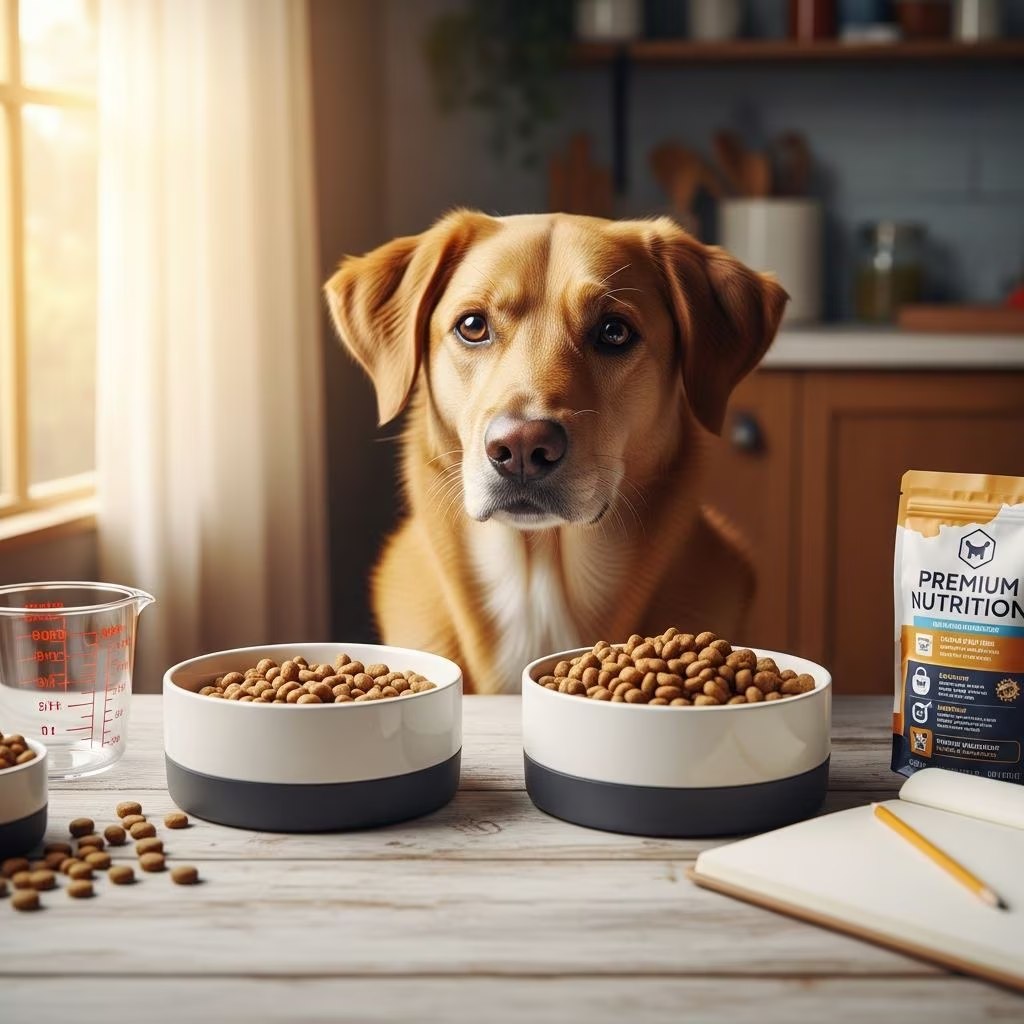
One of the most common challenges dog owners face is determining exactly how much food their pet needs each day. While it may seem straightforward to follow package guidelines, the reality is far more nuanced. Your dog’s ideal portion size depends on multiple interconnected factors that extend beyond simple weight calculations. Understanding these variables and how they interact will help you maintain your dog’s optimal health and prevent both malnutrition and obesity.
Understanding Your Dog’s Baseline Caloric Needs
Every dog has unique caloric requirements that form the foundation for appropriate portion sizing. The amount of energy your dog needs depends on age, current weight, metabolic rate, and activity level. A balanced diet is critically important to your dog’s cell maintenance and growth and overall health. Rather than assuming that all dogs of the same weight need identical portions, veterinarians recommend using feeding guidelines as a starting point and then adjusting based on individual observation.
Dog food packages provide calorie information, but these are general recommendations for populations of pets rather than individualized prescriptions. Your veterinary healthcare team can do an energy calculation based on your dog’s weight, activity, and other factors to give you a more individualized recommendation. This personalized approach accounts for your specific dog’s unique metabolism, which can vary significantly even among animals of similar size.
Age and Life Stage Considerations
Your dog’s age dramatically influences nutritional requirements and appropriate portion sizes. Different life stages require different nutrient balances and feeding frequencies:
- Puppies (Birth to 6 Months): Young puppies have substantially higher energy requirements and need more frequent feedings. Puppies will need four meals per day until they are four months old, reducing to three meals daily until they are six months old and then, once over six months old, two meals daily into adulthood. These smaller, more frequent meals accommodate their developing digestive systems and support rapid growth.
- Adolescent Dogs (6-12 Months): As puppies transition toward adulthood, their growth rate slows but caloric needs remain elevated compared to fully mature adults. Portion sizes increase but feeding frequency typically stabilizes at two daily meals.
- Adult Dogs (1-6 Years): Most adult dogs thrive on consistent portions divided into two equal meals throughout the day. Veterinarians recommend adult dogs eat two meals a day—one in the morning and one at night.
- Senior Dogs (7+ Years): Aging dogs typically have lower activity levels and slower metabolisms, requiring reduced portion sizes. However, maintaining adequate protein becomes increasingly important for preserving muscle mass in older animals.
Weight Categories and Portion Guidelines
While individual variation exists, standard reference ranges provide helpful starting points based on body weight:
| Weight Range | Daily Portion (Per Serving) |
|---|---|
| 3-6 lbs (toy breeds) | 1/3 to 1/2 cup |
| 10-20 lbs (small breeds) | 3/4 to 1 1/3 cups |
| 30-50 lbs (medium breeds) | 1 3/4 to 2 2/3 cups |
| 60-100 lbs (large breeds) | 3 to 4 1/2 cups |
| Over 100 lbs (giant breeds) | 4 1/2 cups + 1/4 cup per additional 10 lbs |
These guidelines assume two daily meals. To understand how much to serve per meal, you can divide the serving size listed in the dog feeding chart by the number of meals your pup needs in a 24-hour period.
Activity Level and Metabolic Demands
A dog’s exercise level profoundly affects caloric requirements. Two dogs of identical weight and age may need vastly different portions based on their daily activity patterns. Active and working dogs require more protein and fat compared to sedentary companions. The amount of food to feed your dog will vary based on the type and brand of food you are feeding and how active your dog is.
Dogs engaged in regular exercise, agility training, or working roles burn significantly more calories than indoor pets with minimal activity. Conversely, dogs with limited mobility or those prone to a sedentary lifestyle require reduced portions to prevent weight gain. Your feeding strategy should evolve as your dog’s activity level changes across seasons or life circumstances.
Nutritional Composition and Food Quality
Not all dog foods are nutritionally equivalent. The macronutrient ratios and ingredient quality affect how much of a particular food your dog needs to meet nutritional targets. The right one is made with a good ratio of carbs, protein, and fat. Plus, it should contain the appropriate amount of vitamins and minerals for your dog.
Dogs at different life stages require varying nutrient profiles:
- Puppies require 22-32% protein and 10-25% fat to support muscle development and energy needs
- Adult dogs thrive on 18-25% protein and 8-20% fat for maintenance
- Senior dogs benefit from 18-23% protein and 8-15% fat to support aging bodies
- Active and working dogs need 25-30% protein and 15-25% fat
A well-balanced diet for dogs must include the correct amount and proportion of several essential nutrients, including amino acids, fatty acids, vitamins, and minerals. Higher quality foods with better digestibility may require smaller portions to meet nutritional goals compared to lower-quality alternatives.
Body Condition Monitoring and Adjustment
Perhaps the most practical approach to portion sizing involves regularly assessing your dog’s physical condition rather than rigidly adhering to package guidelines. You should be able to feel your dog’s ribs without excessive pressure but not see them prominently. Your dog should have a visible waist when viewed from above and a tucked abdomen when viewed from the side.
Weighing out your dog’s daily ration is the most accurate way to ensure you are consistently feeding the correct amount. This also allows you to accurately increase or decrease your dog’s daily food intake should their activity levels or weight fluctuate. Regular weigh-ins at your veterinarian’s office help track whether your current portions maintain ideal body weight.
Special Dietary Considerations
Certain health conditions, medications, or life circumstances may require portion adjustments beyond standard guidelines. Overweight dogs may need portions reduced while maintaining protein levels to preserve muscle during weight loss. Treats should ideally make up no more than 10% of your pets’ daily caloric intake. Overfeeding of treats is a top contributor to pet obesity.
Dogs with food sensitivities, allergies, or digestive issues may require specific food types that influence appropriate portions. Pregnant and nursing females have substantially elevated caloric requirements. Senior dogs with reduced appetites or dental issues may benefit from modified portion sizes or feeding methods.
Practical Feeding Methods
Dogs may be fed in a number of ways that meet both the owner’s and the animal’s needs. These methods include portion-control, free-choice and timed feeding. Portion-control feeding, where measured amounts are offered at specific times, allows maximum control over intake and works well for weight management. Free-choice feeding, where food remains available continuously, suits some situations but risks overeating in food-motivated dogs.
If combining multiple food types, ensure total portions remain appropriate. If you decide to feed your dog a mix of dry and wet food, it is important to make sure overall they are being fed the correct amount. It can be helpful to feed the same brand of both dry and wet food, as the feeding guidelines will often indicate the amount of each to feed in combination.
When to Seek Professional Guidance
Package feeding guidelines serve as initial recommendations, but your veterinarian can provide invaluable personalization based on your dog’s complete health picture. This becomes especially important if your dog has medical conditions, takes medications affecting appetite or metabolism, or fails to maintain ideal body weight on standard portions.
Regular veterinary checkups allow professionals to assess whether your feeding strategy supports optimal health and adjust recommendations as your dog ages or circumstances change.
Frequently Asked Questions
How often should I feed my adult dog?
For most pet dogs, feeding once or twice per day is recommended. Many dogs benefit from eating equally divided meals, two to three times per day.
What if my dog seems constantly hungry after eating the recommended portion?
Apparent constant hunger can indicate insufficient portions, low-quality food with poor satiety, medical issues affecting appetite, or behavioral factors. Consult your veterinarian to rule out health conditions before increasing portions.
How do I transition to a new food without upsetting my dog’s digestion?
Sudden dietary changes can cause stomach upsets, so make dietary changes gradually. A typical transition spans 7-10 days, gradually mixing increasing proportions of new food with the previous diet.
Should water be available during meals?
Always make sure your dog has access to water. Be sure your dog always has access to fresh, clean water.
References
- Feeding Chart For Dogs: A Complete Guide — Darwin’s Pet. 2024. https://www.darwinspet.com/blogs/transitioning/feeding-chart-for-dogs-a-complete-guide
- The Complete Dog Feeding Guide: Everything You Need to Know — Vet Partners. 2024-08-21. https://www.vetpartners.co.uk/pet-advice/dog-advice/diet/the-complete-dog-feeding-guide/
- Dog Nutrition Tips — ASPCA. https://www.aspca.org/pet-care/dog-care/dog-nutrition-tips
- Nutrition – General Feeding Guidelines for Dogs — VCA Hospitals. https://vcahospitals.com/know-your-pet/nutrition-general-feeding-guidelines-for-dogs
- Feeding Guidelines for Newly-Adopted Pets — Wellness Pet Food. https://www.wellnesspetfood.com/blog/feeding-guidelines-for-newly-adopted-pets/
- How Much Should I Feed My Dog? — American Kennel Club. https://www.akc.org/expert-advice/nutrition/how-much-should-i-feed-my-dog/
- Feeding Guidelines For Pets — Pet Food Institute. https://www.petfoodinstitute.org/pet-feeding-guidelines/



