

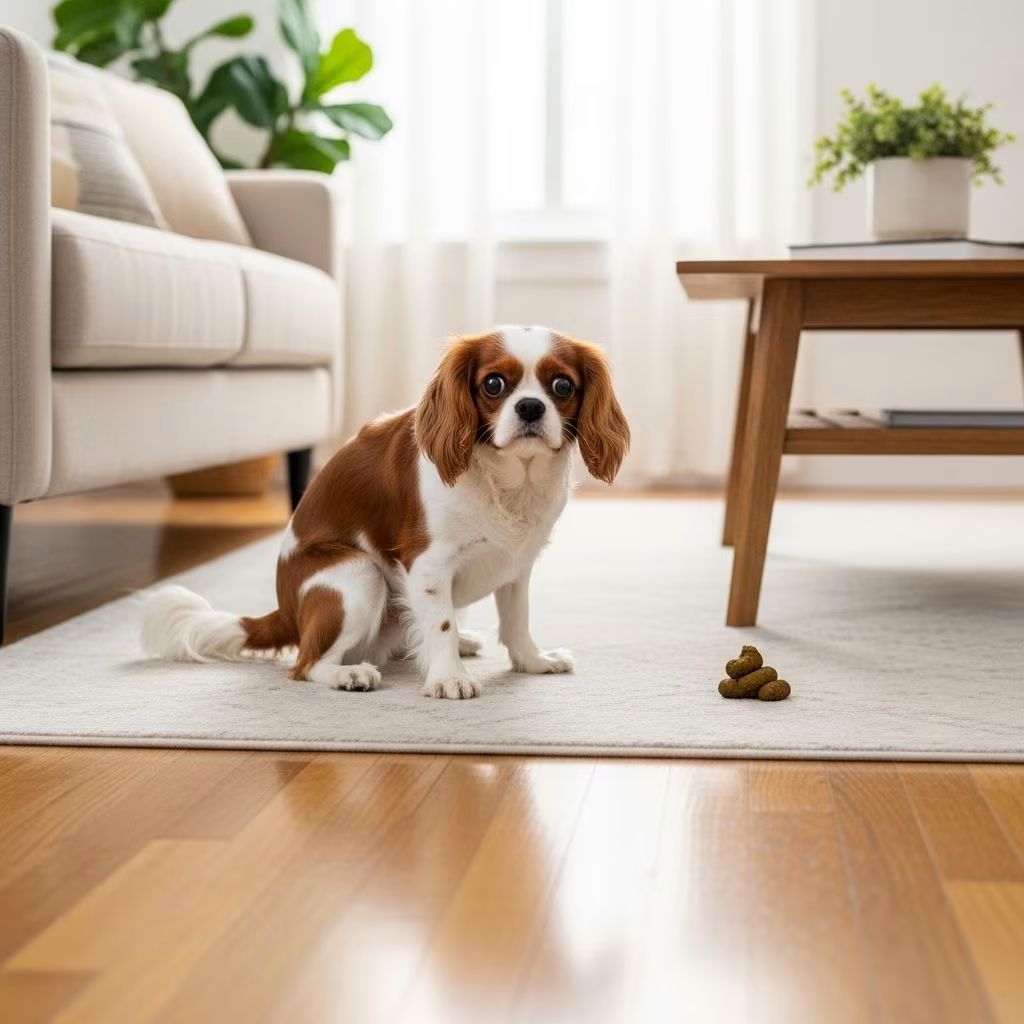
Indoor defecation by dogs disrupts household harmony and signals underlying issues that demand prompt attention. This comprehensive guide explores the primary reasons dogs poop inside, differentiates between medical and behavioral factors, and provides actionable solutions grounded in veterinary expertise. House soiling affects about 20% of pet dogs, often leading to strained owner-pet relationships if unaddressed.
Recognizing the Problem: Patterns and Signals
Observe where, when, and how your dog eliminates indoors to pinpoint the cause. Consistent soiling in specific spots, like a corner or rug, points to incomplete house training or surface preferences developed over time. In contrast, scattered incidents across rooms may indicate anxiety or fear responses, such as during owner absences or loud noises.
- Location consistency: Fixed indoor sites suggest learned habits from poor initial training.
- Timing triggers: Elimination only when alone hints at separation anxiety; during storms or fireworks signals noise phobia.
- Frequency changes: Sudden increases in adults warrant immediate vet checks for health issues.
Tracking these details via a journal helps establish baselines for progress and informs targeted interventions.
Medical Reasons Behind Indoor Defecation
Health problems top the list for house soiling, especially in puppies resisting training, adults with abrupt onset, or seniors losing reliability. Conditions increasing stool urgency, frequency, pain on defecation, or impairing mobility/control demand veterinary evaluation first.
| Condition | Symptoms | Impact on Soiling |
|---|---|---|
| Gastrointestinal issues (diarrhea, colitis) | Loose stools, urgency | Forced indoor elimination due to speed needs |
| Neurological disorders | Mobility loss, incontinence | Loss of voluntary control |
| Cognitive dysfunction (seniors) | Confusion, disorientation | Forgetting trained spots |
| Spinal/peripheral nerve damage | Weakness, pain | Impaired defecation signals |
Vets recommend fecal, blood, and urine tests alongside physical exams to rule out these. Treating the root resolves soiling in most cases, often with a brief retraining. For instance, polyuria from diabetes or renal disease indirectly boosts defecation needs, mimicking behavioral lapses.
Behavioral Triggers: Beyond Health Checks
Once medical causes are excluded, behavioral factors prevail. Incomplete house training remains prevalent, where dogs relieve pressure indoors due to self-reinforcing habits or preferred textures. Life changes like schedule shifts, new homes, or longer isolations spark anxiety-driven losses of control—not spite, as dogs lack such cognition.
Anxiety and Fear Disorders
Separation anxiety prompts soiling during even short absences, while noise fears (thunder, fireworks) or outdoor phobias block proper elimination. These emotional states interrupt complete outdoor relief, leading to indoor accidents. Fecal marking is rare in domestics, reinforcing medical or fear diagnoses over territorial urine spraying.
- Schedule disruptions: Extended alone time exceeds bladder/bowel capacity.
- Fear of outdoors: Refusal to exit, incomplete voids.
- Excitement/submission: Rare fecal but possible in young pups.
Training Lapses and Learned Preferences
Pups never fully trained or adults reverting post-change develop indoor site affinities. Odors from uncleaned spots lure repeats, as elimination feels rewarding regardless of location. Abrupt diet shifts or access denials exacerbate this.
Step-by-Step Solutions to Eliminate Indoor Pooping
Effective fixes blend medical treatment, environmental tweaks, and retraining. Prognosis excels with consistent management, resolving most cases.
- Vet consultation: Rule out/treat health issues first.
- Clean thoroughly: Use enzymatic cleaners to erase scents attracting returns.
- Schedule rigidly: Frequent potty breaks matching age/capacity (e.g., every 2-4 hours for pups).
- Supervise constantly: Leash indoors; crate when absent to prevent opportunities.
- Positive reinforcement: Reward outdoor success lavishly; ignore/redirect indoors without scolding.
For anxiety, desensitization (gradual alone time) or counter-conditioning pairs departures with treats. Severe cases may need vet-prescribed anti-anxiety aids alongside behaviorist input.
Retraining Protocol for All Ages
Mimic puppy methods: Confine, frequent outings post-meals/sleep/play, praise precisely. Track progress; adjust for lapses. Indoor preferences fade with denial of access and scent removal.
| Age Group | Break Frequency | Key Focus |
|---|---|---|
| Puppies (<6 months) | Every 1-2 hours | Build habits early |
| Adults | 3-4 times daily | Consistency post-changes |
| Seniors | More frequent | Mobility aids if needed |
Preventing Recurrence: Long-Term Strategies
Maintain routines to avert relapses. Annual vet checks catch age-related declines early. Enrich environments with puzzle toys to cut anxiety. Multi-dog homes require individual tracking to isolate culprits.
Owners report 80-90% success with diligence, preserving bonds and avoiding relinquishment—a top surrender reason. Patience yields clean homes; persistence differentiates success.
Frequently Asked Questions (FAQs)
Is indoor pooping always a behavioral issue?
No, medical causes like GI disorders or cognitive decline must be vetted first, especially in adults or seniors.
How long does retraining take?
Weeks to months, depending on cause severity and consistency. Track daily for baselines.
Does punishing help?
No—scolding fosters fear, worsening anxiety soiling. Use positives only.
What if my dog poops only when I’m gone?
Likely separation anxiety; try desensitization and consult pros.
Can diet changes cause this?
Yes, abrupt shifts lead to loose stools or urgency; transition slowly.
Armed with this knowledge, reclaim your space. Persistent issues? Seek certified behaviorists for tailored plans.
References
- Canine House Soiling: Back to Basics — Today’s Veterinary Practice. 2023. https://todaysveterinarypractice.com/behavior/canine-house-soiling-back-basics/
- Dog Behavior Problems — House Soiling — Humane Society of Missouri. 2024. https://hsmo.org/portfolio-item/dog-behavior-problems-house-soiling/
- Canine House Soiling: Back to Basics (PDF) — Kennel to Couch. 2021-05-01. https://kenneltocouch.org/wp-content/uploads/2021/05/Canine-House-Soiling_-Back-to-Basics-_-Today_s-.pdf
- Why is my Dog Having Accidents in the House? — CattleDog Publishing. 2023. https://cattledogpublishing.com/blog/why-is-my-dog-having-accidents-in-the-house/
- Canine housesoiling (Proceedings) — dvm360. 2022. https://www.dvm360.com/view/canine-housesoiling-proceedings
- House soiling – Elimination and marking problems in dogs — Vetwest. 2024. https://www.vetwest.com.au/pet-library/house-soiling-elimination-and-marking-problems-in-dogs/
- House-Soiling — San Francisco SPCA. 2023. https://www.sfspca.org/resource/house-soiling/



