

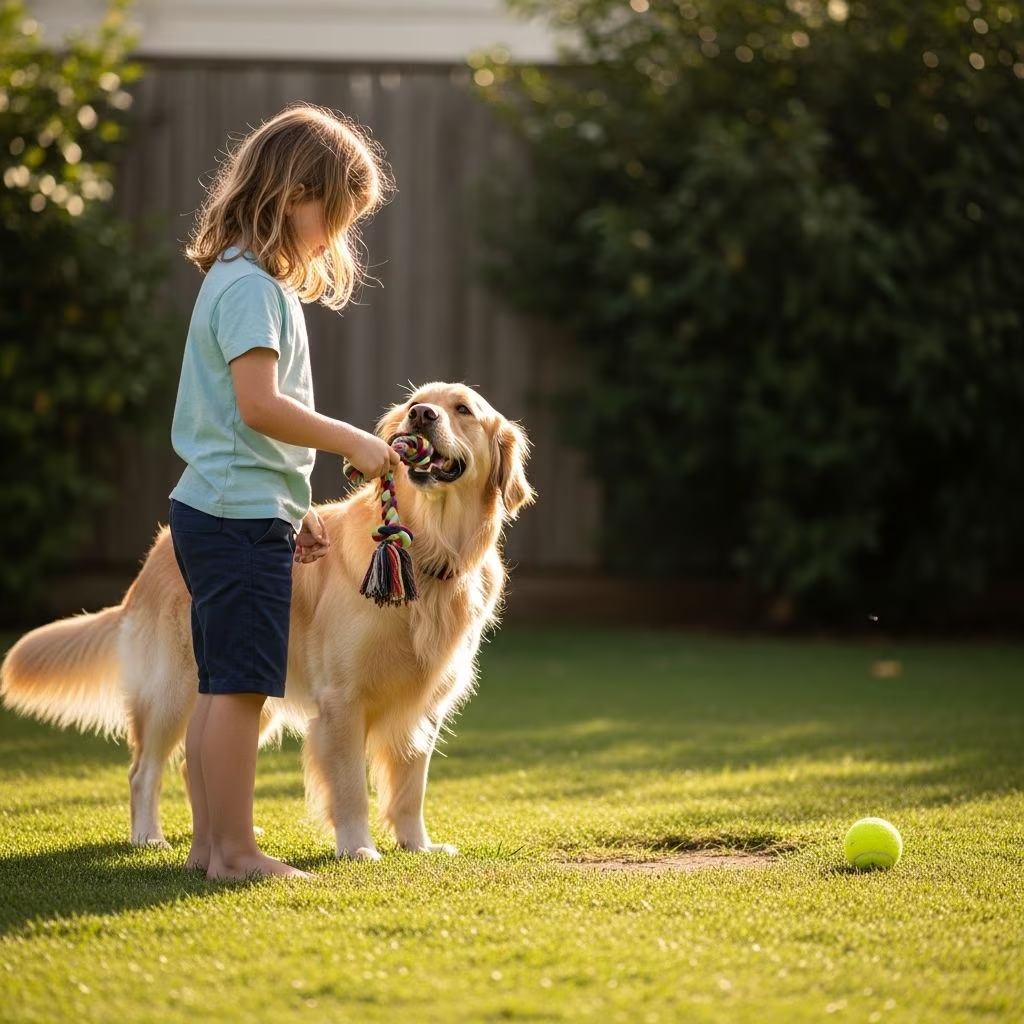
One of the most challenging aspects of dog ownership is managing a pet who seems to have an endless supply of energy and enthusiasm. Many dog owners find themselves struggling with pets who constantly demand more play, more exercise, or more attention, seemingly unable to recognize when activities should come to a close. This persistent behavior often stems from a lack of clear communication about boundaries and transitions. Dogs thrive when they understand expectations, and one of the most valuable skills you can teach is recognizing when an activity has concluded and it’s time to shift into a more relaxed state.
Understanding the Challenge of Continuous Stimulation
Dogs are naturally driven creatures, especially those with high energy levels or working breed backgrounds. Their brains are wired to seek engagement, and once they’ve experienced the joy of play or exercise, they often struggle to accept when that stimulation ends. Without clear boundaries, dogs may develop behaviors that become increasingly demanding—jumping repeatedly, barking persistently, or continuing to bring toys to you long after playtime should have concluded.
This isn’t a sign of misbehavior or disobedience; rather, it reflects a dog’s natural inability to self-regulate without guidance. Just as children need to learn when bedtime is coming or when a favorite activity must pause, dogs require explicit training to understand these transitions. The good news is that this skill is entirely teachable through consistent, patient practice and clear communication strategies.
The Foundation: Preparing Your Dog for Success
Before introducing a cue that signals the end of play, your dog needs to reach a certain level of physical and mental satisfaction. Starting your training during a moment when your dog is already somewhat tired, but not exhausted, creates the optimal learning environment. The timing matters significantly because a completely overstimulated dog won’t be in a mental state to process new information or respond to training cues.
Consider the intensity and duration of play that your specific dog needs. Some dogs may require just a moderate period of fetch or interactive play before they’re ready to settle. Others, particularly high-drive or working breeds, might need extended, vigorous activity—perhaps climbing terrain or repeated retrieval exercises—before they can genuinely relax. The key is finding that sweet spot where your dog has satisfied their immediate drive for engagement but isn’t so exhausted that they collapse rather than choose to settle.
Choosing the Right Activities for Tire-Out
Not all play activities are equally effective at creating readiness to transition to calm behavior. Interactive fetch, where your dog repeatedly retrieves a thrown toy, provides both physical exertion and mental engagement. More challenging activities, such as retrieves on varied terrain or uphill throws, demand greater effort and focus. The choice depends on your dog’s age, fitness level, and preferences. Younger, healthier dogs may need more challenging scenarios, while older dogs or those with joint concerns require gentler but still engaging activities.
Implementing the Conclusion Cue
Once your dog has engaged in sufficient activity and shows signs of readiness to disengage, introduce a consistent verbal cue that signals the end of the current activity. Your chosen phrase becomes the marker that tells your dog, “This is finished now.” The specific words matter less than consistency—many trainers use expressions like “All done,” “That’ll do,” or “Finished.” The critical factor is that you use the identical phrase every single time you want to mark the conclusion of an activity.
When you give your conclusion cue, immediately remove the toy from your dog’s access. Place it in a cupboard, a backpack, or another location where it’s completely out of sight. Visual removal of the toy reinforces your verbal message—the toy is truly gone, not just temporarily hidden or set aside. This physical action paired with your verbal cue creates a powerful association that helps your dog understand the session has genuinely ended.
Managing the Extinction Period
After providing your conclusion cue and removing the toy, your dog will likely continue trying to re-engage you in play. This is expected behavior and represents what behaviorists call an “extinction burst”—the dog intensifies their attempts to obtain the desired outcome because that strategy previously worked. Your response during this phase is absolutely critical to training success.
Complete ignoring is your most powerful training tool during this stage. Do not make eye contact, speak, touch, or otherwise acknowledge your dog’s attempts to restart play. This includes not scolding, as negative attention is still attention and reinforces the behavior you’re trying to extinguish. If your dog brings you the toy, you don’t pick it up. If they bark, you don’t respond. If they jump at you, you remain unmoved.
Enlisting Support from Household Members
One frequently underestimated difficulty in this training is managing other people’s responses. Family members, visitors, or others in your household may find it challenging to ignore a persistent, enthusiastic dog. They may believe they’re being kind by responding to the dog’s requests or may simply lack understanding of the training protocol. Clearly communicate the training plan to everyone who interacts with your dog and explain why their consistent non-engagement is essential. This may require being assertive and even redirecting well-meaning individuals away from the dog.
If certain humans prove too unreliable or too tempted to re-engage the dog, consider physically removing your dog from their vicinity temporarily. This might mean leashing your dog and moving to a different room or area, effectively removing the opportunity for others to inadvertently undermine your training efforts.
Recognizing and Reinforcing Appropriate Settling
While you’re implementing extinction by ignoring unwanted behaviors, you must simultaneously and actively reward desired behaviors. After your dog stops actively trying to re-engage—perhaps by retreating to their bed, lying down, looking away from you, or simply ceasing their pursuit of play—this is your moment to deliver reinforcement.
The type of reinforcement matters. Since you want to help your dog transition from high arousal to calm, avoid rewards that increase excitement. Treats and clicker sounds tend to elevate arousal rather than promote settling. Instead, provide calm attention and gentle physical contact. Approach your dog quietly and stroke them gently, using a relaxed tone of voice. This rewards the settling behavior while maintaining the calm state you’re trying to establish.
Praise should be gentle and understated rather than enthusiastic and exciting. The message you’re sending is “Yes, this calm state is wonderful,” not “You’ve done something amazing!” The distinction might seem subtle, but it meaningfully impacts your dog’s response and whether they maintain the settled state or spike back into arousal.
Building Duration and Complexity
As your dog begins to understand the concept of settling when you provide the conclusion cue, you can gradually increase the difficulty and duration of the settled state you require before providing rewards. Initially, reward any brief moment of calm—just a few seconds of not trying to re-engage might warrant reinforcement. Over successive training sessions and weeks, wait for longer periods of genuine settling before rewarding.
Similarly, you can progress the training to different environments and situations. Begin indoors in a familiar setting, where distractions are minimal and your dog feels secure. Once the behavior is solidly established at home, practice the same protocol while standing rather than sitting. Then introduce outdoor locations, such as a park bench, where additional environmental stimulation might make settling more challenging. Finally, attempt the conclusion cue and settling routine immediately after highly arousing activities—for instance, right after your dog has completed an agility course or after you’ve thrown the ball repeatedly.
Preventing Deprivation and Maintaining Confidence
As you implement boundaries around playtime, it’s crucial that your dog doesn’t develop a sense of deprivation or loss. Provide multiple daily opportunities for your dog to engage in their favorite activities—fetch, interactive play, exercise, or whatever form of engagement your specific dog values most. The goal is to teach that activities can end without disappearing forever. Your dog should trust that while the current session has concluded, future opportunities for engagement will certainly arrive.
This distinction prevents the kind of desperate, frantic behavior that sometimes develops when dogs fear they won’t get another chance for play. A dog who understands that playtime ends but will return tomorrow can accept conclusions calmly. A dog who fears this might be their only opportunity today will fight harder and longer to extend play, making training far more difficult.
Common Questions About Teaching Activity Boundaries
How long does this training typically take?
The timeline varies based on your dog’s age, previous learning history, breed characteristics, and how consistently you apply the protocol. Some dogs show noticeable improvement within days, while others require weeks of consistent practice. High-drive dogs and those with extensive history of getting their way may require longer training periods. Consistency matters more than speed—sporadic practice produces sporadic results.
What if my dog never seems ready to settle?
If your dog seems unable to settle even after extended play, they may not have received adequate physical or mental stimulation. Consider increasing the intensity or duration of play sessions, or introducing more mentally demanding activities like scent work or puzzle toys. Additionally, evaluate whether your dog has adequate daily exercise outside of formal training sessions. Dogs with insufficient daily activity throughout the day will struggle to settle during structured training.
Can I use this training with multiple dogs?
Teaching this skill becomes more complex with multiple dogs because they stimulate each other. You may need to train each dog individually first, in separate spaces, before progressing to managing multiple dogs together. Once each dog understands the protocol independently, you can gradually introduce them to the exercise while the others are settling nearby.
What cue word works best?
The most important factor is that your chosen cue is distinct from other words in your regular vocabulary and that you use it consistently. “All done,” “That’ll do,” “Finished,” or similar phrases all work equally well. Avoid using words that might accidentally occur in normal conversation. The consistency of use matters far more than the specific words chosen.
Beyond Play: Generalizing the Settling Skill
Once your dog thoroughly understands the settling cue in the context of playtime, you can apply the same protocol to other situations requiring transitions. Training sessions can be concluded with the same cue. Casual interactions, petting sessions, or any engagement activity can employ your conclusion cue and the same settling protocol. This generalization extends the value of your training investment across multiple daily interactions.
Teaching your dog to recognize when activities end and settle appropriately transforms the daily dynamic in your household. Rather than having a dog who constantly demands more engagement, you’ll have a companion who can accept conclusions gracefully and transition smoothly between different behavioral states. This skill reduces frustration for both dog and owner and creates a more harmonious living situation overall.
References
- Training a working dog to settle — Anglian Dog Works. https://angliandogworks.com/blogs/training-tips/settle
- How To Teach a Dog The ‘Off’ Command: Step-by-Step Guide — Chewy Education. https://www.chewy.com/education/dog/training-and-behavior/basic-dog-training-commands-off
- Oh No! The dog had no off switch! Dog training 101 — Kalmpets. https://kalmpets.com.au/oh-no-the-dog-had-no-off-switch/



