

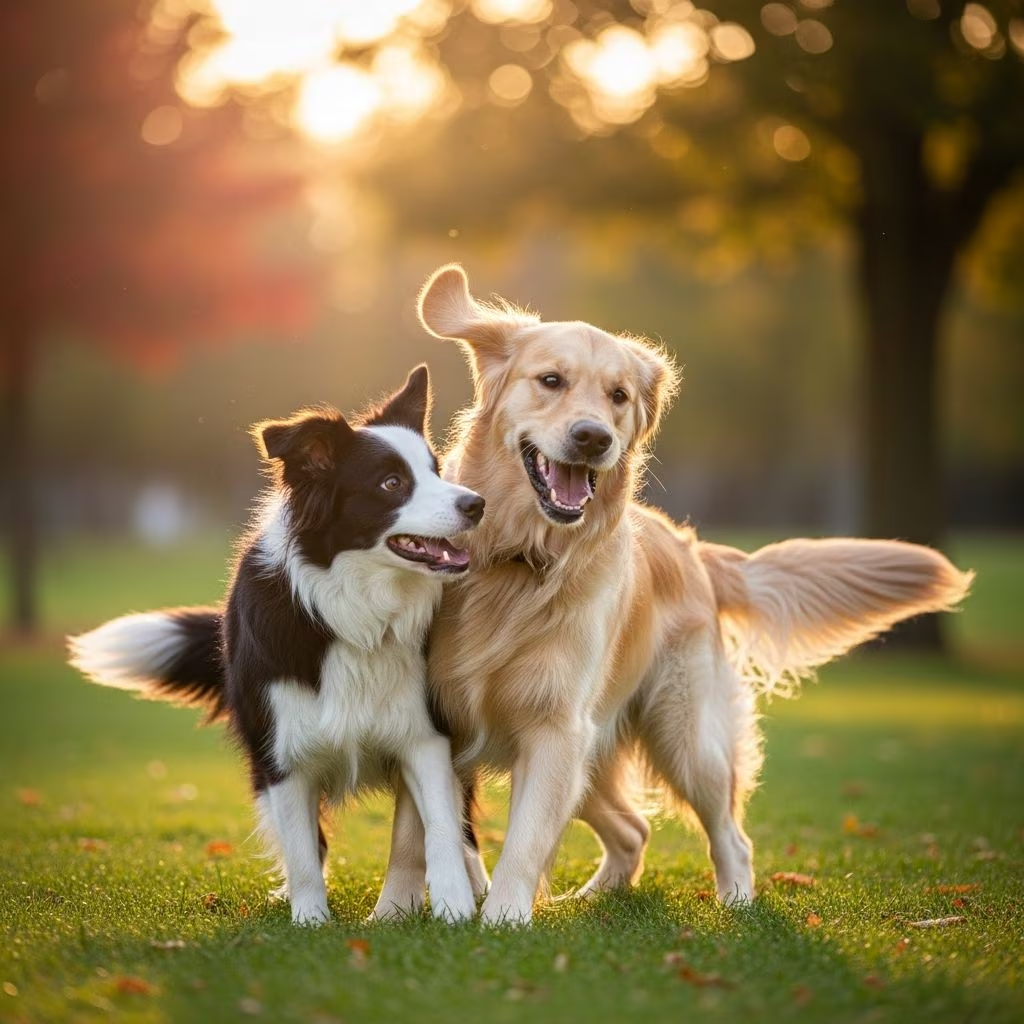
Choosing the right **dog playmate** for your furry friend can transform their social life, boost their confidence, and even enhance training outcomes. Dogs are inherently social animals, descending from pack-living wolves, and play is a fundamental way they learn, bond, and release energy. But not every dog is the perfect match for yours. This guide covers everything from identifying compatible play styles to spotting healthy play signals and ensuring safety during interactions.
Why Dogs Need Playmates
Social play is crucial for dogs of all ages. It mimics the ‘four F’s’ of survival—**fighting, fleeing, feeding, and mating**—in a safe, ritualized context, helping puppies develop essential skills like bite inhibition, cooperation, and communication. Research shows that symmetric play, where both dogs take turns ‘winning’ and ‘losing,’ promotes egalitarian relationships and prosocial behaviors.
During the socialization window (3-12 weeks), puppies form play preferences that last into adulthood. Play also acts as cognitive training, teaching dogs to read signals like play bows and understand reciprocity. Adult dogs continue playing to maintain bonds, reduce stress, and even improve training retention—post-training play can extend memory of behaviors by up to a year.
- Builds confidence and reduces fear of new dogs or environments.
- Prevents boredom-related behaviors like destructive chewing.
- Strengthens human-dog bonds indirectly through observed social skills.
Understanding Dog Play Styles
Dogs exhibit distinct **play styles** influenced by breed, age, size, and personality. Recognizing these helps match your dog with ideal playmates.
| Play Style | Characteristics | Best Matches | Potential Issues |
|---|---|---|---|
| Chaser | Loves pursuit games, high energy, initiates runs. | Other chasers or wrestlers who reciprocate. | Bullying shy dogs; needs breaks to avoid frustration. |
| Wrestler | Body slams, roughhousing, pinning. | Similar-sized wrestlers; avoid tiny toys. | Overpowering smaller dogs; monitor for role reversals. |
| Generic Player | Balanced, mixes chase and wrestle. | Most styles; adaptable. | May get overwhelmed by extreme styles. |
| Softie/Contact Avoider | Gentle, avoids rough contact, prefers tag. | Intimidated by aggressive play; quick time-outs needed. |
Size and age matter: Larger or older dogs self-handicap less, leading to asymmetry in play. Puppies play more symmetrically early on (7-9 weeks), but hierarchies form by 6 months.
Signs of Healthy Dog Play
Healthy play is **reciprocal and consensual**—both dogs engage willingly, take breaks, and switch roles. Look for these signals:
- Play bow: Front down, rear up—universal invitation.
- Self-handicapping: Larger dog lies down or slows for smaller one.
- Role reversals: Taking turns chasing/pinning (aim for 50:50 symmetry).
- Breaks: Sniffing, sitting, or yawning to reset.
- Relaxed body: Loose wiggles, bouncy gait, play face (open mouth grin).
Play incorporating humping or mounting is normal if reciprocal and not obsessive—it’s part of practicing behaviors, not always sexual. Studies confirm play expands during domestication, including dog-dog and dog-human variants.
Red Flags: When Play Turns Problematic
Not all roughhousing is play. Intervene if:
- One dog cowers, hides, or repeatedly avoids.
- No role reversals; one always ‘wins’.
- Intense staring, raised hackles, or growling without play bow.
- Humping becomes fixated or one-sided.
- High-pitched yelps without bouncing back.
Asymmetry increases with age/size, potentially forming dominance without injury if monitored. Incompatible styles (e.g., hyper chaser with softie) lead to frustration—redirect with commands or time-outs.
How to Find the Perfect Dog Playmate
Start with structured playdates:
- Match profiles: Use apps or groups noting age, size, energy, play style.
- Neutral territory: Parks or yards to avoid territoriality.
- Supervised intros: Leashed walks first, then off-leash in fenced area.
- Short sessions: 10-15 mins initially; extend if reciprocal.
- Observe dynamics: Ensure consent—chased dog should egg on, not flee in fear.
Breed considerations: Herding breeds chase; terriers wrestle. Puppies need peers for socialization; adults benefit from energy-matched buddies.
Setting Up Safe Playdates
Safety first:
- Vaccinations up-to-date; flea/tick prevention.
- Fenced, obstacle-free areas.
- Water, shade, toys for variety.
- One human per dog for intervention.
- End on high note—tired, happy dogs.
For multi-dog homes, reward polite play and separate if needed. Dogs learn acceptable play from peers or humans.
Play’s Role in Training and Development
Play isn’t just fun—it’s training gold. Post-session play reinforces commands, extending recall memory significantly. It builds trust, negotiation skills, and emotional regulation. Dogs mirroring child behaviors in families show play enhances household bonds.
Frequently Asked Questions (FAQs)
Q: How do I know if my dogs are playing or fighting?
A: Play is bouncy, reciprocal with role switches and breaks; fights have stiff bodies, pinned ears, no bows, and one-sided aggression.
Q: Is humping during play normal?
A: Yes, if mutual and brief—it’s play practice, not dominance. Interrupt if persistent.
Q: Can puppies play with adult dogs?
A: Yes, with supervision. Adults teach manners; watch for overwhelming.
Q: How often should playdates happen?
A: 1-3 times weekly, based on energy. Quality over quantity.
Q: What if my dog is a lone wolf type?
A: Solo activities like fetch suffice; force social play risks shutdown.
Conclusion
Finding the right dog playmate fosters joy, skills, and health. Prioritize matches, monitor signals, and intervene wisely for pawsitive outcomes.
References
- Friendship or Competition? Symmetry in Social Play within the Two Litters of German Shepherd Puppies — Animals (PMC). 2020-10-13. https://pmc.ncbi.nlm.nih.gov/articles/PMC7552207/
- Dog Play Behavior: Are they fighting or playing? — Inquisitive Canine. Accessed 2026. https://inquisitivecanine.com/dog-play-behavior-are-they-fighting-or-playing/
- Improve Your Dog’s Training Success Through Play — Kinship. Accessed 2026. https://www.kinship.com/dog-behavior/play-improves-dog-training-success



