

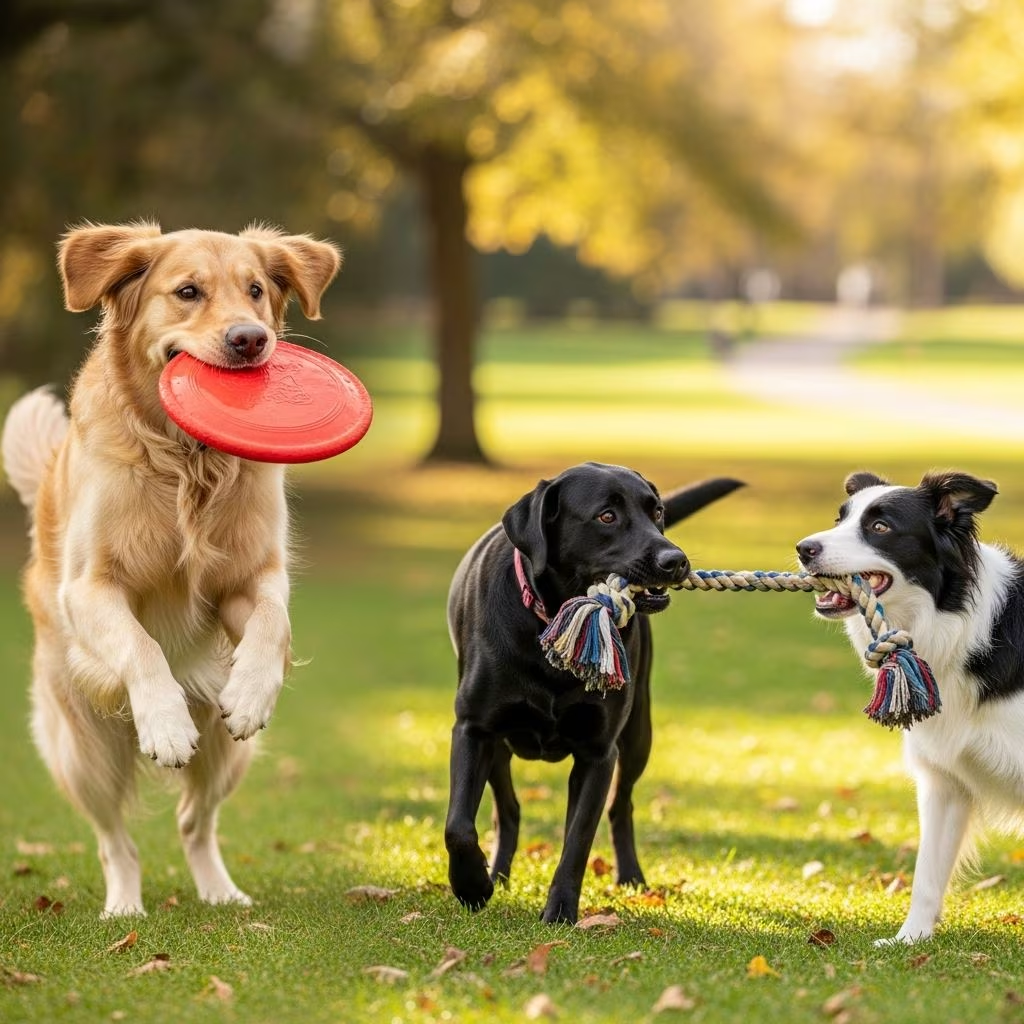
Understanding how dogs play reveals much about their personalities, instincts, and social needs. Dogs express themselves through distinct play patterns that range from high-energy pursuits to thoughtful solo engagements. Recognizing these styles helps owners foster better interactions at parks, during training, or at home, ensuring play remains fun and safe for all involved.
Why Play Matters in Canine Development
Play serves as a critical tool for dogs to practice adult behaviors, build physical strength, and strengthen social bonds. It mimics hunting, herding, and fighting scenarios in a controlled, non-threatening way. Through play, puppies learn bite inhibition, while adults refine communication skills. Owners who observe these activities can match playmates effectively, reducing conflicts and promoting harmony.
Healthy play boosts mental health by reducing stress and preventing boredom-related issues like chewing or digging. It also enhances physical fitness, improving cardiovascular health and muscle tone. Regular play sessions tailored to a dog’s preferred style lead to happier, more balanced pets.
Core Types of Dog Play Behaviors
Dogs showcase a variety of play forms, each tied to their breed heritage and individual temperament. Below, we break down the primary categories with their defining features.
Chase and Pursuit Games
The thrill of the chase captivates many dogs, especially those with herding or hunting backgrounds. In this style, one dog runs after another in bouncy, zigzagging patterns, often switching roles to keep things fair. Herding breeds like Border Collies excel here, using calculated movements to “guide” their partners.
Participants display elastic bodies and frequent pauses, signaling enjoyment. This activity burns significant energy and hones agility, but it requires open spaces to avoid frustration in confined areas.
Contact-Based Wrestling and Tumbling
Wrestlers thrive on physical closeness, rolling, pushing, and gentle mouthing. Common in terriers and sporting dogs, this roughhousing builds strength and teaches boundaries. Dogs self-regulate intensity, with larger ones bowing low or slowing down for smaller friends—a phenomenon called self-handicapping.
Watch for loose limbs and inhibited bites; mouths stay open to avoid injury. This style fosters confidence but demands supervision to prevent over-arousal.
Solo and Independent Activities
Not every dog seeks a partner. Independent players entertain themselves by chasing tails, flipping toys, or sprinting in loops. Sighthounds often favor this, reflecting their solo hunting roots. These dogs value personal space yet may occasionally invite others.
Such play encourages creativity and problem-solving, ideal for intelligent breeds prone to mischief when understimulated.
Recognizing Healthy Play Signals
Dogs communicate play intentions clearly to avoid misunderstandings. Key indicators include:
- Play bow: Front legs extended, rear elevated—a classic “let’s play” pose recognized across breeds.
- Relaxed body: Wiggly, floppy movements with soft eyes and open mouths.
- Turn-taking: Alternating roles in chase or wrestle, with periodic check-ins.
- Play vocalizations: High-pitched barks or growls paired with joyful expressions.
Absence of these, like stiff posture or prolonged pinning, may signal issues. Intervene calmly by calling dogs away and resetting.
Breed Influences on Play Preferences
Genetics shape play tendencies. Use this table to match styles with common breeds:
| Breed Group | Typical Play Style | Key Traits |
|---|---|---|
| Herding | Chase/Pursuit | Focused circling, turn-taking, high stamina |
| Terriers | Wrestling/Tug | Quick pounces, vocal energy, grip strength |
| Working | Structured Tasks | Problem-solving, controlled intensity |
| Sighthounds | Independent Run | Solo sprints, bursts of speed |
Herders may “herd” during group play, while terriers add barking flair. Mix styles thoughtfully for compatibility.
Object-Driven Play Variations
Tug-of-War Enthusiasts
Tuggers grip ropes or toys fiercely, pulling with determination. This satisfies prey drive in breeds like retrievers. Set rules: dog starts, you end with “drop it.” It builds jaw strength and obedience.
Mental Challenge Seekers
Puzzle lovers manipulate toys for rewards, displaying focus and persistence. Ideal for preventing boredom in smart dogs like German Shepherds. Rotate puzzles to sustain interest.
Safety Tips for Multi-Dog Play
Group settings amplify dynamics. Match energy levels and sizes; supervise for bullying signs like constant mounting or neck gripping without bows. Provide breaks to de-escalate. Neutered dogs may play longer without tension.
In parks, note space: chasers need room, wrestlers prefer grass. Teach recall for quick interventions.
Adapting Play for Different Ages and Health
Puppies experiment broadly, learning inhibition via soft bites. Seniors favor gentle touch or short chases, preserving joints. Health issues like arthritis suit puzzle play over roughhousing. Consult vets for tailored advice.
Training to Enhance Play Skills
Channel instincts positively. Use toys mimicking prey for chasers; structured tugs for wrestlers. Reward bows and turn-taking to reinforce etiquette. Group classes build social fluency.
Common Play Pitfalls and Fixes
Over-arousal: Fast panting, dilated pupils—pause play.
Mismatched pairs: Persistent chaser with avoider—separate.
Resource guarding: Stiffening over toys—train trades.
Early socialization prevents rigidity.
FAQs
Is wrestling play ever too rough?
Monitor for stress signals; healthy wrestling includes bows and balance.
Why does my dog play alone?
Independent types self-entertain; enrich with toys.
Can play fix aggression?
Play aids socialization but consult pros for true aggression.
How often should dogs play?
Daily 15-30 minutes, adjusted for age/energy.
Do spayed/neutered dogs play differently?
Often less mounting, more sustained fun.
References
- How to Identify Different Dog Play Styles: From Chase Play to Wrestling — Winston Salem Dog Trainers. 2023. https://www.winstonsalemdogtrainers.com/how-to-identify-different-dog-play-styles-from-chase-play-to-wrestling/
- Decode Your Dog’s Play Style: A Comprehensive Guide to 8 Different Types — Off Leash K9. 2023. https://offleashk9swmo.com/decode-your-dogs-play-style-a-comprehensive-guide-to-8-different-types/
- Dog Park Behavior Guide: Group Play Dynamics and Safety — Wagbar. 2024. https://www.wagbar.com/dog-park-behavior-guide-group-play-dynamics-and-safety
- Play Behavior — iSpeakDog. 2022. http://www.ispeakdog.org/play-behavior.html
- 5 Key Signs of Canine Body Language in Group Play — Pawparazzi Resort. 2023. https://pawparazziresort.com/canine-body-language-group-play/
- Canine Play Styles — CPT Training. 2023. https://cpt-training.com/blog/canine-play-styles/



