

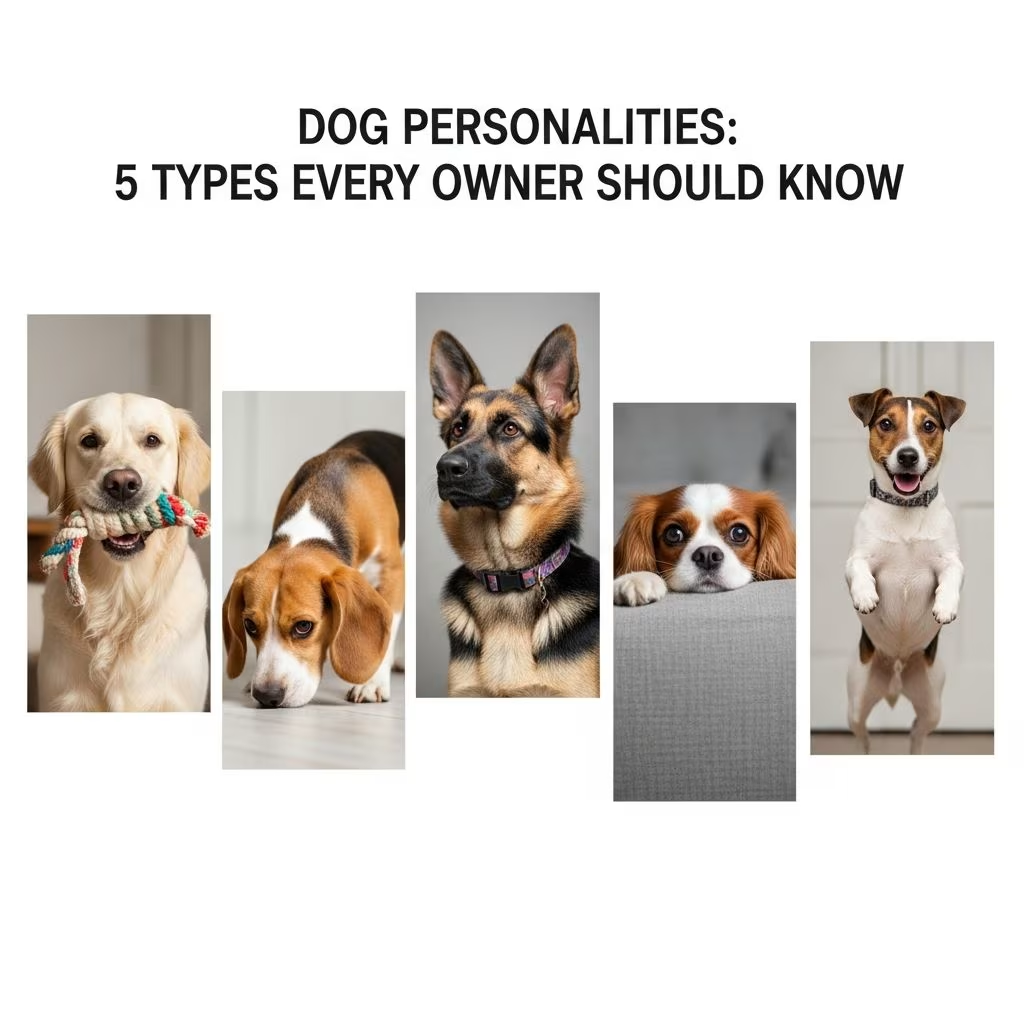
Dogs exhibit distinct personalities that influence their behavior, training needs, and interactions with humans and other animals. Recent AI-driven research analyzing thousands of dogs has identified five primary personality types: excitable/hyper-attached, anxious/fearful, aloof/predatory, reactive/assertive, and calm/agreeable. Understanding these types helps owners tailor care, reduce behavioral issues, and foster stronger bonds.
What Are the Five Dog Personality Types?
Researchers used machine learning to classify dogs based on behavioral data, such as responses to strangers, jealousy, and reactivity to stimuli. This approach revealed consistent patterns across breeds and ages, showing that personality shapes how dogs navigate their world. These categories aren’t rigid but provide a framework for observation. Human personalities also play a role, as studies show correlations between owner traits like neuroticism and dog stress behaviors, emphasizing the impact of shared environments.
Personality Type: Excitable/Hyper-Attached
**Excitable/hyper-attached dogs** thrive on constant interaction and burst with energy. They display high excitability, strong attachment-seeking, separation anxiety, and lower fear levels compared to others. Spot them by their FOMO-driven behavior: always buzzing, slow to calm, impulsive, and shadowing you everywhere—even bathroom visits.
These pups need owners who match their vigor. They struggle with solitude, making them ideal for active households but challenging for remote workers. Training focuses on impulse control; short, rewarding sessions work best. Positive reinforcement builds confidence without overwhelming them. Breeds like Labrador Retrievers or Border Collies often fit here, though any dog can.
Handling tip: Provide mental puzzles and scheduled play to channel energy. Owners with calm, consistent routines help these dogs develop resilience, as shared environments shape temperament.
Personality Type: Anxious/Fearful
**Anxious/fearful dogs** are sensitive souls, prone to whining, jumping, or intervening during owner interactions with others. They may stem from past trauma or innate wiring, reacting deeply to minor events while others bounce back.
These dogs benefit from patient, gradual exposure to triggers. Counter-conditioning with treats pairs fears (like strangers) with positives. Avoid forcing interactions; let them approach at their pace. Research links owner confidence to bolder dog behavior—dogs of assured owners seek proximity more during stress.
Daily routines matter: predictable schedules reduce anxiety. Tools like calming pheromone diffusers or anxiety wraps aid transitions. With time, many gain confidence, but they need empathetic homes willing to invest. Statistics from behavioral surveys show fearful dogs improve markedly with reward-based handling over punishment.
Personality Type: Aloof/Predatory
**Aloof/predatory dogs** prioritize independence, showing low attachment needs and high predatory chases. They’re aggressive toward other dogs, ignore recalls to hunt wildlife, and train stubbornly—eye contact followed by ignoring you.
Not dim, just self-directed. They’re content alone, suiting busy owners but frustrating in recall training. Management is key: secure fencing prevents wildlife pursuits. Positive motivation (high-value toys) outperforms scolding. These traits align with hunting breeds like Terriers or Sighthounds.
Owners report higher satisfaction when matching active lifestyles to these dogs’ independence, per relationship studies. Build respect through consistent boundaries, not dominance myths—modern science debunks human-dog hierarchies.
Personality Type: Reactive/Assertive
**Reactive/assertive dogs** react strongly across contexts: aggression toward family if scolded, fear of loud noises like vacuums. They bark, lunge, or snap under pressure, blending fear with boldness.
Training emphasizes desensitization—slowly introduce triggers at low intensity with rewards. Avoid escalation; timeouts prevent rehearsal of bad habits. Brain imaging confirms dogs process tone and words separately, so cheerful commands trump angry yells.
These pups need structured exercise to burn steam. Surveys link owner emotional stability to less reactive dogs, highlighting routine’s role. Professional help shines for severe cases, improving 80% of reactive dogs per expert data.
Personality Type: Calm/Agreeable
**Calm/agreeable dogs** are low-drama gems: less chasing, quick learners, adaptable. They flow with life, excelling as family pets without superstar drive.
Easy training makes them forgiving for novices. They rarely aggress or fear, thriving in varied homes. Still, provide outlets to prevent boredom. Studies show agreeable dogs correlate with satisfied owners high in openness.
Pro: Minimal behavior issues. Con: May lack protection instinct. Ideal balance for apartments or seniors.
How Human Personality Influences Dog Behavior
Dogs mirror guardians subtly via observation, not osmosis. Confident owners yield outgoing dogs; anxious ones, edgy pups. Correlations exist—neurotic owners link to stressed dogs—but environment trumps genetics.
Social referencing: Dogs gauge objects by owner expressions. Vocal sensitivity distinguishes emotions. Guilty looks? Appeasement to cues, not remorse. Consistent, calm handling fosters steady dogs.
| Owner Trait | Dog Tendency | Evidence |
|---|---|---|
| High Confidence | Sociable, Proximity-Seeking | Behavioral Studies |
| Neurotic/Anxious | Fearful, Reactive | Surveys of Pairs |
| Calm/Consistent | Resilient, Agreeable | AI Analysis |
Tips for Matching and Managing Dog Personalities
- Assess Early: Observe reactions to visitors, noises, solitude.
- Match Lifestyles: Energetic dogs for runners; calm for couch potatoes.
- Reward-Based Training: Builds trust across types.
- Consistent Routines: Reduces all stress behaviors.
- Seek Pros: For anxious/reactive cases.
Personality-aware adoptions cut mismatches, boosting bonds.
Frequently Asked Questions (FAQs)
Q: Can dog personalities change over time?
A: Yes, through training, environment, and age. Early socialization shifts anxious pups toward calm.
Q: Does breed determine personality?
A: Influences but not dictates—AI found types across breeds.
Q: How do I identify my dog’s type?
A: Track behaviors like excitability, fear, independence via journals or quizzes.
Q: Are excitable dogs hard to train?
A: Challenging but rewarding with short, fun sessions.
Q: What if my dog fits multiple types?
A: Hybrids common; focus on dominant traits.
References
- People and Their Dogs Really Do Have Similar Personalities — Kinship. 2023. https://www.kinship.com/pet-behavior/dogs-mirror-humans
- AI Discovers 5 Different Dog Personalities — Kinship. 2023. https://www.kinship.com/dog-behavior/ai-discovers-dog-personalities-news
- Current perspectives on attachment and bonding in the dog–human relationship — PMC/NCBI (Peer-reviewed). 2015-02-18. https://pmc.ncbi.nlm.nih.gov/articles/PMC4348122/



