Dog Paw Pads: Anatomy Essentials
Discover the remarkable structure of dog paw pads, their vital roles in mobility and protection, and expert tips for lifelong paw health.
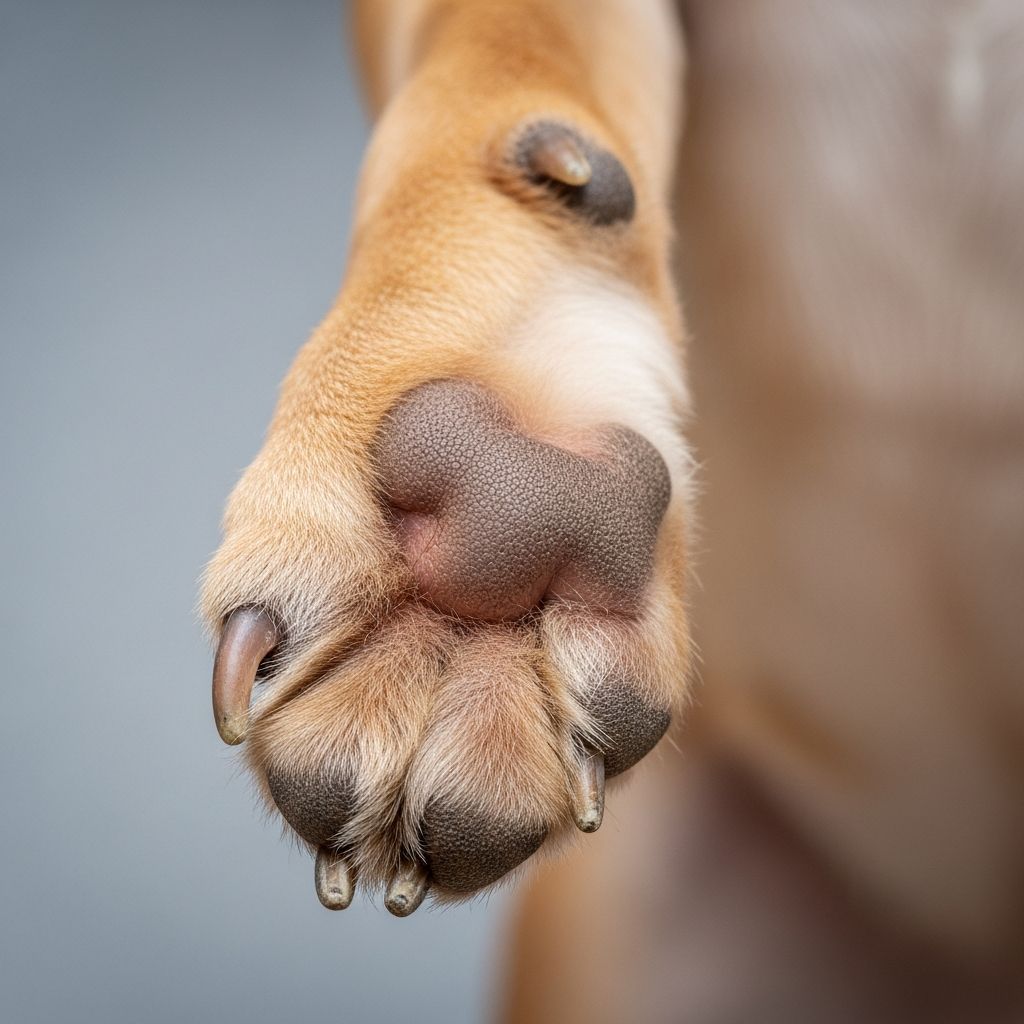
Dog paw pads form the foundational contact points between a canine’s body and the ground, engineered for resilience, sensitivity, and adaptability across diverse environments. These specialized structures integrate tough outer layers with cushioned interiors to handle daily stresses from walking to sprinting.
The Layered Build of Paw Pads
At their core, paw pads feature a multi-layered design that ensures durability and functionality. The outermost layer consists of a thick, keratinized epithelium resembling spike-like projections, which directly interfaces with surfaces. Beneath this lies the dermis, rich in papillae that interlock with epidermal honeycomb cells, creating a robust barrier. The deepest subcutaneous layer, packed with fat and connective tissue, acts as primary shock absorption.
This tripartite system—stratified epithelium, dermis, and subcutaneous tissue—collaborates seamlessly. The epithelium provides initial resistance to abrasion, while dermal papillae enhance grip and energy dissipation. Studies on breeds like German Shepherds reveal how these micro-structures optimize impact attenuation during locomotion.
Primary Components of the Paw
Each paw comprises distinct pads tailored to specific roles. Here’s a breakdown:
- Digital Pads: Positioned under each of the four toes, these smaller cushions manage shock for individual digits, aid traction, and evenly distribute weight during strides.
- Metacarpal/Metatarsal Pad: The prominent central pad on front (metacarpal) and rear (metatarsal) paws bears most body weight, functioning as the main impact buffer for joints and bones.
- Carpal Pad: Exclusive to front limbs above the ‘wrist,’ it supports braking, turning, and stability on declines without routine ground contact.
- Dewclaw: A higher vestigial digit, often on front paws, potentially aiding grip historically though less critical today.
- Claws: Curved extensions providing digging traction and terrain navigation.
These elements interconnect via bones like phalanges (toe bones), metacarpals/metatarsals (paw ‘palms’), tendons, and ligaments, forming a flexible yet sturdy framework.
Critical Functions in Canine Mobility
Paw pads multitask beyond mere support. Their pebbled surfaces deliver superior grip on slick or irregular terrain, preventing slips. Fatty cushions mitigate joint strain during high-speed pursuits or jumps. Sensory nerves embedded throughout offer real-time feedback on texture, temperature, and position, enhancing proprioception—essential for precise movements.
| Function | Description | Key Benefit |
|---|---|---|
| Shock Absorption | Fatty layers compress under force | Protects bones and joints from impact |
| Traction | Rough keratinized texture | Prevents sliding on varied surfaces |
| Thermoregulation | Sweat glands and insulation | Cools via evaporation; insulates against extremes |
| Sensory Feedback | Dense nerve endings | Guides navigation and balance |
| Protection | Tough outer barrier | Shields against cuts, heat, cold |
Such versatility suits dogs from urban strolls to rugged trails.
Microscopic Marvels Enhancing Performance
Zooming in, paw pads reveal honeycomb-structured epidermis where dermal papillae protrude into epidermal cells, forming a velocity-sensitive cushion. Finite element analyses show this geometry excels at higher speeds, linearly countering ground reaction forces to safeguard the musculoskeletal system. The dermis operates hydrostatically, storing and releasing energy, while all layers unify for locomotion demands.
Compared to feline pads, canine versions emphasize oval shapes and non-retractable claws, prioritizing endurance over stealth. Breed variations exist—sighthounds have thinner pads for speed, while working breeds boast thicker ones for endurance.
Preserving Paw Pad Health Daily
Regular inspection prevents minor issues from escalating. Wipe paws post-outings to remove irritants like salt or chemicals. Moisturize dry pads with vet-approved balms to avert cracking. Trim fur between pads to reduce moisture trapping and infections.
Seasonal care is paramount: booties shield from scorching asphalt (above 85°F risks burns) or icy salts. Gradually toughen pads for hikes via short exposures to varied textures. Nutrition with omega-3s and biotin bolsters pad integrity from within.
Spotting and Addressing Common Paw Issues
Vigilance catches problems early. Watch for:
- Cuts/Abrasions: From glass or thorns; clean and bandage.
- Cracks: Due to dryness; apply balms and limit rough walks.
- Burns/Frostbite: Redness or blisters; seek vet for severe cases.
- Infections:
- Allergies: Itching from pollen; medicated soaks help.
- Pododermatitis: Inflammation from allergies or autoimmunity; diagnostics required.
Swelling, pus from bacteria; antibiotics may be needed.
For persistent limp or odor, consult a vet—X-rays or biopsies may diagnose foreign bodies or tumors. Preventive booties and supplements like paw wax fortify resilience.
Advanced Care for Active Dogs
Hiking companions demand extra: test boots for fit to avoid blisters. Toughening protocols involve daily gravel walks building calluses naturally. Monitor for hyperkeratosis (excessive thickening) in breeds like Labradors, trimming as needed.
Rehabilitation post-injury uses padded wraps and controlled exercise. Hydrotherapy eases joint load while rebuilding strength. Always prioritize professional guidance for tailored plans.
FAQs on Dog Paw Anatomy and Care
What causes paw pads to crack?
Dryness from weather, allergies, or nutritional gaps; hydrate with balms and balanced diets.
Do all dogs have carpal pads?
Yes, front paws only; they assist in maneuvers like stopping abruptly.
How do paw pads help with cooling?
Sweat glands secrete moisture for evaporation, vital since dogs lack widespread sweating.
Can dewclaws be removed?
Possible in puppies for safety, but retain if functional; consult vets.
What’s the best way to toughen soft pads?
Gradual exposure to natural surfaces, avoiding extremes initially.
Boosting Longevity Through Proactive Measures
Integrate paw checks into routines: monthly trims, seasonal gear rotations, and dietary tweaks. Track changes via photos for vet consultations. Engaged owners extend paw functionality, ensuring joyful, pain-free adventures.
Word count: 1678 (excluding metadata/HTML tags).
References
- Dog Paw Anatomy and Footpad Care for Outdoor Adventures — Dogpacking.com. 2016 (cited study). https://dogpacking.com/dog-paw-anatomy-and-footpad-care-for-outdoor-adventures/
- The Anatomy of a Paw Pad — K9 Anytime. N/A. https://www.k9anytime.com/single-post/the-anatomy-of-a-paw-pad
- Understanding Dog Paw Anatomy and Care — Doglyness. N/A. https://www.doglyness.com/blogs/news/understanding-dog-paw-anatomy-and-care
- Dog Paw Anatomy: Parts of a Dog’s Paw — Ruffwear. N/A. https://ruffwear.com/blogs/explored/dog-paw-anatomy
- Dog Paw Anatomy 101 (Plus 7 Paw Problems) — ToeGrips. N/A. https://toegrips.com/dog-paw-anatomy/
- How does the canine paw pad attenuate ground impacts? A multi-layered structure with honeycomb-like epidermis — PMC (Peer-reviewed). 2017-12-29. https://pmc.ncbi.nlm.nih.gov/articles/PMC5769641/
- Talk To The Paw: The Necessity of Paw Pads — Texas A&M University College of Veterinary Medicine & Biomedical Sciences (.edu). N/A. https://vetmed.tamu.edu/news/pet-talk/paw-pads/
Similar Articles




Read full bio of Sneha Tete