

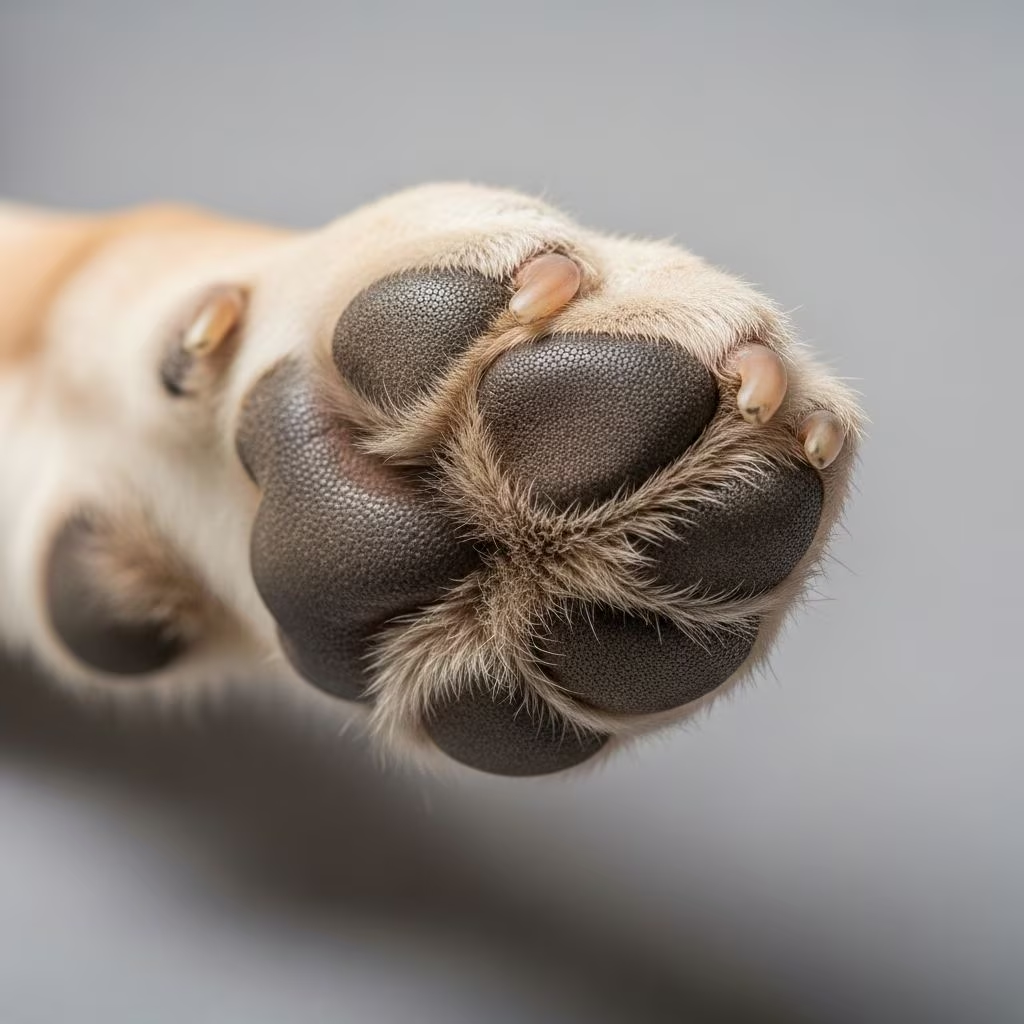
Dog paw pads, often affectionately called “toe beans,” form the foundational contact points between a dog’s body and the ground. These specialized structures enable locomotion, absorb shocks, and safeguard underlying tissues during everyday activities and adventures.
The Intricate Layers of Canine Paw Pads
At a microscopic level, paw pads consist of three primary layers that collaborate to deliver exceptional biomechanical performance. The outermost layer features a tough, spike-like stratum corneum that directly interfaces with surfaces, providing durability against abrasion. Beneath this lies the dermis, a reticulated network of collagen and elastic fibers forming a hydrostatic system capable of storing and dissipating energy. The innermost subcutaneous layer, rich in adipose tissue compartmentalized by collagen membranes, adds cushioning and insulation.
This multi-layered design ensures paw pads meet the demands of digitigrade locomotion, where dogs walk on their toes. The structured epidermis alone can reduce peak ground reaction forces by up to 37% compared to uniform materials, as demonstrated in finite element analyses of canine pads. Such efficiency protects joints and bones from high-impact stresses during running or jumping.
Key Components of the Dog Paw
A typical dog paw integrates several distinct pads, each with specialized functions. Understanding these elements highlights their role in overall canine mobility.
- Digital Pads: Positioned under each of the four toes, these small, oval cushions absorb individual step impacts, enhance traction on slippery terrains, and distribute weight evenly.
- Metacarpal/Metatarsal Pad: The prominent central pad on front (metacarpal) and rear (metatarsal) paws bears the bulk of body weight, functioning as the primary shock absorber during strides and landings.
- Dewclaw: A vestigial toe higher on the leg, present on front paws of most breeds and sometimes rear, it aids in gripping and stability, though its exact role varies by breed history.
- Carpal Pad: Exclusive to front limbs, this smaller pad above the main paw acts as a brake, aiding quick stops, turns, and balance on descents.
Claws complement these pads by providing traction for digging, climbing, and rapid directional changes, embedding into surfaces for grip.
Biomechanical Roles in Daily Activities
Paw pads excel in multiple capacities beyond mere support. Their thick, keratinized epidermis shields against extreme temperatures, sharp objects, and rough landscapes, while embedded sweat glands facilitate cooling through evaporation. Dense nerve endings grant proprioception, allowing dogs to sense terrain texture, pressure, and limb position for precise navigation.
During high-speed pursuits or jumps, the fatty core compresses to mitigate forces, preventing skeletal strain. Studies on breeds like German Shepherds reveal how dermal papillae interlock with epithelial honeycomb cells, enhancing structural integrity under load. This synergy explains why pads endure prolonged outdoor exposure without failure.
Variations Across Breeds and Lifestyles
| Breed Type | Pad Characteristics | Adaptations |
|---|---|---|
| Working Breeds (e.g., Huskies) | Thicker, tougher pads | Enhanced durability for snow, ice, and long treks |
| Sighthounds (e.g., Greyhounds) | Leaner, more flexible | Optimized for speed and minimal weight |
| Companion Breeds (e.g., Bulldogs) | Softer, broader | Better cushioning for low-impact living |
Active dogs in rugged environments develop calloused pads naturally, while urban pets may retain softer textures. Age and health also influence pad resilience, with seniors often showing thinning.
Common Paw Pad Problems and Prevention
Despite their robustness, paw pads face vulnerabilities. Cracks from dry weather, burns from hot pavement, cuts from debris, infections from allergens, and hyperkeratosis (excessive thickening) are prevalent issues. Pododermatitis, inflammation often linked to allergies, compromises pad integrity.
To safeguard pads:
- Inspect weekly for cracks, swelling, or foreign objects.
- Moisturize with vet-approved balms containing natural oils like shea butter.
- Use booties on scalding asphalt (above 85°F/29°C) or icy salts.
- Trim nails regularly to prevent unnatural gait shifts.
- Maintain paw hygiene post-walks, especially in wet conditions.
For adventures, apply protective waxes and monitor for wear during hikes.
Seasonal Care Strategies
Environmental shifts demand tailored maintenance. In winter, pads crack from de-icers; rinse paws and apply petroleum-free protectants. Summer heat scorches unprotected pads—test surfaces with your hand for five seconds before walks. Muddy seasons invite fungal growth; dry thoroughly between toes.
Year-round, a balanced diet rich in omega-3s supports pad suppleness, as deficiencies lead to dryness. Consult vets for supplements if needed.
Training Paws for Peak Performance
Desensitization builds tough pads. Gradually expose pups to varied textures: grass, gravel, sand. Barefoot walks on safe roughage promote natural keratinization without booties. For competition dogs, paw conditioning mimics athletic training, enhancing endurance.
Avoid over-reliance on shoes, as they weaken natural padding over time. Balance protection with exposure for resilient feet.
When to Seek Veterinary Help
Limping, persistent licking, bleeding, or odorless discharge signals trouble. Vets may diagnose via cytology, prescribe antibiotics for infections, or recommend laser therapy for wounds. Chronic cases might involve allergy testing or biopsy. Early intervention prevents lameness.
FAQs
What are dog toe beans?
The soft, pigmented centers of digital pads, visible when paws flex, earning their cute nickname for their bean-like appearance.
Do all dogs have the same number of paw pads?
Most have four digital pads per paw plus one main pad, but carpal pads are front-only, and dewclaws vary by breed.
Can paw pads grow back if injured?
Minor abrasions heal with scarring; deep wounds regenerate via epithelial migration, though full restoration takes weeks.
How do I toughen my dog’s soft paws?
Controlled exposure to natural surfaces, paw waxes, and nutrition promote thickness without harm.
Are booties necessary for all dogs?
Only for extremes like hot/cold extremes or rough trails; everyday use atrophies natural protection.
Enhancing Paw Longevity Through Nutrition
Paw health stems from holistic care. Proteins build collagen; fats lubricate; vitamins A and E aid skin repair. Foods with fish oil bolster elasticity, reducing crack risk. Hydration keeps tissues plump—always provide fresh water.
Monitor breed predispositions: brachycephalics suffer more pododermatitis; giants wear pads faster. Tailor diets accordingly.
References
- How does the canine paw pad attenuate ground impacts? A multi-layered structure with honeycomb caps. — Zhang et al., Journal of The Royal Society Interface (PMC). 2018-01-10. https://pmc.ncbi.nlm.nih.gov/articles/PMC5769641/
- 6 Things You Didn’t Know About Dog Paw Anatomy. — Outward Hound Furtropolis. Accessed 2026. https://outwardhound.com/furtropolis/dogs/dog-paw-anatomy
- Dog Paws Anatomy & Care Guide. — JustFoodForDogs Blog. Accessed 2026. https://blog.justfoodfordogs.com/dog-paws-anatomy.html
- Dog Paw Anatomy and Footpad Care for Outdoor Adventures. — Dogpacking.com. 2016 (updated relevance for anatomy). https://dogpacking.com/dog-paw-anatomy-and-footpad-care-for-outdoor-adventures/
- Dog Paw Anatomy: Parts of a Dog’s Paw. — Ruffwear Explored. Accessed 2026. https://ruffwear.com/blogs/explored/dog-paw-anatomy



