

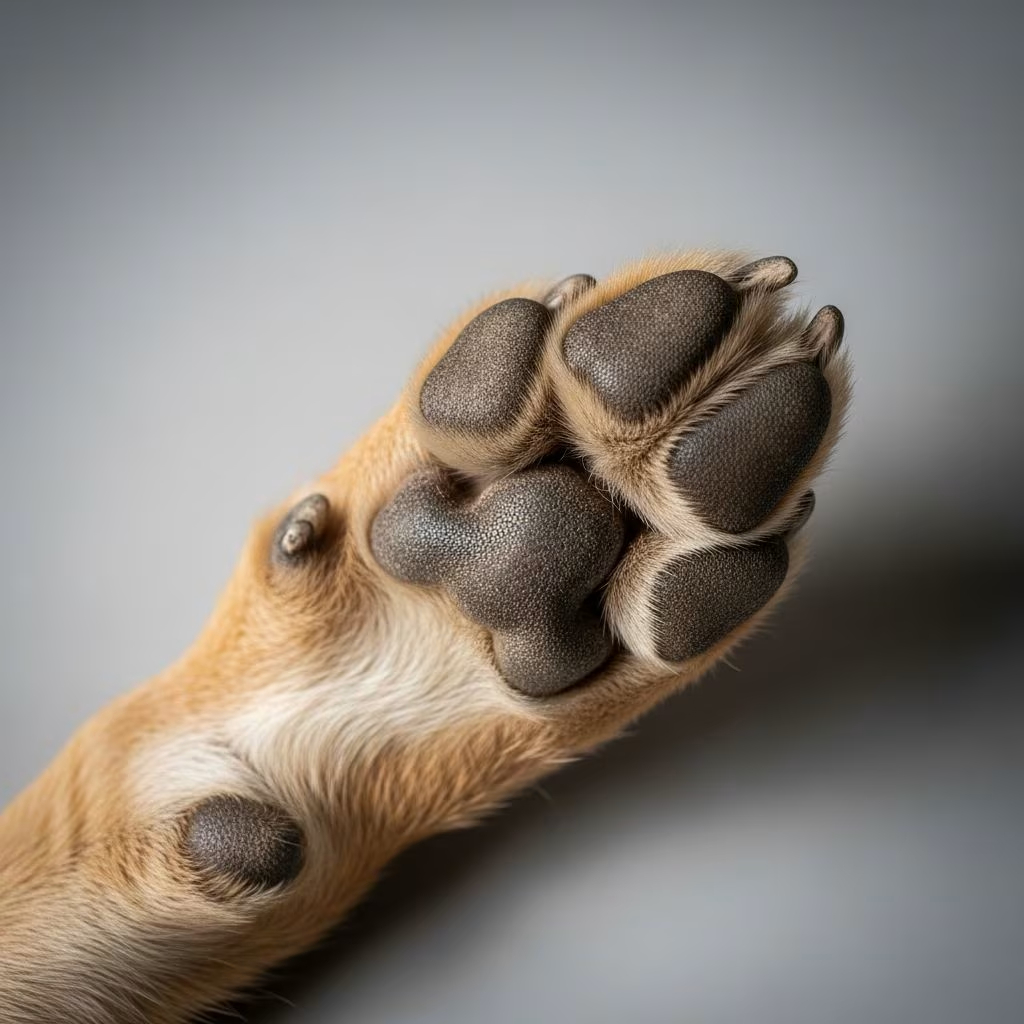
The paws of dogs are remarkable feats of natural engineering, perfectly adapted for running, jumping, digging, and navigating diverse terrains. At the heart of this adaptation lies a precise arrangement of toes, pads, bones, and claws that enable dogs to thrive in various environments. Understanding this anatomy not only highlights the ingenuity of canine design but also empowers pet owners to provide better care and spot potential health issues early.
The Basic Framework: How Many Toes Does a Dog Have?
Dogs typically possess **four weight-bearing toes** on each paw, both front and hind. These toes, supported by digital pads, form the primary contact points with the ground. However, many dogs also feature a **dewclaw**, a fifth digit positioned higher on the leg, which does not always touch the surface during normal movement.
Front paws generally have four toes plus a dewclaw, while hind paws usually have four toes, with dewclaws less common or positioned even higher. This configuration provides stability and grip, akin to how human hands and feet function but optimized for quadrupedal locomotion.
- Front Paws: 4 main toes + 1 dewclaw (often present).
- Hind Paws: 4 main toes (dewclaw optional or absent).
Variations exist across breeds; for instance, some working dogs retain functional dewclaws for enhanced traction, while others may have them removed for safety.
Dissecting the Paw: Key Components Explained
A dog’s paw is a multi-layered system comprising soft tissues, bones, and protective coverings. Each element plays a critical role in shock absorption, traction, and protection.
Paw Pads: Nature’s Shock Absorbers
The pads are the most visible and vital parts of the paw, consisting of thick, keratinized skin over fatty tissue. They cushion impacts, insulate against temperature extremes, and provide grip on slippery surfaces.
| Pad Type | Location | Function |
|---|---|---|
| Digital Pads | Under each toe (4 per paw) | Cushion toes, enhance traction |
| Metacarpal Pad (front) / Metatarsal Pad (rear) | Central large pad | Bears main body weight, absorbs shock |
| Carpal Pad | Above front wrist | Provides braking, stability on slopes |
Research reveals a honeycomb-like microstructure in the epidermis, with stratified epithelium, dermis, and subcutaneous fat layers that collectively attenuate ground forces during locomotion. This design ensures durability while maintaining flexibility.
Bones and Joints: The Skeletal Support
The skeletal foundation includes **phalanges** (three per toe, like human fingers), **metacarpals** (front) and **metatarsals** (rear), connected by ligaments and tendons. Joints act as hinges, allowing precise movements for balance and agility.
- Phalanges enable toe flexion for grip.
- Metacarpals/metatarsals distribute weight and leverage propulsion.
- Ligaments prevent overextension during high-impact activities.
This bony architecture supports weight-bearing while minimizing injury risk.
Claws and Dewclaws: Tools for Traction
Dog claws, made of keratin with a sensitive inner quick containing blood vessels and nerves, dig into surfaces for stability. The dewclaw, often on the front leg’s inner side, aids in turning and climbing but can snag if overgrown.
Dewclaws are homologous to the human thumb, providing evolutionary advantages in ancestral tasks like grasping prey.
Variations Across Breeds and Functions
Not all dog paws are identical. **Webbed paws** in breeds like Labrador Retrievers feature skin connecting toes, ideal for swimming. Breeds such as Greyhounds have elongated metacarpals for speed, while Bulldogs possess compact, sturdy pads for stability.
Working breeds often retain double dewclaws on hind legs for mountain navigation, a trait selectively bred for utility. These adaptations reflect selective breeding for specific roles, from herding to hunting.
Health and Care: Protecting Your Dog’s Paws
Regular inspection is crucial. Check for cracks, foreign objects, or wear, as pads can suffer from hot pavement, ice, or allergens. Trim claws monthly to prevent splitting, avoiding the quick to minimize pain.
Seasonal Tips:
- Summer: Avoid hot asphalt; use booties if needed.
- Winter: Wipe off de-icing chemicals; moisturize dry pads.
- Year-Round: Clean after walks, inspect for injuries.
Nutritional support with omega fatty acids promotes pad resilience. If limping occurs, consult a vet promptly, as issues like torn ligaments or pad infections require professional intervention.
Common Paw Problems and Solutions
Dogs face several paw ailments:
| Issue | Symptoms | Solution |
|---|---|---|
| Cracked Pads | Bleeding, limping | Moisturize, rest, vet balm |
| Overgrown Nails | Slipping, pain | Professional trimming |
| Allergies | Redness, licking | Identify allergen, medicated wash |
| Infections | Swelling, pus | Antibiotics from vet |
Early detection prevents escalation; for example, pododermatitis (pad inflammation) responds well to hygiene and diet adjustments.
Evolutionary Insights into Canine Paws
From wolves to domestic dogs, paws evolved for endurance hunting. The digitigrade stance—standing on toes—enhances speed and energy efficiency. Multi-layered pads evolved to handle rough terrains, with dermal papillae aiding regeneration.
Modern dogs retain these traits, though urban life demands adjusted care.
FAQs on Dog Paw Anatomy
Q: Do all dogs have dewclaws?
A: Most have front dewclaws; hind ones vary by breed. Some are surgically removed at birth for safety.
Q: How often should I trim my dog’s nails?
A: Every 3-4 weeks, or when they click on floors. Use pet-safe clippers.
Q: Why do dogs lick their paws?
A: Often due to irritation, allergies, or boredom. Persistent licking warrants a vet visit.
Q: Are dog paw pads sensitive to heat?
A: Yes; temperatures above 120°F can burn them. Test pavement with your hand.
Q: Can I walk my dog on snow without booties?
A: Short walks yes, but booties protect from salt and ice buildup.
Advanced Anatomy: Microstructure and Biomechanics
Scanning electron microscopy shows paw pads with a stratified epithelium forming a tough outer barrier, dermal layers with collagen for elasticity, and adipose compartments for cushioning. Finite element analysis confirms this structure dissipates impact forces effectively, preventing bone stress during runs.
These findings from studies on breeds like German Shepherds underscore universal paw resilience.
References
- Paw – Wikipedia — Wikipedia. 2023-10-01. https://en.wikipedia.org/wiki/Paw
- Understanding Dog Paw Anatomy and Care — Doglyness. 2024-05-15. https://www.doglyness.com/blogs/news/understanding-dog-paw-anatomy-and-care
- Dog Paws Anatomy & Care Guide — JustFoodForDogs. 2023-11-20. https://blog.justfoodfordogs.com/dog-paws-anatomy.html
- Dog Paw Anatomy 101 (Plus 7 Paw Problems) — ToeGrips. 2024-02-10. https://toegrips.com/dog-paw-anatomy/
- What You Need to Know: Dog Paw Pad Anatomy — Whole Dog Journal. 2023-12-05. https://www.whole-dog-journal.com/care/what-you-need-to-know-dog-paw-pad-anatomy/
- How does the canine paw pad attenuate ground impacts? A multi-layered structure model and finite element analysis — PMC (NCBI). 2018-01-15. https://pmc.ncbi.nlm.nih.gov/articles/PMC5769641/



