

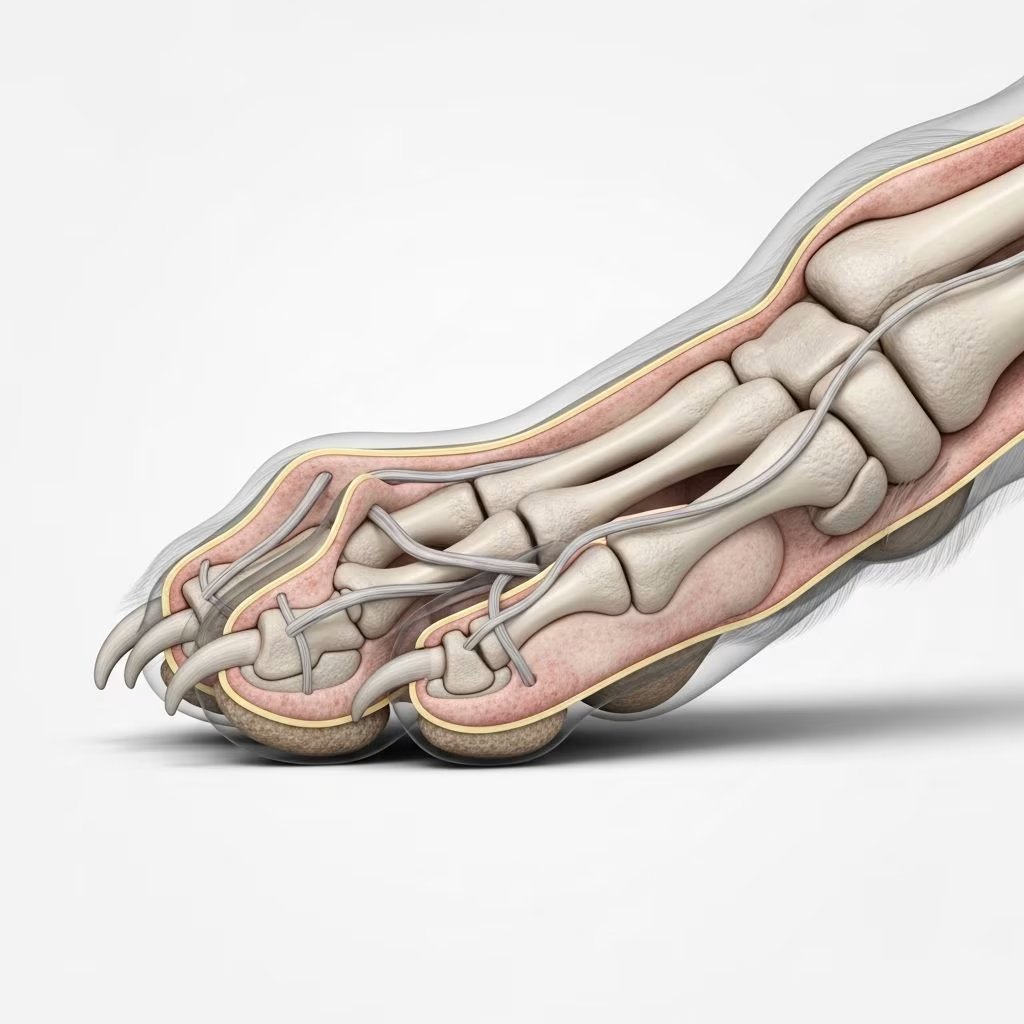
The paws of dogs represent a marvel of evolutionary engineering, perfectly adapted for endurance, agility, and environmental interaction. These robust appendages bear the full weight of a dog’s body during high-impact activities like running and jumping, while providing essential sensory feedback and protection.
Breaking Down the Core Components of Canine Paws
Dog paws consist of multiple layered elements working in harmony. At the base are the **digital pads**, four small, rounded cushions aligned with each toe, offering targeted support during motion. Above them sits the larger **metacarpal pad** (front paws) or **metatarsal pad** (rear paws), which acts as the primary load-bearing surface. The **carpal pad**, located higher on the front legs, aids in braking and stability without direct ground contact.
Encasing these pads is a specialized epidermis: thin, hairless, and keratinized for durability, overlaying collagen-rich subcutaneous tissue and adipose fat that forms the shock-absorbing core. This multi-layered design—epidermis, dermis with collagen bundles, and fatty subcutaneous compartments—distributes forces effectively during locomotion.
Skeletal Framework Supporting Paw Mobility
The bony architecture underpins paw function. Each toe features **phalanges**: three small bones per digit in most cases, linked by flexible joints for splaying and grip adjustment on uneven terrain. These connect to **metacarpals** (forelimbs) or **metatarsals** (hindlimbs), elongated bones that bridge to the leg, absorbing initial ground impact.
**Ligaments** stabilize bones at joints, preventing misalignment, while **tendons** transmit muscle power for precise control. Joints function like hinges, enabling flexion and extension essential for climbing, turning, and shock mitigation. This system grants dogs superior balance and adaptability across surfaces.
Claw Mechanics and Sensitivity
Claws, or nails, extend from each toe, with four weight-bearing ones per paw and often a **dewclaw** positioned higher, akin to a thumb remnant. Composed of a hard keratin shell encasing the vascular **quick**—packed with nerves and blood vessels—claws provide traction, digging into soil for propulsion and aiding in scratching or defense.
Overgrowth leads to discomfort, as the quick extends with length, heightening injury risk during trims. Regular maintenance prevents splitting or embedding, preserving sensory feedback vital for terrain navigation.
Unique Variations in Paw Design
Not all paws are identical. **Webbed paws**, seen in breeds like Labrador Retrievers or Portuguese Water Dogs, feature skin membranes between digits, enhancing swimming propulsion by increasing surface area for paddling.
Dewclaws vary: some dogs retain functional rear ones for stability, while others have them removed surgically in puppyhood to reduce injury risk in working breeds. Pad thickness and elasticity also differ by breed, with larger dogs boasting thicker cushions for heavier loads.
| Breed Type | Paw Feature | Primary Benefit |
|---|---|---|
| Water Breeds (e.g., Labs) | Webbed Toes | Swimming Efficiency |
| Hunting Breeds (e.g., Pointers) | Thick Pads | Endurance on Rough Terrain |
| Sighthounds (e.g., Greyhounds) | Flexible Phalanges | High-Speed Turning |
| Small Companion (e.g., Chihuahuas) | Compact Structure | Agility in Tight Spaces |
Multifaceted Roles of Dog Paws
Beyond locomotion, paws regulate **thermoregulation**. Lacking sweat glands elsewhere in abundance, dogs dissipate heat via paw pads, where eccrine glands release moisture for cooling during exertion. Conversely, pads insulate against cold, preventing frostbite.
- Grip and Traction: Textured pad surfaces and retractable claws ensure non-slip contact on ice, mud, or pavement.
- Sensory Input: Nerve endings detect vibrations, textures, and temperatures, informing balance and hazard avoidance.
- Communication: Paws convey scent via interdigital glands, marking territory or signaling through scratches.
- Shock Absorption: Fatty layers and honeycomb-like epidermal structures attenuate impacts, safeguarding joints from repetitive stress.
Preserving Paw Health Through Daily Care
Maintaining paw integrity prevents lameness and infections. Inspect weekly for cracks, foreign objects, or swelling, cleaning gently with mild soap and drying thoroughly. Moisturize dry pads with vet-approved balms containing natural oils like shea butter or coconut.
Trim nails monthly, cutting just beyond the quick—visible as a pinkish hue in light claws. For dark nails, clip small amounts incrementally. Boots shield from hot asphalt (above 85°F/29°C risks burns) or de-icing chemicals, while paw soaks in Epsom salt soothe irritations.
Recognizing and Addressing Paw Disorders
Common ailments demand prompt attention:
- Pododermatitis: Inflammation from allergies or bacteria, presenting as red, swollen pads; treat with antibiotics and hypoallergenic diets.
- Cracked Pads: Caused by dryness or trauma; heal with ointments and rest.
- Nail Injuries: Splits or torn dewclaws require veterinary gluing or removal.
- Hyperkeratosis: Excessive pad thickening in breeds like Huskies; managed by trimming and moisturizing.
- Interdigital Cysts: Painful lumps between toes from ingrown hairs; resolve via laser therapy or surgery.
Consult a vet for persistent limping, as untreated issues cascade to joint damage or systemic infections.
Seasonal Paw Protection Strategies
Environmental hazards vary by climate. In summer, test pavement heat with your hand: if too hot for 5 seconds, protect paws. Winter salt melts corrode pads—rinse post-walks and apply petroleum-free waxes. Year-round, avoid thorns, glass, or chemicals on trails.
| Season | Risks | Prevention |
|---|---|---|
| Summer | Burns from Hot Pavement | Boots, Walk Early/Late, Grass Paths |
| Winter | Ice Melt Chemicals, Frostbite | Paw Wipes, Musher’s Wax, Short Walks |
| Spring/Fall | Allergens, Foxtails | Daily Inspections, Trims |
Advanced Insights from Biomechanical Research
Studies reveal paw pads’ honeycomb microstructure in the epidermis disperses energy via finite element analysis, confirming collaborative function of all layers for locomotion integrity. This digitigrade stance—standing on toes—optimizes speed and efficiency, unlike plantigrade humans.
FAQs on Dog Paw Anatomy and Care
Why do dogs lick their paws excessively?
Often indicates allergies, injuries, or boredom; examine for issues and redirect with toys.
Can I trim my dog’s dewclaw?
Yes, if overgrown, but professionally if unsure to avoid quick damage.
Do all dogs have five toes?
Most have four main plus dewclaws; rear dewclaws vary by breed.
How often should I moisturize paw pads?
Weekly for dry climates, or as needed after exposure.
Are paw balms safe for ingestion?
Choose pet-safe, non-toxic formulas without essential oils.
References
- Understanding Dog Paw Anatomy and Care — Doglyness. 2023. https://www.doglyness.com/blogs/news/understanding-dog-paw-anatomy-and-care
- Paw — Wikipedia. 2024-01-15. https://en.wikipedia.org/wiki/Paw
- What You Need to Know: Dog Paw Pad Anatomy — Whole Dog Journal. 2023-06-10. https://www.whole-dog-journal.com/care/what-you-need-to-know-dog-paw-pad-anatomy/
- How does the canine paw pad attenuate ground impacts? A multi… — PMC (NCBI). 2018-01-12. https://pmc.ncbi.nlm.nih.gov/articles/PMC5769641/
- Dog Paw Facts and Care — A Pup Above. 2024. https://apupabove.com/blogs/all/dog-paw
- Uncovering the Remarkable Anatomy and Importance of Canine Paws — Pawfecter. 2023. https://www.pawfecter.co.uk/pawpursuits/paws-for-thought-uncovering-the-remarkable-anatomy-and-importance-of-canine-paws
- Dog Paw Anatomy 101 (Plus 7 Paw Problems) — ToeGrips. 2024-02-20. https://toegrips.com/dog-paw-anatomy/



