

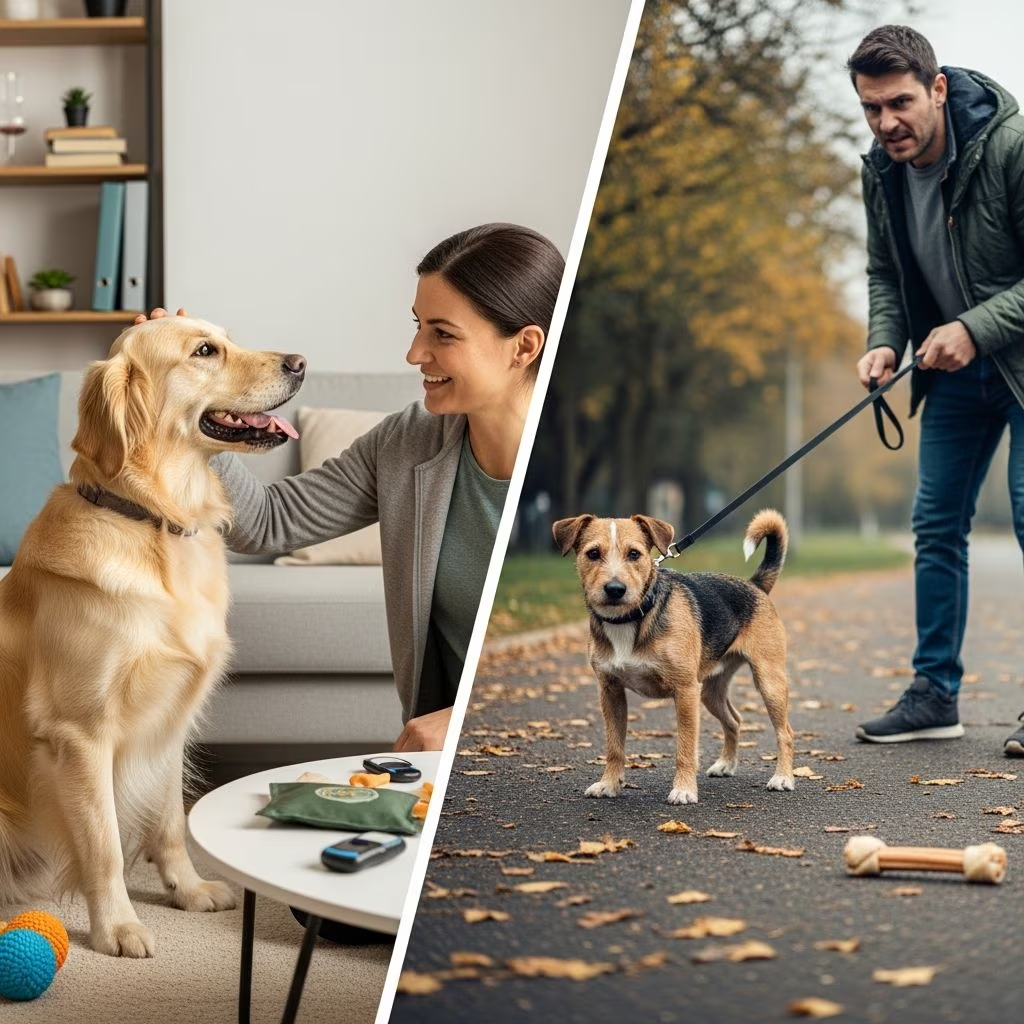
Dog parenting might feel unique, but research suggests that the way you raise your dog mirrors the way many people raise children, and it can strongly influence your pup’s behavior, confidence, and problem‑solving skills.
Modern studies in human–dog relationships show that pet parenting style predicts patterns of dog attachment, sociability, and cognition, much like human parenting styles affect children.
This article explains what dog parenting styles are, how they were studied, what each style looks like in everyday life, and how you can use this knowledge to build a stronger bond with your dog.
How Researchers Studied Dog Parenting Styles
To understand how parenting style affects dogs, researchers adapted concepts from child development and applied them to human–dog relationships.
In one influential study, dog guardians completed questionnaires about their expectations and responsiveness toward their dogs, then brought their dogs into a lab for structured tests of attachment, sociability, and problem‑solving.
Key concepts: demandingness and responsiveness
Psychologists commonly describe parenting style using two core dimensions:
- Demandingness: how much you guide, control, or set expectations for behavior.
- Responsiveness: how warm, supportive, and emotionally attuned you are.
Different combinations of these two traits create distinct parenting styles in both human and dog contexts.
The three main behavioral tests in dogs
In the Oregon State University research on dog parenting, dogs took part in three standardized tasks with their person present.
- Attachment test: Dog and guardian were in a room together. The person interacted with the dog if the dog came close, then left briefly and returned. Researchers watched how the dog reacted to separation and reunion.
- Sociability test: The dog interacted with their guardian and with a stranger. Researchers noted whether the dog chose to stay closer to their person or to the stranger and how they responded to social cues.
- Problem‑solving test: Each dog was given a puzzle box containing high‑value food. The task measured persistence, strategy, and how much help the dog needed to succeed.
From these tests, scientists linked each pet parent’s style to patterns in their dog’s attachment, social behavior, and problem‑solving persistence.
What Are Dog Parenting Styles?
Borrowing from human parenting research, scientists typically describe four theoretical styles based on demandingness and responsiveness.
| Parenting style | Demandingness | Responsiveness | Typical dog experience (general) |
|---|---|---|---|
| Authoritative | High | High | Clear rules, consistent training, warm and supportive relationship. |
| Authoritarian | High | Low | Strict control, low emotional warmth, little flexibility. |
| Permissive | Low | High | Affectionate and indulgent, but few rules or expectations. |
| Uninvolved/neglectful | Low | Low | Low guidance, limited attention or responsiveness. |
The Kinship article and related research focus most on three styles that commonly appear in dog homes: authoritative, authoritarian, and permissive.
Authoritative Dog Parenting Style
Authoritative dog parents combine high expectations with high responsiveness. They guide their dogs with clear rules but are equally attentive to their dogs’ emotional and physical needs.
What authoritative dog parents do
- Use consistent, reward‑based training and clear cues.
- Set realistic boundaries (for example, where the dog can go or how they greet visitors).
- Pay attention to the dog’s body language and stress signals.
- Offer comfort and support in new or stressful situations.
- Encourage problem‑solving through enrichment and interactive play.
How dogs with authoritative parents behave in studies
In laboratory tests, dogs with authoritative guardians showed several patterns associated with secure and confident behavior.
- More secure attachment: These dogs were more likely to have a secure attachment style, seeking their person for comfort after a brief separation and settling more easily when their guardian returned.
- Stronger social preference for their person: They chose to be near their guardian more than a stranger and responded well to their person’s social cues.
- Better problem‑solving and persistence: In puzzle‑box tasks, authoritative‑parented dogs persisted longer, tried different strategies, and were most successful in getting the treat.
Benefits similar to children
In human research, authoritative parenting is linked to children who are confident, socially skilled, and better at regulating emotions. Dog‑focused studies report parallel benefits: dogs whose caregivers are warm yet structured show greater resilience, security, and cognitive engagement.
How to be more authoritative with your dog
- Pair clear rules with positive reinforcement rather than punishment.
- Be consistent with routines (walks, mealtimes, training sessions).
- Recognize your dog’s needs for rest, space, and gradual exposure to new challenges.
- Encourage independent problem‑solving with puzzle toys and scent games, offering help without taking over.
Authoritarian Dog Parenting Style
Authoritarian dog parents also have high expectations, but they show low responsiveness to the dog’s emotional state or changing needs.
What authoritarian dog parents do
- Focus heavily on obedience and rule‑following.
- Rely more on correction or punishment than on reward‑based methods.
- Expect instant compliance, with limited flexibility.
- May overlook signs of stress, fear, or confusion.
- Provide less emotional comfort in challenging situations.
How dogs with authoritarian parents behaved in the study
Compared with dogs of authoritative caregivers, dogs of authoritarian parents showed distinct patterns.
- Higher likelihood of insecure attachment: These dogs were more often classified as insecurely attached. They might cling excessively, avoid their guardian, or struggle to settle after separation.
- Preferred their person over strangers, but without the same security: They still spent more time near their guardian than strangers, indicating a bond, but not the same relaxed confidence seen in authoritative pairs.
- Difficulties with problem‑solving: In the puzzle‑box task, none of the dogs with authoritarian caregivers solved the challenge successfully.
Potential long‑term impact
In human research, authoritarian parenting is linked with good rule‑following but also increased fear of punishment, poorer social skills, and difficulty making independent decisions. Parallel concerns in dogs may include over‑dependence on commands, reduced initiative, and anxiety in uncertain situations, especially if punishment is frequent or unpredictable.
How to shift away from authoritarian patterns
- Replace harsh corrections with reward‑based training and management.
- Allow your dog time to think and offer behaviors rather than demanding instant responses.
- Watch for stress signals (lip licking, yawning, turning away, tucked tail) and adjust your expectations.
- Offer reassurance and support, particularly in new environments or around triggers like strangers or loud noises.
Permissive Dog Parenting Style
Permissive dog parents show low demandingness and low structure, but may still offer significant warmth and affection.
What permissive dog parents do
- Offer lots of love, attention, and treats.
- Set few rules or enforce them inconsistently.
- Struggle to say “no” or to maintain boundaries.
- Often avoid training that feels strict or structured.
- Prioritize short‑term comfort over long‑term skills (for example, comforting instead of teaching coping strategies).
How dogs with permissive parents behaved in the study
Dogs with permissive caregivers showed a different social and cognitive profile from those with authoritative guardians.
- More responsive to strangers than to their own person: These dogs tended to respond more to social cues from strangers than from their guardians, suggesting a weaker or less focused attachment in that structured setting.
- Similar behavior whether their person paid attention or not: They spent roughly the same amount of time near their guardian whether the person was actively engaging or ignoring them, hinting at a less defined social reliance.
- Low persistence in problem‑solving: These dogs gave up more quickly when the puzzle‑box task became difficult and did not solve it.
Parallels with human children
In human families, permissive parenting is associated with children who feel loved and have good social skills, but who may be impulsive, demanding, and struggle with self‑control. In dogs, researchers and behaviorists raise similar concerns: a lack of boundaries can contribute to frustration, difficulty coping with limits, and challenges in training or safety (for example, recall or leash manners).
Balancing warmth with structure
- Keep your affection, but add clear, consistent rules and routines.
- Use rewards to reinforce calm behavior, polite greetings, and safe choices.
- Introduce simple training goals (sit before crossing the street, wait for a release cue, settle on a mat).
- Support your dog emotionally while still asking for small, achievable tasks so they learn to cope and collaborate.
Do We Parent Dogs the Way We Were Raised?
Beyond day‑to‑day behavior, one major question is where our dog‑parenting style comes from. Recent research suggests that our own childhood experiences shape how we care for our dogs.
Intergenerational transmission of parenting style
A 2023 peer‑reviewed study on the intergenerational transmission of human parenting styles to human–dog relationships found that people who grew up with permissive parents are more likely to adopt a permissive style with their dogs.
- Participants reported how they were parented as children.
- They then described their current caregiving behaviors toward their dogs.
- Researchers found that permissive tendencies often carried over from human to dog relationships.
The role of your orientation toward dogs
The same study and follow‑up analyses highlight that your underlying orientation toward dogs matters.
- Protectionistic attitudes (seeing dogs as beings whose welfare must be protected) were linked to a lower likelihood of using authoritarian caregiving.
- Humanistic and protectionistic views (seeing dogs as family members or quasi‑children) increased the chance of compensatory permissive behaviors, where guardians may overindulge their dogs to make up for perceived past deficits.
These insights support the idea that, just as with human children, your own upbringing and beliefs about animals shape how you set limits, offer comfort, and respond to your dog’s behavior.
Why Parenting Style Matters for Dog Welfare
Dog parenting style is not just about training philosophy; it affects welfare, stress, and the quality of the human–dog bond.
Behavior, stress, and cognition
- Dogs with warmer, more responsive caregivers show more proximity‑seeking in stressful situations and may cope better when they can rely on their person for support.
- Authoritative parenting has been linked with dogs that are more persistent problem‑solvers and more secure in attachment tests, suggesting better resilience and confidence.
- Different interaction styles can influence how dogs perceive and respond to social cues, which affects training success and daily cooperation.
Implications for training and behavior programs
Researchers emphasize that understanding a guardian’s parenting style can help trainers design more effective, tailored behavior modification plans.
- Trainers may need to support authoritarian‑leaning guardians in adopting more reward‑based, responsive methods.
- Permissive guardians may benefit from practical guidance on setting boundaries while preserving warmth.
- Recognizing the emotional roots of a person’s style (for example, their own childhood experiences) can make education more empathetic and impactful.
Practical Tips to Evaluate and Adjust Your Dog Parenting Style
You do not have to fit perfectly into one box; many people show a mix of styles. The key is to recognize patterns and adjust toward a more authoritative, balanced approach.
Questions to ask yourself
- Do I rely more on correction or on rewarding what I like?
- Do I set clear, consistent rules my dog can understand?
- How do I respond when my dog is afraid, frustrated, or confused?
- Do I give my dog chances to think and solve problems, or do I always step in?
- Am I repeating the way I was raised, and is that helping this particular dog?
Small changes that move you toward authoritative parenting
- Switch to positive reinforcement: Reward behaviors you want more of with food, play, or praise.
- Clarify expectations: Pick a few key rules (for example, no rushing through doors, gentle greetings) and be consistent.
- Create predictable routines: Regular walks, feeding times, and training sessions help dogs feel secure.
- Offer guided challenges: Use puzzle toys and training games, giving hints without taking over.
- Respond to emotional needs: Comfort your dog when appropriate, and provide gradual exposure instead of forcing them through fears.
Frequently Asked Questions (FAQs)
Q: Can my parenting style really change my dog’s behavior?
A: Yes. Studies show that pet parenting style predicts patterns of dog behavior, including attachment style, sociability, and problem‑solving. Shifting toward a more authoritative, reward‑based and responsive approach can improve your dog’s confidence and cooperation over time.
Q: Is authoritative parenting always the best style for dogs?
A: Research consistently associates authoritative caregiving—high expectations combined with high responsiveness—with positive outcomes in both children and dogs. While every dog is an individual, a balanced approach with clear boundaries and emotional support is generally considered ideal for welfare and training.
Q: What if I grew up with very strict or very permissive parents?
A: Intergenerational studies suggest that some aspects of human parenting style, especially permissive tendencies, can carry over into dog caregiving. However, these patterns are not fixed. With awareness, education, and support from professionals, you can deliberately choose different strategies that better fit your current dog.
Q: Does parenting style matter as much as breed or genetics?
A: Genetics and breed traits do influence many dog behaviors, but experts report that personal history and caregiving style have a major impact on how those traits are expressed. Environment, training, and your day‑to‑day interactions work together with biology to shape your dog’s personality and behavior.
Q: How can trainers or behaviorists use this research?
A: By recognizing that clients bring their own parenting histories and orientations toward dogs, professionals can tailor training plans to the human side of the relationship. Addressing style—helping authoritarian guardians soften or permissive guardians add structure—can make behavior change more sustainable and humane.
References
- Pet parenting style influences dog behavior, study finds — Oregon State University / Phys.org. 2022-10-11. https://phys.org/news/2022-10-pet-parenting-style-dog-behavior.html
- You Raise Your Dog the Way Your Parents Raised You, New Study Shows — Kinship. 2023-05-25. https://www.kinship.com/dog-behavior/dog-parenting-style-study
- Intergenerational Transmission of Human Parenting Styles to Human–Dog Relationships — Franchini et al., Animals (MDPI). 2023-01-10. https://doi.org/10.3390/ani13010129
- Does Your Parenting Style Actually Influence Your Pet’s Behavior? — Kinship. 2022-11-02. https://www.kinship.com/pet-behavior/nature-vs-nurture-dog-parenting
- Redefining Parenting and Family – The Child-Like Role of Dogs in the Family — Hall et al., Journal of Individual Differences (Hogrefe). 2016-06-01. https://econtent.hogrefe.com/doi/10.1027/1016-9040/a000552



