

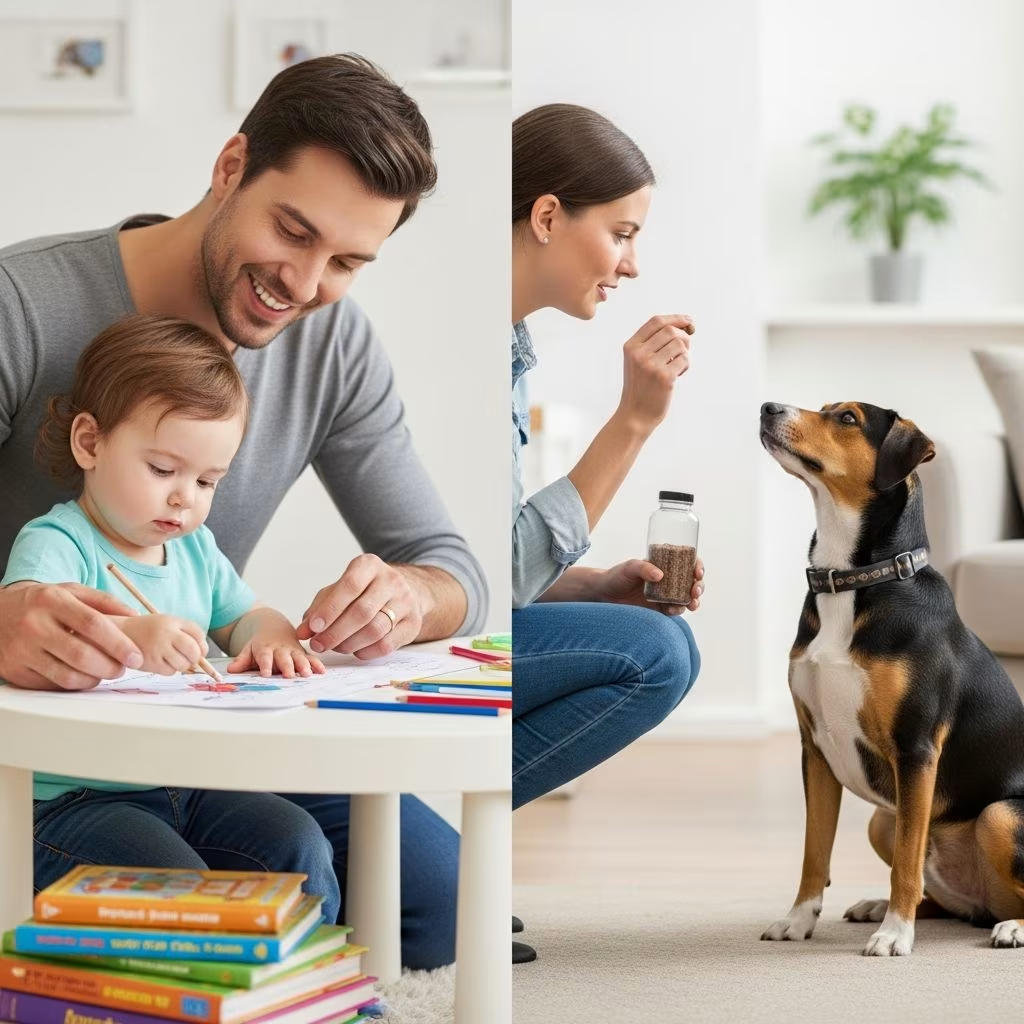
Parenting a dog may seem worlds apart from raising a child, but emerging research shows striking similarities in how different parenting styles influence behavior, attachment, and cognitive skills. A pivotal study published in Animal Cognition by researchers Lauren Brubaker and Monique Udell demonstrates that dogs respond to pet-parenting styles in ways parallel to human children, with authoritative parenting yielding the most positive outcomes. This article delves into the study’s findings, the four core parenting styles, their effects on dogs, and the intergenerational transmission of these approaches, offering practical insights for dog owners aiming to foster secure, resilient companions.
The Study: How Parenting Styles Affect Dogs
The landmark research examined whether pet-parenting styles impact dogs’ performance in attachment, social behavior, and problem-solving tasks. Researchers assessed 165 dogs using three key tests designed to mirror child development evaluations, such as the Strange Situation paradigm used in human psychology.
- Attachment Test: Dogs and their owners entered a room where the owner interacted affectionately if the dog approached. The owner then left briefly and returned, gauging the dog’s reunion behavior to determine secure vs. insecure attachment.
- Social Behavior Test: Evaluated interactions with the owner and a stranger, measuring responsiveness to social cues and proximity preferences.
- Problem-Solving Test: Dogs faced a puzzle box with high-value food inside, testing persistence and success in opening it.
Udell notes, “Dog owners who take the time to understand and meet their dog’s needs are more likely to end up with secure, resilient dogs.” The results revealed clear patterns: dogs’ home environments profoundly shape their emotional security, sociability, and cognitive resilience, much like in children.
The Four Dog Parenting Styles
Dog parenting styles, adapted from Diana Baumrind’s human child framework, are defined by two axes: demandingness (expectations and structure) and responsiveness (warmth and support). These yield four styles: authoritative, authoritarian, permissive, and uninvolved/neglectful.
| Style | Demandingness | Responsiveness | Effects on Children | Effects on Dogs (Study Findings) |
|---|---|---|---|---|
| Authoritative | High | High | Confident, self-regulated, social | Secure attachment, social, persistent problem-solvers |
| Authoritarian | High | Low | Rule-following but fearful, poor decision-making | Lower persistence, potential insecurity |
| Permissive | Low | High | Good social skills but impulsive | Stranger-responsive, poor problem-solving |
| Uninvolved/Neglectful | Low | Low | Poor coping, emotional dysregulation | Limited data; likely insecure, low engagement |
This framework highlights how balanced, responsive guidance optimizes development across species.
Authoritative Parenting Style: The Gold Standard for Dogs
Authoritative pet parents set high expectations—clear rules, consistent training—while being highly responsive to their dog’s emotional and physical needs. They use positive reinforcement, provide ample exercise, mental stimulation, and affection.
In the study, these dogs shone brightest. They exhibited secure attachment, eagerly reuniting with owners post-separation and showing distress only mildly during absence. Socially, they preferred owners over strangers, responding best to familiar cues. Problem-solving was exceptional: 70% persisted longest and succeeded most at the puzzle box, demonstrating resilience and independence.
Brubaker emphasizes, “This research shows that the pet dog-human caretaker bond may be functionally and emotionally similar to the bond between a human parent and their child.” Earlier work supports this, finding ‘dog moms’ often adopt authoritative styles, balancing discipline with warmth for optimal welfare.
Permissive Parenting Style: High Warmth, Low Structure
Permissive parents offer love and few boundaries, avoiding discipline to prevent upsetting their dog. They might allow unlimited freedom without consistent training.
Study dogs here showed insecure attachment patterns, spending equal time near attentive or ignoring owners. They favored strangers’ social cues over owners’, indicating weaker primary bonds. Critically, zero permissive dogs solved the puzzle; they quit quickly, lacking persistence. This mirrors human permissive outcomes: sociable but impulsive kids.
Authoritarian and Uninvolved Styles: Risks to Avoid
Authoritarian parents demand obedience with low warmth, relying on punishment. While not deeply tested here, parallels suggest dogs may comply fearfully but struggle with independence. Uninvolved parents provide minimal engagement, leading to neglected needs and poor development, akin to human emotional dysregulation.
Recent NIH research notes authoritarian replication is less common due to protective dog orientations, but permissive styles transmit intergenerationally.
Intergenerational Transmission: You Parent Dogs Like Your Parents Did
A 2024 study in Animals (391 owners surveyed, 10 interviewed) reveals parenting styles pass from human childhood to dog caregiving. Permissive upbringing strongly predicts permissive dog parenting, mediated by attitudes like protectionism (reducing authoritarianism) and humanism (boosting compensatory permissiveness).
Interviews highlighted childhood impacts: those with strict parents might overcompensate with dogs, while permissive-raised individuals replicate leniency. This transmission underscores why understanding personal history improves pet parenting. Authors advocate tailored training accounting for upbringings to enhance welfare.
Practical Tips: Adopt Authoritative Parenting Today
- Set Clear Rules: Use consistent commands and boundaries with positive reinforcement.
- Be Responsive: Attend to whining, exercise needs, and affection promptly.
- Encourage Independence: Provide puzzle toys, training sessions to build problem-solving.
- Monitor Attachment: Practice short separations to foster security.
- Reflect on Your Style: Survey your childhood parenting to adjust habits.
These strategies, grounded in evidence, can transform insecure dogs into confident partners.
Frequently Asked Questions (FAQs)
Q: What is the best parenting style for dogs?
A: Authoritative—high demands and high responsiveness—produces secure, social, problem-solving dogs, per Animal Cognition study.
Q: Do dog parenting styles affect behavior like in kids?
A: Yes, parallels are strong: authoritative yields resilient dogs, permissive leads to impulsivity and poor persistence.
Q: Can I change my dog parenting style?
A: Absolutely. Reflect on your upbringing, adopt consistent training, and prioritize responsiveness for quick improvements.
Q: Why do permissive owners have less successful dogs?
A: Lack of structure reduces persistence; dogs prefer strangers and fail persistence tasks.
Q: Is authoritarian parenting bad for dogs?
A: It risks fear-based compliance and insecurity; balance with warmth is key.
Why This Matters: Stronger Bonds, Better Welfare
Converging human-dog caretaking blurs species lines, with parenting styles driving outcomes. By emulating authoritative methods, owners boost canine welfare, reduce behavioral issues, and deepen bonds. More research is needed on long-term health impacts, but current evidence empowers intentional parenting.
References
- Parenting a Dog Isn’t So Different From Raising a Kid, After All — Kinship. 2023. https://www.kinship.com/dog-behavior/dog-parenting-style
- Intergenerational Transmission of Human Parenting Styles to Human-Dog Relationships — National Institutes of Health (PMC). 2024-04-02. https://pmc.ncbi.nlm.nih.gov/articles/PMC11010965/
- You Raise Your Dog the Way Your Parents Raised You, New Study — Kinship. 2024. https://www.kinship.com/dog-behavior/dog-parenting-style-study
- “Dog Moms” Use Authoritative Parenting Styles — CABI Digital Library. 2016. https://www.cabidigitallibrary.org/doi/full/10.1079/hai.2016.0008
- Redefining Parenting and Family – The Child-Like Role of Dogs — Hogrefe. 2023. https://econtent.hogrefe.com/doi/10.1027/1016-9040/a000552



