

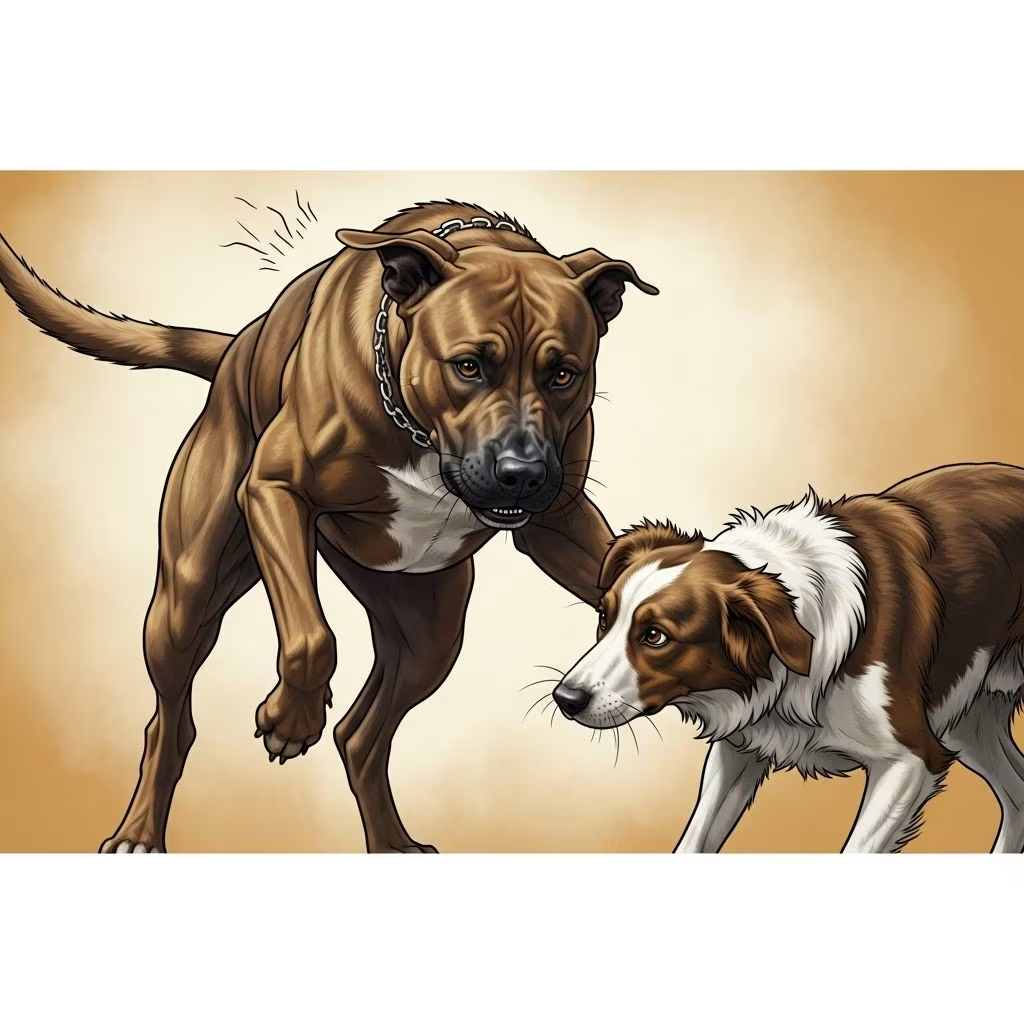
Dog-on-dog aggression manifests in various forms, often rooted in fear, territorial instincts, or resource protection, posing risks during walks, parks, or multi-pet homes. Identifying these patterns early allows owners to implement targeted interventions, reducing incidents and improving canine social dynamics.
Why Dogs Fight: Core Triggers Behind Inter-Dog Conflicts
Aggression between dogs rarely stems from pure malice; instead, it arises from evolutionary survival mechanisms amplified by modern environments. Fear tops the list as the predominant trigger, where a dog perceives another as a threat due to past experiences or poor socialization. Medical issues like pain from arthritis or neurological disorders can lower tolerance thresholds, turning neutral encounters hostile.
Environmental factors play a key role too. Boredom leads to pent-up energy redirection, while anxiety from household changes—new pets or moves—escalates reactivity. Hormonal influences in intact dogs, particularly males competing for females or resources, intensify disputes. Genetics contribute, with certain breeds inheriting lower aggression thresholds, though nurture often determines expression.
Fear-Driven Clashes: The Most Prevalent Form
Fear aggression occurs when a dog feels cornered or overwhelmed, lunging or snapping to create distance from another dog. Common in under-socialized pups or those with traumatic histories, it features stiff posture, tucked tail, and averted gaze before escalating to growls or bites.
Triggers include crowded dog parks or leashed walks where flight is impossible, prompting ‘fight’ responses. Veterinary behaviorists note this as the leading type seen in clinics, often misread as dominance. Senior dogs may show novel fear due to cognitive decline mimicking dementia, startling easily from sensory loss.
- Early signs: Whale-eye (whites visible), lip licking, yawning.
- Prevention: Gradual desensitization via controlled exposures.
Territorial Disputes: Defending Personal Space
Territorial aggression erupts when a dog guards its home, yard, or favored spots against intruders, even familiar ones. Intact males exhibit this prominently during resource competition, like food or mates. Signs include barking salvos, raised hackles, and charging fence lines.
This differs from general fear by context-specificity: calm off-territory but explosive at home. Multi-dog households see intra-pack territoriality over beds or family attention.
| Type | Common Locations | Typical Targets |
|---|---|---|
| Territorial | Home, yard | Strangers, other dogs |
| Fear | Anywhere neutral | Approaching dogs |
| Resource | Food areas | Competitors |
Resource Guarding: Battles Over Valued Items
Possession aggression targets food bowls, toys, or bones, with the dog stiffening and growling at encroachers. Not linked to starvation but learned behavior from scarcity or genetics. Puppies from resource-poor litters often carry this trait.
In dog parks, it sparks over sticks or balls. Management involves trade-up training: offering higher-value treats to relinquish items peacefully.
Redirected and Frustrated Aggression Patterns
Redirected aggression happens when a dog, aroused by an unreachable target (e.g., window intruder), lashes at a nearby companion. Leash frustration—’barrier aggression’—mimics this, with lunging at passing dogs due to restraint.
Control aggression emerges from repeated negative human interactions, though less common dog-to-dog; dogs ‘decide’ to enforce space.
Special Cases: Maternal, Predatory, and Age-Related
Maternal Protection Instincts
Pregnant or nursing females aggressively shield litters, hormone-driven and temporary. Even phantom pregnancies trigger this.
Predatory Chase Responses
Predatory aggression chases small, fast-moving dogs like prey, silent and intense—not angry but instinctual.
Senior and Medical Influences
Older dogs growl from pain (dental, joints) or cognitive dysfunction causing confusion. Rule out rabies in unvaccinated sudden-onset cases—fatal and zoonotic.
Spotting Warning Signals Before Escalation
Pre-aggression cues include frozen stares, ear pinning, displacement sniffing, and play bows turning stiff. Ignoring these invites bites. Body language varies by type:
- Fear: Crouched, tail low, escape attempts.
- Territorial: Upright, forward lean, piloerection.
- Possessive: Head over item, hard eyes.
Diagnosis: Ruling Out Health Contributors
Always consult vets first—hypothyroidism, epilepsy, or tumors mimic behavioral aggression. Bloodwork and neurologics pinpoint issues; treatable causes like pain meds reduce irritability.
Management Blueprint: Step-by-Step Strategies
Safety first: Muzzle train, avoid triggers. Positive reinforcement builds confidence—no punishment, as it worsens fear.
- Counter-Conditioning: Pair triggers with rewards.
- Socialization Windows: Expose pups 3-14 weeks.
- Exercise/Mental Stimulation: Tire dogs to curb boredom.
- Professional Help: Certified trainers/behaviorists.
Neutering curbs hormone-fueled fights but doesn’t fix fear-based ones.
Multi-Dog Home Harmony Tactics
Separate feeding, equal attention prevent rivalry. Introduce via parallel walks, not face-to-face.
FAQs on Dog-on-Dog Aggression
Can all aggressive dogs be rehabilitated?
Most yes, with early intervention; severe cases may need permanent management.
Is dog aggression breed-specific?
Genetics influence but environment dominates; any breed can show it.
What if my dog suddenly turns aggressive?
Medical check urgent—rabies, pain, neuro issues possible.
Does dominance training work?
No; it amplifies fear aggression.
How to break up a dog fight safely?
Never grab collars; use barriers, loud distractions.
Long-Term Prevention for Safer Interactions
Enroll in obedience classes, maintain routines, monitor health. Track progress with journals to refine approaches. With patience, most dogs reclaim sociable lives, fostering joyful pack bonds.
References
- Dog Aggression Diagnosis and Overview — VCA Animal Hospitals. 2023. https://vcahospitals.com/know-your-pet/dog-behavior-problems-aggression-diagnosis-and-overview
- 6 Causes of Aggression in Dogs — VEG ER for Pets. 2024. https://www.veg.com/post/aggression-in-dogs
- Aggression in Dogs — PetMD. 2024. https://www.petmd.com/dog/behavior/aggression-in-dogs
- 7 Types of Dog Aggression and How to Nip Them in the Bud — Salish Veterinary Hospital. 2023. https://www.salishvet.com/services/dogs/blog/7-types-dog-aggression-and-how-nip-them-bud
- Dog Aggression: Signs, Causes, and How to Manage — Best Friends Animal Society. 2024. https://bestfriends.org/pet-care-resources/dog-aggression-signs-causes-and-how-manage
- Canine Aggression — AKC Canine Health Foundation. 2023. https://www.akcchf.org/disease-history/canine-aggression/



