

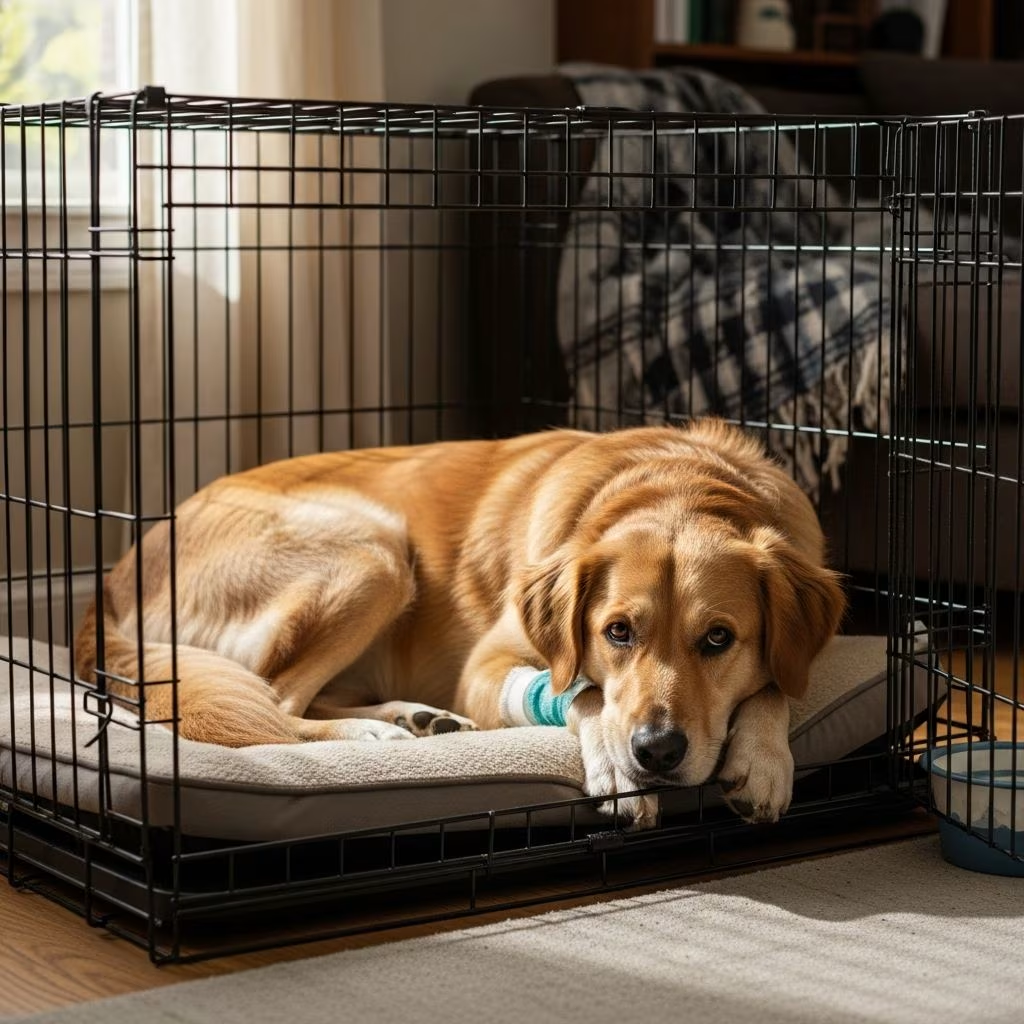
Putting your dog on **cage rest** is a critical veterinary recommendation following surgeries, injuries, or certain medical conditions to promote healing by strictly limiting movement. This confinement prevents re-injury, supports tissue repair, and ensures the best possible recovery outcomes, often required for 4-8 weeks depending on the condition.
What is cage rest for dogs?
Cage rest, also known as **crate rest** or strict confinement, involves keeping your dog in a secure crate for nearly all of the time, with brief supervised outings only for elimination. Unlike general crate training for housebreaking or safety, cage rest is a medical necessity post-surgery (e.g., spinal, orthopedic like TPLO or fracture repair) or for conditions like intervertebral disc disease (IVDD). The goal is zero jumping, running, stairs, or play to allow bones, ligaments, and soft tissues to heal properly. Veterinary neurologists and surgeons emphasize that non-compliance can lead to surgical failure or prolonged recovery.
During cage rest, dogs are typically out of the crate for just 5-10 minutes several times a day for potty breaks, carried to avoid walking if possible, and immediately returned. This mimics hospital confinement and is non-negotiable for high-risk cases like atlantoaxial stabilization or spinal surgery.
Why does my dog need cage rest?
Your veterinarian prescribes cage rest to minimize physical stress on the injury site. Movement can displace surgical hardware, reopen incisions, or exacerbate inflammation. For instance, in spinal surgeries, even minor activity risks paralysis recurrence. Studies from veterinary institutions highlight that strict rest improves success rates by 80-90% in orthopedic cases. It’s challenging emotionally for owners but essential—think of it as prescribed bed rest for humans after major surgery.
- Post-surgical recovery: TPLO, fracture pinning, spinal decompression.
- IVDD or back injuries: Prevents disc re-herniation.
- Soft tissue repairs: Cruciate ligaments, hips.
- Conservative management: Non-surgical injuries needing immobilization.
How long does cage rest last?
Duration varies by case: 2-4 weeks for minor soft tissue injuries, 6-8 weeks for orthopedic surgeries, and up to 12 weeks for complex spinal cases. Follow your vet’s exact timeline, confirmed via re-check exams and X-rays. Gradual reintroduction to activity follows, starting with short leash walks.
Choosing the right crate for cage rest
Select a sturdy **wire crate** (not plastic airline or collapsible mesh) sized 2-3 times your dog’s length for lying down without stretching. Middle wires allow visibility to reduce anxiety, and a solid top prevents jumping. For large breeds, extra-large models (42-48 inches) are ideal.
| Crate Type | Pros | Cons | Best For |
|---|---|---|---|
| Wire Metal | Durable, ventilated, visible | Heavier | All sizes, post-surgery |
| Plastic Airline | Secure, portable | Poor visibility, hot | Travel only |
| Mesh/Fabric | Lightweight | Unstable, chewable | Avoid for rest |
Multiple crates—one in living area, one in bedroom—aid compliance and comfort.
Setting up the crate for success
Create a healing sanctuary: Use a foam mattress with plastic cover topped by absorbent, clean towels or blankets changed daily. No pillows or thick bedding that could bunch and cause pressure sores. Attach a spill-proof water bowl; remove food except during meals. Cover three sides with breathable blankets for a den-like feel, leaving one side open for interaction. Place in a quiet, draft-free spot where your dog sees family but avoids high traffic.
- Bedding: Orthopedic foam base + waterproof liner + towels.
- Water: Always accessible, hook-on bowl.
- Toys: Kong with frozen peanut butter (no rolling toys).
- Cover: For nighttime calm.
Daily routine on cage rest
Structure the day for predictability:
- Morning: Carry out for potty (leash, no walk), quick meal in crate.
- Daytime: Short potty breaks every 4-6 hours; hand-feed meals, puzzle toys.
- Evening: Final potty, meds if prescribed.
- Night: Crated fully, quiet environment.
Potty breaks: Carry small dogs; sling large ones (towel under belly) or use sling harness. No sniffing or play—straight out and back in 5 minutes. Monitor urine/feces for issues.
Feeding and hydration during cage rest
Hand-feed small portions 3-4 times daily to prevent gulping and maintain appetite. Use elevated bowls if neck surgery. Stick to prescription diet if advised; add toppers for appeal. Ensure constant fresh water—dehydration risks constipation. Weigh weekly to track weight stability.
Exercise and physical therapy
**Zero exercise** beyond potty. Passive range-of-motion (PROM) exercises, if vet-approved, involve gently flexing limbs 10-15 reps twice daily. No swimming, treadmill, or walks until cleared. Underwater treadmill may start in rehab phase.
Mental stimulation ideas
Boredom leads to stress; combat with low-physical activities:
- Frozen Kongs or Lickimats with pureed food.
- Scent games: Hide treats in towels inside crate.
- Training: Target stick, “touch” commands via crate door.
- Interactive toys: Nina Ottosson puzzles (supervised).
- Audio: Calming podcasts or your voice recordings.
- Visits: Sit by crate for gentle petting.
Rotate toys daily; 15-30 minutes of brain games prevents depression.
Medication and pain management
Administer vet-prescribed NSAIDs (e.g., carprofen), gabapentin for nerve pain, or muscle relaxants exactly as directed. Track side effects like vomiting. Never give human meds. Re-checks ensure proper dosing.
Monitoring your dog’s progress
Daily checks: Appetite, stool, incision (no swelling/discharge), behavior. Log mobility attempts or whining. Vet visits at 2, 4, 6 weeks with imaging. Signs of trouble: Lethargy, refusal to eat, blood in urine—call vet immediately.
Common challenges and how to overcome them
Cage rest tests patience:
- Whining/Anxiety: Calming pheromone diffuser, vet for anti-anxiety meds.
- Escape Attempts: Zip-tie doors, extra latches.
- House Soiling: More frequent potty, enzyme cleaners.
- Family Resistance: Educate all household members; post rules.
- Muscle Atrophy: PROM, nutrition.
Gradual return to normal activity
Post-rest: Week 1-2 short leash walks (5 min), no off-leash. Week 3-4: 10-15 min walks. Full activity at 12 weeks with clearance. Use long-line for control.
Frequently Asked Questions (FAQs)
What if my dog hates the crate?
Introduce positively pre-injury with treats; use meds for severe anxiety. Consistency builds tolerance.
Can I let my dog out for short play?
No—even 30 seconds risks re-injury. Strict is best.
How do I handle a large dog?
Use sling or wagon for transport; extra-large crate essential.
Is cage rest cruel?
No, it’s temporary medicine saving long-term quality of life.
What bedding prevents sores?
Firm foam + frequent changes; check skin daily.
References
- Spinal Surgery Recovery Guidelines — American College of Veterinary Surgeons. 2024-05-15. https://www.acvs.org/small-animal/spinal-surgery-recovery
- Post-Operative Care for Orthopedic Surgery — Cornell University College of Veterinary Medicine. 2023-11-20. https://www.vet.cornell.edu/departments-centers-and-institutes/riney-canine-health-center/canine-health-information/post-operative-care
- Crate Confinement After Surgery — Davies Veterinary Specialists (UK). 2025-01-10. https://www.vetspecialists.co.uk/fact-sheets-post-surgery-care/crate-confinement-fact-sheet/
- IVDD Management Guidelines — American Kennel Club Canine Health Foundation. 2024-08-01. https://www.akcchf.org/research-progress/ivdd
- Rehabilitation Protocols Post-TPLO — University of California Davis Veterinary Medicine. 2023-09-12. https://www.vetmed.ucdavis.edu/hospital/animal-health-topics/tplo



