

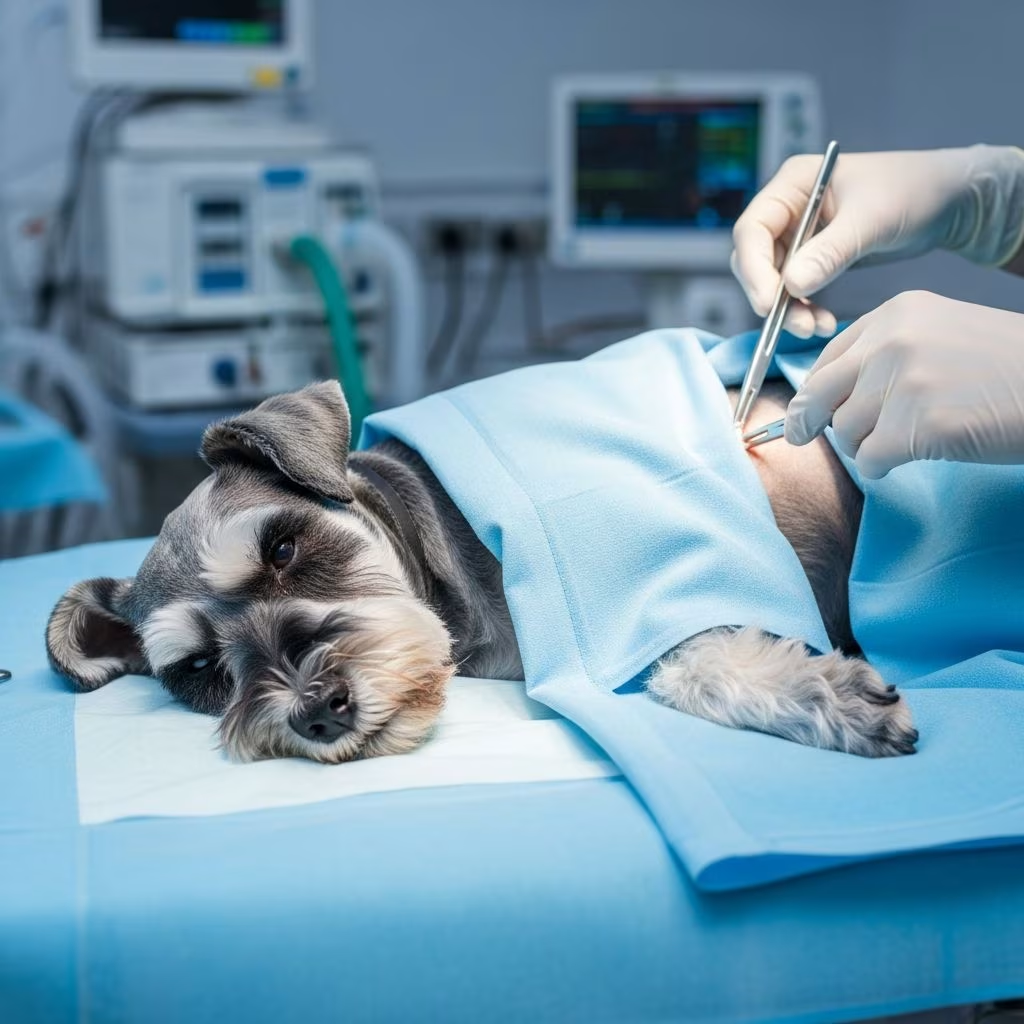
Getting Your Dog Neutered: A Step-by-Step Look at Dog Neuter Surgery
Dog neutering, also known as castration or sterilization, is one of the most common surgical procedures performed on male dogs. It involves the surgical removal of the testicles and is recommended by veterinarians worldwide for numerous health and behavioral benefits. Understanding what happens during this procedure can help pet owners feel more confident about their decision and better prepare their dogs for surgery. This comprehensive guide walks you through every stage of the neutering process, from initial preparation through recovery.
Understanding Dog Neutering: Why It Matters
Neutering your dog is an important health decision that offers significant benefits beyond population control. Neutered dogs typically have reduced aggression, decreased marking behaviors, and lower risks of certain health conditions including testicular cancer and prostate disease. The procedure is most commonly performed when dogs reach sexual maturity, typically between six months and one year of age, though it can be performed at various ages.
The decision to neuter your dog should be made in consultation with your veterinarian, who can assess your individual dog’s health status and recommend the optimal timing for the procedure.
Pre-Operative Preparation: Getting Your Dog Ready for Surgery
Proper preparation before neutering surgery is essential for ensuring a safe and successful procedure. The preparation phase typically begins several days before the scheduled surgery and involves several important steps.
Pre-Surgical Health Examination
Before scheduling neutering surgery, your veterinarian will conduct a thorough physical examination of your dog. This examination assesses your dog’s overall health status, heart function, and ability to tolerate anesthesia. Your vet will palpate the scrotum to ensure both testicles are present and descended, as undescended testicles may require additional surgical intervention. Testes should be descended by six to nine months of age; if not, your veterinarian will discuss treatment options with you.
Blood Work and Pre-Operative Testing
Many veterinarians recommend pre-operative blood work, especially for older dogs or those with existing health conditions. These tests help identify any underlying issues that might complicate anesthesia or surgery. Common pre-operative tests include a complete blood count and a chemistry panel to evaluate organ function.
Fasting Instructions
Your veterinarian will provide specific fasting instructions before surgery, typically requiring that your dog have nothing to eat for 6-12 hours before the procedure. This fasting period is crucial as it reduces the risk of vomiting and aspiration during anesthesia. Water may be restricted as well, depending on your veterinarian’s protocols.
Medication Review
Inform your veterinarian about any medications or supplements your dog is currently taking. Some medications may need to be discontinued before surgery, while others can continue as prescribed. Your vet will provide clear guidance on medication management before the procedure.
Day of Surgery: The Pre-Operative Process
On the day of surgery, arrive at your veterinary clinic at the scheduled time with your dog. The pre-operative process involves several important steps to prepare your dog for anesthesia and surgery.
Check-In and Final Assessment
Upon arrival, you’ll check in with the veterinary staff who will review your dog’s medical history and answer any final questions. Your dog will receive a light sedative and pain relief medication to help them relax and manage pre-operative anxiety. Your veterinarian may place an intravenous (IV) catheter to facilitate fluid administration and medication delivery during surgery.
Hair Clipping and Surgical Site Preparation
The scrotum and surrounding pre-scrotal area are carefully shaved to allow for a clean incision and reduce infection risk. The surgical site is then scrubbed with surgical-grade antiseptic solutions to ensure asepsis during the procedure. Your dog’s bladder is typically expressed to empty it completely before anesthesia.
Anesthesia Administration
Once the sedative has taken full effect, your dog will be placed under general anesthesia. An endotracheal tube will be inserted into your dog’s windpipe to ensure a clear airway and allow for oxygen and gas anesthetic delivery. Your dog will be monitored continuously throughout the procedure by experienced anesthetic technicians who track vital signs including heart rate, blood pressure, oxygen saturation, and body temperature.
Surgical Techniques: The Neutering Procedure
Once your dog is properly anesthetized and positioned, the surgical team is ready to begin the neutering procedure. There are two primary surgical approaches used for canine castration, each with its own advantages.
Scrotal Technique
The scrotal technique involves making an incision directly over the testicles in the scrotal skin. Using gentle pressure on the scrotum, the veterinarian pushes one testicle cranially into the pre-scrotal area and makes a single bold incision through the skin and subcutaneous tissue, usually positioned lateral to the median raphe. This incision is typically about one-third the length of the testicle. The testicle is then gently exteriorized through this opening, and the surgical procedure continues as described below. The scrotal approach may be used for both pediatric puppy and adult dog castrations.
Pre-Scrotal Technique
The pre-scrotal technique involves making an incision in the skin between the prepuce and scrotum, located just above the testicles. This approach may be preferred in certain cases and allows access to both testicles, potentially through a single incision or two separate incisions. The pre-scrotal approach typically results in more conventional wound healing and closure requirements.
Open and Closed Castration Techniques
Once the testicles have been gently exteriorized, veterinarians choose between two castration techniques: open or closed.
Open Castration Technique: In the open technique, the internal spermatic fascia is incised, allowing direct visualization of the spermatic cord. The ligament of the tail of the epididymis is separated from the vaginal tunic using hemostats. The testicle is gently exteriorized, and haemostats are placed across the ductus deferens and vascular cord to create a crush mark. An encircling ligature using 2/0 or 3/0 absorbable suture material is placed around both the ductus deferens and vascular cord. The ligature must be securely knotted with 6-8 throws for monofilament sutures or 4-6 throws for multifilament sutures to ensure complete hemostasis. A second ligature may be placed distal to the first for added security. The cord is then incised between the haemostats, and the cord is inspected for bleeding. The cord is replaced into the tunic, and the vaginal tunic is closed using absorbable suture in a continuous pattern or by placing an encircling ligature around the tunic and cremaster muscle.
Closed Castration Technique: In the closed technique, the internal spermatic fascia is not incised. The cord tissue is dissected manually or carefully using surgical instruments. Encircling ligatures encompassing the internal spermatic fascia, cremaster muscle, ductus deferens, and vascular cord are performed similarly to the open technique. The vaginal tunic does not need to be closed separately in this technique. The closed technique may be preferred by some surgeons due to its potentially lower complication rates.
Cord Handling and Ligation
Regardless of the technique chosen, proper cord handling is critical to prevent complications. The cord is stripped of any excess tissue or fat to clearly identify the structures requiring ligation. A strangle knot, sometimes modified as a Miller’s knot, is used to secure the cord. The knot is set using appropriate instruments and tightened with sufficient throws to ensure secure closure and complete hemostasis. Many veterinarians use additional throws beyond the minimum to ensure maximum security of the knot.
Surgical Site Closure: Closing the Incision
After both testicles have been removed and the ligatures secured, the incision must be properly closed. Closure techniques differ depending on which surgical approach was used.
Scrotal Approach Closure
When using the scrotal approach, it is not recommended to suture the scrotum completely. A single interrupted suture may be placed in the dartos fascia, or the scrotal skin may be inverted and left without sutures. A small amount of fluid drainage from the surgical site is normal and expected with this approach.
Pre-Scrotal Approach Closure
The pre-scrotal approach requires a standard three-layer closure technique. The dense fascial layer is closed using either interrupted or continuous sutures. The subcutaneous tissue layer is then closed with a continuous suture pattern. Finally, the skin layer is closed using buried subcuticular or intradermal sutures for optimal cosmetic results. Some veterinarians may use skin adhesive or staples depending on individual preferences and protocols.
Spay Tattoo Placement
Many veterinary clinics place a small spay tattoo near the surgical site or in the pre-scrotal area to permanently indicate that your dog has been neutered. This tattoo is particularly helpful if your dog becomes lost and requires urgent veterinary care, allowing vets to quickly identify your dog’s neutering status.
Anesthesia and Pain Management During Surgery
Safe anesthesia and adequate pain control are fundamental aspects of neutering surgery. Your dog will be stabilized under anesthesia with appropriate analgesia and fluid therapy administered throughout the procedure. Local anesthetic blocks using Lignocaine may be administered into the testicles prior to castration surgery to provide additional analgesia. This multimodal pain management approach ensures your dog remains comfortable throughout the procedure and recovers more smoothly afterward.
Post-Operative Recovery and Aftercare
Proper post-operative care is essential for successful recovery and preventing complications. Your dog will be carefully monitored as they wake up from anesthesia, and most pets go home the same day as surgery.
Immediate Post-Surgery Monitoring
Your veterinary team will monitor your dog closely as the anesthetic wears off. Vital signs including heart rate, respiratory rate, and oxygen saturation will be continuously assessed. Your dog will be kept warm and comfortable in a recovery area until fully alert.
Home Care Instructions
Your veterinarian will provide detailed post-operative care instructions before you take your dog home. These typically include:
- Restrict activity for the recommended period (usually 7-14 days) to allow proper healing
- Prevent your dog from licking or chewing at the incision site
- Keep the incision clean and dry
- Use an Elizabethan collar if your dog is prone to licking
- Follow prescribed pain medication schedules
- Administer any prescribed antibiotics as directed
- Watch for signs of infection or complications
Healing Timeline
The healing process is usually smooth, though your pet will need extra care in the days following surgery. Most dogs show significant improvement within the first few days. Sutures or skin adhesive typically remain in place for 10-14 days, depending on your veterinarian’s preference. During this time, you should prevent your dog from swimming, bathing, or exposing the incision to excessive moisture.
When to Contact Your Veterinarian
Contact your veterinarian immediately if you notice any of the following:
- Excessive swelling, redness, or discharge from the incision
- Signs of infection such as fever or lethargy
- Your dog excessively licking or chewing at the incision
- Difficulty urinating or defecating
- Vomiting or lack of appetite beyond the first day
- Separation of incision edges or dehiscence
- Excessive bleeding or seroma formation
Important Considerations and Safety Protocols
Successful neutering surgery depends on adherence to strict safety protocols and proper surgical technique. Acts of veterinary surgery should only be performed by qualified, trained, and licensed veterinary professionals. Your veterinarian or a board-certified surgical specialist should perform the procedure, ensuring the highest standards of care and safety.
Local anesthetic injection into the testicles may help provide additional analgesia during the procedure. Your veterinarian will determine the most appropriate pain management strategy for your individual dog based on age, health status, and the specific surgical approach being used.
Frequently Asked Questions About Dog Neutering
Q: At what age should I have my dog neutered?
A: Most veterinarians recommend neutering between six months and one year of age, though the optimal timing can vary based on breed, size, and individual health factors. Your veterinarian can recommend the best timing for your specific dog.
Q: Is dog neutering surgery safe?
A: Yes, dog neutering is a routine surgical procedure performed thousands of times daily by veterinarians worldwide. Complications are rare when performed by qualified veterinarians following proper surgical protocols and anesthesia safety measures.
Q: Will my dog’s personality change after neutering?
A: Neutering typically reduces testosterone-driven behaviors such as aggression, marking, and roaming, but does not dramatically change your dog’s basic personality or temperament. Most dogs maintain their distinctive personality traits after surgery.
Q: How long does the neutering procedure take?
A: The actual surgical procedure typically takes 15-30 minutes depending on the surgical technique used and individual factors. However, your dog will spend additional time at the clinic for pre-operative preparation and post-operative monitoring.
Q: What can I expect during recovery?
A: Most dogs recover quickly from neutering. You can expect some grogginess the first day, mild discomfort managed with prescribed pain medication, and the need to restrict activity for 7-14 days. Most dogs resume normal activity within two to three weeks.
Q: Will my dog gain weight after neutering?
A: Neutered dogs may have a slightly slower metabolism, but weight gain is preventable through appropriate diet and exercise. Discuss nutrition and activity adjustments with your veterinarian.
Q: What happens if my dog has undescended testicles?
A: Dogs with cryptorchidism (one or two undescended testicles) may require two incisions for their castration, allowing your veterinarian to locate and remove retained testicles from the abdomen or inguinal area.
Q: How much does dog neutering cost?
A: Neutering costs vary based on your location, veterinary clinic, and your dog’s age and size. Contact your veterinarian for a specific estimate. Some animal welfare organizations offer reduced-cost spay and neuter services.
References
- Surgical Approach to Dog Castration — University of Edinburgh School of Veterinary Medicine. 2024. https://edwebcontent.ed.ac.uk/sites/default/files/atoms/files/cnr_surgical_approach_to_dog_castrate_v1.2.pdf
- ASPCA Pro Spay/Neuter Training Reference Guide for Veterinarians — ASPCA Professional. 2024. https://www.aspcapro.org/sites/default/files/wysiwyg-uploads/asna_spay_neuter_reference_guide_for_veterinarians.pdf
- Dog Neutering: Everything You Need To Know — PetMD. 2024. https://www.petmd.com/dog/procedure/dog-neutering-everything-you-need-know
- A Step-by-Step Guide to Spaying and Neutering Your Pet — Penn Veterinary Care. 2024. https://www.pennvetcare.com/blog/1293847-a-step-by-step-guide-to-spaying-and-neutering-your-pet
- Dog Neutering: A Guide to Castration and Spaying — People’s Dispensary for Sick Animals (PDSA). 2024. https://www.pdsa.org.uk/pet-help-and-advice/pet-health-hub/other-veterinary-advice/dog-neutering-a-guide-to-castration-and-spaying



