

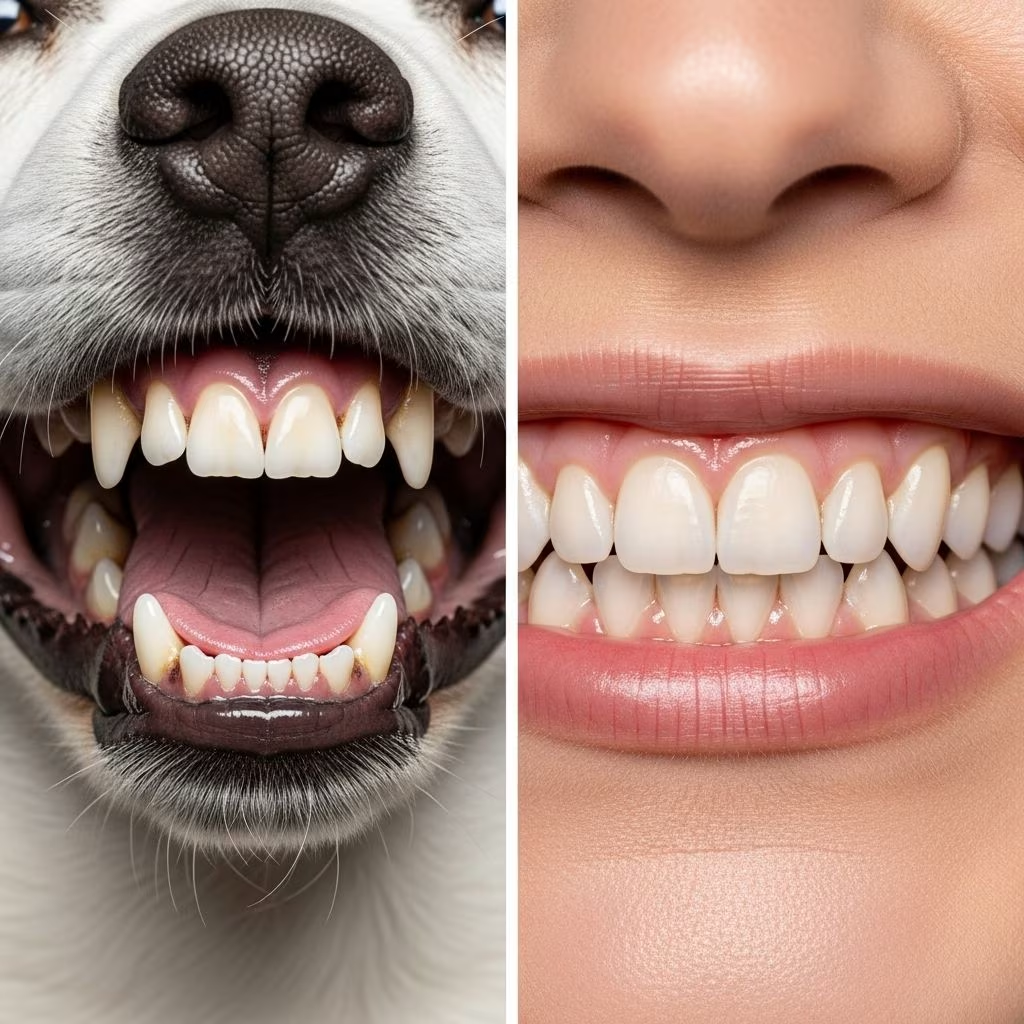
The notion that dogs possess inherently cleaner mouths than humans persists as a common misconception. Scientific evidence reveals that canine oral environments host vast microbial communities, comparable in quantity but distinct in composition from those in human mouths.
Understanding Oral Microbiomes in Dogs and Humans
The oral cavity serves as a primary habitat for microorganisms in both species. Human mouths contain approximately 615 distinct bacterial types, while dogs harbor around 600 species, indicating similar diversity. These numbers underscore that neither mouth is sterile; both teem with bacteria essential for digestion, immunity, and oral ecology.
Key differences emerge in bacterial profiles. Dogs exhibit higher counts of certain pathogens absent or rare in humans, such as those thriving in their saliva and on teeth. A foundational study culturing samples from humans, dogs, and cats found human oral flora with the fewest bacteria, followed by dogs, then cats, challenging assumptions of canine superiority.
Shared and Unique Bacterial Species
Overlap exists between canine and human microbiomes, notably in the Porphyromonas genus, linked to periodontal issues. Dogs carry P. gulae, while humans predominantly host P. gingivalis, both contributing to gum disease, plaque buildup, and tooth loss.
- Porphyromonas in dogs: Drives canine gingivitis and periodontitis.
- Porphyromonas in humans: Major factor in adult gum disease.
- Other shared types: Veillonella parvula appears in all sampled species, though less virulent.
Unique canine bacteria include Pasteurella canis, prevalent in dog saliva and a leading cause of infections post-bite. Capnocytophaga canimorsus poses severe risks, potentially fatal in vulnerable individuals.
Health Risks from Cross-Species Contact
Dog saliva introduces zoonotic threats to humans. While most bacteria pose low risk to healthy adults, immunocompromised people, infants, elderly individuals, or those with open wounds face heightened dangers.
| Bacteria | Found In | Risk to Humans |
|---|---|---|
| Pasteurella canis | Dog saliva | Common in bite wounds, causes infections |
| Capnocytophaga canimorsus | Dog mouth | Sepsis in immunocompromised |
| Corynebacterium ulcerans | Dog oral flora | Diphtheria-like illness |
| Escherichia coli | Possible via contamination | Diarrhea, fever from fecal exposure |
Bites transmit these rapidly, with severity depending on wound site and host immunity. Kissing pets or allowing face licks amplifies exposure, especially if dogs scavenge waste harboring salmonella.
Dental Diseases: Parallels and Differences
Periodontal disease affects over 80% of dogs by age three, mirroring human prevalence in untreated populations. Bacteria accumulate on teeth, forming plaque that hardens into tartar, leading to inflammation, recession, abscesses, and bone loss.
Dogs lack routine brushing like humans, accelerating issues. Symptoms include halitosis, loose teeth, and pain, often undetected until advanced.
- Early signs: Bad breath, discolored teeth.
- Advanced: Drooling, reluctance to eat, facial swelling.
Preventive Care for Canine Oral Health
Maintaining dog dental hygiene prevents bacterial overgrowth. Daily brushing with enzymatic toothpaste removes plaque effectively.
- Select pet-safe toothpaste (poultry or peanut flavors appeal to dogs).
- Use finger brush or pet toothbrush, targeting outer surfaces.
- Incorporate dental chews, water additives, or diets with kibble that scrubs teeth.
Professional cleanings under anesthesia every 6-12 months scale tartar and assess issues, akin to human hygienist visits.
Human Oral Care in Comparison
Humans benefit from flossing, mouthwashes, and fluoridated products, reducing bacterial loads more than typical dog routines. Yet, poor hygiene yields similar pathologies, emphasizing shared principles.
Both species thrive with consistent habits: brushing twice daily for humans, daily for dogs; regular vet/dentist checks.
Debunking the Cleanliness Myth Origins
The myth likely stems from dogs’ self-grooming and saliva’s antibacterial enzymes like lysozyme. However, saliva volume doesn’t sterilize; it transports bacteria. Environmental exposures—dogs licking genitals, eating feces—introduce contaminants humans avoid.
Studies confirm no cleanliness edge; dog mouths rival or exceed human bacterial density in untreated states.
FAQs on Dog and Human Oral Bacteria
Is a dog’s mouth cleaner due to licking wounds?
No, licking introduces bacteria; clean with soap and water instead.
Can I get sick from dog kisses?
Low risk for healthy adults, but avoid if immunocompromised.
How many bacteria in a dog mouth?
Over 600 species, similar to human 615+.
What causes dog bad breath?
Bacterial plaque, tartar, infections.
Do dogs need dentists?
Vets perform equivalent cleanings.
Safe Interactions with Pets
Promote hygiene: Brush dog teeth, schedule vet dental exams, discourage face licking. For humans, robust immunity and wound care mitigate risks.
Understanding microbiomes fosters informed pet ownership, prioritizing health over myths.
References
- A comparison of human and animal mouth flora — PubMed/NCBI. 1991. https://pubmed.ncbi.nlm.nih.gov/1744782/
- Are Dogs’ Mouths Cleaner Than Human Mouths? — PetMD. 2020. https://www.petmd.com/general-health/are-dogs-mouths-cleaner-than-human-mouths
- Dog Dental Care: Is dog’s mouth cleaner than human’s? — North Brookhaven Vet. 2024-01-15. https://www.northbrookhavenvet.com/site/blog/2024/01/15/dog-dental-care
- Debunking the Dog’s Mouth Being Cleaner Than a Human’s Myth — Trooper Vet. 2023-04-15. https://www.troopervet.com/site/blog/2023/04/15/dog-mouth-cleaner-human-mouth
- Is a Dog’s Mouth Cleaner Than a Human’s? — American Kennel Club. N/A. https://www.akc.org/expert-advice/health/is-dogs-mouth-cleaner-than-humans/
- Is a Human’s Mouth or Dog’s Mouth Cleaner? — Bright Smiles Brookfield. N/A. https://www.brightsmilesbrookfield.com/blog/?p=83



