Dog Lymph Nodes: Locations and Health Checks
Master the art of locating and palpating your dog's lymph nodes to detect early signs of illness and ensure optimal health.
The lymphatic system plays a crucial role in a dog’s overall health, acting as a network of vessels, tissues, and organs that help fight infections, filter toxins, and maintain fluid balance. Central to this system are lymph nodes, small bean-shaped structures that trap harmful pathogens and produce immune cells. Understanding where to find these nodes and how to check them empowers dog owners to spot potential health issues early, such as infections, inflammation, or cancers like lymphoma.
The Essential Role of Lymph Nodes in Canine Immunity
Lymph nodes function as checkpoints in the body’s defense mechanism. They filter lymph fluid—a clear substance carrying white blood cells—from tissues and organs, capturing bacteria, viruses, and abnormal cells. In dogs, these nodes swell when actively combating threats, making them key indicators of health status. Healthy nodes are typically small and soft; enlargement often signals the need for veterinary attention.
Dogs have hundreds of lymph nodes distributed throughout their bodies, but only a subset are superficial and palpable. These peripheral nodes drain specific body regions: head and neck, forelimbs, hindlimbs, and abdomen. Deeper nodes, like those in the chest or abdomen, require imaging for assessment. Regular home checks complement vet exams, promoting proactive care.
Primary Palpable Lymph Node Sites in Dogs
Focus on five main groups accessible through gentle palpation. Each pair (left and right) mirrors symmetrically, allowing bilateral comparison for consistency.
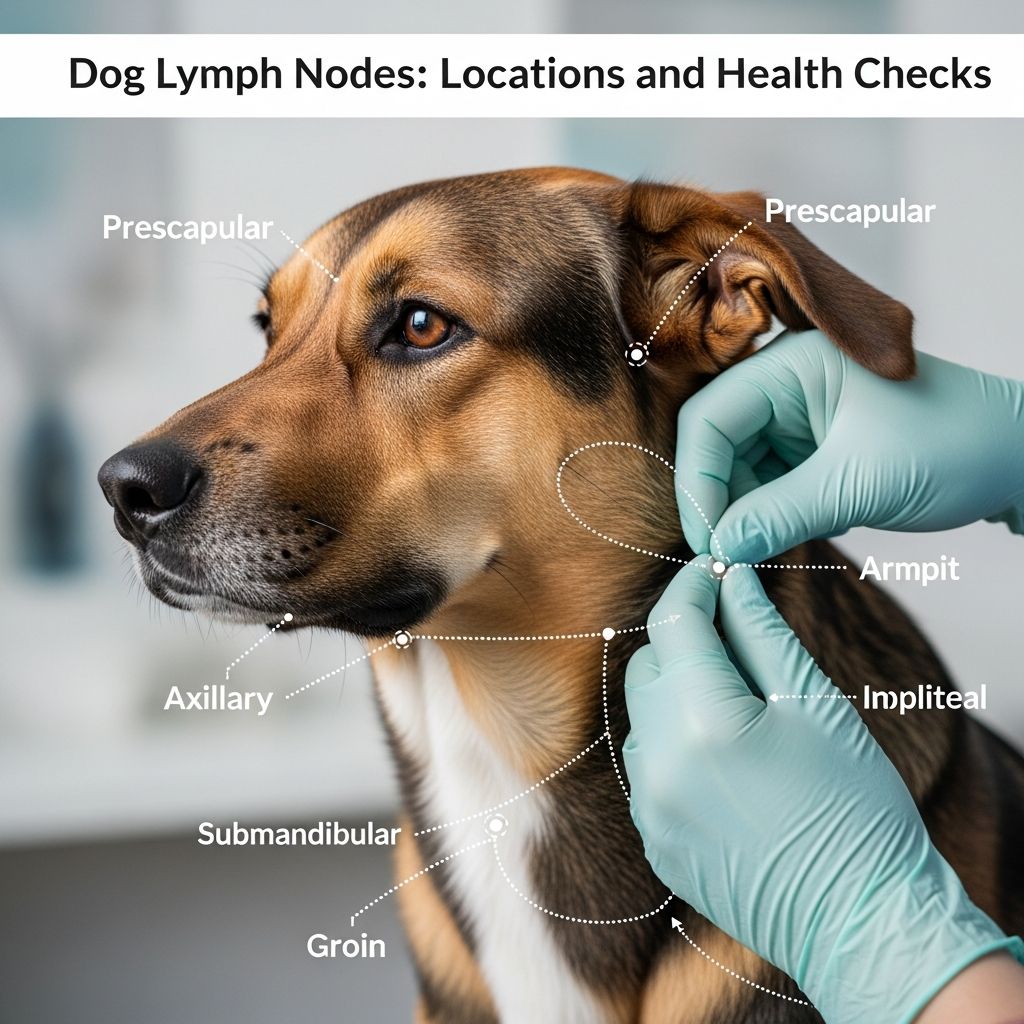
- Submandibular (Mandibular) Nodes: Positioned under the jaw, where the neck meets the lower mandible. These drain the head, mouth, and salivary glands. In healthy dogs, they feel like small peas (small breeds) or grapes (large breeds).
- Prescapular Nodes: Located in front of the shoulder blade, at the neck-chest junction. They handle drainage from the forelimbs, shoulder, and upper chest.
- Axillary (Armpit) Nodes: Found in the armpit area, between the chest and upper foreleg. These filter lymph from the forelimb and lateral chest wall.
- Inguinal (Groin) Nodes: Situated in the inner groin, near the hindleg’s base. They drain the hindlimbs, genitals, and lower abdomen.
- Popliteal Nodes: Behind the knee (stifle joint) on hind legs. These manage lower hindlimb drainage.
Visualize these as a routine petting map: jaw, shoulders, armpits, groin, knees. Familiarity reduces stress during checks.
Step-by-Step Guide to Palpating Dog Lymph Nodes
Perform checks weekly or if your dog shows lethargy, appetite loss, or lumps. Use calm environments with treats for cooperation.
- Prepare: Wash hands; have treats ready. Position dog standing or lying relaxed.
- Jaw Check: Slide fingers under jawline on both sides, feeling for firm, oval structures behind the bone. Normal size: 0.5-1 cm.
- Shoulder Check: Press gently in front of scapula, where muscle meets chest. Nodes here are deeper in larger breeds.
- Armpit Check: Lift foreleg slightly; probe axilla for small, mobile lumps.
- Groin Check: Part hind legs gently; feel inner thigh for elongated nodes.
- Knee Check: Bend hind knee slightly; palpate popliteal fossa for pea-sized nodes.
Nodes should slide under fingers, feel symmetrical, and not cause pain. Measure with calipers if swelling noted, tracking over time.
Understanding Normal vs. Abnormal Lymph Node Sizes
| Location | Small Dog Normal Size | Large Dog Normal Size | Abnormal Signs |
|---|---|---|---|
| Submandibular | Pea (0.5 cm) | Grape (1-2 cm) | Hard, fixed, >2x normal |
| Prescapular | 0.5-1 cm | 1-2 cm | Swollen, painful |
| Axillary | 0.3-0.8 cm | 0.8-1.5 cm | Mobile loss, asymmetry |
| Inguinal | 0.5-1 cm | 1-2.5 cm | Enlarged >3 cm |
| Popliteal | 0.3-0.7 cm | 0.7-1.5 cm | Firm, non-tender swell |
Sizes vary by breed, age, and body condition. Consult breed-specific norms via vet. Abnormalities include persistent swelling (>2 weeks), asymmetry, hardness, or pain.
Common Causes of Lymph Node Enlargement in Dogs
Reactive hyperplasia from infections (e.g., dental disease for submandibular) is most common, resolving with treatment. Allergies or injuries cause temporary swelling.
Serious concerns: Lymphoma, the most frequent canine cancer, often presents with generalized node enlargement. Multicentric form affects peripheral nodes first. Other cancers (mast cell tumors) or autoimmune diseases may target specific nodes.
Deep nodes (sternal, mediastinal) indicate thoracic issues, visible via radiographs. Abdominal nodes signal GI problems.
When to Consult a Veterinarian
Seek immediate care if nodes double in size rapidly, dog is febrile, loses weight, or nodes ulcerate. Vets use fine-needle aspirates, biopsies, or ultrasounds for diagnosis. Early detection improves lymphoma prognosis via chemo.
Routine checks aid holistic health monitoring alongside vaccines and dental care.
Advanced Lymph Node Anatomy for Deeper Understanding
Beyond peripherals, dogs have retropharyngeal nodes (head drainage, non-palpable), sternal nodes (dorsal to sternebrae, 3-20 mm normal), and parietal abdominal nodes near aorta. These inform surgical or imaging decisions.
Tracheobronchial nodes at tracheal bifurcation drain lungs. Knowledge aids informed vet discussions.
FAQs: Dog Lymph Node Monitoring
Can I feel lymph nodes in puppies?
Yes, but they are tinier. Start gentle checks around 8 weeks.
Is lymph node swelling always cancer?
No, often infection-related. Vets differentiate via cytology.
How often should I check my dog’s nodes?
Weekly for seniors/high-risk breeds; monthly otherwise.
What if one side is larger?
Asymmetry warrants prompt vet exam—could indicate localized infection or tumor.
Are there tools for home measurement?
Calipers or apps for tracking; note dates/sizes.
Enhancing Your Dog’s Lymphatic Health
Support immunity with balanced diet, exercise, parasite control, and stress reduction. Omega-3s and antioxidants aid lymph flow. Annual vet lymph checks integrate into wellness exams.
(Word count: 1687)
References
- How Lymph Nodes on Dogs Work and Why They’re Important — Imprimedicine. 2023. https://www.imprimedicine.com/blog/lymph-nodes
- Where Are Lymph Nodes In Dogs And How Do You Check Them? — We Are The Cure. 2023. https://wearethecure.org/where-are-lymph-nodes-in-dogs-and-how-do-you-check-them/
- Lymphadenectomy: Overview of Surgical Anatomy & Removal of Peripheral Lymph Nodes — Today’s Veterinary Practice. 2022. https://todaysveterinarypractice.com/oncology/lymphadenectomy-overview-of-surgical-anatomy-removal-of-peripheral-lymph-nodes/
- Radiographic imaging of thoracic lymph nodes in the dog — PMC – NIH (Peer-reviewed). 2024-05-15. https://pmc.ncbi.nlm.nih.gov/articles/PMC11195510/
- General – The Lymphatic System of the Dog — Saskoer (Academic .ca). 2022. https://www.saskoer.ca/k9lymphaticsystem/chapter/parietal-wall-lymph-nodes/
- Where are my dog’s lymph nodes?? — YouTube (Veterinary demo). 2023. https://www.youtube.com/watch?v=sQTn4BfqlCg
Similar Articles








Read full bio of medha deb