

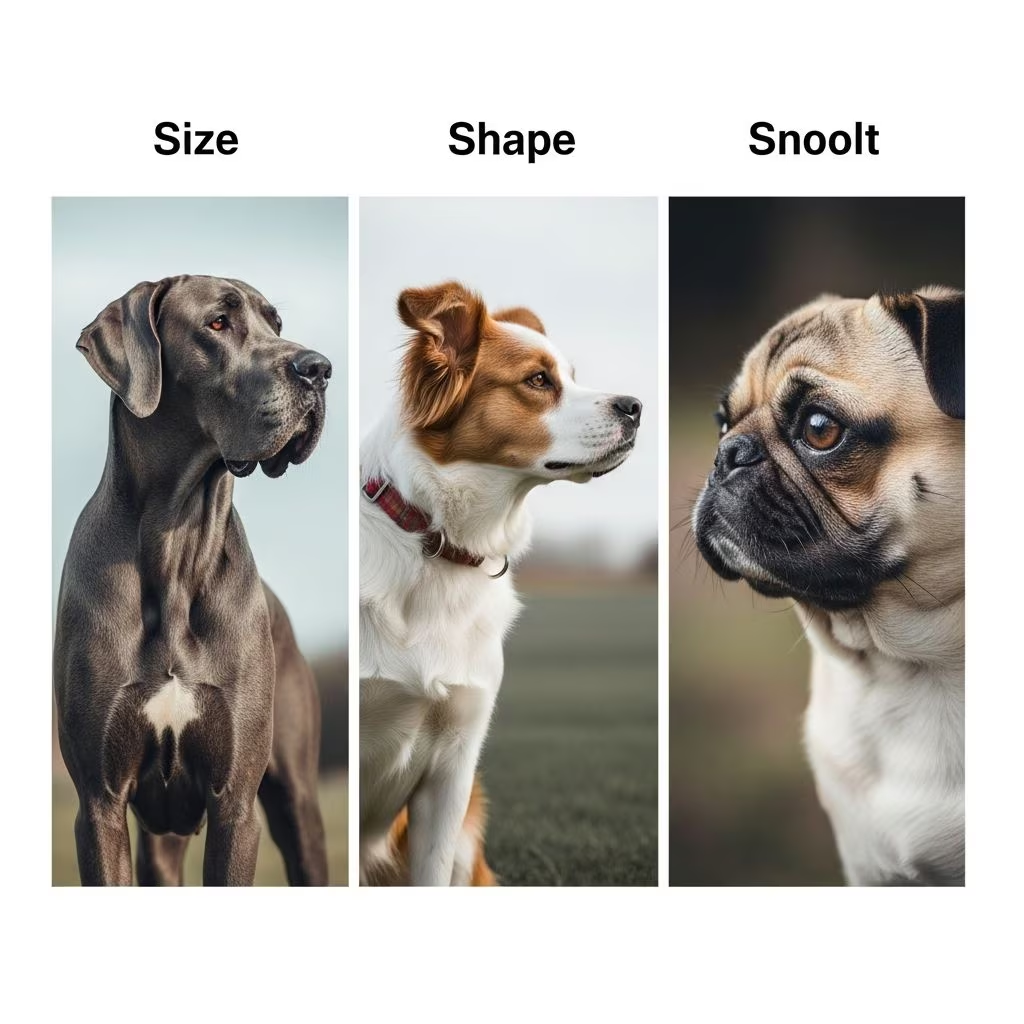
Dogs’ lifespans vary dramatically across breeds, often spanning from under 8 years for giants to over 15 for tiny companions. Key influencers include body size, overall physique, and muzzle structure, as revealed by extensive veterinary studies. Smaller dogs typically enjoy longer lives due to slower aging processes, while lean body conditions and elongated snouts further boost survival odds.
The Size-Lifespan Connection in Canines
Large breeds like Great Danes or Mastiffs often face shorter lifespans, averaging 7-10 years, compared to small breeds such as Chihuahuas or Dachshunds that can reach 15-20 years. This inverse relationship stems from accelerated cellular aging in bigger dogs. Research shows large dogs experience faster telomere shortening—protective chromosome caps that erode with each cell division—leading to earlier genomic instability.
In one analysis of canine fibroblasts, cells from large breeds displayed heightened DNA damage and reduced repair efficiency as they aged, unlike their small-breed counterparts. Telomere attrition occurs roughly 10 times quicker in dogs than humans, mirroring their compressed lifespan ratio, with shorter telomeres correlating to higher cardiovascular mortality risks.
Insulin-like Growth Factor 1 (IGF-1) plays a pivotal role here. Larger dogs maintain elevated IGF-1 levels, fueling rapid growth but hastening metabolic wear. Studies confirm higher IGF-1 in big breeds links to diminished longevity, akin to findings in lab mice where IGF-1 knockdown extends life. Conversely, small breeds’ lower IGF-1 signaling promotes proteostasis—the cellular cleanup of damaged proteins—delaying age-related decline.
| Breed Size Category | Average Lifespan (Years) | Key Aging Factor |
|---|---|---|
| Small (<20 lbs) | 12-15 | Slow telomere loss, low IGF-1 |
| Medium (20-50 lbs) | 10-13 | Balanced growth signaling |
| Large (>50 lbs) | 8-11 | High IGF-1, rapid DNA damage |
Body Condition: The Weighty Impact on Years
Maintaining an ideal body condition score (BCS) profoundly affects dog longevity. Dogs with optimal leanness (BCS 3-4) outlive overweight peers by years. A landmark 14-year trial with Labrador Retrievers demonstrated that puppies fed 25% fewer calories to stay lean had a median lifespan of 13 years, versus 11.2 for unrestricted controls—a 15% extension.
- Lean-fed dogs showed delayed osteoarthritis onset and reduced chronic disease severity.
- No negative skeletal or metabolic effects from controlled feeding.
- Overweight dogs (BCS 5+) had 11.71 years life expectancy at birth, dropping further with age.
Obesity accelerates the 12 hallmarks of aging: mitochondrial dysfunction spikes reactive oxygen species (ROS), overwhelming antioxidants; proteasomes falter, accumulating toxic proteins; and inflammation surges via weakened immunity. Underweight pups (BCS 1-2) fare worse early on, with life expectancies as low as 1.54-3.91 years, though gaps narrow post-maturity.
Facial Structure and Breathing’s Hidden Toll
Brachycephalic (short-nosed) breeds like Bulldogs or Pugs suffer brachycephalic obstructive airway syndrome (BOAS), compressing airways and straining hearts from puppyhood. This chronic hypoxia accelerates aging hallmarks: oxidative stress from constant oxygen deprivation, cellular senescence buildup, and dysbiosis from swallowing disorders.
Studies estimate brachycephalic dogs lose 2-3 years versus dolichocephalic (long-snouted) peers like Greyhounds. BOAS demands extra energy for breathing—up to 25% more calories—fostering obesity and joint strain. Mesocephalic (medium-snout) breeds fall in between. Surgical corrections help but can’t fully reverse inherited anatomy’s drag on vitality.
| Snout Type | Example Breeds | Lifespan Penalty | Main Health Risks |
|---|---|---|---|
| Dolichocephalic (Long) | Saluki, Collie | None (baseline) | Lower BOAS risk |
| Mesocephalic (Medium) | Labrador, Beagle | Minimal | Moderate breathing ease |
| Brachycephalic (Short) | French Bulldog, Boston Terrier | 2-3 years shorter | BOAS, heart strain, overheating |
Mitochondria and Metabolic Pathways in Aging Dogs
Mitochondrial health underpins breed differences. Small-breed fibroblasts exhibit superior respiration, less electron leakage (reducing ROS), and higher capacity, explaining their endurance. Large breeds show contrary patterns: elevated lipid peroxidation, protein carbonyls, and glutathione deficits with age.
Sirtuins (SIRT1) decline faster in large-breed elders, amplifying DNA breaks. Ubiquitin-proteasome system (UPS) falters too—Psmd4 and Psmb8 drop, ubiquitinated proteins pile up in brains—impairing neuron function. Emerging hallmarks like impaired water homeostasis may compound these in brachycephalics prone to dehydration.
Lifestyle Boosters for Extended Canine Vitality
Beyond genetics, modifiable factors amplify lifespan. The Dog Aging Project (DAP), tracking 50,000+ dogs, underscores sociability’s power: social dogs live longer, with owner interactions fivefold outweighing financial stability. Exercise curbs inflammation; tailored nutrition counters metabolic shifts.
- Nutrition: Feed for lean BCS from puppyhood; senior formulas mitigate dysbiosis.
- Activity: Daily walks enhance mitochondrial biogenesis, telomere maintenance.
- Socialization: Playdates reduce stress-induced cortisol, preserving immunity.
- Environment: Stable homes with older owners correlate to healthier aging.
DAP’s genome sequencing of 10,000 dogs identifies variants interacting with lifestyle for aging resilience, aiding vet tools for personalized care.
Breed-Specific Longevity Strategies
Small Breeds: Maximizing the Gift of Time
Leverage their edge with dental vigilance—toy breeds risk periodontal disease—and moderate exercise to prevent patellar luxation. Holistic diets support low IGF-1 benefits.
Large Breeds: Countering Accelerated Aging
Prioritize joint supplements, controlled portions for leanness, and cardiac screenings. Growth-plate mindful puppy feeding tempers IGF-1 surges.
Brachycephalic Breeds: Easing Respiratory Burden
Opt for air-conditioned spaces, harnesses over collars, weight management. BOAS grading informs surgical timing.
FAQs: Dog Longevity Essentials
Why do small dogs live longer than large ones?
Small dogs age slower due to lower IGF-1, better DNA repair, and efficient mitochondria, per cellular studies.
Can diet really add years to my dog’s life?
Yes—a 14-year Labrador study showed 1.8-year gains from lifelong leanness via 25% calorie cut.
Do flat-faced dogs always have shorter lives?
Typically yes, by 2-3 years from BOAS complications, though management helps.
How does socialization affect lifespan?
DAP data: Social support boosts longevity more than wealth, curbing isolation’s inflammatory toll.
What’s the Dog Aging Project?
A NIA-backed study of 50,000+ dogs decoding genes, lifestyle, environment for healthier aging in pets and humans.
Holistic Care for Thriving Senior Dogs
Integrate regular vet checkups tracking BCS, telomere proxies via bloodwork, and mitochondrial markers. Antioxidants like omega-3s combat ROS; probiotics foster gut health. Owners’ roles—puppies socialized early, adults exercised consistently—yield compounding returns.
Cross-species insights abound: Dogs mirror human aging, from IGF-1 to social gradients, positioning them as models for interventions. As research evolves, expect tailored breed therapies extending ‘healthspan’—vital years of play and companionship.
References
- Life expectancy tables for dogs and cats derived from clinical data of 4 million pets — Frontiers in Veterinary Science. 2023. https://www.frontiersin.org/journals/veterinary-science/articles/10.3389/fvets.2023.1082102/full
- Dog Aging – Molecular, Cellular, and Physiological Processes — PMC (NCBI). 2024. https://pmc.ncbi.nlm.nih.gov/articles/PMC11675035/
- What dogs are teaching us about aging — University of Chicago News. Recent. https://news.uchicago.edu/what-dogs-are-teaching-us-about-aging
- 14-Year Life Span Study in Dogs — Purina Institute. Recent. https://www.purinainstitute.com/science-of-nutrition/extending-healthy-life/life-span-study-in-dogs
- Sociability is key to a healthier dog’s life — UW Newsroom. Recent. https://newsroom.uw.edu/blog/dog-aging-project-study-identifies-keys-healthier-life
- Dog Aging Project goal is to help both dogs and humans live longer, healthier lives — National Institute on Aging (NIA). Recent. https://www.nia.nih.gov/news/dog-aging-project-goal-help-both-dogs-and-humans-live-longer-healthier-lives



