

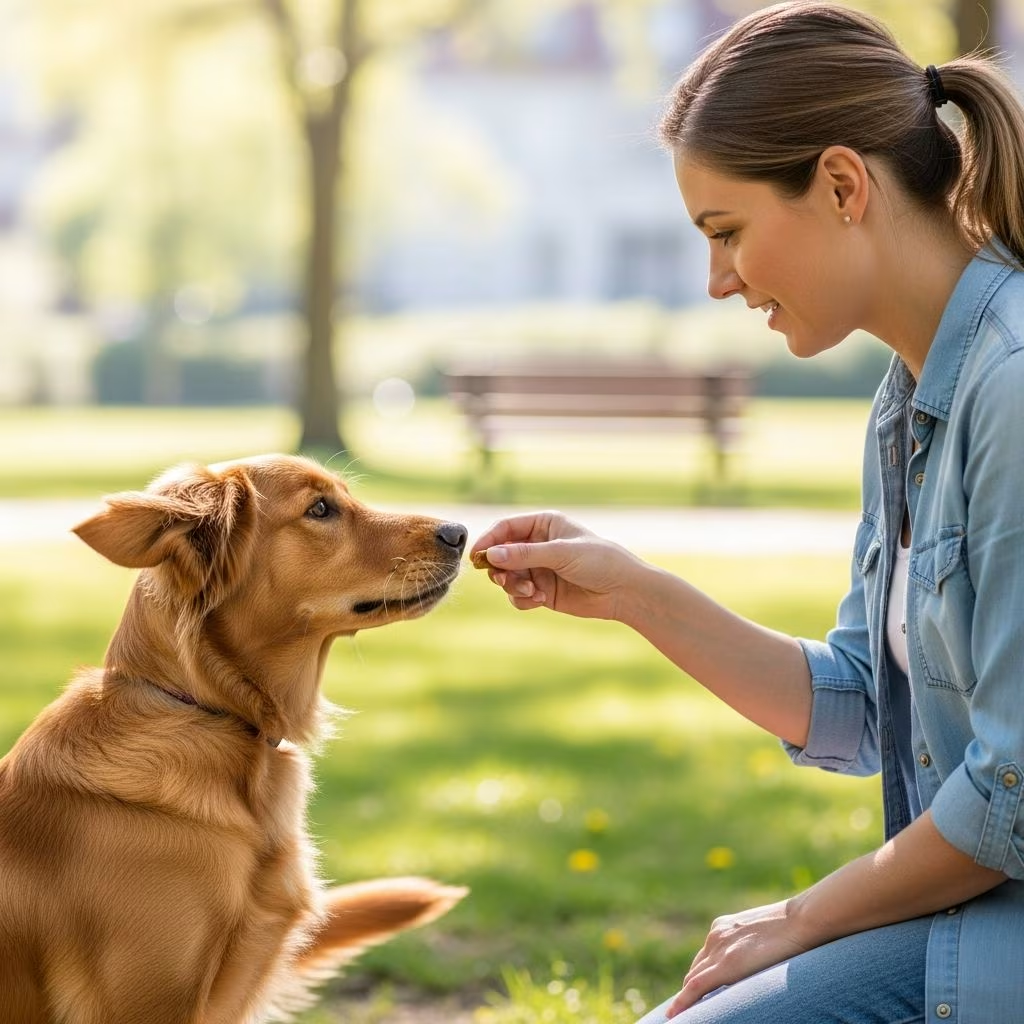
Dogs learn at varying paces depending on biological, environmental, and training-related factors, with basic obedience often taking 6-12 months but advanced skills requiring ongoing practice throughout their lives.
Biological Foundations of Canine Learning
The journey of a dog’s learning ability begins even before birth. Maternal stress during pregnancy can imprint lasting effects on puppies, making them more prone to anxiety in novel situations. Pups from calm mothers tend to adapt quicker to new stimuli, while those from stressed dams may need extra gentle exposure to build confidence.
Nutrition plays a pivotal role in cognitive development. Diets rich in DHA, an omega-3 fatty acid from fish oil, enhance memory, problem-solving, and response times in puppies up to one year old. Studies show these pups not only retain commands better but also execute them with greater enthusiasm during sessions.
Genetics further shape learning trajectories. Breeds like herding dogs excel in tasks requiring quick decision-making, while others shine in scent work or endurance. No breed is universally ‘smarter,’ but inherent predispositions influence how swiftly they grasp specific skills.
Individual Learning Styles and Personalities
Each dog has a unique learning profile, much like humans. Some pick up cues in minutes, others need weeks of repetition. Observing your dog’s reactions helps tailor approaches: food-motivated pups thrive on treats, while playful ones respond to toys.
Sensitivities and stubborn streaks also factor in. A sensitive dog might shut down under pressure, slowing progress, whereas a bold one pushes boundaries but learns resilience faster with firm consistency. Track these traits early to adjust methods.
| Personality Trait | Impact on Learning | Best Strategy |
|---|---|---|
| High Food Drive | Quick initial acquisition | Use meals as rewards |
| Playful/Energetic | Fast with fun cues | Incorporate games |
| Sensitive | Slower in stress | Low-pressure sessions |
| Stubborn | Resistant at first | Consistent repetition |
Core Elements of Training Fluency
Fluency isn’t just about knowing a command—it’s achieving low latency (quick start), high speed (swift execution), and precision (exact form). Dogs with fluent behaviors respond reliably anywhere, anytime.
- Latency: Time from cue to action start. Aim for under 3 seconds; reward instant responses lavishly.
- Speed: How fast the behavior completes. Enthusiastic cues and play rewards boost pace.
- Precision: Accurate positioning. Use markers like clickers to capture perfect moments.
Train one element at a time before combining. For example, perfect latency and speed indoors first, then add precision.
Progressive Training Phases for Lasting Results
Structure training into stages to build unbreakable habits. Start simple, then layer complexity.
- Acquisition: Teach basics in quiet settings with high-value treats. Focus solely on understanding the cue.
- Proficiency: Refine fluency elements in low-distraction zones. Short, frequent sessions keep momentum.
- Generalization: Test in new places, with distractions, and at distances. Consistency across contexts solidifies learning.
- Maintenance: Periodic refreshers prevent fading. Daily life integration ensures habits stick.
Daily Hacks to Accelerate Learning
Incorporate training into routines for exponential gains without extra time.
- Mealtime Magic: Use kibble for recalls, sits, or place stays while preparing food. Puzzle feeders sharpen focus.
- Mini-Sessions: 2-3 minute bursts multiple times daily outperform long hauls. Capitalize on peak attention.
- Routine Pairing: Link cues to daily events, like ‘down’ before leashing. Repetition breeds automaticity.
- Play Integration: Hide treats for searches or tug for quick sits. Fun fuels retention.
- Strong Reinforcers: Match rewards to difficulty; avoid mixed signals by being clear and timely.
Repeat behaviors 20 times per session for habit formation. Even off-leash walks teach—consistent commands 24/7.
Common Pitfalls and How to Avoid Them
Progress plateaus are normal; regressions happen. If stuck, revert two steps back. Rushing leads to confusion; patience speeds overall results.
Distractions derail fluency—start distraction-free. Inconsistent cues confuse; one word, one meaning. Over-rewarding average efforts lowers standards; pay only for excellence.
Breed-Specific Learning Insights
While individuals vary, breed traits guide expectations.
- Herding breeds: Rapid problem-solvers, thrive on variety.
- Retrievers: Steady learners, excel with repetition.
- Hounds: Scent-focused, slower on visual cues.
- Toy breeds: Quick but distraction-prone.
Adapt to strengths: Use scent games for hounds, agility for herders.
Long-Term Learning: A Lifelong Commitment
Basic cues solidify in 6 months to a year, but fluency demands upkeep. Aging dogs learn slower but retain core skills with gentle practice. Lifelong training prevents boredom and behavioral issues.
Socialization complements commands—expose pups to worlds positively for resilient learners.
FAQs
Why does my dog learn some commands fast but others slowly?
Different behaviors tap varied skills; match methods to the task and your dog’s style.
How many sessions per day for fastest progress?
Multiple 2-5 minute sessions beat one long one; integrate into daily life.
Can older dogs learn new tricks quickly?
Yes, with patience; focus on motivation and short bursts.
What if training seems to regress?
Normal—step back, rebuild foundation consistently.
Is breed destiny for learning speed?
No, but it influences; environment and technique matter more.
Master these principles, and your dog will not only learn faster but respond with joy and precision in any scenario.
References
- How Quickly Do Dogs Learn? — Whole Dog Journal. 2023-10-01. https://www.whole-dog-journal.com/training/how-quickly-do-dogs-learn/
- Fluent Dog Behaviors: The Key to Reliable Training — Pet Dog Trainer. 2024-05-15. https://www.petdogtrainer.com/blog/achieving-fluency-in-dog-training-behaviors-mastering-latency-speed-and-precision
- How to Train a Dog Faster: 5 Daily Hacks — Pupford. 2024-02-20. https://pupford.com/blogs/all/how-to-train-dog-faster
- Training & Learning Speed — Pawling Labs. 2023-11-10. https://www.pawlinglabs.com/new-blog/n8sdkw5py3fdnh3n63wh65cxrr78k6
- How to Teach Perfect, Fast Dog Behaviors — Ahimsa Dog Training. 2024-01-05. https://ahimsadogtraining.com/how-to-teach-perfect-fast-dog-behaviors/



