

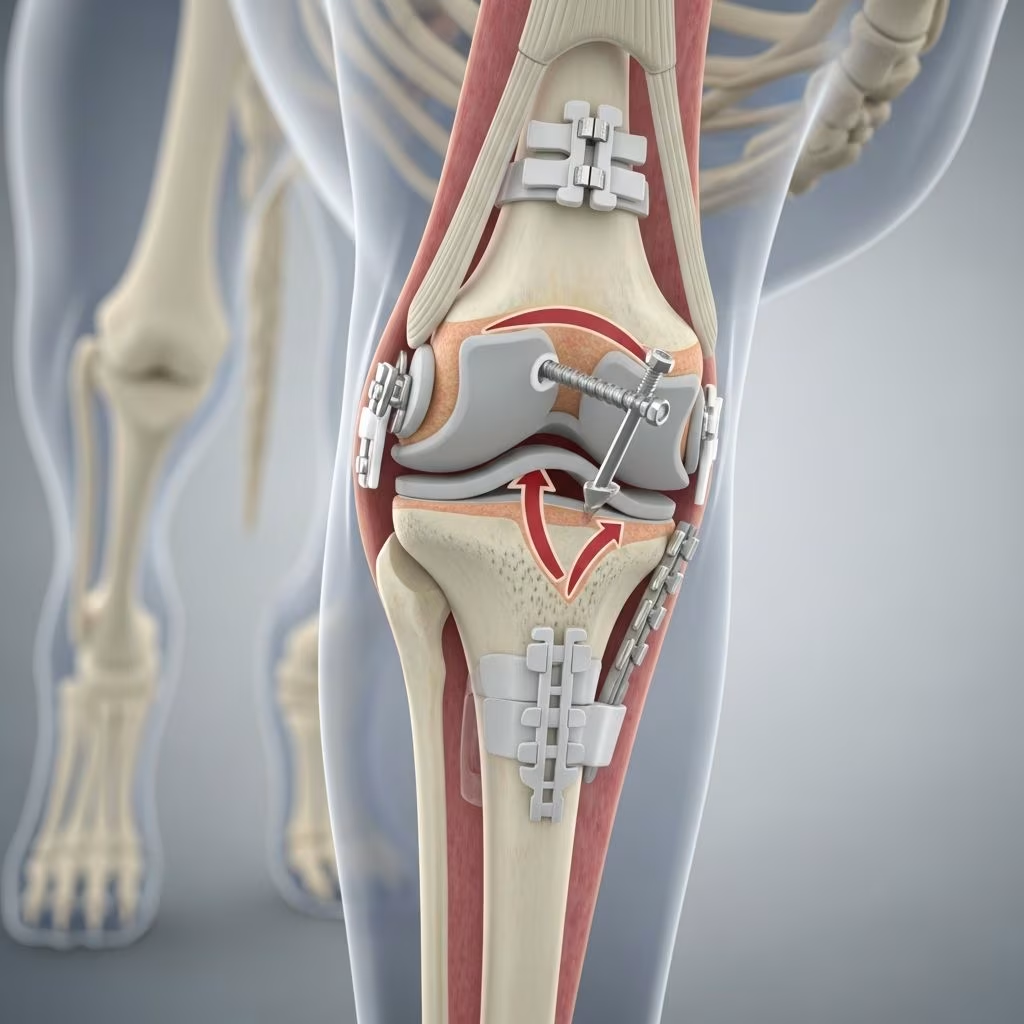
Cranial cruciate ligament (CCL) ruptures represent one of the most prevalent orthopedic issues in dogs, particularly affecting medium to large breeds. Tibial Plateau Leveling Osteotomy (TPLO) surgery stands out as a highly effective treatment that alters knee biomechanics for lasting stability without relying on ligament replacement.
Understanding Canine Knee Anatomy and CCL Function
The dog’s stifle joint, equivalent to a human knee, relies on the cranial cruciate ligament to prevent the femur from sliding forward over the tibia during movement. This ligament maintains joint integrity under load-bearing activities like running or jumping. In dogs, the tibial plateau’s steep slope—often around 30 degrees—creates excessive shear forces, predisposing the CCL to degeneration over time rather than acute trauma seen in humans.[10]
When intact, the CCL counters tibial thrust, ensuring smooth articulation. Degenerative changes, influenced by breed, weight, and activity, weaken the ligament, leading to partial or full tears. Unlike human ACL injuries from sports trauma, canine cases often stem from chronic instability, with 40-60% of affected dogs experiencing bilateral involvement.
Common Causes Behind CCL Ruptures in Dogs
While sudden twists can trigger rupture in some cases, most CCL issues arise from multifactorial degeneration. Obesity accelerates wear by increasing joint stress, while conformational factors like shallow hip sockets or straight stifle angles exacerbate instability. Breeds such as Labrador Retrievers, Rottweilers, and Pit Bulls face higher risks due to genetics and size.
Hormonal influences, early spaying/neutering, and repetitive high-impact activities contribute. Studies indicate that immune-mediated inflammation may play a role in ligament breakdown, distinguishing canine pathology from traumatic human injuries.[10]
Recognizing Symptoms of a Torn CCL
Owners often notice a sudden non-weight-bearing lameness after play, but subtle signs precede full rupture: intermittent limping, difficulty rising, or toe-touching gait. Affected dogs may sit with a hunched posture, resisting stairs or jumps. Chronic cases show muscle atrophy in the thigh and persistent swelling around the joint.
- Sudden “pop” sensation followed by collapse
- Instability when standing on slippery surfaces
- Pain on palpation of the stifle
- Creaking or grinding sounds during flexion
- Progressive hindlimb weakness
Early detection prevents secondary damage like meniscal tears, which complicate 50-70% of chronic ruptures.
Diagnostic Approaches for CCL Injuries
Veterinarians start with a physical exam, including the tibial compression test and cranial drawer maneuver to assess ligament laxity. Radiographs reveal joint effusion, bone changes, or avulsion fractures, though soft tissue visualization requires advanced imaging.
Arthroscopy offers superior accuracy over traditional arthrotomy, using a tiny camera for direct ligament and cartilage inspection with minimal invasion. This method identifies concurrent issues like meniscal damage in real-time.
| Diagnostic Method | Advantages | Limitations |
|---|---|---|
| Physical Exam | Non-invasive, immediate | Subjective, misses partial tears |
| X-rays | Detects arthritis, bone changes | Poor soft tissue detail |
| Arthroscopy | Precise, therapeutic potential | Requires anesthesia, specialized equipment |
Why TPLO Emerges as the Gold Standard Treatment
TPLO surgery revolutionizes CCL repair by neutralizing tibial shear through osteotomy. Surgeons make a radial cut in the tibial plateau, rotate it to a near-zero slope (approximately 5-7 degrees), and secure it with a bone plate and screws. This biomechanical shift eliminates the need for the torn ligament, providing inherent stability.
Unlike extracapsular sutures or TTA, which mimic ligament function, TPLO yields superior outcomes: 94% good-to-excellent owner-reported results, reduced osteoarthritis progression, and faster return to function.
Comparing TPLO with Alternative Surgical Options
Several procedures address CCL disease, each suited to specific profiles.
| Procedure | Best For | Success Rate | Recovery Time |
|---|---|---|---|
| TPLO | Large/active dogs | 94-95% | 12 weeks |
| Lateral Suture | Small dogs <50lbs | 80-85% | 8-12 weeks |
| TTA | Medium dogs | 90% | 10-12 weeks |
| MMP | Variable | 80-85% | 10 weeks |
TPLO excels for dogs over 50 pounds or with advanced degeneration, outperforming others in force plate analyses at 3-6 months post-op.
Step-by-Step Overview of TPLO Procedure
- Pre-op Planning: X-rays determine tibial plateau angle for precise cuts.
- Anesthesia and Approach: Minimally invasive incision exposes the proximal tibia.
- Osteotomy: Specialized saw creates curved cut; plateau rotates clockwise.
- Fixation: Custom plate and screws anchor the segment.
- Concurrent Repairs: Arthroscopic meniscal trimming if needed.
- Closure: Layered suturing; most dogs bear weight within 24 hours.
The 20-30 minute surgery boasts low complication rates under 5% when performed by certified surgeons.
Detailed TPLO Recovery Timeline and Protocols
Recovery spans 12 weeks, emphasizing strict rest to ensure bone healing.
- Weeks 1-2: Crate confinement, short leash walks (5-10 min, 4x/day). Ice/heat therapy, pain meds.
- Weeks 3-8: Gradual increase to 20-30 min walks. Passive range-of-motion exercises.
- Weeks 9-12: Introduce jogging, swimming. Supervised off-leash at week 12.
Re-check X-rays at 8 weeks confirm union. Physical therapy accelerates gains, targeting 90% function by month 3.
Managing Pain and Supporting Healing Post-TPLO
Multimodal analgesia includes NSAIDs, opioids, and gabapentin. Joint supplements like glucosamine aid cartilage health. Weight control prevents overload; hydrotherapy builds strength without impact.
Monitor for complications: infection (rare, <2%), implant issues, or delayed union. Prompt intervention maintains the excellent prognosis.
Long-Term Prognosis and Lifestyle Adjustments
Post-TPLO, 95% of dogs resume pre-injury activities, including agility and hunting. Arthritis may develop but progresses slower than untreated cases. Annual exams track joint health; bilateral surgeries often follow within 6-12 months.
Maintain lean body weight, low-impact exercise, and orthopedic beds to maximize longevity.
Frequently Asked Questions (FAQs)
Is TPLO surgery painful for dogs?
Modern protocols ensure minimal discomfort; most walk same-day with proper meds.
How much does TPLO cost?
Varies by location/size: $3,500-$6,000, including aftercare.
Can small dogs get TPLO?
Yes, though lateral sutures suffice for <30lbs; TPLO ideal for instability.
What if both knees are affected?
Stage surgeries 3-6 months apart; contralateral rupture common.
Will my dog need lifelong meds?
Rarely; occasional NSAIDs for activity-related stiffness.
Preventing CCL Injuries in At-Risk Dogs
Proactive measures reduce incidence: maintain ideal weight (BCS 4-5/9), core strengthening exercises, and joint supplements from middle age. Avoid sudden high-impact on uneven terrain. Genetic screening for predisposed breeds informs breeding.[10]
References
- TPLO Surgery in Dogs | Kansas City Canine Orthopedics — Kansas City Canine Orthopedics. 2023. https://www.kck9ortho.com/services/acl-tplo-shawnee-ks
- Understanding TPLO vs. Lateral Suture: Which Surgery Is Right for Your Pet? — Animal Surgical Center. 2023. https://asc.vet/blog/understanding-tplo-vs-lateral-suture-which-surgery-is-right-for-your-pet/
- CCL Injury and TPLO Surgery in Missoula, MT — Sentinel Veterinary Specialty Emergency. 2023. https://www.sentinelvse.com/services/ccl-tplo-surgery.html
- The differences between TPLO, TTA and MMP cranial cruciate ligament — B. Braun Vet Care. 2023. https://www.bbraun-vetcare.com.au/en/stories/the-differences-between-tplo–tta-and-mmp-cranial-cruciate-ligam.html
- Cruciate Ligament Repair Options for Dogs – Which procedure is best? — Southern Animal Health. 2023. https://www.southernanimalhealth.com.au/whichcruciateprocedureisbest/
- Types of Canine Knee Surgery: What Dog Owners Should Know — Dog Rehab MI. 2023. https://dogrehabmi.com/types-of-canine-knee-surgery-what-dog-owners-should-know/



