

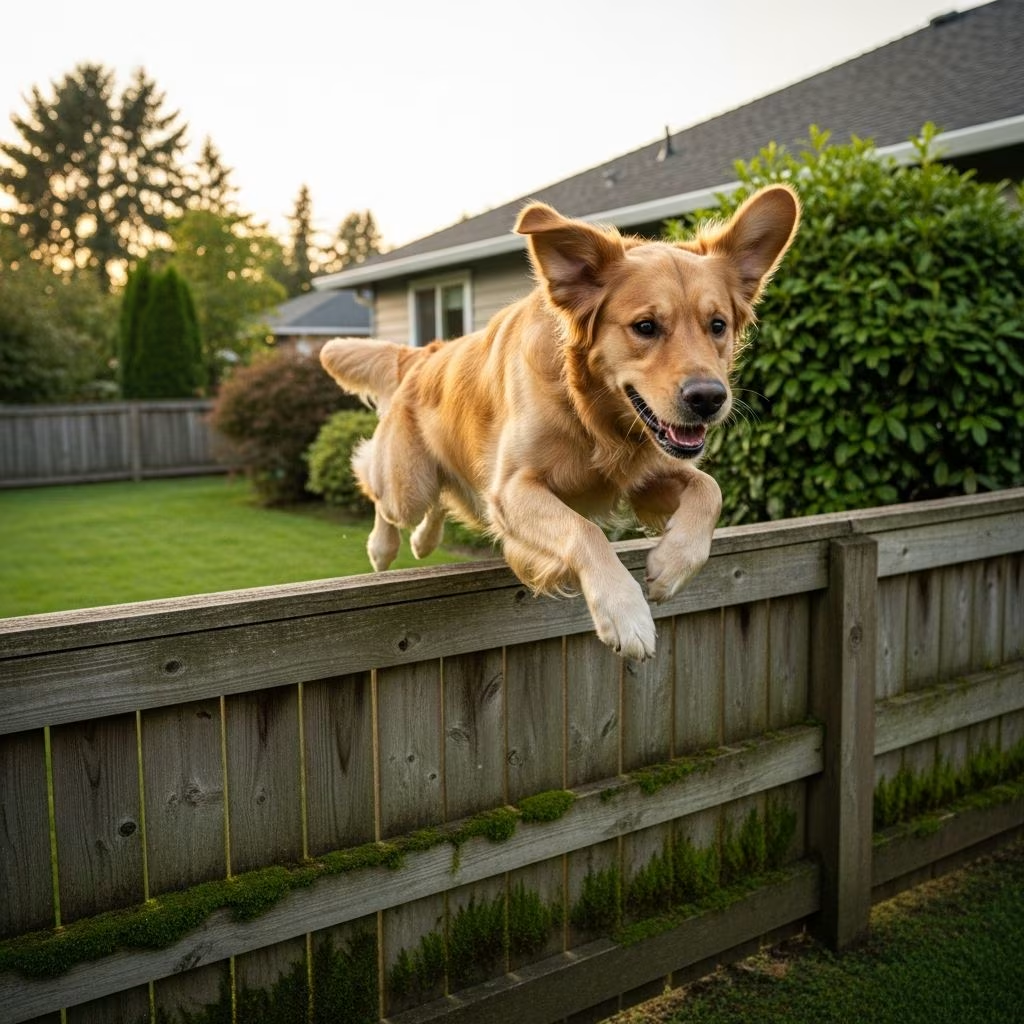
Preventing dogs from jumping fences is essential for their safety and your peace of mind. Escape-prone dogs risk traffic, predators, and other dangers. This guide covers physical modifications, training techniques, behavioral solutions, and more to create a secure yard.
Why Dogs Jump Fences
Dogs jump fences due to high energy, boredom, fear, prey drive, or separation anxiety. Breeds like Border Collies, Huskies, or athletic mixes are more prone. Identifying the root cause helps tailor solutions effectively.
High arousal from squirrels or neighbors can trigger jumps. Anxious dogs may escape to reunite with owners. Reducing triggers through enrichment prevents many incidents.
Physical Fence Modifications
Modifying your existing fence provides immediate containment. These solutions deter climbing and jumping without harming dogs.
Increase Fence Height
The simplest fix is raising fence height to 6-8 feet. Use extension kits with poly mesh or welded wire for chain-link or wood fences. Lattice panels add height aesthetically while blocking views that tempt jumps.
- Fence extenders: Available in 50-400 ft kits, durable for long-term use.
- Solid extensions: Provide privacy, reducing visual triggers.
- Bamboo/reed rolls: Affordable 6-ft height addition for chain-link.
Higher fences work for most dogs, though no height is foolproof for determined jumpers.
Coyote Rollers and Fence Rollers
Coyote rollers are spinning PVC or metal bars on fence tops. Dogs can’t grip as they rotate, preventing leverage for jumps. Effective on chain-link, wood, and metal.
DIY versions use L-brackets, wire, and PVC pipe. Professional installs ensure stability. Users report success with persistent climbers.
- Compatible with most fence types.
- Humane, no shocks or injury.
- Spinning action thwarts grip.
Fence Crowns
Fence crowns are smooth plastic pipes capping fence tops, like those in parks. They eliminate footholds. Combine with rollers for enhanced effect.
Angled and Flat-Top Extensions
Angled extensions slant inward or outward, making clearance difficult. Flat-top adds a perpendicular ledge dogs can’t lean over.
- Inward slant: Prevents backward lean.
- Upward angle: Increases effective height.
Full Cover Fencing and Dog Runs
For extreme cases, roof the enclosure with chain-link or netting. Dog runs are dedicated high-sided pens with optional tops, ideal for yards.
Eliminate Gaps and Digging
Seal gaps under gates and along bottoms. Use L-footers: wire bent into L-shape, staked 8-12 inches out and stapled to fence.
- Chicken wire buried 1-2 ft deep.
- Concrete strips or rocks at base.
- Wide gap barriers for all fence types.
Training Solutions
Training reinforces boundaries and redirects impulses, complementing physical barriers.
Boundary Training
Place flags 18 inches inside fence line, 18 inches apart. Walk leashed dog daily for 4-5 days. Correct strays with verbal \”no\” and e-collar tap, then reward recall.
Commands like \”stay,\” \”leave it,\” and \”come\” build reliability. Positive reinforcement outperforms punishment.
Obedience and Redirect Training
Teach impulse control through games. Reward calm behavior near fence. Daily sessions reduce jumping motivation.
Electronic and Invisible Fencing
Invisible fences bury wire emitting signals to a collar. Audible warnings precede static corrections, deterring approaches.
- Cost: $200-300+ based on yard size.
- Pros: No visual barrier, pairs with physical fences.
- Cons: Doesn’t stop intruders; training required.
Wireless systems add layers for high-jumpers.
Behavioral and Management Solutions
Address underlying causes for long-term success.
Exercise and Mental Stimulation
Tired dogs jump less. Provide 60+ minutes daily vigorous exercise: runs, fetch, agility. Puzzle toys and scent games combat boredom.
Reduce Anxiety and Triggers
Desensitize to triggers gradually. Crate train for separation. Calming aids or vet consult for severe cases.
| Solution Type | Best For | Cost Range | Effectiveness |
|---|---|---|---|
| Height Extensions | Most jumpers | Low-Medium | High |
| Coyote Rollers | Climbers | Medium | Very High |
| Invisible Fence | Boundary training | Medium | Medium-High |
| Dog Run | Persistent escapees | High | Very High |
Frequently Asked Questions
What is the best way to stop a dog from jumping a 4-foot fence?
Add 2-4 ft extensions or coyote rollers. Combine with training for best results.
Are coyote rollers effective for large dogs?
Yes, they work on breeds up to 100+ lbs by eliminating grip, regardless of size.
Can training alone prevent fence jumping?
It helps but pair with physical barriers for reliability, especially for high-drive dogs.
Is invisible fencing safe?
Yes, with proper training; corrections are adjustable static pulses, not harmful shocks.
How do I stop digging under fences?
Install L-footers, bury chicken wire, or add concrete bases.
Implementing multiple strategies creates a robust system. Monitor progress and adjust. Consult professionals for custom installs or behavior issues.
References
- Anti Climb Dog Fence: Top 5 Proven Solutions for 2024 — Pet Playgrounds. 2024-08-23. https://petplaygrounds.com/2024/08/23/anti-climb-dog-fence/
- A Foolproof Guide: How to Stop a Dog from Climbing a Fence — CC SPCA. N/A. https://ccspca.com/blog-spca/education/how-to-stop-a-dog-from-climbing-a-fence/
- Preventing Dogs from Jumping Fences — Alpine Fencing. N/A. https://www.alpinefencing.co/blog/prevent-dogs-jumping-fences-guide
- How To Stop Dog Jumping Fence — K9 Coach. N/A. https://k9coach.dog/blog/fence-training
- Stop Dog from Jumping Fence: Effective Solutions — On Pattison. 2025-09-23. https://onpattison.com/news/2025/sep/23/stop-dog-from-jumping-fence-effective-solutions-every-pet-owner-should-know/
- How to Keep a Dog from Jumping the Fence — Whole Dog Journal. N/A. https://www.whole-dog-journal.com/behavior/how-to-keep-a-dog-from-jumping-the-fence/
- How to Stop a Dog Jumping the Fence — The Dog Line. N/A. https://www.thedogline.com.au/electric-dog-fences-review/stop-a-dog-jumping-the-fence



