

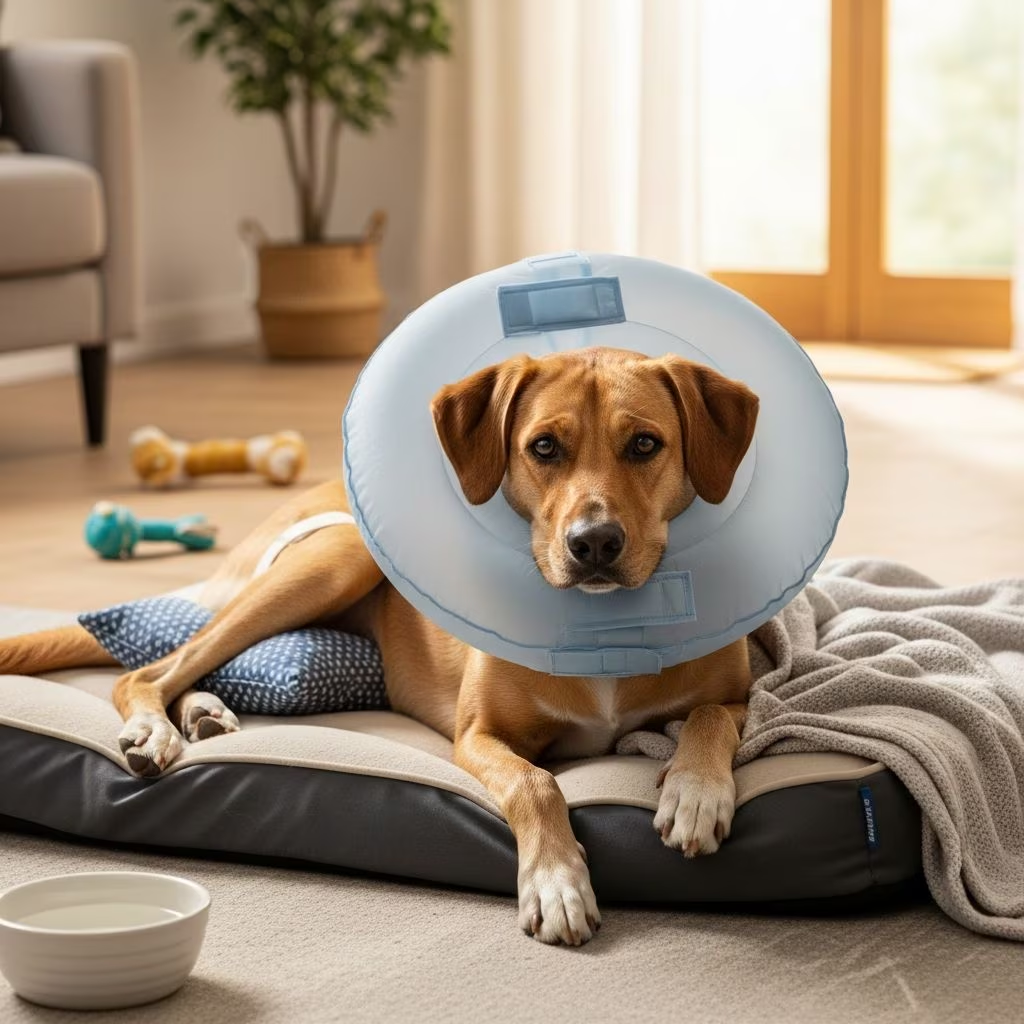
Recovering from hip dysplasia surgery requires careful management to ensure your dog regains mobility and lives pain-free. Common procedures like femoral head ostectomy (FHO), triple pelvic osteotomy (TPO/DPO), and total hip replacement (THR) each have unique recovery paths, typically spanning 4-12 weeks of restricted activity followed by rehabilitation.
Understanding Hip Dysplasia and Surgical Options
Hip dysplasia occurs when the ball-and-socket joint of a dog’s hip doesn’t fit properly, leading to pain, lameness, and arthritis. Surgery becomes necessary when conservative treatments fail. FHO removes the femoral head to eliminate painful bone-on-bone contact, ideal for smaller dogs or those with advanced disease. TPO/DPO realigns the pelvis in young dogs under 10 months to improve joint coverage. THR replaces the entire joint with prosthetics, offering the most natural function for larger breeds.
Choosing the right surgery depends on your dog’s age, size, severity, and health. Post-surgery success hinges on strict adherence to recovery protocols.
Immediate Post-Operative Phase: First 48 Hours
Right after surgery, dogs are monitored in the hospital for 1-3 days. Pain is controlled with medications like NSAIDs and opioids, while staff encourage gentle use of the leg to promote healing. Discharge happens once the dog can stand and walk short distances with assistance.
- Hospital stay: 1-3 days for THR/FHO; shorter for TPO
- Pain management: Multi-modal therapy including meds and monitoring
- Early mobility: Supervised weight-bearing starts day 1
At home, set up a quiet recovery space with non-slip flooring. Use an e-collar to prevent licking the incision.
Week-by-Week Recovery Timelines by Procedure
Recovery varies by surgery type. Here’s a breakdown:
| Procedure | Weeks 1-2 | Weeks 3-6 | Weeks 7-12 | Full Recovery |
|---|---|---|---|---|
| FHO | Crate rest, short leash walks, no jumping | Gradual walk increases, physio intro | Normal activity resume | 6 weeks |
| TPO/DPO | Strict confinement, sling support | Leash walks 5-10 min 3-5x/day | Build to 20-30 min walks | 4-6 weeks |
| THR | Crate rest, bathroom breaks only | X-rays at 6 weeks, controlled exercise | Longer walks, swimming | 3-4 months |
For bilateral cases, surgeries are staged 3-6 months apart.
Home Care Essentials During Confinement
The first 4-6 weeks demand crate rest or small-room confinement. Limit movement to potty breaks on a short leash—no stairs, jumping, or playing. Assist with a sling under the hindquarters for support.
- Incision care: Keep clean and dry; check daily for redness/swelling
- Medication: Administer pain relievers, antibiotics as prescribed
- Comfort: Soft bedding, easy-access food/water
- Hygiene: Gentle cleaning if needed; monitor stool/urine
Weigh your dog weekly to track muscle maintenance. Appetite loss is common; offer bland, nutritious food.
Physical Rehabilitation Strategies
Rehab accelerates healing and prevents muscle atrophy. Start with passive range-of-motion (PROM) exercises: gently flex/extend the hip 10-15 reps, 2-3x daily. Introduce hydrotherapy around week 4 for low-impact strengthening.
- Weeks 1-3: PROM, cryotherapy (ice 10 min 3x/day)
- Weeks 4-8: Underwater treadmill, sit-to-stand drills
- Weeks 8+: Incline walking, balance exercises
Laser therapy reduces inflammation; consult your vet for a certified canine rehab specialist. Consistency yields 20-30% faster mobility gains.
Veterinary Follow-Ups and Monitoring
Regular checkups ensure progress:
- 10-14 days: Suture removal, wound check
- 4-6 weeks: X-rays for bone healing/implant stability
- 12 weeks: Gait analysis, activity clearance
Watch for complications like infection (fever, discharge), luxation (sudden lameness), or implant issues (grinding sounds). Contact your vet immediately if symptoms arise.
Nutrition and Supplements for Optimal Healing
Support recovery with a joint-health diet rich in omega-3s, glucosamine, and chondroitin. Maintain ideal body weight to reduce joint stress—every extra pound adds 4x force on hips.
- Protein: 25-30% for muscle repair
- Anti-inflammatories: Fish oil (EPA/DHA 50-100mg/kg daily)
- Joint supplements: Vet-approved formulas
Common Challenges and Solutions
Restlessness: Puzzle toys and frozen Kongs distract without exertion.
Muscle Loss: Early rehab counters atrophy; most regain mass by 12 weeks.
Pain Spikes: Ice/heat alternation; adjust meds with vet approval.
Boredom: Mental stimulation via training commands from crate.
Patience is key—rushing leads to setbacks.
Long-Term Outcomes and Success Rates
Over 90% of dogs achieve good-to-excellent function post-surgery. THR offers near-normal gait; FHO excels in pain relief for small dogs; TPO prevents arthritis progression. Lifelong low-impact exercise like swimming sustains benefits. Annual checkups monitor for OA.
Frequently Asked Questions
How long until my dog walks normally after hip surgery?
Weight-bearing starts within 1 week; normal walking by 6-8 weeks; full activity 3-4 months for THR, sooner for FHO/TPO.
When can rehab exercises begin?
Gentle PROM day 1-3; structured physio week 4+. Hydrotherapy week 6-8.
Can my dog run and play after recovery?
Yes, most return to off-leash play by 3-4 months with vet OK. Avoid high-impact sports long-term.
What if both hips need surgery?
Stage procedures 3-6 months apart to allow healing.
Are complications common?
Rare (5-10%): Infection, luxation. Early detection via follow-ups minimizes risks.
Preparing Your Home and Lifestyle
Ramp stairs/doors, install baby gates, and stock supplies: slings, e-collars, ice packs. Enlist family for shifts. Budget for rehab ( $50-150/session x 8-12). Emotional support: Many owners join online forums for tips.
With diligence, your dog can thrive post-surgery, enjoying hikes and play pain-free.
References
- Hip Dysplasia Surgery: Cost, Process, and Recovery Explained — Dixah. 2023-05-15. https://www.dixah.com/site/blog/2023/05/15/hip-dysplasia-surgery-cost-process-recovery
- What to Expect During Recovery from Total Hip Replacement in Dogs — Sustainable Vet. N/A. https://www.sustainablevet.org/blog/total-hip-replacement-dogs-recovery
- Hip Dysplasia Surgery in Dogs — PetMD. N/A. https://www.petmd.com/dog/procedure/hip-dysplasia-surgery-dogs
- Post hip surgery recovery and rehabilitation — Royal Canin Academy. N/A. https://academy.royalcanin.com/en/veterinary/physical-rehabilitation-after-hip-surgery
- Dog Hip Dysplasia Surgery – Cost, Process & Recovery — AnimERge. 2022-05-30. https://www.animergevets.com/site/blog/2022/05/30/dog-hip-dysplasia-surgery
- Hip Dysplasia Surgery for Dogs: What to Expect — Heart of Georgia Animal Care. 2024-05-15. https://www.heartofgeorgiaanimalcare.com/site/blog/2024/05/15/hip-dysplasia-surgery-dogs
- Total Hip Replacement — Arizona Canine Orthopedics. N/A. https://www.arizonacanineorthopedics.com/total-hip-replacement.html



