

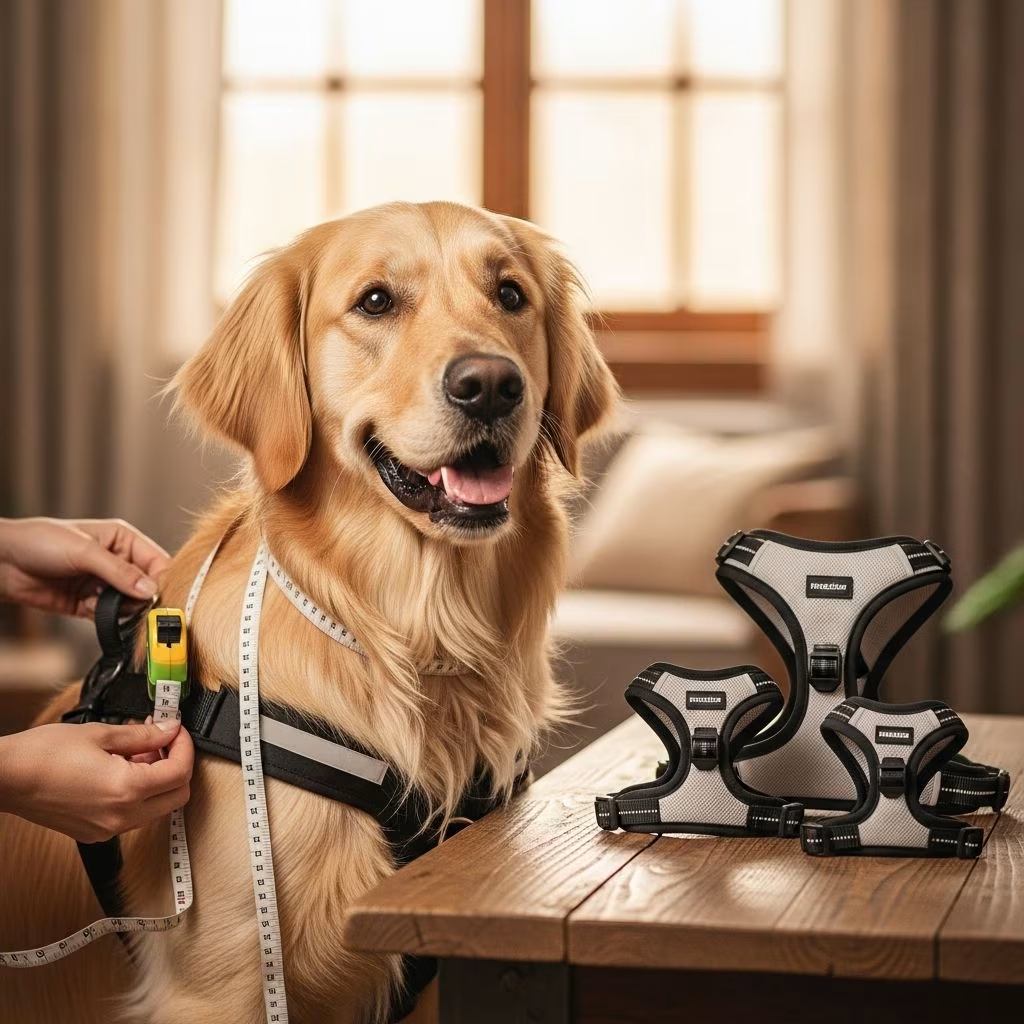
Selecting the appropriate harness for your dog requires more than just guesswork or relying solely on weight recommendations. Dogs come in remarkably diverse body shapes and proportions—a 40-pound Bulldog has an entirely different structure than a 40-pound Greyhound, making accurate measurement essential for comfort and safety. Whether you’re a first-time dog owner or experienced handler, understanding how to properly measure your canine companion ensures the harness will provide appropriate control during walks while maintaining comfort throughout the day.
Why Accurate Measurement Matters
A harness that doesn’t fit correctly can cause discomfort, chafing, or even injury to your dog. Conversely, an oversized harness may slip off or fail to provide proper control during walks. The difference between a good fit and a poor one often comes down to precise measurements taken with proper technique. When a harness fits correctly, you should be able to fit two fingers comfortably between the harness and your dog’s body, providing adequate room without excessive looseness[10]. Taking time to measure accurately prevents costly mistakes and ensures your investment in quality gear actually works as intended.
Essential Tools for Measurement
Before beginning the measuring process, gather the appropriate equipment. A soft fabric measuring tape is the gold standard for this task, offering flexibility and accuracy. However, many households don’t have tailoring supplies readily available. Fortunately, alternatives work equally well: a piece of string, rope, or even your dog’s leash can serve as measuring tools. If using string or rope, simply mark the point where the material comes full circle around your dog’s body, then use a standard ruler or measuring tape to determine the precise length. The key is ensuring whatever you use can conform to your dog’s body contours without adding unwanted tension.
Preparing Your Dog for Measurement
Successful measurement begins with preparation. Your dog should be standing comfortably in their natural position—not stretched out, crouching, or otherwise positioned unnaturally. For dogs with longer or fluffier coats, gently brush the fur away from the measurement area so the tape sits close to skin level rather than the outer coat. This prevents overestimating the size needed. Have treats available to keep your dog calm and cooperative during the process. Most dogs become accustomed to this routine quickly, especially if you make it a positive experience. Choose a time when your dog is relaxed and not overly energetic, as this ensures the most accurate reading.
Taking the Girth Measurement
The girth measurement—taken around the widest part of your dog’s chest—is the most critical measurement for harness sizing. Locate this point just behind your dog’s front legs, where the rib cage is most prominent. Wrap your measuring tape horizontally around this section of your dog’s body, pulling snug enough that the tape doesn’t sag but not so tight that it compresses the chest. The tape should sit snugly against the skin without puckering the fur or creating pressure marks. Write down this measurement in inches, as this will be your primary reference point when consulting sizing charts.
Neck Measurement Considerations
While girth is the primary measurement, some harness styles require a neck measurement as well. To measure the neck, locate the point just below where your dog normally wears a collar—essentially where the collar sits naturally on the neck. Wrap the measuring tape around this area without excessive tightness. For collar-style harnesses or those with neck straps, understanding your dog’s neck circumference ensures straps won’t ride up or slip down during wear. Feel for your dog’s shoulder blades to confirm you’re measuring at the correct location if you’re uncertain.
Understanding Sizing Chart Variations
Different manufacturers use different sizing systems, which can be confusing when shopping across brands. Some use simple size designations like Small, Medium, and Large, while others employ additional gradations such as XXSmall or XLarge. Standard girth ranges for common sizes typically include:
- XXSmall: 8-10 inches girth (approximately 5 lbs)
- Small: 13-23 inches girth (approximately 10-25 lbs)
- Medium: 18-29 inches girth (approximately 55 lbs)
- Large: 22-39 inches girth (approximately 75 lbs)
- XLarge: 36-42 inches girth (larger breeds)
However, these ranges can vary significantly between manufacturers, making it essential to consult the specific brand’s sizing chart rather than assuming consistency across companies. Always check multiple measurements against the size range rather than selecting based on size name alone.
Size Selection When Between Measurements
Often, your dog’s measurement will fall between two size categories. In these situations, general guidance recommends selecting the larger size. A slightly loose harness is preferable to one that’s too tight, as you can adjust straps for a better fit. Additionally, if your dog has a thick coat, broader chest, or wider underside, sizing up prevents the harness from fitting too snugly once your dog is fully clothed in fur. Growing puppies especially benefit from sizing up slightly, as they’ll quickly outgrow smaller sizes.
Verifying the Fit After Purchase
Once your new harness arrives, verify the fit matches your expectations. When properly fitted, you should be able to insert two fingers between the harness material and your dog’s body[10]. This spacing provides comfort while maintaining necessary control. The harness should not cause chafing, rubbing, or visible skin irritation. Check that straps are adjusted so they don’t slide during movement but also don’t restrict breathing or natural gait. Some harnesses feature multiple adjustment points, allowing fine-tuning beyond just the overall size selection.
Measurement Alternatives and Tricks
If you already own a harness that fits your dog well, you can measure the existing harness instead of measuring your dog directly. This works particularly well if your dog is anxious about measurement or when shopping for a replacement from the same brand. Additionally, some manufacturers suggest measuring specific body areas slightly differently—for instance, some recommend starting measurement about 1 inch behind the front leg and ending about 1 inch behind the other front leg. These nuanced approaches all aim at capturing the widest point where the harness will sit.
Accounting for Growth and Changes
Puppies grow rapidly, potentially outgrowing a harness within weeks or months. When sizing a puppy harness, consider their projected adult size rather than their current measurements. If exact projections prove difficult, many recommend choosing the next size up to extend the harness’s useful lifespan. Adult dogs may also experience weight fluctuations due to seasonal changes, dietary adjustments, or aging. Periodically reassess harness fit, especially if you notice your dog’s body composition changing. A harness that fit perfectly six months ago might need readjustment or replacement depending on how much your dog’s girth has changed.
Common Measurement Mistakes
Several errors can undermine accurate measurement. Measuring while your dog is sitting or lying down produces inaccurate results—always measure with your dog standing naturally. Pulling the tape too tightly compresses the chest and overestimates how snug the harness should fit, leading to overly tight choices. Conversely, leaving too much slack in the tape results in purchasing an oversized harness. Measuring over a thick coat rather than close to skin level adds unwanted inches to your measurement. Finally, measuring the wrong body area—such as directly behind the armpits rather than at the widest point of the rib cage—yields results that don’t align with manufacturer specifications.
Harness Type Considerations
Different harness styles may require slightly different measurement approaches. Standard over-the-back harnesses prioritize chest girth measurements, while front-clip harnesses designed to reduce pulling might emphasize slightly different fitting points. No-pull harnesses sometimes feature additional straps that require more precise measurements to function correctly. Some specialty harnesses for activities like hiking or water sports incorporate packs or attachment points that influence fitting requirements. Consulting the specific manufacturer’s guidance for your chosen harness style ensures you’re measuring at the appropriate body locations for that particular design.
Professional Fitting Assistance
If you’re uncertain about your measurements or your dog proves particularly difficult to measure, many pet retailers offer in-store fitting services. Professional staff can measure your dog using proper technique and help select the best size from available inventory. This service often costs nothing and prevents purchasing errors. Additionally, customer support teams at major harness manufacturers typically respond to measurement questions, helping you select the correct size if you’re caught between options.
FAQs About Dog Harness Sizing
Can I size a harness based on my dog’s weight alone?
Weight provides one data point but shouldn’t be your only consideration. Dogs of identical weight can have vastly different body structures, making chest girth a far more reliable measurement than pounds alone.
What if my dog has an unusual body shape?
Dogs with barrel chests, narrow chests, or other non-standard proportions should be measured carefully at the widest point of their rib cage and compared against multiple sizes on the chart. When in doubt, consult manufacturer customer service with your specific measurements.
How often should I remeasure my dog?
Puppies should be remeasured monthly during growth phases. Adult dogs benefit from annual reassessment or whenever significant weight changes occur. Senior dogs may require remeasurement if they lose muscle mass or gain weight.
Should the harness touch my dog’s skin directly?
The harness typically sits over fur, not directly on skin. However, ensure the material doesn’t pinch or create pressure marks even when sitting over the coat.
What’s the difference between girth and other measurements?
Girth measures circumference around the body, while length measurements (like back length) measure from point to point along the spine. Most harnesses prioritize girth for sizing purposes.
References
- Harness Sizing Guide — Rex Specs. Accessed January 2026. https://www.rexspecs.com/pages/harness-sizing-guide
- How to Measure Your Dog to Determine Which Size Easy Walk Harness is Needed — PetSafe Support. https://support.petsafe.net/articles/how-to-measure-your-dog-to-determine-which-size-easy-walk-harness-is-needed/
- How to Measure for a Dog Harness, Size Chart Included — Kurgo. https://www.kurgo.com/how-to-measure-your-dog-3-easy-steps
- Dog Harness Sizing Chart — PetSmart Help. https://www.petsmart.com/help/sizing-charts-H0012d.html
- The Size is Right: How to Measure for Your Dog’s Gear — Ruffwear Blogs. https://ruffwear.com/blogs/explored/the-size-is-right-how-to-measure-for-your-dogs-gear
- Want to Learn How to Choose the Right Harness for Your Dog? — Coastal Pet Blog. https://www.coastalpet.com/blog/want-to-learn-how-to-choose-the-right-harness-for-your-dog/
- How To Size Your Dog For A Dog Harness, Coat, Vest, Packs, Apparel — YouTube. https://www.youtube.com/watch?v=uCnrh8N6MTo



