

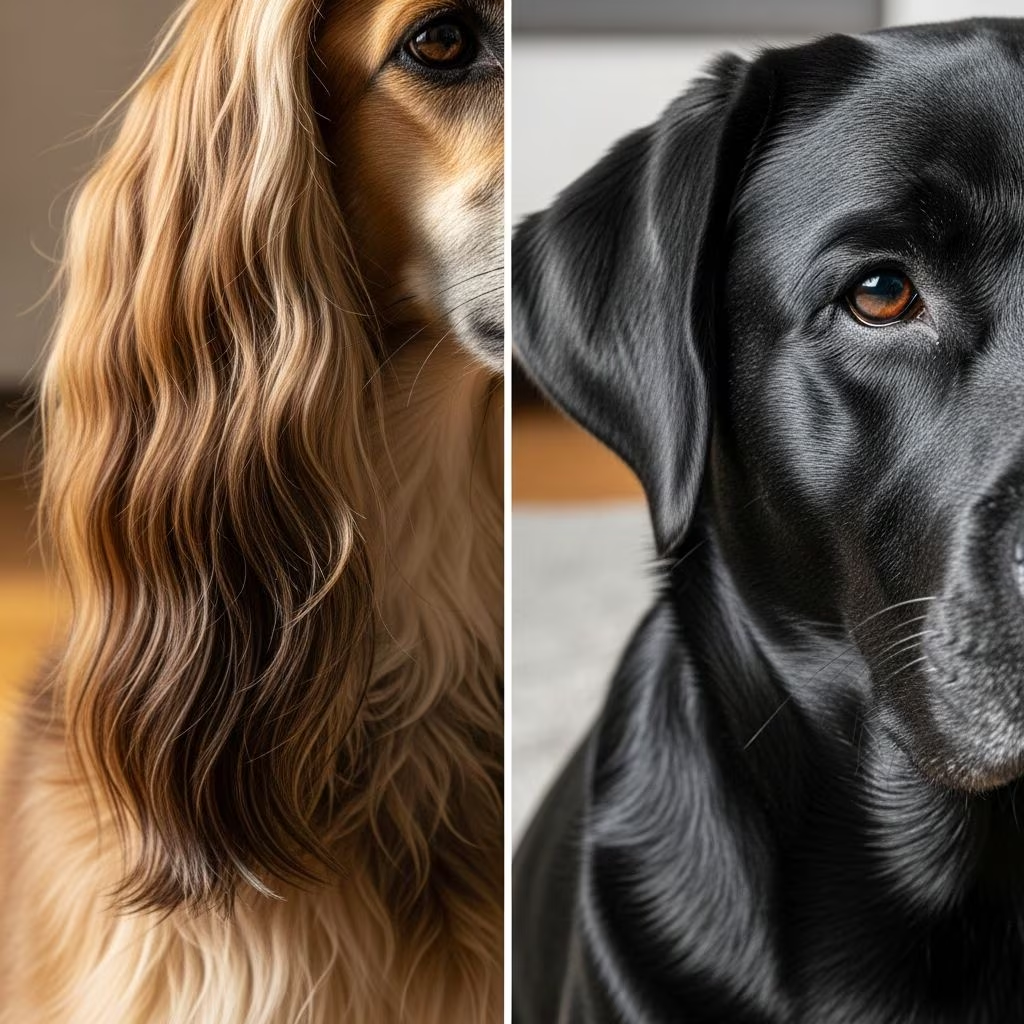
Understanding whether your dog has hair or fur is crucial for effective grooming, managing shedding, and addressing allergies. Both are composed of keratin, but their growth cycles, textures, and maintenance needs vary significantly, influencing daily care routines.
Understanding Canine Coat Composition
Dog coats serve multiple purposes, including protection from elements, temperature regulation, and sensory functions. At a biological level, hair and fur originate from the same protein structure but diverge in development and function. Coats can be single-layered or double-layered, with the latter featuring a dense undercoat for insulation and a protective outer layer.
- Keratin Foundation: Both hair and fur derive from keratin, the tough protein also found in human hair and nails, providing durability and flexibility.
- Follicle Density: Fur coats often have higher follicle density, contributing to thickness and seasonal adaptability.
- Layering Variations: Single-layer hair grows uniformly, while fur typically includes guard hairs over softer undercoat fibers.
Growth Patterns: Continuous vs Cyclical
The most defining distinction lies in growth behavior. Hair follows an undetermined length pattern, continuing to elongate until trimmed or broken, akin to human scalps. Fur, conversely, reaches a predetermined length and enters a resting phase, promoting regular turnover.
| Aspect | Dog Hair | Dog Fur |
|---|---|---|
| Growth Cycle | Long anagen phase (up to years); minimal shedding | Short anagen (months); frequent telogen shedding |
| Length Potential | Undetermined (UDL) – keeps growing | Predetermined (PDL) – stops at set length |
| Shedding Frequency | Low, year-round minimal loss | High, especially seasonal “blowing coat” |
These cycles impact not just appearance but also how often owners must intervene with tools or professional services.
Texture and Appearance Variations
Visual and tactile differences help identify coat types quickly. Hair tends toward finer, silkier strands that may wave or curl, while fur appears coarser, denser, and often straighter in guard hairs. Double-coated fur provides a plush feel, particularly before shedding seasons.
- Hair Traits: Fine, wavy/curly, single-layer, prone to tangling without care.
- Fur Traits: Dense, short-to-medium, layered, self-regulating length.
Texture influences grooming: silky hair mats easily, demanding detanglers, whereas wiry fur benefits from deshedding shampoos.
Breed Examples by Coat Type
Breeds are selectively bred for specific coat traits, making breed knowledge a reliable identifier. Hair breeds suit allergy sufferers due to reduced dander dispersion, while fur breeds excel in harsh climates.
Hair-Dominant Breeds
- Poodle: Curly, dense hair requiring clips every 4-6 weeks.
- Shih Tzu: Long, flowing single-layer hair, needs daily brushing.
- Yorkshire Terrier: Fine, silky coat prone to mats if neglected.
- Bichon Frise: Soft, curly hair with low-shed properties.
Fur-Dominant Breeds
- Golden Retriever: Double coat with heavy seasonal sheds.
- Siberian Husky: Thick undercoat for cold endurance, blows twice yearly.
- Labrador Retriever: Short, dense fur needing weekly brushes.
- German Shepherd: Wiry outercoat over fluffy underlayer.
These examples illustrate how coat type aligns with breed purpose and owner lifestyle.
Grooming Strategies Tailored to Coat Type
Effective grooming prevents health issues like hotspots or matting. Hair coats demand consistent brushing and conditioning to maintain flow, while fur requires undercoat removal to avoid clumping.
- Daily Brushing: Essential for hair to prevent knots; use slicker brushes.
- Deshedding Tools: Ideal for fur during spring/fall; undercoat rakes reduce loose hairs.
- Bathing Frequency: Hair: Monthly with moisturizers; Fur: As needed, focus on de-shed formulas.
- Professional Cuts: Hair breeds every 1-2 months; Fur rarely needs styling.
Consult groomers for breed-specific advice, as improper tools can damage follicles.
Shedding Dynamics and Seasonal Changes
Fur shedding peaks biannually as dogs adapt to temperature shifts, releasing undercoat in masses. Hair sheds minimally and evenly, trapped better within the coat. Environmental factors like diet and stress influence intensity.
- Seasonal Blow: Fur dogs lose 20-50% undercoat in weeks.
- Year-Round Management: Vacuuming, lint rollers aid fur owners.
- Nutrition Boost: Omega fatty acids support coat health, reducing excessive loss.
Regular care minimizes home mess and skin irritation.
Allergies: Hair, Fur, and Dander Realities
Allergies stem primarily from dander (dead skin flakes), saliva, and urine proteins, not coat type alone. However, hair coats shed less dander externally, earning “hypoallergenic” labels for breeds like Poodles. Fur’s density traps then releases more allergens during sheds.
- Lower Risk with Hair: Less shedding disperses fewer particles.
- Fur Challenges: Seasonal blows exacerbate symptoms.
- Mitigation Tips: Frequent baths, air filters, grooming reduce exposure.
No dog is truly allergen-free; testing with the individual pet is key.
Health Implications of Coat Maintenance
Neglected coats lead to dermatitis, parasites, or overheating. Hair requires anti-matting vigilance; fur needs circulation to prevent trapped moisture. Monitor for bald spots or excessive itch signaling issues.
| Issue | Hair Coats | Fur Coats | Solution |
|---|---|---|---|
| Matting | High risk | Moderate | Detangler sprays, combs |
| Overheating | Low | High in double coats | Shaving (caution: regrowth issues) |
| Parasites | Visible on fine hair | Hidden in density | Monthly preventives |
Balanced care promotes shiny, healthy coats.
Common Myths About Dog Coats
Several misconceptions persist. Technically, all canine coverings are “hair,” but “fur” colloquially describes short, shedding types. Shaving double coats harms insulation; opt for brushing instead.
- Myth: Hair Dogs Never Shed. They do, just less visibly.
- Myth: All Hair Breeds Are Hypoallergenic. Varies by dander production.
- Myth: Fur Grows Back Faster Post-Shave. Often coarser, less effective.
Choosing the Right Dog for Your Lifestyle
Coat type informs compatibility. Low-maintenance families favor short-fur breeds; allergy-prone homes select hair types. Consider time for grooming, vacuuming tolerance, and climate.
For apartments: Hair breeds like Malteses. Active outdoors: Fur breeds like Labs thrive with brushing routines.
Frequently Asked Questions (FAQs)
Can you tell hair from fur by touch?
Yes, hair feels finer and silkier; fur denser with possible undercoat softness.
Do hair dogs make better pets for allergies?
Often, due to lower dander shedding, but individual testing is essential.
How often should I groom a double-coated dog?
Weekly brushing, daily during sheds; baths bi-monthly.
Is shaving safe for fur coats?
Avoid for double coats; disrupts natural insulation.
What if my mixed-breed dog’s coat is unusual?
Observe growth and shedding; consult a vet or groomer for hybrid traits.
References
- Dog Hair vs. Dog Fur: What’s the Difference? — Timberdog. 2023. https://timberdog.com/blogs/all-blogs/dog-hair-vs-dog-fur-what-s-the-difference
- Dogs With Hair vs Fur | Difference Between Dog Hair and Fur — Whole Dog Journal. 2023-10-01. https://www.whole-dog-journal.com/care/grooming/does-your-dog-have-hair-or-fur/
- What is the difference between dog’s fur & hair? — Pride+Groom. 2023. https://prideandgroom.com/blogs/dog-grooming-tips-blog/what-is-the-difference-between-dog-s-fur-hair
- Dog Hair vs Fur: What’s the Difference? — Four Paws. 2024. https://www.fourpaws.com/pets-101/grooming-gateway/dog-hair-vs-fur
- Do Dogs Have Hair or Fur? And How Can I Tell? — Splash and Dash for Dogs. 2023. https://splashanddashfordogs.com/blog/dogs-hair-fur-can-tell/
- How to Tell If Your Dog Has Hair or Fur — DoggieLawn. 2023. https://doggielawn.com/blogs/blog/how-to-tell-if-your-dog-has-hair-or-fur
- Do Dogs Have Hair or Fur? — American Kennel Club (AKC). 2024-01-15. https://www.akc.org/expert-advice/health/dogs-hair-fur-grooming/



