

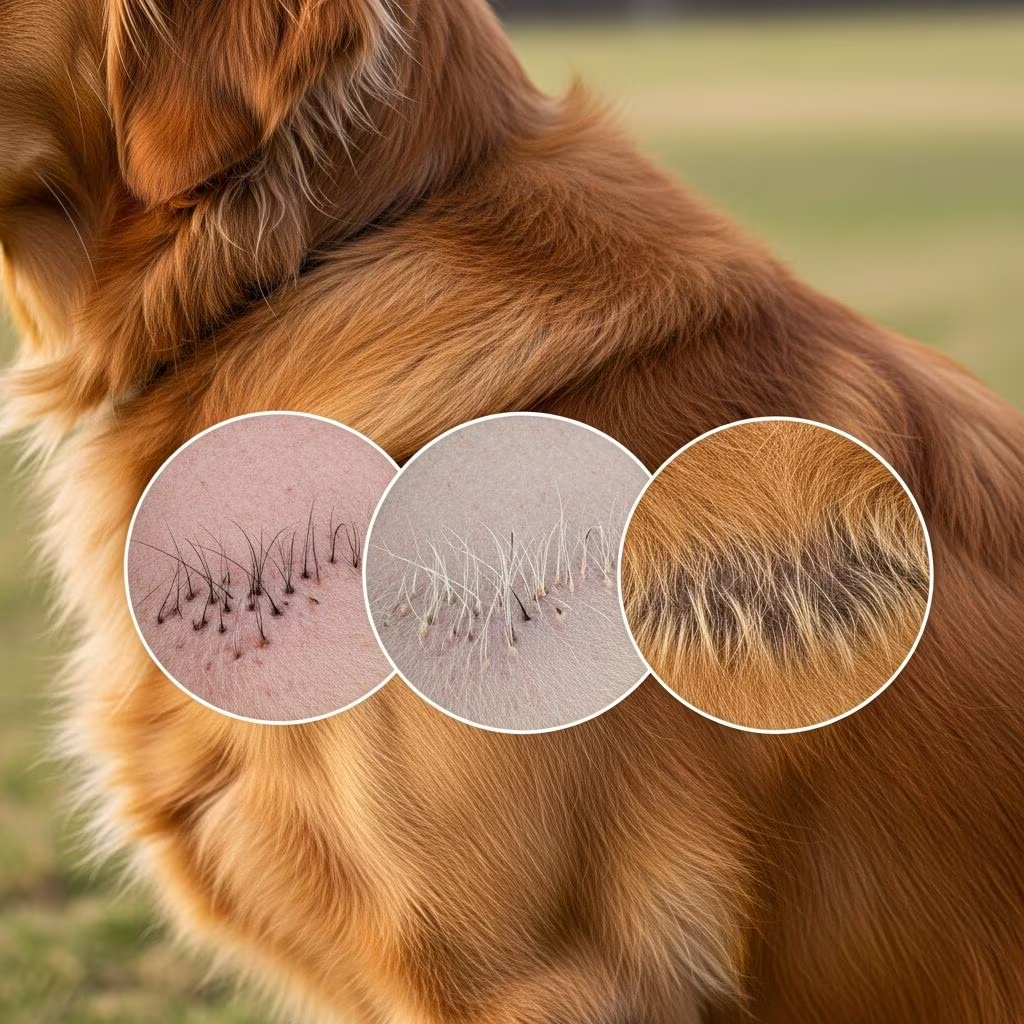
Dog hair regrowth typically takes 3 to 6 months to reach noticeable length, but full recovery to pre-loss thickness and texture can extend to 12 months or more, depending on breed, health, and care practices. Unlike human hair, canine coats follow a cyclical pattern with distinct phases that influence speed and uniformity of new growth.
Understanding the Canine Hair Growth Cycle
Canine hair does not grow continuously; it cycles through four key stages: anagen (active growth), catagen (transition), telogen (resting), and exogen (shedding). This process ensures the coat renews itself while adapting to environmental needs.
- Anagen Phase: Follicles produce new hair at a rapid rate, determining ultimate coat length. Breeds like Afghan Hounds remain here for 2-6 months or longer, yielding extended coats.
- Catagen Phase: Growth halts as the follicle shrinks and detaches from its blood supply; this brief 2-3 week period prepares for rest.
- Telogen Phase: Hair rests dormant yet anchored, lasting 3-4 months; medium-length coat breeds spend the most time here, explaining slower regrowth after clipping.
- Exogen Phase: Old hairs release, allowing new ones to emerge; often synced with seasons in double-coated breeds.
Disrupting this cycle, such as through shaving, forces follicles into telogen prematurely, delaying visible regrowth until new anagen phases activate across the coat.
Factors Affecting Regrowth Speed and Quality
Several variables dictate how quickly and evenly a dog’s hair returns. Genetics play the primary role, but nutrition, age, and health can accelerate or hinder progress.
| Factor | Impact on Regrowth | Examples |
|---|---|---|
| Breed Genetics | Long anagen = faster/longer growth; long telogen = slower | Poodles (continuous growth) vs. Huskies (seasonal cycles) |
| Age | Puppies regrow quickest; seniors slower due to extended telogen | Pups: 4-8 weeks to 1 inch; Seniors: 6+ months |
| Nutrition | Protein, omegas, vitamins fuel follicles | Deficiencies cause thin, patchy regrowth |
| Health/Stress | Hormonal issues prolong telogen | Thyroid imbalance leads to dull, slow coats |
| Season/Environment | Daylight triggers cycles; indoor life reduces seasonality | Winter thickens coats via melatonin |
Double-coated breeds like German Shepherds or Samoyeds face unique challenges: guard hairs grow slowly, while undercoats cycle rapidly, often resulting in uneven regrowth that prioritizes insulation over aesthetics.
Regrowth Timelines by Coat Type and Breed
Expect initial stubble within 1-2 weeks, visible fuzz by 4-6 weeks, and 1-inch length in 2-4 months for most dogs. Full restoration varies widely.
- Single-Coated Breeds (e.g., Poodles, Yorkies): Continuously growing hair returns steadily in 3-6 months; regular trimming maintains shape without long telogen delays.
- Double-Coated Breeds (e.g., Huskies, Retrievers): Undercoat regrows in 4-8 weeks, but guard hairs may take 12+ months; shaving can cause permanent texture changes.
- Wire/Wiry Coats (e.g., Terriers): Prolonged telogen means 6-12 months for wiry texture; clipping often yields softer regrowth initially.
- Short-Haired Breeds (e.g., Beagles, Labs): Quickest recovery at 2-4 months to functional length; minimal visual change post-shave.
For shaved dogs, patience is key—rushing with harsh products irritates follicles, extending timelines.
Promoting Faster, Healthier Hair Regrowth
Support the cycle with targeted care to minimize telogen duration and optimize anagen.
- Balanced Diet: Prioritize high-quality protein (25-30% of calories), omega-3/6 fatty acids (fish oil), and vitamins A, E, biotin. These nutrients reach follicles via blood, enhancing growth rates.
- Grooming Routine: Brush daily to stimulate circulation and remove dead hairs, preventing matting that blocks new growth. Use slicker brushes for undercoats.
- Supplements: Vet-approved options like linatone or omega blends reduce shedding by 30-50% during regrowth.
- Skin Health: Moisturize with hypoallergenic shampoos; avoid overbathing, which strips natural oils.
- Environmental Adjustments: Maintain 68-72°F indoors to stabilize hormones; full-spectrum lighting mimics natural photoperiods.
Professional grooming every 4-6 weeks prevents overload on regrowing follicles, ensuring even development.
Common Causes of Delayed or Abnormal Regrowth
If hair stubs at 1/4 inch or grows patchy after 3 months, underlying issues may stall the cycle.
- Alopecia: Symmetrical loss from allergies or demodex mites disrupts anagen.
- Hormonal Disorders: Hypothyroidism extends telogen, causing dull, thin coats.
- Post-Shave Issues: Razor burn or infection inflames follicles, mimicking prolonged catagen.
- Nutritional Gaps: Zinc deficiency (common in Huskies) leads to color dilution and slow growth.
Consult a vet for biopsies if regrowth lags; early intervention restores cycles effectively.
When Shaving Is Okay—and When to Avoid It
Shaving single-coated breeds is low-risk for quick regrowth, but double-coats risk ‘coat blowout’—failure to regrow guard hairs properly, exposing skin to sunburn and temperature extremes. Opt for de-shedding tools like Furminators instead.
FAQs on Dog Hair Regrowth
1. How long after shaving will my dog have hair again?
Stubble in 1-2 weeks, 1/2 inch by 1 month, full length in 4-12 months per breed.
2. Why does my shaved double-coated dog’s hair grow back softer?
Guard hairs take longest; undercoat dominates initially, altering texture temporarily.
3. Can I speed up regrowth with home remedies?
Nutrition and brushing help most; avoid unproven oils that clog follicles.
4. Is seasonal shedding normal during regrowth?
Yes, exogen phases sync with spring/fall, overlaying recovery.
5. What if no hair grows after 6 months?
Seek vet care for potential alopecia or endocrine issues.
Monitoring progress monthly via photos helps track subtle improvements in density and shine.
References
- The Four Phases of Dog Hair Growth—Up Close — Vroom Grooms. 2025-07-20. https://vroomgrooms.com/2025/07/20/%F0%9F%90%BE-the-four-phases-of-dog-hair-growth-up-close/
- Dog Shedding: Why Dogs Shed and How to Manage It — Pet Butler. N/A. https://www.petbutler.com/dog-shedding-why-dogs-shed-and-how-to-manage-it/
- Do Dogs Have Hair or Fur? — American Kennel Club. N/A. https://www.akc.org/expert-advice/health/dogs-hair-fur-grooming/
- Understanding Canine Fur — Edition Dog Magazine. N/A. https://editiondog.com/blogs/paws-the-word/understanding-canine-fur
- Shedding 101: Understanding Your Pet’s Shedding Cycle — Earthbath. N/A. https://earthbath.com/blogs/earthbath-blog/shedding-101-understanding-your-pets-shedding-cycle
- The canine hair cycle – a guide for the assessment of morphological changes… — PubMed (NCBI). 2011-04-01. https://pubmed.ncbi.nlm.nih.gov/21401741/



