

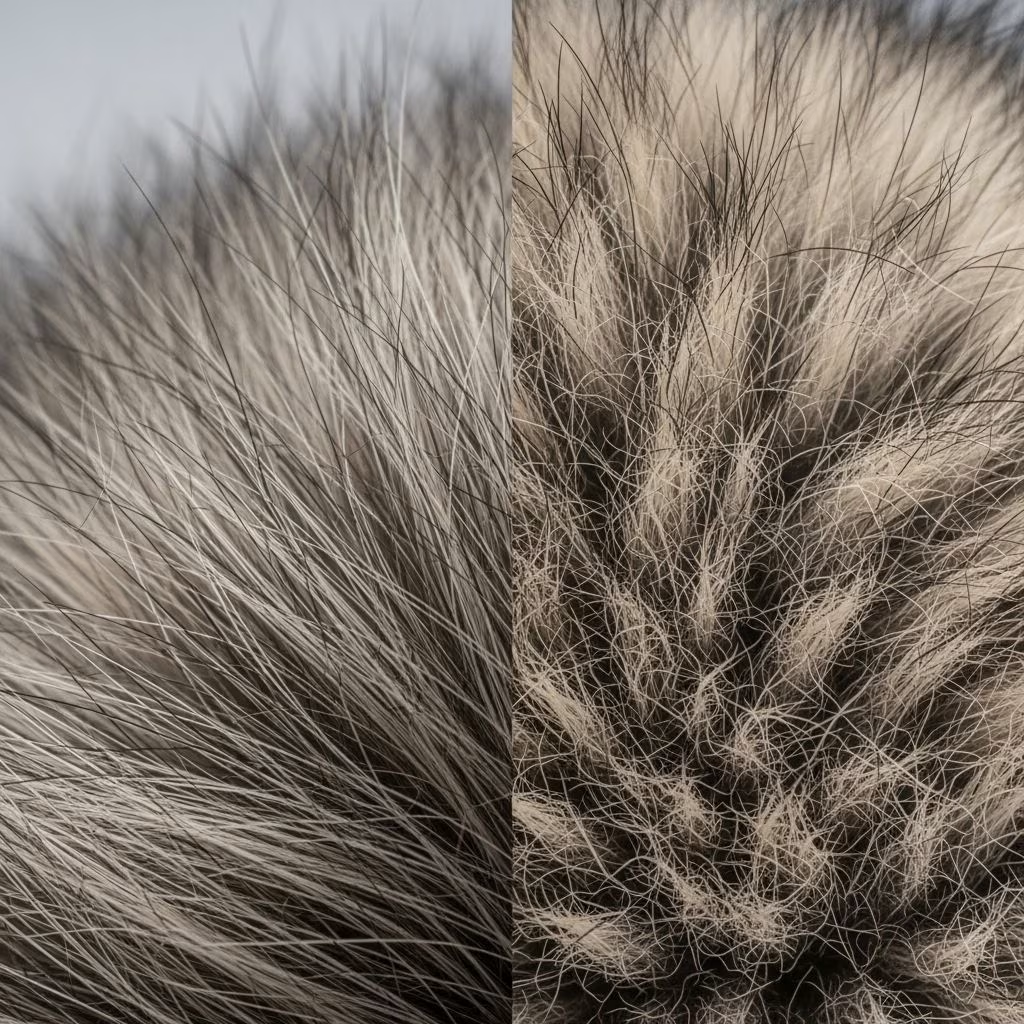
Understanding whether your dog has **hair** or **fur** is crucial for effective grooming, managing allergies, and maintaining a comfortable home environment. Both are composed of keratin, making them chemically identical, yet their growth cycles, textures, and shedding behaviors differ significantly, influencing daily care routines.
Understanding Canine Coat Composition
At a biological level, dog coats consist of the same protein structure as human hair: keratin. This shared foundation means no chemical variance exists between what we call “hair” and “fur.” The distinctions arise from follicle density, growth phases, and coat layering.
Dogs with fur typically feature denser follicle arrangements, leading to shorter, more uniform lengths. In contrast, hair-type coats grow longer due to extended active growth periods. These traits evolved for protection, insulation, and breed-specific functions, such as herding or hunting.
Coat Growth Cycles: The Core Distinction
The hair growth cycle defines the primary difference: dogs with fur follow a predetermined length (PDL) pattern, stopping growth at a genetic limit, while hair coats exhibit undetermined length (UDL), continuing until trimmed or broken.
Both undergo anagen (growth), catagen (transition), and telogen (resting) phases, but durations vary. Fur’s anagen phase lasts months, prompting seasonal shedding, whereas hair’s can extend years, reducing overall loss.
- Fur coats: Short anagen (3 months), quick telogen cycle, results in predictable shedding.
- Hair coats: Prolonged anagen (up to 8 years), slower turnover, minimal shedding.
This cycle impacts everything from vacuuming frequency to professional grooming schedules.
Physical Characteristics of Hair vs. Fur
Visual and tactile cues help identify coat types. Fur is often short, dense, and straight, sometimes with double layers for weather resistance. Hair appears finer, wavier, or curlier, forming single layers prone to length variability.
| Feature | Hair Coats | Fur Coats |
|---|---|---|
| Length | Continuously grows long | Stops at set length |
| Density | Less dense, single layer | Denser, often double-coated |
| Texture | Silky, wavy, or wiry | Straight, coarse guard hairs |
| Shedding | Minimal year-round | Heavy seasonal blows |
Double-coated fur includes guard hairs (outer protective layer) and undercoat (insulating ground hairs), absent in most hair breeds.
Breeds with Hair Coats
Certain breeds are renowned for hair coats requiring regular trims. Poodles, with their curly, dense hair, exemplify UDL growth, needing cuts every 4-6 weeks. Similarly, Bichon Frises and Shih Tzus sport fine, wavy hair that mats if neglected.
- Poodle: Curly, hypoallergenic, professional grooming essential.
- Maltese: Silky straight hair, daily brushing recommended.
- Yorkshire Terrier: Fine, flowing hair prone to tangles.
- Soft Coated Wheaten Terrier: Wavy, low-shedding coat.
These breeds suit allergy sufferers due to reduced dander dispersion.
Breeds with Fur Coats
Fur breeds shed predictably, often twice yearly. Labrador Retrievers have short, dense fur with minimal grooming needs beyond brushing. Huskies and German Shepherds boast double coats for harsh climates, shedding profusely in spring and fall.
- Labrador Retriever: Smooth short fur, weekly brushing.
- Siberian Husky: Thick double coat, de-shedding tools vital.
- Golden Retriever: Medium-length fur, seasonal heavy shed.
- Beagle: Short, weather-resistant fur.
Fur coats self-regulate length, simplifying maintenance for active owners.
Shedding Patterns and Home Management
Fur dogs experience “blowing coat,” where undercoats shed en masse seasonally, controllable with tools like slicker brushes or de-shedders. Hair dogs shed lightly but accumulate mats from trapped debris.
Seasonal shedding aligns with temperature shifts: spring for undercoat loss, fall for regrowth. Hair breeds show steady, low-volume loss year-round. Strategies include:
- Vacuuming high-shed areas weekly.
- Using lint rollers on furniture.
- Outdoor play to release loose fur.
Allergies: Debunking Myths and Realities
No dog is truly hypoallergenic, but hair breeds trigger fewer reactions. Allergens stem from dander, saliva, and urine—not fur or hair itself. Fur’s frequent shedding spreads dander widely, while hair traps it, producing less overall.
Studies from the American Kennel Club note hair dogs like Portuguese Water Dogs shed less dander, benefiting sensitive individuals. Test exposure gradually, as reactions vary.
Grooming Essentials for Hair Coats
Hair requires frequent detangling to prevent mats. Use wide-tooth combs and conditioners post-bath. Bath every 4-6 weeks preserves oils; overbathing dries skin.
Professional clips maintain style and health. Home routines: daily brushing for long coats, weekly for shorter.
Grooming Needs for Fur Coats
Focus on undercoat removal during sheds. De-shedding shampoos and rakes penetrate layers without over-stripping. Baths quarterly suffice for most; dirtier dogs need more.
Brushing 2-3 times weekly distributes oils and reduces loose fur.
Coat Health: Nutrition and Monitoring
Omega-3 supplements support shiny coats. Watch for dullness, hotspots, or excessive itchiness signaling allergies or parasites. Regular vet checks ensure follicle health.
Breeds with double coats benefit from deshedding baths; hair types from moisturizing sprays.
Common Myths About Dog Coats
- Myth: Hairless dogs are allergen-free. Fact: Dander persists.
- Myth: All fur dogs shed everywhere. Fact: Grooming minimizes it.
- Myth: Hair grows forever without end. Fact: It breaks naturally if uncut.
Frequently Asked Questions (FAQs)
How can I tell if my dog has hair or fur?
Observe growth: if it reaches a set length and sheds seasonally, it’s fur. Continuous growth needing trims indicates hair.
Are hair dogs better for allergies?
They shed less dander, making them preferable, but individual testing is key.
How often should I groom my dog’s coat?
Hair: Daily brushing, monthly cuts. Fur: Weekly brushes, seasonal de-shedding.
Does diet affect coat type?
No, genetics determine type, but nutrition influences quality.
Can mixed breeds have hybrid coats?
Yes, inheriting traits from both parents leads to unique patterns.
Choosing the Right Dog for Your Lifestyle
Active families may prefer low-maintenance fur breeds like Labs. Allergy-prone homes benefit from hair types like Schnauzers. Consult breeders or rescues for coat details.
Regardless of type, consistent care fosters bonding and health. Tailor routines to your dog’s needs for a happier pet.
References
- Dog Fur vs. Hair: What’s the Difference? — Best Bully Sticks. 2023. https://www.bestbullysticks.com/blogs/bbs-blog/dog-fur-vs-hair-what-s-the-difference
- Dogs With Hair vs Fur | Difference Between Dog Hair and Fur — Whole Dog Journal. 2024-01-15. https://www.whole-dog-journal.com/care/grooming/does-your-dog-have-hair-or-fur/
- What is the difference between dog’s fur & hair? — Pride+Groom. 2023. https://prideandgroom.com/blogs/dog-grooming-tips-blog/what-is-the-difference-between-dog-s-fur-hair
- Do Dogs Have Hair or Fur? And How Can I Tell? — Splash and Dash for Dogs. 2024. https://splashanddashfordogs.com/blog/dogs-hair-fur-can-tell/
- How to Tell If Your Dog Has Hair or Fur — DoggieLawn. 2023-05-10. https://doggielawn.com/blogs/blog/how-to-tell-if-your-dog-has-hair-or-fur
- Do Dogs Have Hair or Fur? — American Kennel Club. 2025-02-20. https://www.akc.org/expert-advice/health/dogs-hair-fur-grooming/
- Dog coat — Wikipedia. 2026-03-01. https://en.wikipedia.org/wiki/Dog_coat



